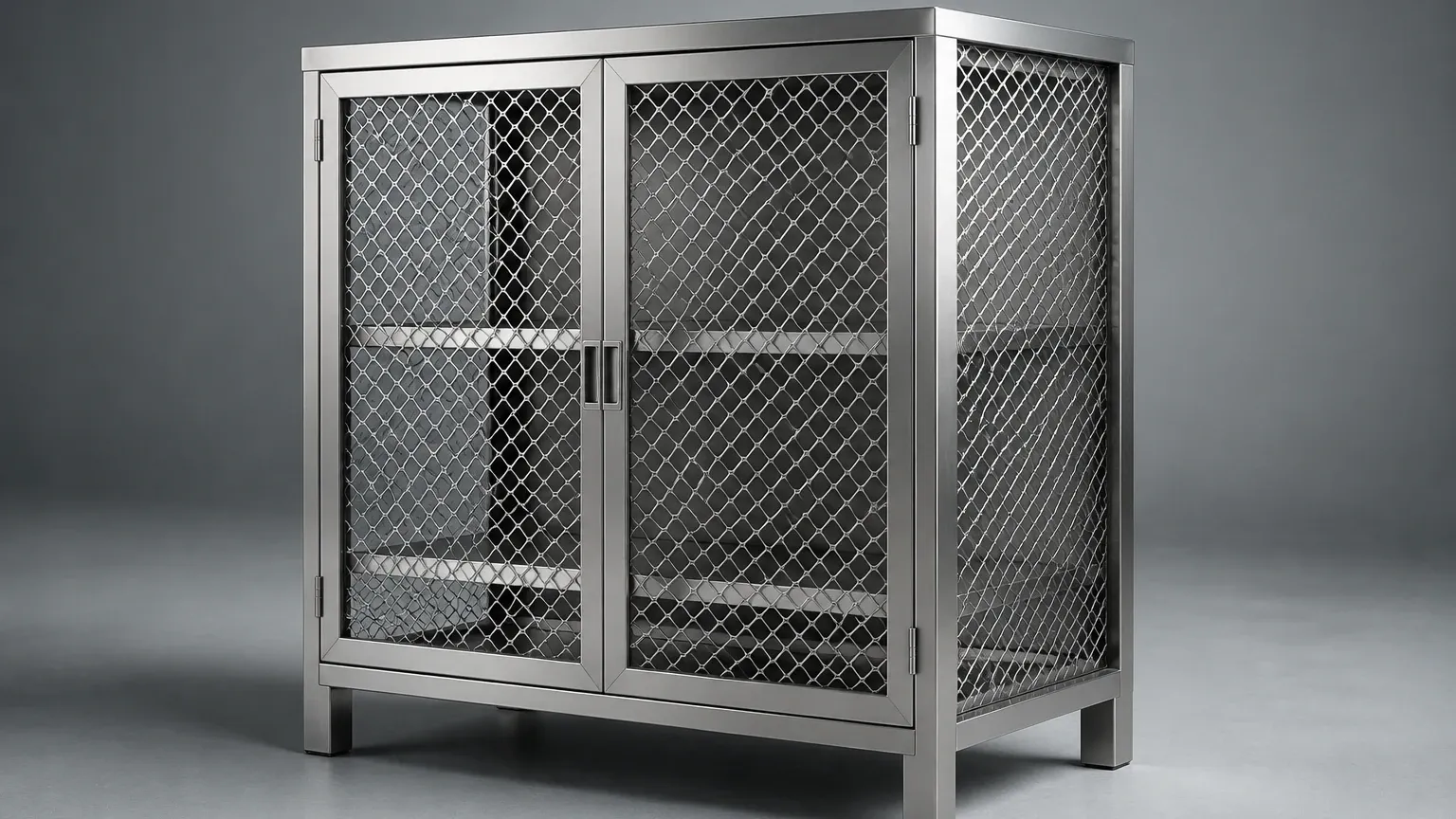
Expanded Metal Cabinet
In industrial environments, the storage and protection of sensitive equipment, chemicals, and tools require a balance between structural security and environmental control. An expanded metal cabinet serves as a specialized enclosure solution designed to meet these rigorous demands. Unlike solid-walled cabinets, these units utilize the unique properties of expanded metal to provide continuous airflow, visual monitoring, and high strength-to-weight ratios. For engineers and facility managers, selecting the right cabinet involves understanding the metallurgical properties and manufacturing nuances of the mesh used in its construction.
Understanding Expanded Metal in Industrial Enclosures
Expanded metal is produced through a specific manufacturing process where a metal sheet—often stainless steel or carbon steel—is simultaneously slit and stretched. This process creates a uniform pattern of diamond-shaped openings. Because the metal is stretched rather than punched, there is no material waste, and the structural integrity of the original sheet is maintained through a network of interconnected strands and bonds.
When integrated into an expanded metal cabinet, this material provides a rigid, one-piece structure that cannot unravel. This is a critical distinction from woven wire mesh, where strands can shift or become displaced under mechanical stress. For industrial applications, the choice of Perforated & Expanded Metal components determines the cabinet's durability and suitability for specific environments, such as chemical processing plants or high-temperature manufacturing floors.
Key Engineering Advantages of Expanded Metal Cabinets
1. Passive Ventilation and Thermal Management
One of the primary reasons engineers specify an expanded metal cabinet is for its inherent ventilation capabilities. In facilities where electronic components, motors, or volatile chemicals are stored, heat buildup and gas accumulation present significant risks. The open area of the expanded metal allows for natural convection, ensuring that internal temperatures remain stabilized and hazardous fumes do not reach dangerous concentrations. This eliminates the need for active cooling systems in many storage scenarios, reducing total energy consumption.
2. Visual Inspection and Security
In high-security or high-efficiency industrial settings, the ability to perform a visual inventory without opening the cabinet is a major operational advantage. Expanded metal provides excellent visibility, allowing supervisors to verify the presence of tools or the status of equipment at a glance. Despite this transparency, the mesh remains a formidable physical barrier. The sharp, angled strands of expanded metal are difficult to cut with standard manual tools, providing a higher level of security than many lightweight perforated alternatives.
3. Strength-to-Weight Ratio
The expansion process increases the overall rigidity of the metal sheet. The resulting "truss-like" structure of the diamonds distributes weight and impact forces across the entire panel. This allows for the construction of large-scale industrial cabinets that are significantly lighter than solid steel counterparts but possess comparable structural strength. This weight reduction is particularly beneficial for mobile cabinets or wall-mounted units where load-bearing capacity is a concern.
Material Selection: Why Stainless Steel Matters
For most B2B industrial applications, the material grade of the expanded metal is as important as the mesh pattern. Kaifil specializes in stainless steel filtration and component solutions because of the material's superior performance in demanding conditions.
* Grade 304 Stainless Steel: This is the standard choice for general industrial use. It offers excellent corrosion resistance and is suitable for most indoor and outdoor environments where exposure to harsh chemicals is limited.
* Grade 316 Stainless Steel: For pharmaceutical, food processing, or marine environments, Grade 316 is the preferred specification. The addition of molybdenum provides enhanced resistance to chlorides and acidic cleaners, ensuring the expanded metal cabinet does not succumb to pitting or surface oxidation over time.
In industries like food and beverage, the ability to sanitize equipment is paramount. Stainless steel expanded metal can withstand high-pressure washdowns and aggressive sterilization protocols without losing its structural integrity or aesthetic finish.
Comparing Perforated & Expanded Metal for Cabinetry
When designing an industrial enclosure, engineers often weigh the pros and cons of perforated metal versus expanded metal. While both fall under the category of Perforated & Expanded Metal solutions, their performance characteristics differ:
* Manufacturing Impact: Perforated metal is created by punching holes in a sheet, which results in significant scrap material. Expanded metal is a zero-waste product, often making it a more cost-effective choice for large-volume projects.
* Structural Rigidity: Expanded metal strands are oriented at an angle to the plane of the sheet, providing three-dimensional strength. Perforated metal remains a flat 2D plane, which may require additional bracing for large spans.
* Airflow Dynamics: The angled strands of expanded metal can actually help direct airflow, whereas perforated metal provides a more direct, straight-through passage. Depending on the cabinet's placement near HVAC vents, this can be an engineering consideration for moisture control.
Design Considerations for Custom Industrial Cabinets
Customization is a core requirement for most B2B procurement processes. When ordering an expanded metal cabinet, several technical parameters must be defined to ensure the final product meets the application's needs.
Mesh Dimensions (LWD and SWD)
The size of the diamond openings is defined by the Long Way of the Diamond (LWD) and the Short Way of the Diamond (SWD). For a cabinet, the LWD/SWD must be small enough to prevent the removal of stored items but large enough to maintain the required percentage of open area for ventilation. Typical industrial specifications range from micro-mesh for small component storage to heavy-duty 1.5-inch LWD for large equipment lockers.
Flattened vs. Raised Expanded Metal
Expanded metal is naturally "raised," meaning the strands sit at an angle. For cabinets, this provides a slip-resistant surface and a more aggressive security profile. However, if the cabinet doors or shelves need to be perfectly smooth to prevent snagging or to allow for easy cleaning, the metal can be "flattened" through a cold-rolling process. Flattened expanded metal is slightly thinner and has a smoother surface finish, which is often preferred in pharmaceutical storage.
Frame and Reinforcement
The expanded metal panels are typically welded into a structural frame made of angle iron or square tubing. The quality of these welds is critical for the cabinet's longevity. In heavy-duty industrial environments, the frame must be designed to withstand the vibration of nearby machinery and the impact of forklifts or hand trucks.
Maintenance and Operational Longevity
An expanded metal cabinet is a low-maintenance asset, but its lifespan is directly tied to the initial material selection and environmental exposure. In chemical processing plants, regular inspection of the bond points (where the strands intersect) is recommended to ensure no stress-corrosion cracking is occurring due to chemical exposure.
Cleaning expanded metal requires a different approach than solid surfaces. Because of the diamond openings, dust can accumulate on the strands. In cleanroom or food-grade environments, pressurized air or steam cleaning is the most effective way to maintain hygiene standards. Stainless steel variants are particularly resilient to these cleaning methods, as they do not require paint or powder coatings that could chip and contaminate the workspace.
Specification Checklist for Purchasing Teams
Before finalizing a purchase order for an expanded metal cabinet, technical teams should confirm the following specifications with the manufacturer:
1. Material Grade: Is 304 sufficient, or does the environment require 316 stainless steel?
2. Opening Size: What is the minimum size of the items being stored? Does the LWD/SWD prevent their removal?
3. Load Capacity: What is the maximum weight per shelf? Does the expanded metal require additional support bars?
4. Surface Finish: Is a raised mesh acceptable for security, or is a flattened mesh required for safety and cleaning?
5. Environmental Exposure: Will the cabinet be exposed to salt spray, acidic fumes, or extreme temperatures?
Conclusion
The expanded metal cabinet is more than just a storage unit; it is a precision-engineered component of an industrial facility's infrastructure. By leveraging the unique benefits of Perforated & Expanded Metal, companies can ensure their equipment is protected, ventilated, and easily accessible. Whether for chemical storage, tool management, or protecting sensitive filtration systems, the choice of high-quality stainless steel mesh ensures that these enclosures provide reliable service for decades. For engineers, focusing on the technical details of the expansion process and material grade is the key to optimizing both performance and total cost of ownership.