


Expanded Metal Corner Bead
In the realm of industrial construction and precision metal fabrication, the structural integrity of corners and joints is a critical engineering consideration. Expanded metal corner bead serves as a foundational component designed to reinforce plaster, stucco, and render at vulnerable external corners. By leveraging the unique mechanical properties of expanded metal, these components provide a robust mechanical key that ensures long-term durability and resistance to impact. For engineers and procurement teams, selecting the correct specification of expanded metal corner bead requires a deep understanding of material science, mesh geometry, and environmental compatibility.
As a specialized manufacturer of high-precision filtration and metal solutions, Kaifil provides a comprehensive range of Perforated & Expanded Metal products. Understanding the technical nuances of these materials is essential for ensuring that the final installation meets the rigorous standards of industrial, pharmaceutical, and chemical processing environments.
Understanding the Role of Expanded Metal in Structural Reinforcement
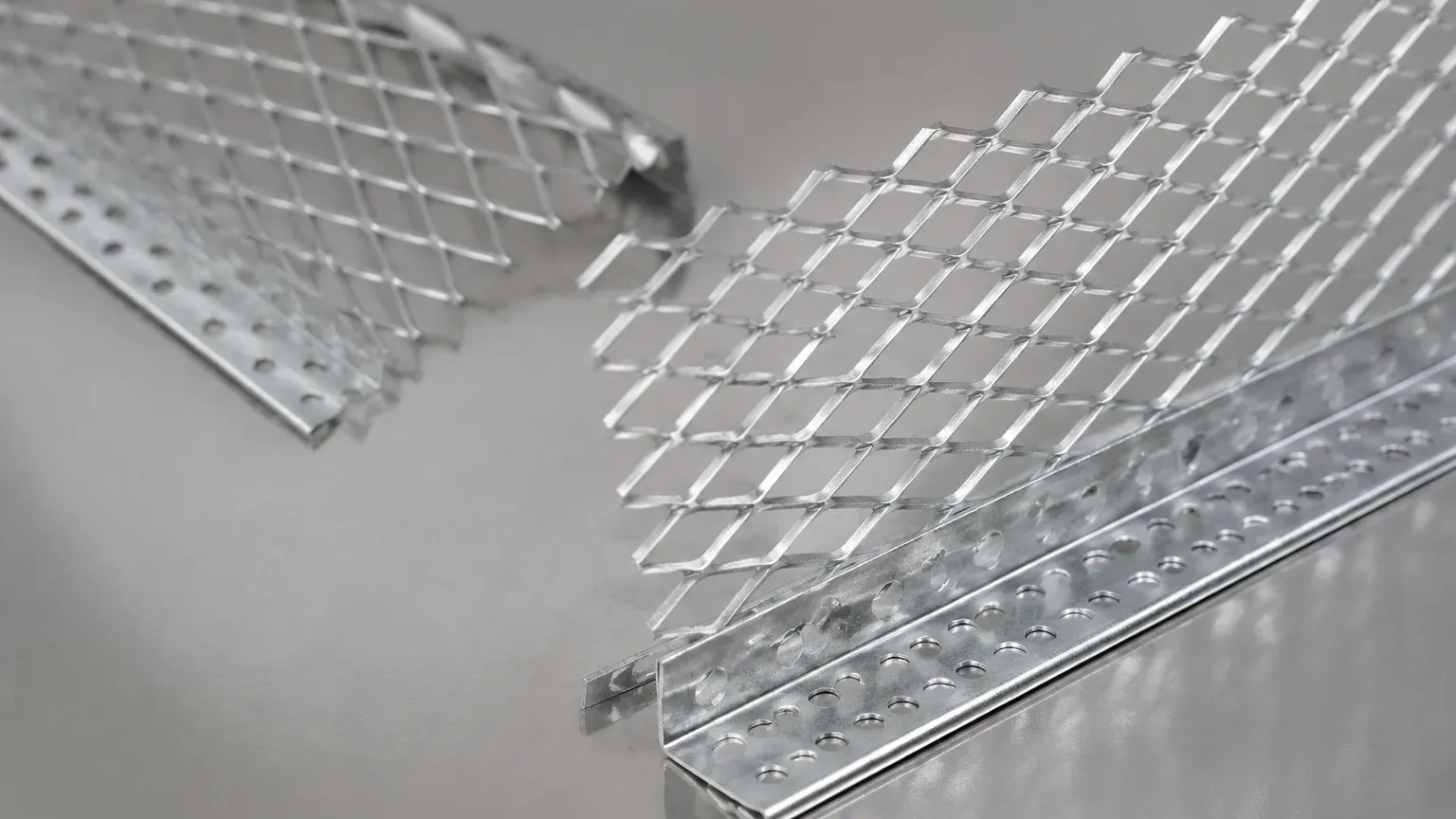
Expanded metal corner bead is manufactured by simultaneously slitting and stretching a metal sheet, typically stainless steel or galvanized steel, to create a uniform diamond-shaped mesh. Unlike perforated metal, which involves punching holes and generating waste material, the expansion process creates a three-edged strand that is oriented at an angle to the original plane of the sheet. This geometry is what gives the expanded metal corner bead its superior bonding capabilities.
In plastering and rendering applications, the "wings" or flanges of the bead are embedded into the wet material. The open mesh allows the plaster to flow through the openings and wrap around the metal strands, creating a mechanical bond that is significantly stronger than what can be achieved with solid or even perforated alternatives. This mechanical keying is vital in industrial settings where vibration, thermal expansion, and physical impact are common.
The Mechanics of the Diamond Mesh
The diamond mesh pattern is not merely aesthetic; it is an engineered solution for stress distribution. When an external force is applied to a corner, the expanded mesh distributes the energy across a wider surface area, reducing the likelihood of cracking or delamination. For technical professionals, the choice of mesh size (the dimensions of the diamond opening) and strand width directly influences the rigidity of the bead and the volume of plaster required for a flush finish.
Material Selection: Stainless Steel vs. Galvanized Options
The choice of material for an expanded metal corner bead is perhaps the most significant factor in determining the lifecycle of the installation. While galvanized steel is a common choice for standard interior applications, industrial environments often demand the superior corrosion resistance of stainless steel.
Stainless Steel (Grade 304 and 316)
For chemical processing plants, food and beverage facilities, and pharmaceutical laboratories, stainless steel is the industry standard. Grade 304 provides excellent resistance to oxidation and common industrial chemicals. However, in environments with high chloride concentrations or coastal locations, Grade 316 is preferred due to its molybdenum content, which offers enhanced protection against pitting and crevice corrosion.
Using stainless steel expanded metal corner bead ensures that the reinforcement will not rust behind the plaster. Rusting metal expands, which inevitably leads to "spalling"—the cracking and breaking away of the plaster surface. In a B2B context, the total cost of ownership is significantly lower when using stainless steel in high-moisture or corrosive areas, as it eliminates the need for premature repairs and maintenance.
Galvanized Steel
Galvanized steel beads are coated with a layer of zinc to prevent oxidation. While effective in dry, controlled environments, the zinc layer can be compromised during cutting or installation. If the core steel is exposed to moisture, galvanic corrosion can occur. Engineers must verify the coating weight (e.g., G60 or G90) to ensure it meets the specific requirements of the project's environmental class.
Technical Specifications and Performance Metrics
When specifying expanded metal corner bead for a project, technical professionals must look beyond basic dimensions. Several key performance metrics define the quality and suitability of the component:
1. Flange Width (Wing Size): Standard widths typically range from 2 inches to 3 inches. Wider flanges provide a larger bonding surface and are often used in heavy-duty industrial applications where the plaster thickness is greater.
2. Gauge Thickness: The thickness of the base metal before expansion. A higher gauge (thinner metal) offers more flexibility, while a lower gauge (thicker metal) provides greater impact resistance. Common industrial gauges range from 26 to 24 gauge.
3. Mesh Dimensions: Defined by the Long Way of the Diamond (LWD) and Short Way of the Diamond (SWD). These dimensions dictate the "open area" percentage, which influences the plaster's ability to penetrate the mesh.
4. Nose Profile: The central ridge of the bead. It must be perfectly straight and rigid to act as a guide for the plasterer’s straightedge. In high-traffic areas, a reinforced or thickened nose profile is often specified to withstand direct impacts from equipment or carts.
Comparative Analysis: Expanded Metal vs. Perforated Beads
Within the broader category of Perforated & Expanded Metal, both expanded and perforated designs are used for corner reinforcement. However, they serve slightly different engineering needs.
* Expanded Metal Beads: These are generally preferred for heavy-duty rendering and exterior stucco. The three-dimensional nature of the expanded strand provides a superior mechanical grip. It is also more cost-effective in terms of material usage, as the expansion process increases the surface area without adding weight.
* Perforated Metal Beads: These are often used for thin-coat plastering or drywall applications. The flat surface of perforated metal allows for a lower profile, which is ideal when the goal is a very smooth, minimal finish. However, perforated beads lack the multi-directional strength and the deep mechanical key of expanded metal.
For industrial applications where durability is the priority, expanded metal corner bead is almost always the superior choice due to its ability to integrate into the structural matrix of the wall coating.
Common Engineering Risks and Quality Control
Specifying the wrong type of expanded metal corner bead or overlooking quality control during procurement can lead to significant structural failures. Engineers should be aware of the following risks:
1. Corrosion and Bleed-Through
In environments with high humidity or chemical exposure, using non-compatible materials (such as galvanized steel in a chlorine-rich environment) will lead to corrosion. This not only weakens the corner but also causes rust stains to bleed through the finished surface, which is unacceptable in pharmaceutical or food-grade facilities. Confirming the material grade through Mill Test Reports (MTRs) is a critical step for quality assurance.
2. Inadequate Mechanical Bond
If the mesh size is too small for the aggregate size in the plaster or render, the material will not be able to pass through the openings. This results in a "cold joint" where the plaster merely sits on top of the metal rather than being reinforced by it. Engineers must ensure the mesh geometry is compatible with the specified coating material.
3. Deformation During Transport and Installation
Expanded metal is inherently rigid, but long lengths of corner bead can be susceptible to twisting or bending if not handled correctly. A deformed bead will result in a crooked corner, which compromises both the aesthetics and the structural integrity of the wall. Specifying rigid packaging and inspecting for straightness upon delivery is essential.
Installation and Maintenance Considerations
Correct installation is as important as material selection. Expanded metal corner bead should be attached using fasteners that are compatible with the bead material to prevent galvanic corrosion. For example, stainless steel beads should always be installed with stainless steel nails or staples.
Attachment Methods
In industrial masonry construction, beads are often "dabbed" into place using the same plaster material that will be used for the base coat. This ensures a monolithic bond. Alternatively, they can be mechanically fastened to the substrate. The choice depends on the substrate material (concrete block, steel stud, or wood) and the required impact resistance.
Alignment and Leveling
The nose of the bead serves as a ground for the plastering process. If the bead is not perfectly plumb and level, the entire wall surface will be affected. In large-scale industrial projects, using laser levels to set the corner beads is standard practice to ensure precision across long corridors or high-bay walls.
Procurement and Customization for Industrial Projects
For large-scale B2B projects, off-the-shelf corner beads may not always meet the specific engineering requirements. Customization options provided by manufacturers like Kaifil allow engineers to optimize the reinforcement for their specific application.
Custom Lengths and Angles
While standard corners are 90 degrees, industrial facility designs often incorporate obtuse or acute angles for airflow optimization or equipment clearance. Custom-bent expanded metal corner beads ensure a precise fit without the need for on-site modification, which can compromise the protective coatings of the metal.
Specialized Coatings and Finishes
In addition to standard stainless and galvanized options, expanded metal can be treated with specialized coatings for extreme environments. This includes epoxy coatings for additional chemical resistance or powder coating for color-coding in specific safety zones of a factory.
Conclusion: Making Informed Engineering Decisions
Expanded metal corner bead is a deceptively simple component that plays a vital role in the longevity and safety of industrial infrastructure. By understanding the mechanical advantages of the expanded mesh, the importance of material compatibility, and the technical specifications required for a robust installation, engineers and purchasing teams can avoid common pitfalls and ensure a high-quality finish.
When evaluating suppliers for Perforated & Expanded Metal products, it is essential to partner with a manufacturer that understands the technical demands of industrial filtration and structural components. Kaifil’s expertise in precision metal fabrication ensures that every component, from complex filter cartridges to structural corner beads, meets the highest standards of durability and performance.
Before proceeding with a procurement order, technical teams should confirm the environmental conditions, the required impact resistance, and the compatibility of the metal grade with the surrounding materials. These steps ensure that the expanded metal corner bead provides a reliable, maintenance-free solution for the life of the facility.
