


Expanded Metal Catwalk Grating
In industrial architecture and facility engineering, the selection of flooring materials for elevated platforms, walkways, and stair treads is a critical decision that impacts both structural integrity and personnel safety. Expanded metal catwalk grating has emerged as a primary solution for these applications due to its unique combination of high strength-to-weight ratio, cost-effectiveness, and inherent slip resistance. Unlike traditional bar grating or solid plate flooring, expanded metal is manufactured through a precision slitting and stretching process that creates a continuous, weld-free structure.
For engineers and procurement professionals, understanding the technical specifications and performance characteristics of Perforated & Expanded Metal is essential for ensuring that catwalk systems meet local building codes, OSHA safety standards, and the specific rigors of industrial environments. This guide examines the engineering principles, material considerations, and selection criteria for expanded metal catwalk grating.
Understanding the Manufacturing and Structural Integrity
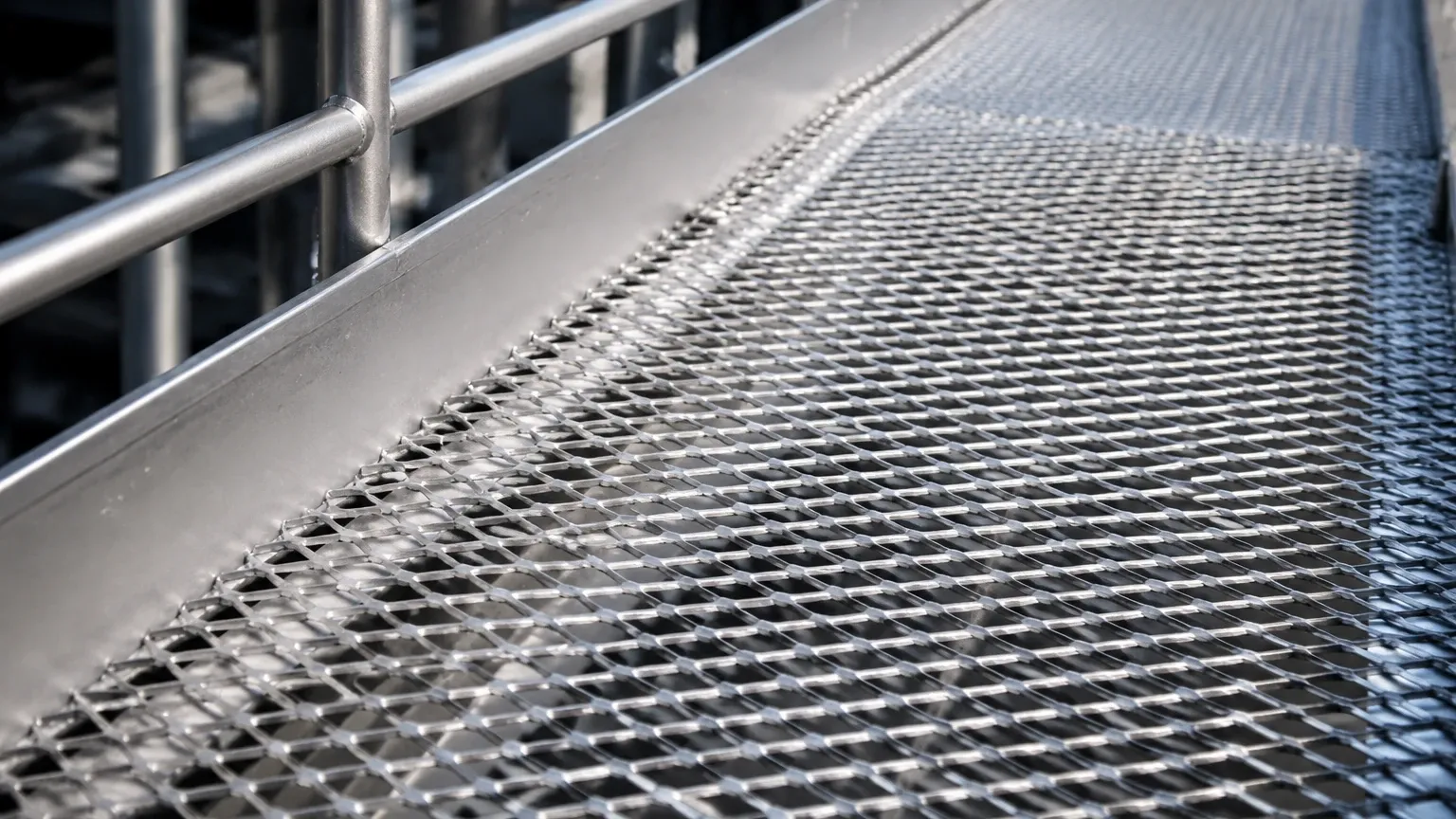
Expanded metal is produced from a single solid sheet of metal—typically stainless steel, carbon steel, or aluminum. The manufacturing process involves a machine that simultaneously slits and stretches the metal. This process expands the initial sheet into a uniform diamond-shaped pattern. Because the metal is stretched rather than punched, there is zero material waste, which contributes to the product's cost-efficiency compared to perforated alternatives.
The resulting structure is composed of "strands" and "bonds." The strands are the individual strips of metal that form the sides of the diamond, while the bonds are the intersections where the strands meet. In the context of expanded metal catwalk grating, the material is typically produced in a "raised" or "standard" format. In this state, the strands are set at a sharp angle to the plane of the sheet, which provides the multi-directional traction necessary for industrial walkways.
From an engineering perspective, the lack of welds is a significant advantage. In traditional bar grating, the joints are potential points of failure due to fatigue or corrosion. Expanded metal, being a single piece of material, distributes loads across the entire panel, reducing the risk of localized structural failure. This continuous bond also ensures that if a single strand is damaged, the surrounding structure remains intact, maintaining the overall safety of the catwalk.
Engineering Considerations: Load-Bearing and Deflection
When specifying expanded metal catwalk grating, engineers must prioritize load-bearing capacity and allowable deflection. Grating is generally categorized by its weight per square foot (e.g., 3.0 lb, 4.0 lb, or 5.0 lb grating). These designations refer to the weight of the carbon steel equivalent and serve as a baseline for structural calculations.
Long Way of Diamond (LWD) vs. Short Way of Diamond (SWD)
The orientation of the diamond pattern is critical to the performance of the grating. The Long Way of Diamond (LWD) refers to the dimension across the largest part of the diamond, while the Short Way of Diamond (SWD) is the dimension across the narrowest part. For maximum structural efficiency, the LWD should always run perpendicular to the support members (the span). If the grating is installed with the SWD spanning the supports, the load-bearing capacity is significantly reduced, and the risk of excessive deflection increases.
Deflection Limits
In industrial applications, the standard allowable deflection for a catwalk is typically L/240 (the span length divided by 240) or a maximum of 0.25 inches, whichever is smaller. Engineers must consult manufacturer load tables to determine the maximum clear span for a given grating weight and expected live load (usually measured in pounds per square foot, PSF). For high-traffic areas or platforms supporting heavy equipment, moving to a heavier 6.25 lb or 7.0 lb grating may be necessary to maintain rigidity and prevent the "bouncing" sensation that can cause worker fatigue or insecurity.
Material Selection for Corrosive and Demanding Environments
While carbon steel is common for general industrial use, many B2B applications—particularly in chemical processing, food and beverage production, and pharmaceutical manufacturing—require superior corrosion resistance. This is where stainless steel expanded metal becomes the preferred choice.
Stainless Steel Grades
* Grade 304: Offers excellent resistance to a wide range of atmospheric environments and many corrosive media. It is the standard choice for food processing and general industrial catwalks where moisture is present.
* Grade 316: Contains molybdenum, which provides significantly higher resistance to chlorides and marine environments. For offshore platforms or chemical plants handling aggressive acids, Grade 316 expanded metal grating is the industry standard to prevent pitting and stress corrosion cracking.
Aluminum and Galvanized Options
For applications where weight reduction is a priority, such as in aerospace facilities or mobile industrial equipment, aluminum expanded metal provides a high strength-to-weight ratio and natural oxidation resistance. Conversely, for outdoor infrastructure where cost is a primary driver, hot-dipped galvanized carbon steel provides a thick layer of zinc protection that can withstand decades of exposure to the elements.
Safety Features and Traction Performance
The primary function of expanded metal catwalk grating is to provide a safe walking surface. The geometry of the raised diamond pattern is inherently slip-resistant. The "knuckles" created by the expansion process provide grip in all directions, which is vital in environments where oil, grease, water, or ice may be present on the floor.
Drainage and Visibility
One of the most significant advantages of expanded metal over solid flooring is its open area. Depending on the diamond size, expanded metal grating typically offers between 40% and 70% open area. This allows for:
1. Debris Management: Liquid, dust, and small debris fall through the grating rather than accumulating on the surface, keeping the walkway clear.
2. Light and Air Flow: In multi-level industrial facilities, the open mesh allows light to reach lower levels and facilitates the movement of air, which is crucial for HVAC efficiency and the dispersal of hazardous fumes.
3. Fire Safety: Standard fire suppression systems (sprinklers) can penetrate the grating, ensuring that water reaches lower levels during an emergency.
Comparing Expanded Metal to Traditional Bar Grating
Engineers often weigh the pros and cons of expanded metal versus welded bar grating. While bar grating is capable of handling much higher concentrated loads (such as heavy vehicle traffic), expanded metal catwalk grating offers several distinct advantages for pedestrian-centric applications:
* Weight: Expanded metal is significantly lighter than bar grating of comparable surface area, which simplifies the design of the supporting steel structure and reduces shipping costs.
* Installation: Because it is lighter, expanded metal is easier to handle on-site. It can be cut to fit complex geometries using standard industrial tools without losing its structural integrity.
* Cost: The "no-waste" manufacturing process makes expanded metal one of the most economical high-performance flooring options available for large-scale industrial projects.
* Traction: The multi-directional grip of expanded metal is often superior to the uni-directional serrations found on some bar gratings.
Installation Best Practices and Compliance
Proper installation is as important as material selection. Expanded metal grating must be securely fastened to the supporting framework to prevent shifting or rattling. Common fastening methods include:
* Welding: Tack welding the grating to the support beams provides the most rigid connection but makes future removal difficult.
* Grating Clips/Clamps: Specialized mechanical fasteners allow for the removal of panels for maintenance or inspection of the underlying systems. These should be spaced according to the manufacturer's recommendations, typically every 2 to 4 feet along the support.
OSHA and ANSI Standards
In the United States, OSHA 1910.28 requires that employers provide protection for each employee on a walking-working surface with an unprotected side or edge that is 4 feet or more above a lower level. Expanded metal catwalks must be designed to support at least four times the maximum intended load. Furthermore, if the catwalk is located above machinery or areas where employees may pass below, the use of toe boards in conjunction with the grating is required to prevent tools or parts from falling over the edge.
Customization and OEM Capabilities
Every industrial project has unique requirements, ranging from specific filtration needs to non-standard walkway dimensions. As a specialist in custom metal solutions, Kaifil provides the engineering support necessary to tailor Perforated & Expanded Metal products to these exact specifications. Whether the project requires a specific mesh opening size to prevent small parts from falling through or a custom alloy for a high-temperature chemical reactor platform, customization ensures that the final product performs optimally within its specific operational context.
When evaluating a supplier for expanded metal catwalk grating, purchasing teams should confirm the manufacturer's ability to provide material certifications (MTRs), load-deflection data, and precision shearing. For large-scale B2B contracts, the ability to receive pre-cut, project-ready panels can significantly reduce labor costs and project timelines.
Conclusion
Expanded metal catwalk grating remains a cornerstone of industrial design because it addresses the core requirements of safety, durability, and economy. By selecting the appropriate material grade, understanding the importance of diamond orientation, and adhering to rigorous load-bearing standards, engineers can create walkway systems that provide long-term reliability in the most demanding environments. As industrial facilities continue to evolve with a focus on worker safety and operational efficiency, the role of high-quality expanded metal components will only continue to grow.
