


Expanded Metal Dog Kennel
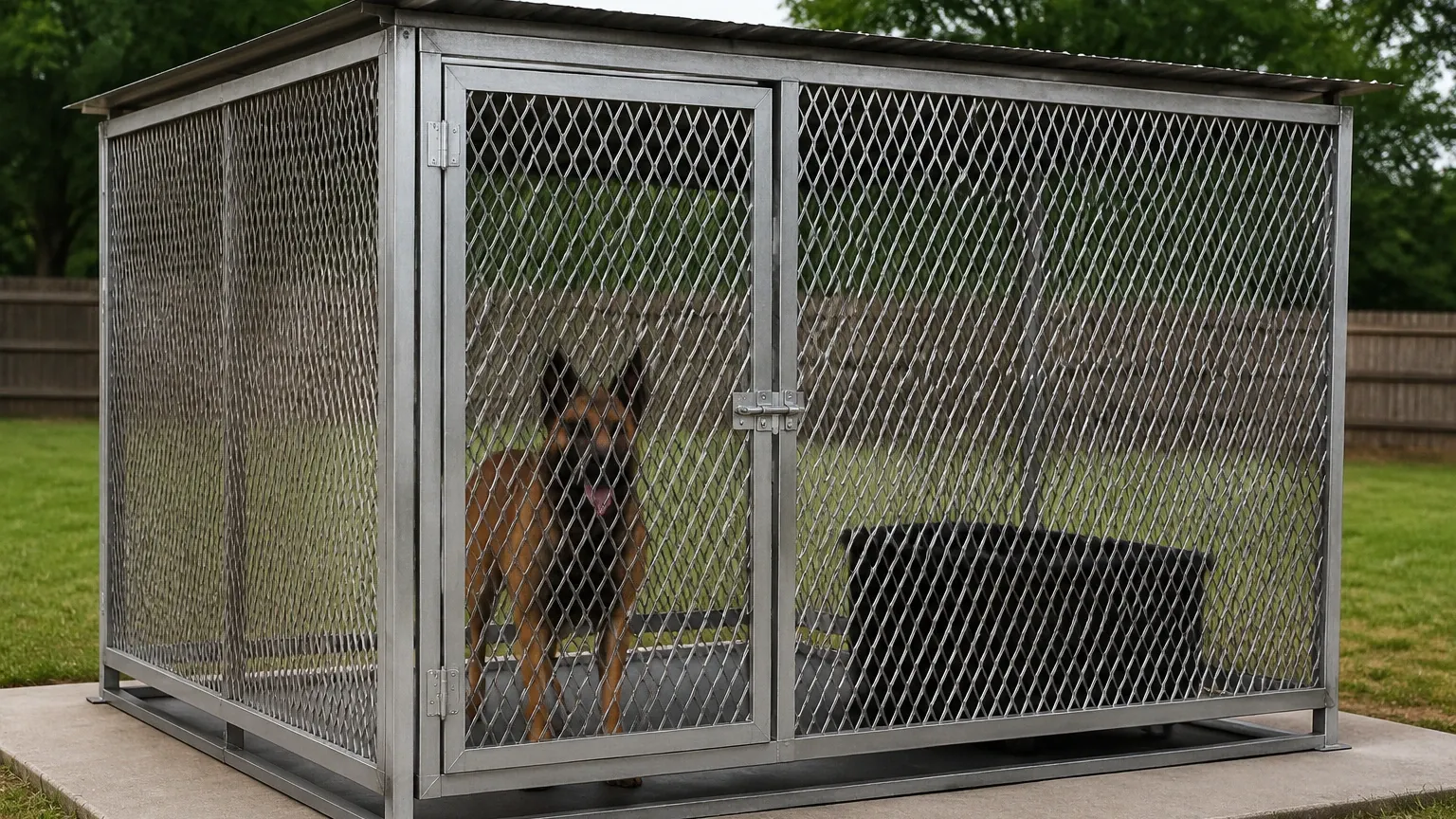
In the realm of industrial-grade animal containment and facility management, the selection of materials for enclosures is a critical engineering decision. An expanded metal dog kennel represents a high-durability solution that addresses the limitations of traditional chain-link fencing and light-gauge wire mesh. By utilizing the structural integrity of Perforated & Expanded Metal, facility designers and OEM manufacturers can create containment systems that offer superior security, longevity, and hygiene.
For engineers and procurement professionals, understanding the technical nuances of expanded metal—ranging from material grades to geometric specifications—is essential for optimizing the performance of animal housing units in commercial, veterinary, and research environments.
Understanding the Engineering of Expanded Metal
Expanded metal is not a woven or welded product; rather, it is manufactured through a precision process of slitting and stretching a single sheet of solid metal. This process creates a series of diamond-shaped openings, resulting in a continuous piece of material with no joints or welds to fail under stress.
In the context of an expanded metal dog kennel, this structural continuity is a primary advantage. Unlike traditional wire mesh, where individual strands can be bent or unraveled by high-energy animals, expanded metal maintains its shape even under significant impact or bite pressure. The "truss-like" characteristic of the diamond pattern distributes loads across the entire panel, providing a high strength-to-weight ratio that is difficult to achieve with other fabrication methods.
When evaluating these materials, it is important to distinguish between "Standard" (raised) and "Flattened" expanded metal. Standard expanded metal features strands that are turned at an angle to the plane of the sheet, providing extra rigidity and a slip-resistant surface. Flattened expanded metal is processed through a cold-rolling mill to create a smooth, level surface. For kennel flooring or contact surfaces, flattened metal is often preferred to ensure the safety and comfort of the animal's paws.
Technical Specifications for Kennel Fabrication
To specify the correct material for a kennel project, engineers must define several key parameters that dictate the mesh's performance and suitability. These specifications ensure that the containment is secure while maintaining visibility and airflow.
SWD and LWD Dimensions
The geometry of the diamond is defined by the Short Way of Design (SWD) and the Long Way of Design (LWD). In an expanded metal dog kennel, the SWD is typically the more critical dimension as it determines the maximum gap through which an animal might attempt to push its nose or paws. For medium to large breeds, an SWD of 0.5 inches to 1.0 inch is standard, providing a balance between security and visibility.
Strand Width and Thickness
The strength of the mesh is determined by the thickness of the original base metal and the width of the strands created during the expansion process. Industrial kennels often utilize 13-gauge to 9-gauge steel. A thicker strand width increases the overall rigidity of the panel, making it resistant to deformation from jumping or leaning.
Open Area Percentage
One of the primary functional requirements of any kennel is ventilation. Expanded metal naturally provides a high percentage of open area—often between 50% and 80% depending on the pattern. This ensures constant airflow, which is vital for temperature regulation and odor control in high-density boarding or clinical facilities.
Material Selection: Stainless Steel vs. Carbon Steel
The environment in which the kennel will be placed dictates the choice of alloy. As a specialist in custom stainless steel filtration and metal components, Kaifil emphasizes the importance of corrosion resistance in animal containment applications.
Stainless Steel (304 and 316 Grades)
For pharmaceutical research labs, veterinary hospitals, and high-end boarding facilities, stainless steel is the gold standard. Grade 304 provides excellent resistance to the organic acids found in animal waste and the harsh chemical disinfectants used during daily cleaning cycles. Grade 316, which includes molybdenum, is recommended for facilities located in coastal areas or environments exposed to high chloride concentrations. Stainless steel expanded metal dog kennels offer the lowest total cost of ownership due to their virtually indefinite lifespan and minimal maintenance requirements.
Galvanized Carbon Steel
For large-scale outdoor enclosures or industrial security applications, hot-dipped galvanized steel is a cost-effective alternative. The zinc coating provides a sacrificial layer of protection against atmospheric corrosion. However, specifiers must ensure that the galvanization process is performed after the metal is expanded to ensure that all cut edges are fully coated, preventing premature rust at the strand intersections.
Safety and Performance Standards for Animal Housing
Beyond structural integrity, the safety of the animal is the most critical factor in kennel design. Industrial manufacturing processes must account for the physical behavior of the animals being housed.
1. Deburring and Surface Finishing: The expansion process can leave sharp edges or "burrs" at the bond points of the diamonds. For kennel applications, it is mandatory that the panels undergo a rigorous deburring process. Furthermore, many facilities opt for powder coating or PVC coating to provide a softer contact surface and an additional layer of protection against moisture.
2. Anti-Climb Geometry: The diamond pattern of expanded metal can be engineered to discourage climbing. By selecting a smaller SWD, the mesh prevents animals from gaining a foothold, reducing the risk of injury associated with climbing and falling within the enclosure.
3. Noise Reduction: Unlike thin-gauge wire that can rattle or vibrate when an animal moves, the rigid, single-piece construction of expanded metal panels is significantly quieter. This contributes to a lower-stress environment for the animals, which is particularly important in clinical and recovery settings.
Comparing Expanded Metal to Alternative Materials
When designing a containment system, it is helpful to compare the performance of expanded metal against other common industrial materials.
| Feature | Expanded Metal | Chain Link | Perforated Metal |
| :— | :— | :— | :— |
| Structural Rigidity | High (Single piece) | Low (Woven) | High (Solid sheet) |
| Security | Excellent (Anti-cut) | Moderate (Easily cut) | High |
| Airflow | High | High | Variable |
| Maintenance | Low | Moderate (Tightening needed) | Low |
| Cost-Effectiveness | High (Low waste) | High (Initial cost) | Moderate |
Compared to chain link, an expanded metal dog kennel does not sag or deform over time. Compared to perforated metal, expanded metal is often more cost-effective because the manufacturing process involves no scrap loss—the metal is stretched rather than punched out. This makes it an environmentally conscious and budget-friendly choice for large-scale industrial projects.
Customization and OEM Manufacturing Considerations
For B2B purchasers and facility engineers, the ability to customize the containment system is vital. Working with a professional manufacturer like Kaifil allows for the integration of expanded metal into complex frame designs and modular systems.
Custom Panel Sizing
Standard sheets are typically available in 4'x8' or 4'x10' dimensions, but OEM projects often require custom-cut sizes to fit specific gate frames or wall partitions. Precision cutting ensures that the diamond pattern is centered and that the edges are prepared for seamless welding into the kennel frame.
Integration with Filtration and Drainage
In advanced facility designs, the kennel walls are often integrated with specialized drainage and filtration systems. Because Kaifil specializes in precision metal filtration components, we understand how to align the open area of the expanded metal with the facility's HVAC and waste management requirements to maintain a sterile and controlled environment.
Confirming Project Requirements
Before proceeding with a bulk order for expanded metal kennel panels, procurement teams should confirm the following with their manufacturing partner:
* Material Grade: Is 304 stainless steel sufficient, or does the cleaning protocol require 316?
* Finish: Is the material flattened and deburred for animal safety?
* Load Requirements: Will the panels be used for flooring, requiring a higher gauge and smaller SWD for weight support?
* Tolerances: What are the allowable variances in sheet flatness and diamond alignment?
Conclusion
The transition from traditional fencing to an expanded metal dog kennel is a move toward industrial-grade reliability and long-term facility efficiency. By leveraging the inherent strengths of the expansion process—structural continuity, high open area, and material versatility—engineers can design enclosures that withstand the rigors of heavy-duty use while ensuring the safety and comfort of the animals. Whether for a high-security canine training center or a sterile veterinary research lab, expanded metal provides a robust, low-maintenance, and professional solution for modern animal containment needs.
