


Expanded Metal Edging
In industrial manufacturing and filtration design, the perimeter treatment of metal components is as critical as the filtration media itself. Expanded metal, characterized by its diamond-shaped openings and structural rigidity, is a preferred material for high-strength applications. However, the manufacturing process—which involves slitting and stretching a solid metal sheet—leaves sharp, exposed strands and bonds at the edges. For engineers and procurement teams, implementing professional expanded metal edging is not merely an aesthetic choice; it is a technical necessity for safety, structural integrity, and seamless integration into larger industrial systems.
Selecting the right edging solution requires an understanding of the material's geometry, the mechanical stresses of the application, and the chemical environment in which the component will operate. This guide examines the technical considerations for edging Perforated & Expanded Metal and how these choices impact the performance of custom filtration and industrial components.
The Role of Edging in Industrial Expanded Metal Applications
Expanded metal is unique because it is produced from a single piece of material without any waste. While this makes it cost-effective and structurally sound, the resulting "open" edges are inherently jagged. In a B2B context, particularly within the chemical processing, pharmaceutical, and food and beverage sectors, these raw edges present several risks:
1. Safety and Handling: Exposed strands can cause injury during installation or maintenance. In high-vibration environments, raw edges can also damage adjacent components or housing seals.
2. Structural Support: For large filtration panels or heavy-duty grates, the edge provides the necessary rigidity to prevent sagging or warping under pressure. Edging acts as a frame that distributes mechanical loads evenly across the mesh.
3. Seal Integrity: In filtration systems, the interface between the filter element and the housing must be airtight or watertight. Professional edging ensures a flat, uniform surface that can be compressed against gaskets or O-rings to prevent bypass.
4. Hygienic Compliance: In food-grade or pharmaceutical applications, raw edges can trap particulate matter or bacteria. Smooth, welded edging eliminates these "dead zones," facilitating easier cleaning and sterilization (CIP/SIP processes).
Technical Comparison: Perforated & Expanded Metal Characteristics
When designing a filtration or separation component, engineers often choose between perforated and expanded metal. The choice of edging depends heavily on which material is selected.
Expanded Metal Geometry
Expanded metal is measured by the Long Way of Design (LWD) and Short Way of Design (SWD). Because the material is stretched, the strands are angled relative to the plane of the sheet. This three-dimensional profile means that expanded metal edging must account for the "overall thickness" of the mesh, which is significantly greater than the original gauge of the flat sheet. If the edging channel is too narrow, the mesh will not sit flush; if it is too wide, the mesh may rattle or fail to weld securely.
Perforated Metal Geometry
Perforated metal remains flat after the punching process. Edging perforated sheets is generally more straightforward because the thickness is consistent across the entire surface. However, perforated metal often has "margins" (solid areas around the edges). If a design requires a full-bleed pattern, the edging must be robust enough to hide the partial holes and provide a clean weld point.
Common Methods for Expanded Metal Edging and Framing
There are several standardized methods for finishing the perimeter of an expanded metal sheet. The selection depends on the required mechanical strength and the installation method.
U-Edging (U-Channel)
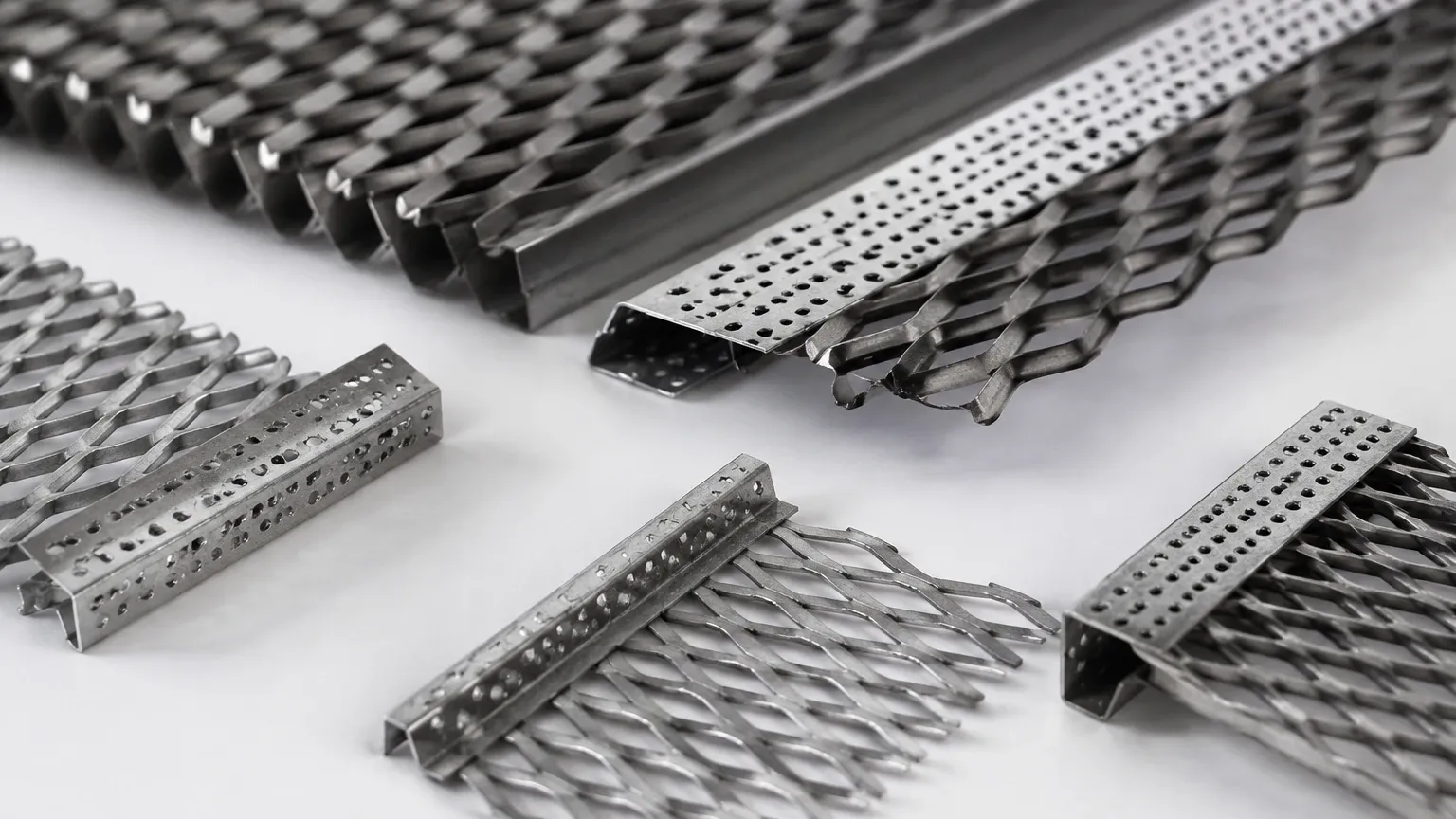
U-edging is the most common solution for expanded metal. It involves a C-shaped or U-shaped metal profile that slides over the edge of the mesh.
* Application: Ideal for safety guards, partition screens, and large filter panels.
* Engineering Note: The internal width of the U-channel must match the "overall thickness" of the expanded metal. For heavy-duty industrial applications, the U-channel is typically tack-welded to the mesh at regular intervals to ensure it remains permanent under thermal expansion or vibration.
J-Channel Edging
Similar to U-edging, a J-channel has one side longer than the other. This is often used when the expanded metal needs to be mounted against a flat surface or when a specific offset is required for drainage in liquid filtration systems.
Flat Bar Framing
For maximum structural rigidity, expanded metal can be welded to a solid flat bar frame. This is a common requirement for high-pressure hydraulic filters or heavy-duty industrial strainers. The flat bar provides a substantial surface for secondary operations, such as drilling mounting holes or attaching handles.
Strip Edging and Hemming
In lighter-duty applications or fine wire mesh filtration, the edges may be hemmed (folded over) or covered with a thin metal strip. While cost-effective, this method offers less structural support than U-channel or flat bar framing and is generally not recommended for high-pressure environments.
Engineering Considerations for Custom Filtration Components
When specifying expanded metal edging for filtration solutions, several technical variables must be confirmed to ensure long-term performance.
Material Compatibility and Galvanic Corrosion
It is critical that the edging material matches the mesh material. For instance, if a 316L stainless steel expanded metal mesh is used in a chemical reactor, the edging must also be 316L. Mixing different grades of stainless steel or using carbon steel edging with stainless mesh can lead to galvanic corrosion, especially in electrolyte-rich environments like water treatment or chemical processing.
Impact on Open Area and Flow Rates
Every edging solution reduces the total "open area" of the component. Engineers must calculate the effective filtration area by subtracting the area covered by the U-channel or flat bar. In high-flow systems, failing to account for this can lead to unexpected pressure drops across the filter element.
Weld Integrity and Heat-Affected Zones (HAZ)
Welding expanded metal to a frame requires precision. Because the strands are thin, excessive heat can cause burn-through or weaken the structural integrity of the mesh. TIG (Tungsten Inert Gas) welding is often preferred for stainless steel filtration components to provide clean, high-strength joints without introducing contaminants.
Material Selection and Durability Factors
Kaifil specializes in stainless steel solutions, which are the industry standard for demanding environments. The choice of material for both the mesh and the edging is dictated by the chemical and thermal demands of the application.
* 304 Stainless Steel: Suitable for general industrial use, food processing, and atmospheric exposure. It offers good corrosion resistance and excellent weldability.
* 316/316L Stainless Steel: The preferred choice for marine environments, pharmaceutical production, and highly corrosive chemical processing. The addition of molybdenum provides superior resistance to pitting and crevice corrosion.
* Specialty Alloys: For extreme temperatures or highly acidic environments, materials like Monel, Inconel, or Hastelloy may be required. In these cases, the edging must be custom-fabricated from the same alloy to maintain the integrity of the component.
Total Cost of Ownership and Procurement Best Practices
When evaluating the cost of expanded metal components, purchasing teams should look beyond the initial material price. The "total cost of ownership" is heavily influenced by the quality of the edging and finishing.
1. Reduced Installation Time: Components that are pre-edged and framed to exact tolerances can be installed immediately without on-site modifications or deburring.
2. Extended Service Life: Properly welded and material-matched edging prevents premature failure due to vibration fatigue or localized corrosion at the joints.
3. Maintenance Efficiency: Smooth, professionally edged filters are easier to clean and less likely to damage gaskets during routine maintenance cycles, reducing downtime.
Before finalizing a purchase order for expanded metal components, engineers should confirm the following with their manufacturer:
* Tolerance Requirements: Specify the allowable variance in outer dimensions, including the edging.
* Finish Standards: Determine if the component requires pickling, passivating, or electropolishing after welding to restore corrosion resistance.
* Load Requirements: Provide the expected pressure differential or mechanical load the edged panel must withstand.
Conclusion
Expanded metal edging is a fundamental aspect of industrial component design that bridges the gap between raw material and a functional, safe, and durable product. Whether the application involves a complex chemical filtration system or a simple industrial safety guard, the choice of edging method—be it U-channel, flat bar, or custom framing—directly impacts the performance and safety of the installation. By focusing on material compatibility, precision welding, and application-specific geometry, engineers can ensure that their expanded metal solutions meet the rigorous demands of modern industrial environments.
