


Expanded Metal Fence
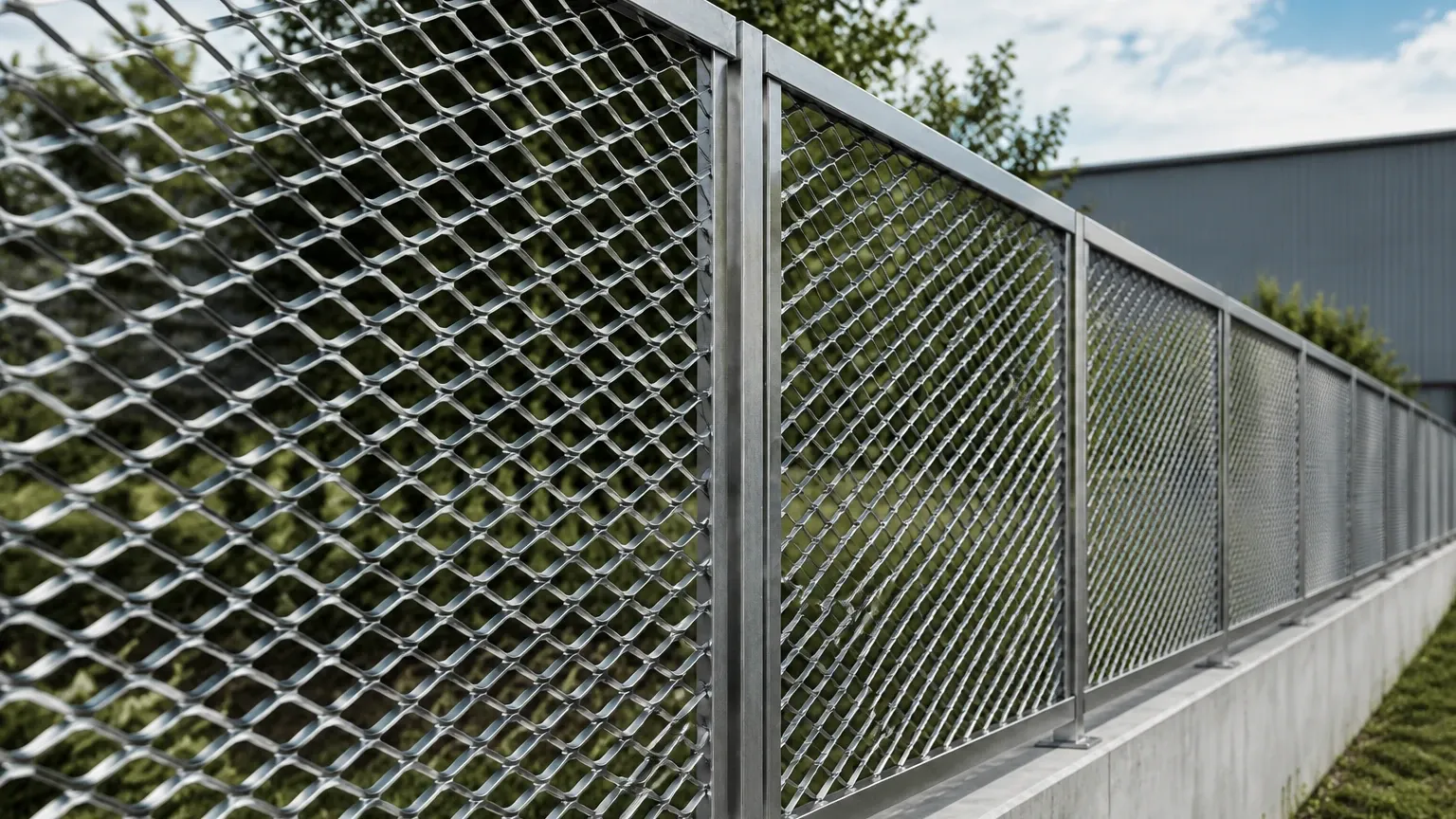
In industrial and high-security environments, the selection of fencing materials is a critical engineering decision that impacts security, structural longevity, and maintenance costs. An expanded metal fence represents a significant upgrade over traditional chain-link or welded wire mesh systems. Unlike woven materials, expanded metal is manufactured from a single solid sheet of metal that is simultaneously slit and stretched. This process creates a continuous, jointless mesh with inherent structural integrity that cannot be easily breached or disassembled.
For engineers and procurement professionals, understanding the technical nuances of Perforated & Expanded Metal is essential for specifying the correct material for perimeter security, machinery guarding, or infrastructure protection. This guide examines the engineering fundamentals, material considerations, and performance advantages of expanded metal fencing systems in industrial applications.
Engineering Fundamentals of Expanded Metal Fencing
The manufacturing process of expanded metal is a key factor in its performance. A solid metal plate or coil is fed through a machine that performs a "slit and stretch" operation. This transforms the solid sheet into a diamond-patterned mesh. Because the material is expanded rather than punched, there is zero scrap metal waste during production, making it a highly efficient use of raw materials.
From a structural perspective, the resulting mesh consists of "strands" and "bonds." The strands are the individual metal strips that form the sides of the diamond, while the bonds are the intersections where the strands remain connected as part of the original solid sheet. Because there are no welds, rivets, or weaves, the mesh is physically incapable of unraveling. If a single strand is cut, the remaining strands maintain the overall tension and shape of the panel, a property that is vital for high-security fencing.
Technical Specifications: SWD, LWD, and Mesh Geometry
When specifying an expanded metal fence, engineers must define the geometry of the mesh to meet specific security and visibility requirements. The dimensions are typically measured in two directions:
* SWD (Short Way of Design): The distance from the center of one bond to the center of the next bond across the short axis of the diamond.
* LWD (Long Way of Design): The distance from the center of one bond to the center of the next bond across the long axis of the diamond.
* Strand Width: The amount of metal fed into the machine for each slit.
* Strand Thickness: The thickness of the original base metal sheet.
By adjusting these variables, manufacturers like Kaifil can produce mesh with varying levels of transparency and strength. Smaller SWD measurements result in a tighter mesh that is difficult to climb or cut with standard hand tools, while larger apertures allow for better airflow and visibility, which is often required for monitoring industrial equipment or maintaining line-of-sight for security cameras.
Material Selection for Durability and Corrosion Resistance
The choice of material is the most significant factor in determining the service life of an expanded metal fence, especially in demanding industrial environments. While carbon steel is common for general applications, specialized industries often require higher-performance alloys.
Stainless Steel
For chemical processing plants, pharmaceutical facilities, or coastal installations, stainless steel (typically Grade 304 or 316) is the preferred choice. Stainless steel expanded metal offers superior resistance to oxidation and chemical corrosion. In filtration-adjacent applications where the fence may also serve as a coarse debris barrier, the non-reactive nature of stainless steel ensures that the structure does not contaminate the environment or degrade prematurely.
Galvanized Carbon Steel
For standard industrial perimeters, hot-dipped galvanized carbon steel provides a cost-effective balance between strength and corrosion resistance. The galvanization process applies a thick layer of zinc that protects the underlying steel from atmospheric moisture. However, in highly acidic or saline environments, the longevity of galvanized steel may be insufficient compared to stainless steel.
Aluminum
Aluminum expanded metal is used where weight is a primary concern or where non-magnetic properties are required. While it lacks the sheer tensile strength of steel, its natural oxide layer provides excellent corrosion resistance in many outdoor applications.
Structural Variations: Raised vs. Flattened Mesh
One of the unique aspects of Perforated & Expanded Metal is the choice between "Raised" (or Standard) and "Flattened" profiles. This distinction is critical for both safety and functionality.
1. Raised Expanded Metal: This is the product as it comes off the expanding machine. The strands and bonds are set at a sharp angle to the plane of the sheet. This creates a three-dimensional surface that provides exceptional rigidity and a high strength-to-weight ratio. In fencing, the angled strands act as a natural deterrent to climbing and provide a degree of directional privacy or shading.
2. Flattened Expanded Metal: After the expansion process, the sheet is passed through a cold-rolling reducing mill. This flattens the strands and bonds into a single plane, resulting in a smooth, level surface. Flattened mesh is often preferred for machinery guards or partitions where personnel may come into frequent contact with the fence, as it eliminates the sharp edges associated with the raised profile.
Security Performance and Anti-Intrusion Features
The primary reason for selecting an expanded metal fence over other options is its security rating. In industrial settings, security is measured by the time and effort required to breach a barrier. Expanded metal excels in several areas:
* Anti-Cut Properties: Unlike chain-link fencing, which can be cut with standard bolt cutters to create a large opening quickly, expanded metal requires heavy-duty power tools or specialized hydraulic cutters to penetrate. The density of the strands means that an intruder must make multiple cuts to create a passable hole.
* Anti-Climb Design: By specifying a small SWD (typically under 1 inch), the mesh openings become too small to provide toe-holds or finger-holds. This makes the fence virtually impossible to climb without the aid of ladders or scaling equipment.
* Visibility and Surveillance: The open area of the mesh can be engineered to allow clear visibility for security personnel and CCTV systems. Unlike solid walls, the fence does not create "blind spots" where intruders can hide.
* Integration with Security Systems: Expanded metal panels are rigid enough to support the installation of motion sensors, vibration detectors, and electrified top-wires without sagging or triggering false alarms due to wind-induced movement.
Installation and Maintenance Protocols
To ensure the long-term performance of an expanded metal fencing system, proper installation and maintenance are required. Because expanded metal panels are rigid, they are typically installed using a framework of posts and rails. The panels can be attached using several methods:
* Welding: Directly welding the mesh to a steel frame provides the highest level of security and structural rigidity. This is the standard for high-security industrial perimeters.
* Clamping/Bolting: Specialized "U-edging" or heavy-duty clips can be used to secure panels to the frame. This allows for easier replacement of individual panels if they are damaged by vehicle impact or extreme weather.
Maintenance requirements for stainless steel or galvanized expanded metal are minimal. Periodic inspections should focus on the attachment points and the integrity of the protective coatings. In environments with high particulate accumulation, such as mining or cement production, the mesh should be cleaned to prevent the buildup of corrosive materials in the bonds of the diamonds.
Customization and OEM Considerations for Engineers
When sourcing components for industrial projects, off-the-shelf solutions may not always meet the specific technical requirements of the application. Customization is often necessary to balance filtration (airflow/light) with structural protection. Before finalizing a purchase order, engineers should confirm the following with their manufacturer:
* Aperture Accuracy: For applications involving machinery guarding or safety barriers, the exact SWD and LWD must be maintained to comply with safety regulations regarding reaching through openings.
* Load-Bearing Requirements: If the expanded metal will be used in a horizontal application (such as a walkway or a debris screen), the load-bearing capacity must be calculated based on the strand thickness and material type.
* Edge Finishing: Specify whether the panels should have "random sheared" edges or "bond sheared" edges. Bond shearing provides a finished edge that is easier to handle and weld.
* Total Cost of Ownership: While the initial cost of a stainless steel expanded metal system may be higher than galvanized steel or chain-link, the reduction in replacement frequency and maintenance labor often results in a lower total cost over a 10- to 20-year cycle.
As a professional manufacturer, Kaifil specializes in providing high-precision metal components that meet these rigorous industrial standards. Whether the application requires custom filtration support or robust physical security, our expertise in Perforated & Expanded Metal ensures that each product is engineered for durability and precise performance in demanding environments.
