


Expanded Metal Lath
In industrial engineering and high-performance filtration, the structural integrity of a system often depends on the underlying support components. Expanded metal lath serves as a critical element in these environments, providing a unique combination of rigidity, open area, and material efficiency. Unlike traditional woven wire or perforated sheets, expanded metal is manufactured through a specialized process of slitting and stretching, resulting in a continuous piece of metal with diamond-shaped openings. For technical professionals and purchasing teams, understanding the mechanical properties and application-specific requirements of expanded metal lath is essential for optimizing filtration performance and ensuring the longevity of industrial equipment.
As a core component within the broader category of Perforated & Expanded Metal, expanded metal lath is utilized across diverse sectors, including chemical processing, pharmaceutical manufacturing, and hydraulic systems. Its role extends beyond simple reinforcement; it acts as a precision-engineered substrate that facilitates fluid flow while maintaining the shape of delicate filter media under high-pressure conditions.
The Manufacturing Process and Structural Characteristics
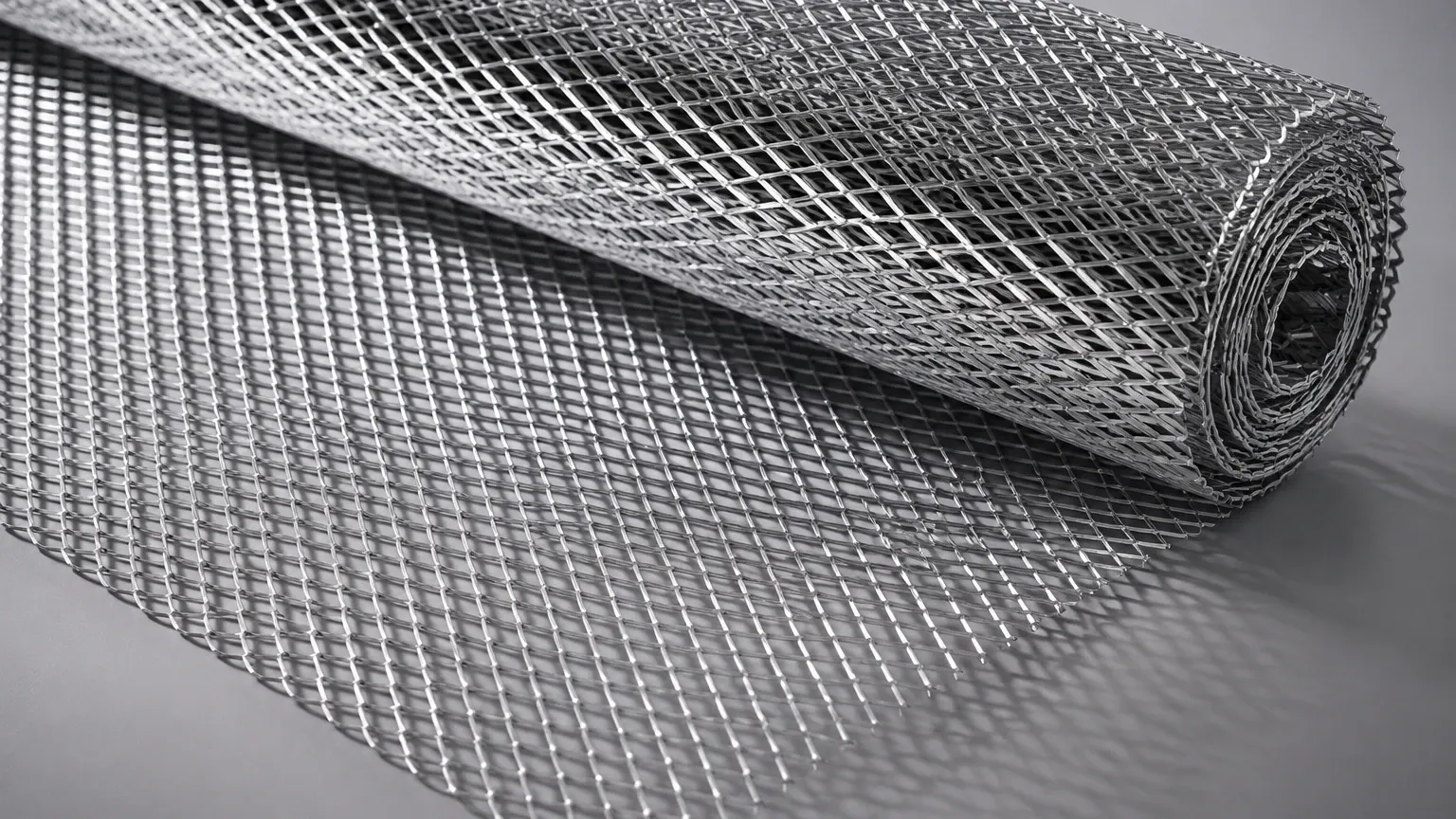
The production of expanded metal lath is a highly efficient process that distinguishes it from other metal mesh products. The process begins with a solid metal sheet or coil, which is fed through a machine equipped with specialized knives. These knives simultaneously slit and stretch the metal in a single motion. Because the metal is expanded rather than punched, there is zero material waste, making it a cost-effective alternative to perforated metal for many industrial applications.
The resulting structure consists of strands and bonds. The strands are the individual metal strips that form the sides of the diamond openings, while the bonds are the points where the strands intersect. This interconnected structure provides exceptional strength-to-weight ratios. Because the lath is made from a single piece of material, there are no welds or joints that can fail under mechanical stress or thermal expansion, which is a significant advantage in demanding industrial environments.
Raised vs. Flattened Lath
When specifying expanded metal lath for industrial use, engineers must choose between raised and flattened configurations:
1. Raised (Standard) Expanded Metal: In this form, the strands and bonds are set at a sharp angle to the plane of the sheet. This creates a three-dimensional surface that offers high rigidity and excellent grip. In filtration, raised lath is often used as a pre-filter or a protective screen where turbulence or mechanical interlocking is desired.
2. Flattened Expanded Metal: This is produced by passing the standard expanded sheet through a cold-rolling reducing mill. The process flattens the strands and bonds into the same plane, resulting in a smooth, flat surface. Flattened lath is preferred when the component must be bonded to other layers of filter media or when a thin profile is required to fit within tight housing tolerances.
Technical Specifications for Industrial Selection
To ensure an expanded metal lath meets the rigorous demands of industrial filtration, several technical parameters must be precisely defined. These specifications dictate the flow characteristics, pressure drop, and mechanical support capabilities of the component.
Dimensional Nomenclature
* SWD (Short Way of Design): The distance from the center of one bond to the center of the next bond measured across the short diamond diagonal.
* LWD (Long Way of Design): The distance from the center of one bond to the center of the next bond measured across the long diamond diagonal.
* Strand Width: The amount of metal fed into the knives for each stroke.
* Strand Thickness: The gauge or thickness of the original base metal.
* Open Area: Calculated as a percentage, this determines how much fluid or gas can pass through the lath. In filtration, balancing a high open area for low pressure drop with sufficient strand thickness for structural support is a primary engineering challenge.
Material Considerations
The choice of material is the most significant factor in determining the lath's resistance to corrosion, temperature, and chemical degradation. For most industrial B2B applications, stainless steel is the standard due to its durability.
* Grade 304 Stainless Steel: Suitable for general industrial use, providing good corrosion resistance and mechanical strength at a reasonable cost.
* Grade 316/316L Stainless Steel: Essential for marine environments, chemical processing, and pharmaceutical applications. The addition of molybdenum provides superior resistance to pitting and crevice corrosion in chloride-rich environments.
* High-Nickel Alloys: For extreme temperatures or highly aggressive chemical environments, specialized alloys may be required to prevent premature failure of the filtration system.
Applications of Expanded Metal Lath in Filtration
In the context of industrial filtration, expanded metal lath is rarely a standalone filter. Instead, it functions as a critical support layer within a multi-stage filtration assembly. Its primary purpose is to protect finer, more fragile filter media from the forces exerted by high-velocity fluid streams or high-pressure differentials.
Pleat Support in Cartridge Filters
In stainless steel filter cartridges, expanded metal lath is frequently used as an inner or outer support core. When filter media is pleated to increase surface area, the lath provides the necessary tension and spacing to keep the pleats open. This prevents the pleats from collapsing under pressure, which would otherwise lead to a rapid increase in pressure drop and a decrease in filtration efficiency.
Pre-Filtration and Coarse Straining
In heavy-duty industrial systems, such as water treatment or oil and gas processing, expanded metal lath serves as a primary strainer. It captures large debris and particulates before the fluid reaches more sensitive downstream components. The diamond-shaped openings are particularly effective at catching irregular solids while maintaining a high flow rate.
Protective Shrouds
For filters operating in turbulent environments, such as hydraulic return lines, expanded metal lath is used as an external shroud. This protects the internal filter element from mechanical damage during installation, maintenance, or high-flow surges. The robust nature of the expanded metal ensures that the integrity of the filtration system is maintained even in the event of physical impact.
Engineering Considerations for System Integration
When integrating expanded metal lath into a larger industrial system, engineers must look beyond simple dimensions. Total cost of ownership and system reliability are heavily influenced by the following factors:
Pressure Drop and Flow Dynamics
The geometry of expanded metal creates a specific flow pattern. While it provides excellent support, the strands can introduce turbulence. Engineers must calculate the effective open area to ensure that the lath does not become a bottleneck in the system. In high-viscosity applications, such as heavy oil filtration, the strand profile must be carefully selected to minimize resistance.
Compatibility with Filter Media
If the lath is used in direct contact with fine wire mesh or synthetic membranes, the surface finish is paramount. Any burrs or sharp edges resulting from the slitting process could puncture the delicate media. Flattened lath with deburred edges is typically specified for these applications to ensure the safety of the primary filtration layer.
Chemical and Thermal Stability
Industrial filters often operate in environments where temperatures fluctuate or where they are exposed to caustic cleaning agents. The expanded metal lath must maintain its structural properties under these conditions. Stainless steel 316L is often the preferred choice for its ability to withstand both thermal cycling and the aggressive chemicals used in Clean-in-Place (CIP) cycles in the food and beverage or pharmaceutical industries.
Selection and Customization for OEM Requirements
For Original Equipment Manufacturers (OEMs), the ability to customize expanded metal lath is essential for developing proprietary filtration solutions. Standard off-the-shelf sizes rarely meet the specific requirements of high-performance industrial equipment. Customization options typically include:
* Custom Sheet Sizes and Coil Widths: Tailored to fit specific manufacturing lines and reduce scrap during the production of filter elements.
* Variable Diamond Sizes: Adjusting the SWD and LWD to match the specific support requirements of different filter media types.
* Edge Treatments: Providing lath with solid borders or specialized edge finishes to facilitate easier welding or mechanical fastening into filter housings.
* Surface Coatings: In some cases, additional coatings such as PTFE or specialized plating may be applied to enhance release properties or provide extra corrosion protection.
Evaluating Quality and Compliance
In B2B procurement, ensuring the quality of expanded metal lath involves verifying material certifications and manufacturing tolerances. Reliable suppliers provide Mill Test Reports (MTRs) that confirm the chemical composition of the stainless steel used. Furthermore, dimensional consistency is vital; variations in strand width or thickness can lead to uneven support and potential failure points in the filter element.
When sourcing Perforated & Expanded Metal components, it is important to confirm that the manufacturer adheres to international standards such as ISO 9001. This ensures that the production processes are controlled and that the final product will perform predictably in the field.
Conclusion: The Strategic Value of Precision Lath
Expanded metal lath is a fundamental component that bridges the gap between raw structural strength and refined filtration performance. For engineers and purchasing managers, the selection of this material is not a commodity purchase but a strategic decision that affects the efficiency, durability, and maintenance cycles of industrial systems. By focusing on material grade, dimensional accuracy, and the specific needs of the application—whether it be pleat support, pre-filtration, or mechanical protection—organizations can ensure their filtration solutions meet the highest standards of reliability. In the demanding landscapes of chemical processing, hydraulics, and pharmaceuticals, the right expanded metal lath is the backbone of a successful filtration strategy.
