


Expanded Metal for Sale
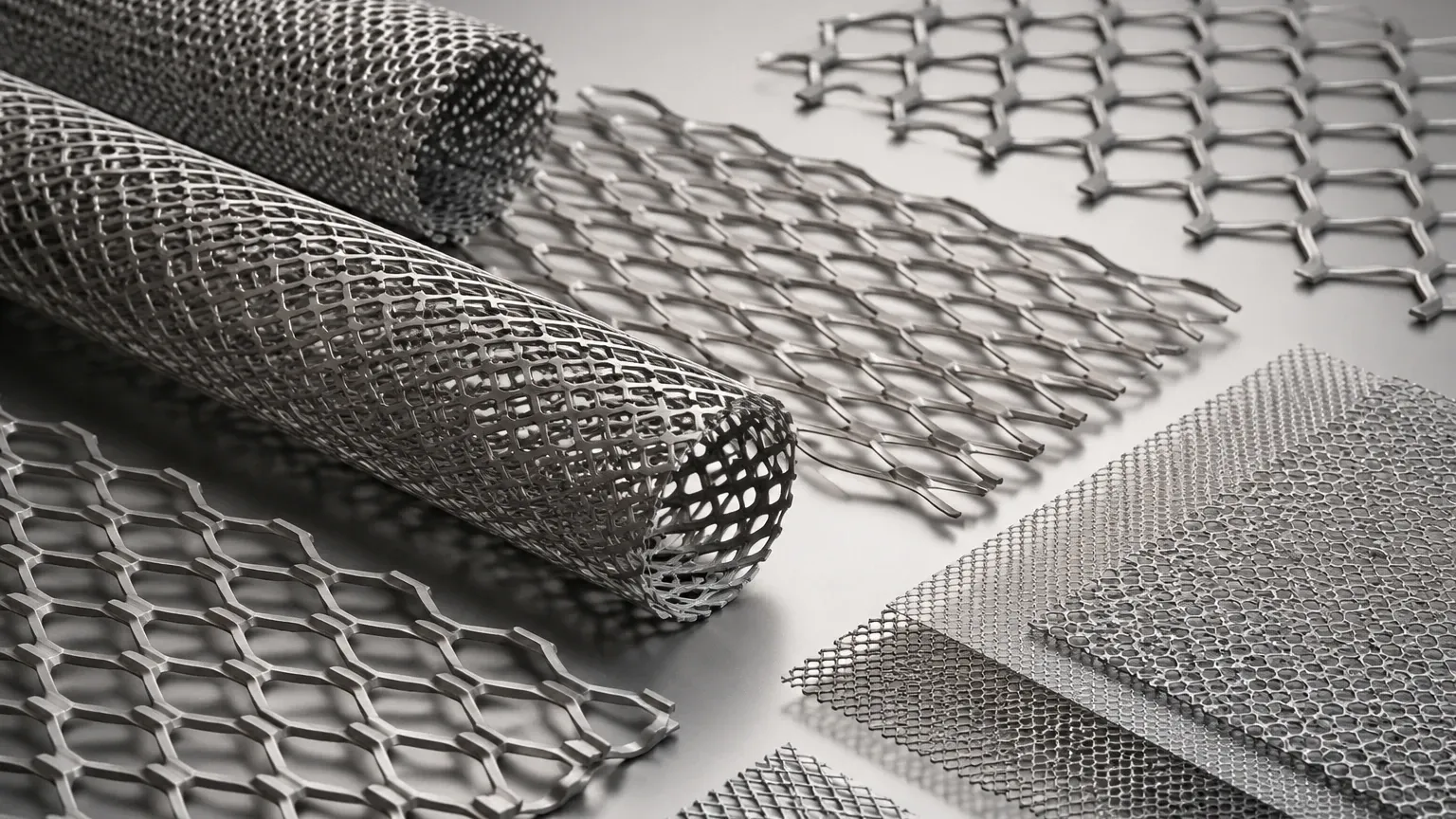
When searching for expanded metal for sale, industrial engineers and procurement professionals must look beyond simple price points to evaluate technical specifications, material integrity, and application suitability. Expanded metal is a versatile material produced by simultaneously slitting and stretching a solid metal sheet, creating a diamond-shaped pattern that remains integral to the original piece of metal. Unlike woven wire mesh, which can fray, or perforated metal, which generates significant scrap waste during production, expanded metal offers a high strength-to-weight ratio and excellent structural stability.
In the context of industrial filtration and structural support, selecting the right expanded metal requires a deep understanding of the manufacturing process and the resulting mechanical properties. As a specialized manufacturer of stainless steel filtration solutions, Kaifil provides precision-engineered Perforated & Expanded Metal components designed to meet the rigorous demands of chemical processing, water treatment, and hydraulic applications.
Understanding the Engineering Behind Expanded Metal
The production of expanded metal is a cold-forming process. A metal sheet is fed through an expanding machine where a series of knives slit the material while a mechanical press stretches it. This process creates the characteristic diamond openings without losing any material, making it a highly cost-effective alternative to perforated metal in many scenarios.
There are two primary forms of expanded metal available for sale: standard (raised) and flattened.
1. Standard (Raised) Expanded Metal: In this form, the strands and bonds are set at a uniform angle to the plane of the sheet. This creates a three-dimensional texture that provides extra strength and rigidity. It is often used in applications requiring high slip resistance or where the angled strands can assist in deflecting or directing fluid flow.
2. Flattened Expanded Metal: This is produced by passing standard expanded metal through a cold-roll reducing mill. The process flattens the strands and bonds into a single plane, resulting in a smooth, flat surface. Flattened expanded metal is preferred when the component must be integrated into a tight assembly or when a smooth surface is required to prevent damage to adjacent filter media.
Key Technical Specifications for Procurement
When evaluating expanded metal for sale, technical professionals must define several critical dimensions to ensure the product meets engineering requirements. These specifications determine the flow rate, pressure drop, and mechanical strength of the final component.
* SWD (Short Way of Design): This is the distance from the center of one bond to the center of the next bond measured across the short diamond diagonal.
* LWD (Long Way of Design): This is the distance from the center of one bond to the center of the next bond measured across the long diamond diagonal.
* SWO (Short Way of Opening): The actual width of the opening, measured from the inside of the bonds.
* LWO (Long Way of Opening): The actual length of the opening, measured from the inside of the bonds.
* Strand Width: The amount of metal fed into the knives to produce one strand.
* Strand Thickness: The thickness of the original base metal.
* Percentage of Open Area: This is a critical calculation for filtration applications, as it dictates the throughput and the resistance to flow.
For engineers designing filtration systems, these dimensions are not just measurements; they are variables that impact the efficiency of the entire system. A larger LWD might provide better flow but could compromise the structural integrity of a filter cartridge under high pressure.
Material Selection: Stainless Steel vs. Alternative Alloys
The environment in which the expanded metal will operate dictates the material choice. While expanded metal is available in carbon steel and aluminum, industrial filtration typically demands the corrosion resistance and thermal stability of stainless steel.
Stainless Steel 304 and 304L
Grade 304 is the most common stainless steel used for expanded metal. It offers excellent corrosion resistance in most atmospheric conditions and is highly weldable. For applications involving welding where intergranular corrosion is a concern, 304L (low carbon) is often specified.
Stainless Steel 316 and 316L
For more aggressive environments, such as marine applications or chemical processing plants involving chlorides, Grade 316 is the industry standard. The addition of molybdenum enhances its resistance to pitting and crevice corrosion. In filtration, 316L is frequently used for expanded metal support cores in filter cartridges that handle acidic or caustic fluids.
Specialized Alloys
In high-temperature or extreme chemical environments, specialized alloys like Monel, Inconel, or Titanium may be required. When sourcing expanded metal for sale for these niche applications, it is essential to confirm that the manufacturer has experience handling these difficult-to-form materials, as their stretching and slitting characteristics differ significantly from standard stainless steel.
Perforated vs. Expanded Metal: Choosing the Right Media
One of the most frequent questions engineers face is whether to specify perforated or expanded metal. Both serve similar functions in filtration and structural support, but their manufacturing processes lead to different performance characteristics.
Cost Efficiency: Expanded metal is generally more economical because the process does not produce scrap. In perforated metal, the "slugs" punched out of the sheet are waste material (though recyclable), which increases the base cost of the finished part.
Structural Integrity: Expanded metal is a single piece of material with no joins or welds. The strands are oriented at an angle, which provides inherent rigidity. Perforated metal, while strong, relies entirely on the thickness of the remaining "bridge" between holes for its strength.
Flow Characteristics: Perforated metal offers highly predictable and uniform hole sizes, which is vital for precise particle retention. Expanded metal openings are diamond-shaped and can vary slightly depending on the tension during the stretching process. Therefore, expanded metal is often used as a support structure for finer mesh layers or as a pre-filter for larger debris.
When browsing Perforated & Expanded Metal options, engineers should consider the mechanical load. If the application involves high-pressure differentials, the structural rigidity of expanded metal often makes it the superior choice for internal support cores in industrial filter elements.
Industrial Applications in Filtration and Support
Expanded metal plays a vital role across various industrial sectors. Its ability to provide structural support while allowing for high fluid throughput makes it indispensable in the following areas:
Filter Cartridge Support Cores
In high-pressure hydraulic and process filtration, the filter media (such as pleated wire mesh or fiberglass) requires a rigid internal core to prevent collapse. Expanded metal tubes are frequently used for this purpose. The diamond pattern provides a high percentage of open area, ensuring that the core itself does not contribute significantly to the pressure drop across the filter.
Pre-Filtration and Strainers
In water treatment and HVAC systems, expanded metal serves as a primary barrier to capture large debris before it can reach more sensitive, finer filtration stages. Its durability allows it to withstand the impact of large particles and high flow velocities.
Catalyst Support in Chemical Reactors
In chemical processing, expanded metal grids are used to support catalyst beds. The material must be able to withstand high temperatures and corrosive gases while maintaining a flat, stable surface for the catalyst pellets.
Flame Arrestors and Safety Guards
The unique geometry of expanded metal can help dissipate heat and disrupt flame fronts, making it a common component in safety equipment and explosion-proof enclosures in the oil and gas industry.
Quality Assurance and Sourcing Strategies
When looking for expanded metal for sale, the reliability of the manufacturer is as important as the material specifications. For B2B buyers, several factors should be confirmed before finalizing a purchase order:
1. Dimensional Tolerances: Industrial applications often require tight tolerances for LWD, SWD, and overall sheet flatness. Ensure the supplier can provide a certificate of conformance that matches your engineering drawings.
2. Edge Conditions: Expanded metal can be supplied with "random sheared" edges (where the diamonds are cut through) or "bond sheared" edges (where the cut is made through the joints, resulting in a closed diamond edge). Bond shearing is safer for handling and provides a cleaner edge for welding into frames.
3. Surface Finish: Depending on the application, the metal may require degreasing, pickling, or passivating (especially for stainless steel) to ensure maximum corrosion resistance. In food and beverage or pharmaceutical applications, an electropolished finish may be necessary to meet hygiene standards.
4. Customization Capabilities: Many standard expanded metal products found in general hardware catalogs will not meet industrial filtration needs. Working with a manufacturer like Kaifil allows for customized strand widths and opening sizes tailored to specific flow and pressure requirements.
Total Cost of Ownership Considerations
While the initial price per square foot is a factor, the total cost of ownership (TCO) for expanded metal components includes longevity, maintenance, and system efficiency. A cheaper, lower-grade carbon steel expanded metal may save costs upfront but will lead to frequent replacements and potential system contamination due to rust.
Investing in high-quality stainless steel expanded metal ensures that the component will survive multiple cleaning cycles. In many industrial filtration systems, expanded metal components are cleaned via backwashing or ultrasonic baths. The structural integrity of the diamond bonds is crucial here; if the bonds fail during cleaning, the entire filter element may be compromised, leading to costly downtime.
Conclusion
Sourcing expanded metal for sale for industrial use is a technical task that requires balancing material science with mechanical engineering. Whether it is used as a support core for a high-pressure hydraulic filter or as a protective screen in a chemical reactor, the quality of the expanded metal directly impacts the performance and safety of the industrial process. By focusing on precise specifications, material grades, and the specific needs of the application, procurement teams can secure filtration components that offer both durability and efficiency. For those seeking specialized solutions, exploring professional Perforated & Expanded Metal options ensures that the final product will meet the exacting standards of modern industrial environments.
