


Expanded Metal Installation
Expanded metal is a versatile industrial material produced by simultaneously slitting and stretching a solid sheet of metal. This process creates a diamond-shaped pattern of openings, resulting in a product that maintains structural integrity while offering a high strength-to-weight ratio. In industrial filtration, architectural applications, and structural reinforcement, the success of the material depends heavily on precise expanded metal installation.
For engineers and procurement professionals, understanding the technical nuances of how these components are integrated into larger systems is essential. Whether used as a support structure for fine wire mesh or as a standalone filtration screen, the installation method must account for mechanical stresses, environmental conditions, and the specific properties of the metal alloy used. This guide provides a technical overview of the considerations, methods, and best practices for installing expanded metal in industrial environments.
Technical Characteristics and Orientation
Before beginning the expanded metal installation process, it is critical to understand the geometry of the material. Expanded metal is defined by several key dimensions: the Long Way of the Diamond (LWD), the Short Way of the Diamond (SWD), strand width, and thickness.
The orientation of these diamonds significantly impacts the material's structural performance. In most load-bearing or high-pressure filtration applications, the LWD should span across the supports. This orientation provides the highest level of rigidity and minimizes deflection under stress. If the material is installed with the SWD spanning the supports, the panel may experience excessive sagging or mechanical failure under load.
Furthermore, installers must distinguish between "raised" (standard) and "flattened" expanded metal. Raised expanded metal has strands that are turned at an angle to the plane of the sheet, providing better grip and higher rigidity. Flattened expanded metal has been cold-rolled to create a smooth, flat surface, which is often preferred in filtration applications where the expanded metal serves as a backing for delicate filter media, as it prevents the strands from piercing the mesh.
Material Selection and Compatibility
Material choice is a primary factor in the durability of an installation. In many industrial sectors, such as chemical processing or food and beverage production, stainless steel is the preferred material due to its corrosion resistance and ability to withstand high temperatures.
When planning an installation, engineers must ensure that the expanded metal is compatible with the surrounding framework and the fluids it will encounter. For instance, if a stainless steel expanded metal panel is installed into a carbon steel frame, galvanic corrosion may occur in the presence of an electrolyte. In such cases, using stainless steel fasteners or applying protective coatings is necessary to isolate the metals.
As a specialist in Perforated & Expanded Metal, Kaifil emphasizes the importance of selecting the correct grade—such as 304 or 316L stainless steel—to match the specific chemical and thermal demands of the application. The precision of the manufacturing process ensures that the openings remain consistent, which is vital for maintaining flow rates and filtration efficiency.
Common Methods for Expanded Metal Installation
There are several established methods for securing expanded metal, each suited to different industrial requirements. The choice of method depends on whether the installation needs to be permanent, removable for maintenance, or capable of withstanding high vibration.
1. Welding Techniques
Welding is the most common method for permanent expanded metal installation. Because expanded metal is relatively thin compared to structural frames, specific welding techniques are required to prevent burn-through.
* Spot Welding: Ideal for securing expanded metal to a flat frame. It provides a clean finish and sufficient strength for most filtration housings.
* Plug Welding: Used when the expanded metal is layered with other components. A hole is drilled in the top layer, and the weld is applied through the hole to join it to the underlying structure.
* Tack Welding: Small, intermittent welds are placed along the perimeter (typically every 6 to 10 inches) to secure the panel without causing excessive thermal distortion.
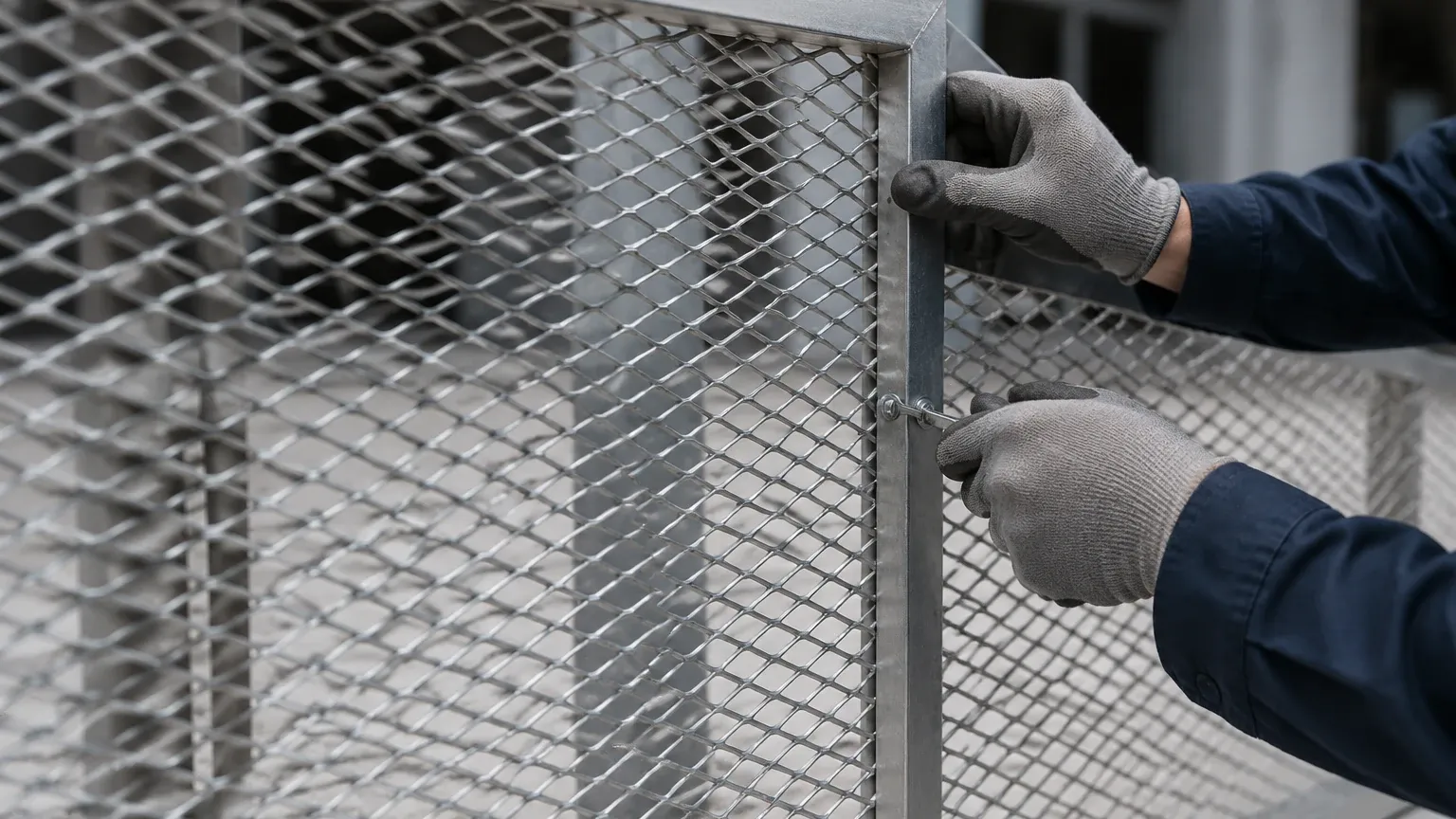
2. Mechanical Fasteners
In applications where the expanded metal must be removed for cleaning or replacement—common in industrial filtration systems—mechanical fasteners are preferred.
* Bolts and Washers: Large "fender" washers are often used to distribute the clamping force across multiple strands of the expanded metal, preventing the fastener from pulling through the openings.
* Clips and Clamps: Specialized J-clips or grating clips can secure the metal to I-beams or angle iron without the need for drilling or welding on-site.
3. Framing and U-Edging
For safety and structural integrity, expanded metal panels are often encased in a frame. U-edging, a C-shaped metal channel, is fitted over the raw edges of the expanded metal and welded in place. This not only hides sharp edges but also significantly increases the rigidity of the panel, making the expanded metal installation more robust and easier to handle during assembly.
Engineering Considerations for Industrial Filtration
In the context of filtration, expanded metal often serves as the "skeleton" for more fragile filter elements. When performing an expanded metal installation for a filter cartridge or a large-scale screen, engineers must consider the following:
Pressure Drop and Open Area
The percentage of open area in the expanded metal directly affects the pressure drop across the system. An installation that uses a material with too little open area will restrict flow, leading to increased energy consumption and potential pump damage. Conversely, too much open area may compromise the structural support required for the filter media.
Thermal Expansion
Industrial processes often involve significant temperature fluctuations. Stainless steel expands and contracts with heat. If an expanded metal panel is welded rigidly on all four sides into a heavy frame without room for expansion, it may buckle or crack the welds. Designing the installation with slotted bolt holes or allowing for slight movement at one end can mitigate these risks.
Vibration and Fatigue
In hydraulic systems or high-velocity gas streams, vibration is a constant factor. If the expanded metal is not securely fastened, the constant movement against the frame can lead to work-hardening and eventual fatigue failure of the strands. Ensuring tight tolerances and using vibration-damping gaskets can extend the service life of the installation.
Common Risks and Mitigation Strategies
Improper expanded metal installation can lead to several operational issues. Identifying these risks early in the design phase is essential for maintaining system reliability.
* Sharp Edges: The shearing process leaves sharp "burrs" at the edges of the metal. If these are not properly framed or deburred, they can damage filter bags, injure maintenance personnel, or act as sites for localized corrosion.
* Warping During Welding: Due to the thin strands, expanded metal is sensitive to heat. Excessive welding heat can cause the panel to warp, making it difficult to fit into a housing. Using heat sinks or staggered welding patterns helps maintain flatness.
* Bypass Risks: In filtration applications, if the expanded metal support is not perfectly flush with the housing, fluid may bypass the filter media entirely. Ensuring a precise fit and using appropriate seals or gaskets is critical.
Maintenance and Replacement Cycles
Even the best expanded metal installation will eventually require inspection. In filtration environments, the expanded metal should be checked for:
1. Erosion: High-velocity particles can wear down the strands over time, reducing the structural integrity of the support.
2. Blinding/Clogging: While the expanded metal is usually a support layer, it can trap larger debris. If this debris cannot be removed during backwashing, the panel may eventually need mechanical cleaning or replacement.
3. Corrosion: Even stainless steel can succumb to pitting or stress-corrosion cracking in certain chemical environments. Regular visual inspections are necessary to identify discoloration or thinning of the strands.
Because expanded metal is often more cost-effective than heavy perforated plate, many facilities treat these panels as semi-consumable components, replacing them during major maintenance shutdowns to ensure the continued protection of more expensive downstream equipment.
Conclusion for Technical Procurement
Successful expanded metal installation requires a balance of material science, mechanical engineering, and practical assembly techniques. By selecting the appropriate alloy, understanding the directional strength of the diamond pattern, and choosing the right fastening method, engineers can ensure that their filtration and structural systems operate at peak efficiency.
When sourcing components, it is vital to work with manufacturers who understand these technical requirements. High-quality Perforated & Expanded Metal provides the foundation for reliable industrial performance, offering the precision necessary for complex OEM and custom filtration solutions. Confirming the LWD/SWD requirements, the desired finish (raised or flattened), and the specific environmental challenges of your project before procurement will streamline the installation process and reduce the total cost of ownership.
