


Expanded Metal Images
In the procurement and engineering of industrial filtration components, visual documentation serves as a critical bridge between conceptual design and physical manufacturing. While a technical data sheet provides the numerical parameters required for performance calculations, expanded metal images and detailed technical drawings allow engineers to evaluate the structural integrity, mesh orientation, and surface characteristics of a material before it enters the production phase. For technical professionals sourcing components for chemical processing, hydraulic systems, or food-grade filtration, understanding how to interpret these visual cues is essential for ensuring application compatibility.
At Kaifil, we recognize that selecting the right filtration media involves more than just identifying a part number. It requires a comprehensive understanding of how the geometry of Perforated & Expanded Metal influences flow dynamics, mechanical strength, and the longevity of the filter element. This guide examines the technical nuances found in expanded metal images and outlines the critical specifications that must be confirmed to ensure optimal performance in demanding industrial environments.
The Engineering Value of Expanded Metal Images
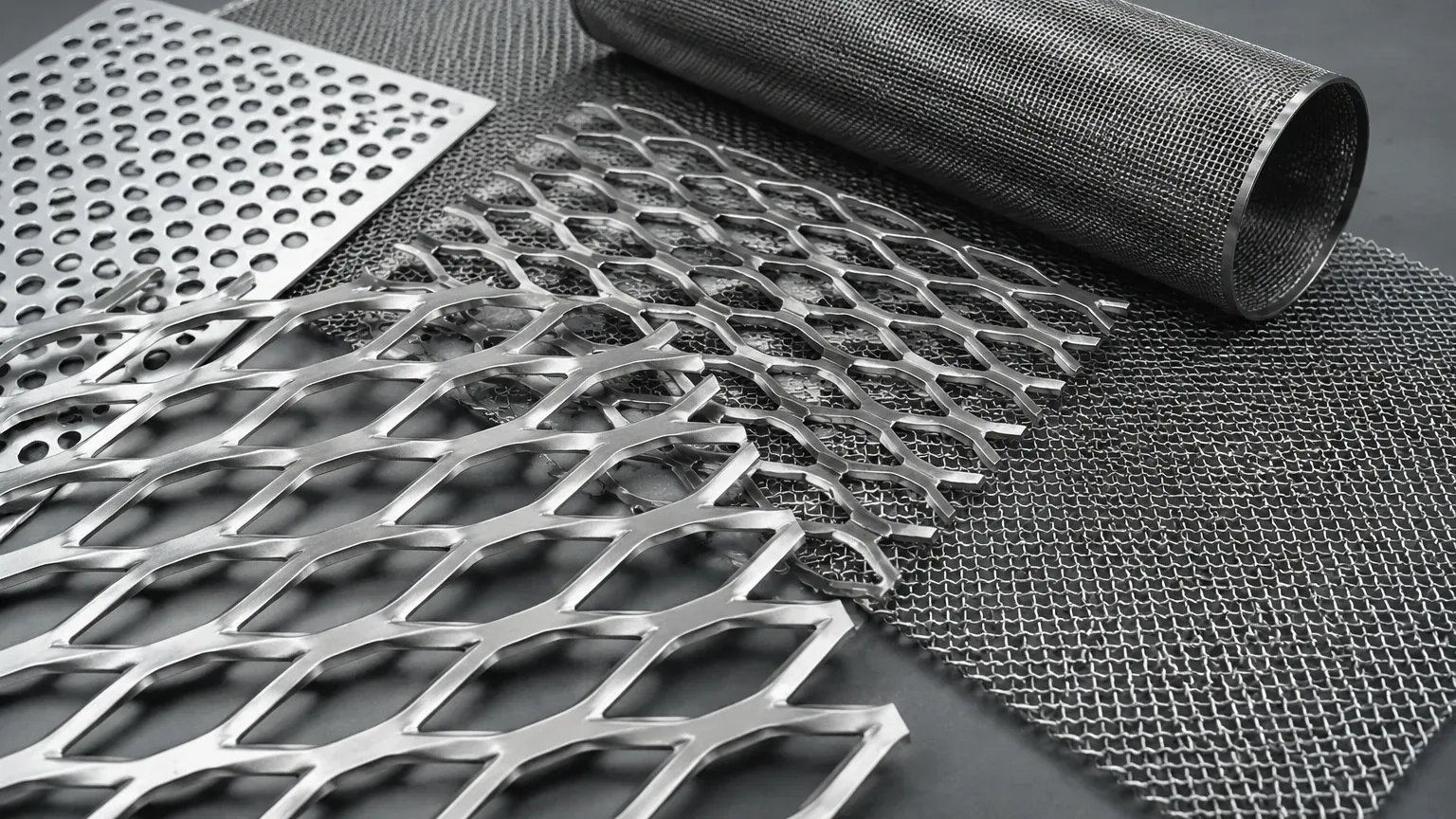
For a design engineer, expanded metal images are not merely marketing assets; they are diagnostic tools. In the context of industrial filtration, these images help clarify the relationship between the strand width, the thickness of the base material, and the resulting open area. Unlike perforated metal, which is created by punching holes and removing material, expanded metal is produced by simultaneously slitting and stretching a solid sheet. This process creates a unique diamond-shaped pattern that is inherently three-dimensional.
When reviewing expanded metal images, engineers can quickly identify whether the material is "standard" (raised) or "flattened." This distinction is vital because it dictates the mechanical behavior of the filter. Standard expanded metal features strands that are set at an angle to the plane of the sheet, providing excellent rigidity and a high strength-to-weight ratio. Conversely, flattened expanded metal has been cold-rolled to create a smooth, two-dimensional surface, which is often preferred in applications where a low profile or a specific surface smoothness is required to prevent particle entrapment or to facilitate cleaning.
Decoding the Geometry: SWD and LWD
To accurately interpret expanded metal images, one must understand the two primary dimensions that define the diamond opening: the Short Way of Design (SWD) and the Long Way of Design (LWD). These measurements are taken from the center of one bond (the intersection of the strands) to the center of the next.
1. Short Way of Design (SWD): This is the dimension of the shorter diagonal of the diamond. In filtration, the SWD often determines the primary structural support frequency for the filter media.
2. Long Way of Design (LWD): This is the dimension of the longer diagonal. The ratio between LWD and SWD affects the flow path and the directional strength of the mesh.
By examining high-resolution expanded metal images, engineers can visualize the "bond"—the point where the strands intersect. A robust bond is essential for maintaining the structural integrity of a filter cartridge, especially when subjected to high-pressure differentials or mechanical vibrations in hydraulic or chemical processing applications.
Material Selection and Visual Quality Indicators
In industrial filtration, the choice of material is as important as the mesh geometry. Kaifil specializes in stainless steel solutions, predominantly utilizing Grades 304, 316, and 316L. When viewing expanded metal images, technical professionals should look for specific indicators of manufacturing quality:
* Edge Consistency: High-quality expanded metal should exhibit uniform strand widths across the entire sheet. Any variation in strand dimensions can lead to localized weak points or inconsistent flow rates.
* Surface Finish: For food and beverage or pharmaceutical applications, the surface must be free of burrs, oil residues, or oxidation. Images can often reveal the quality of the pickling, passivating, or electropolishing processes used to enhance corrosion resistance.
* Strand Integrity: The stretching process should not result in micro-cracks at the bonds. Clear, close-up expanded metal images allow for a preliminary inspection of the material's structural health, ensuring it can withstand the stresses of pleating or welding during the fabrication of filter cartridges.
Perforated vs. Expanded Metal: A Functional Comparison
While both Perforated & Expanded Metal are used extensively in filtration, they serve different functional roles. Perforated metal offers precise hole diameters and a consistent flat surface, making it ideal for fine filtration where exact particle retention is required. However, expanded metal is often more cost-effective because the manufacturing process involves no material waste.
From a performance perspective, the three-dimensional nature of standard expanded metal (as seen in many expanded metal images) provides a "turbulent" flow path. This can be advantageous in certain chemical mixing or heat exchange applications but may increase pressure drop in high-velocity systems. Engineers must weigh the structural benefits of expanded metal—such as its ability to act as a rigid support cage for finer wire mesh layers—against the specific flow requirements of their system.
Customization and Technical Specifications
Because industrial filtration environments vary significantly, off-the-shelf solutions are rarely sufficient. Customization is a core component of the Kaifil manufacturing process. When engineers provide or request expanded metal images for a custom project, several secondary specifications must be confirmed beyond the basic diamond dimensions:
* Strand Width and Thickness: These determine the overall weight and the mechanical load-bearing capacity of the mesh.
* Open Area Percentage: This is the most critical calculation for filtration efficiency. It represents the ratio of the area of the openings to the total area of the sheet. A higher open area reduces pressure drop but may compromise the structural support of the filter media.
* Overall Thickness: In standard (raised) expanded metal, the overall thickness is significantly greater than the original plate thickness due to the angle of the strands. This must be accounted for in the housing design of the filter.
Kaifil works closely with global customers to refine these specifications. Whether the requirement is for a heavy-duty support mesh in a hydraulic filter or a precision component for a pharmaceutical centrifugal separator, our engineering team utilizes technical drawings and expanded metal images to validate designs before production begins.
Application-Specific Considerations
Chemical Processing
In environments involving corrosive fluids, the visual integrity of the stainless steel is paramount. Expanded metal images can help verify that the material has been properly treated to resist pitting and crevice corrosion. Furthermore, the diamond pattern of expanded metal is often used as a support layer in multi-layered sintered mesh filters, providing the necessary rigidity to withstand backwashing cycles.
Food and Beverage
For food-grade applications, cleanliness is the primary concern. Flattened expanded metal is typically preferred here, as the smooth surface prevents the accumulation of organic matter. High-resolution images allow quality control teams to ensure that the mesh openings are uniform and that there are no sharp edges that could harbor bacteria or contaminate the product stream.
Hydraulic Systems
Hydraulic filters are subject to rapid pressure fluctuations. The structural strength of the expanded metal support core is vital to prevent the collapse of the primary filter media. By analyzing expanded metal images, engineers can evaluate the bond strength and strand orientation to ensure the core provides maximum resistance to radial collapse.
Total Cost of Ownership and Procurement
When evaluating expanded metal for industrial use, procurement teams must look beyond the initial purchase price. The total cost of ownership (TCO) is influenced by the durability of the material and the frequency of replacement. High-quality stainless steel expanded metal, while potentially carrying a higher upfront cost than galvanized or carbon steel alternatives, offers significantly longer service life in corrosive or high-temperature environments.
Using expanded metal images to confirm the quality of the manufacturing process—such as the precision of the slitting and the uniformity of the expansion—helps mitigate the risk of premature failure. A well-manufactured filter component reduces downtime and maintenance costs, providing a better long-term return on investment.
Conclusion: Making Informed Decisions
Expanded metal images are an indispensable part of the technical dialogue between engineers and manufacturers. They provide a visual baseline for quality, geometry, and application suitability. However, these images must always be supported by rigorous technical data, including material certifications, precise SWD/LWD measurements, and calculated open area percentages.
At Kaifil, we combine advanced manufacturing capabilities with deep engineering expertise to deliver custom filtration solutions that meet the most demanding industrial standards. By focusing on the technical details of Perforated & Expanded Metal, we help our customers achieve reliable, durable, and efficient filtration performance. When selecting your next filtration component, ensure that you are evaluating both the visual evidence and the engineering specifications to guarantee a solution that is fit for purpose.
