


Expanded Metal Lath for Plastering
In industrial construction and specialized architectural engineering, the structural integrity of finishes depends heavily on the internal reinforcement substrate. Expanded metal lath for plastering serves as a critical component in this regard, providing a high-surface-area matrix that ensures a mechanical bond between the substrate and the plaster or stucco. As a specialized manufacturer of Perforated & Expanded Metal, Kaifil provides technical insights into how these components are engineered to meet the rigorous demands of industrial environments, chemical processing plants, and commercial infrastructure.
Understanding the technical nuances of expanded metal lath is essential for engineers and procurement professionals who must balance structural performance with long-term durability. This guide explores the manufacturing principles, material specifications, and selection criteria necessary for optimizing plastering outcomes in demanding applications.
The Role of Expanded Metal Lath in Modern Construction and Industrial Applications
Expanded metal lath is a versatile reinforcement material created by simultaneously slitting and stretching a metal sheet. Unlike traditional wire mesh, which is woven or welded, expanded metal is a single-piece structure without joins or welds. This manufacturing process results in a diamond-shaped pattern that is inherently rigid and capable of distributing loads evenly across its surface.
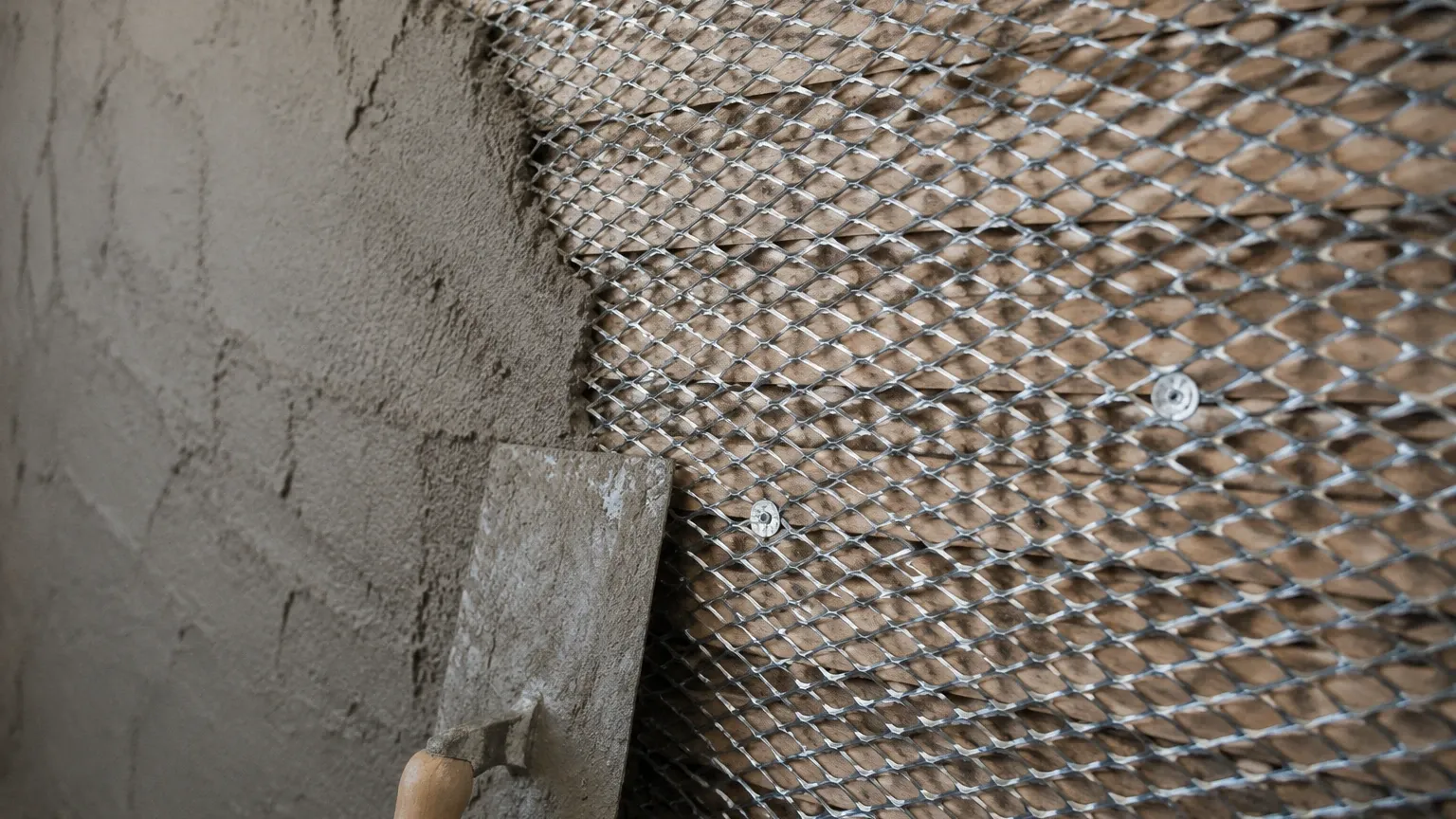
In the context of plastering, the lath acts as a "keying" agent. When wet plaster is applied to the lath, it is squeezed through the diamond openings. As the plaster sets, it hardens behind the metal strands, creating a permanent mechanical lock. This is particularly vital in industrial settings where vibration, thermal expansion, or heavy mechanical loads might otherwise cause delamination or cracking in unreinforced plaster or fireproofing materials.
Beyond standard walls and ceilings, expanded metal lath for plastering is frequently utilized in:
* Fireproofing Steel Columns: Providing a secure base for intumescent or cementitious fireproofing sprays.
* Industrial Enclosures: Reinforcing specialized coatings in chemical processing or water treatment facilities.
* Architectural Facades: Supporting heavy stucco or decorative finishes in commercial developments.
* Seismic Reinforcement: Enhancing the shear strength of plaster coatings in regions prone to geological activity.
Manufacturing Principles: From Sheet Metal to Expanded Lath
The production of expanded metal is a highly efficient process that generates zero waste, a factor that contributes to its cost-effectiveness compared to perforated alternatives. The process begins with a solid metal coil or sheet, which is fed through a machine equipped with a reciprocating knife. This knife slits the metal while simultaneously stretching it laterally.
Raised vs. Flattened Lath
There are two primary forms of expanded metal relevant to industrial applications:
1. Raised (Standard) Expanded Metal: This is the direct product of the expanding machine. The strands and bonds are set at a uniform angle to the plane of the sheet. For plastering, the raised profile is often preferred because it creates a deeper "pocket" for the plaster to settle into, enhancing the mechanical bond.
2. Flattened Expanded Metal: This is produced by passing the raised expanded sheet through a cold-roll reducing mill. This process flattens the strands and bonds into a single plane. While flattened metal is often used for walkways or guards, it is less common for primary plastering reinforcement unless a very thin profile is required.
For most plastering specifications, the diamond-shaped aperture (often referred to as the "opening") is engineered to provide the optimal balance between plaster penetration and material rigidity. The geometry of these openings is defined by the Long Way of the Diamond (LWD) and the Short Way of the Diamond (SWD).
Technical Specifications and Material Selection for Plastering
When specifying expanded metal lath for plastering, engineers must consider the environmental conditions of the installation site. Material selection is the most significant factor in determining the lifespan of the reinforcement.
Material Grades
* Galvanized Steel: The most common choice for standard commercial applications. The zinc coating provides basic corrosion resistance suitable for interior environments or protected exterior use.
* Stainless Steel (SS304/SS316): For industrial environments, particularly in chemical processing or coastal regions, stainless steel is the gold standard. SS316, with its molybdenum content, offers superior resistance to chlorides and acidic vapors. As a specialist in stainless steel filtration and metal components, Kaifil emphasizes the use of high-grade alloys to prevent sub-surface corrosion that can lead to "spalling" (the breaking away of plaster due to the expansion of rusting metal).
* Aluminum: Used in lightweight applications or where non-magnetic properties are required, though it is less common for heavy-duty industrial plastering due to its lower tensile strength compared to steel.
Weight and Density
Lath is typically classified by its weight per square yard. Common industrial standards include:
* 1.75 lb/sq yd: Used for light-duty interior applications or as a base for thin-coat plasters.
* 2.5 lb/sq yd: A versatile mid-range weight suitable for most vertical surfaces and standard industrial partitions.
* 3.4 lb/sq yd: The heavy-duty standard for horizontal spans (ceilings) and areas requiring maximum rigidity or thick plaster applications.
Mechanical Bonding: The "Keying" Effect in Industrial Plastering
The efficiency of expanded metal lath is measured by its ability to facilitate "keying." This term refers to the physical protrusion of plaster through the mesh openings. In industrial engineering, the depth and consistency of this key are vital for ensuring that the finish can withstand environmental stressors.
When plaster is applied with sufficient pressure, it flows through the diamond apertures and slumps slightly behind the metal strands. This creates a series of "hooks" that anchor the entire plaster mass to the lath. Because expanded metal is manufactured from a single sheet, the strands are interconnected without gaps. This means that stress applied to one area of the plaster is distributed across the entire metal matrix, preventing localized failures.
In high-temperature environments, such as those found near industrial furnaces or boilers, the thermal expansion coefficients of the metal lath and the plaster must be considered. Stainless steel expanded lath is often preferred here because its thermal properties are well-documented, allowing engineers to calculate the necessary expansion joints and overlap requirements to maintain the integrity of the fireproofing or insulation layer.
Evaluating Expanded Metal Lath vs. Perforated Metal for Structural Support
While both expanded and perforated metals are used in industrial design, they serve distinct roles. When choosing between them for plastering or filtration-adjacent structural support, several factors come into play.
| Feature | Expanded Metal Lath | Perforated Metal |
| :— | :— | :— |
| Manufacturing | Slit and stretched; zero waste. | Punched/die-cut; generates scrap. |
| Surface Texture | Naturally angled strands provide superior grip. | Smooth surface; requires specific patterns for grip. |
| Strength-to-Weight | Extremely high due to continuous strands. | Varies based on hole pattern and spacing. |
| Cost | Generally lower for large-scale reinforcement. | Higher due to material waste and processing time. |
| Plaster Keying | Excellent; diamond shape is optimized for flow. | Moderate; depends on hole size and spacing. |
For most plastering applications, expanded metal is the superior choice because the angled strands provide a three-dimensional surface that perforated metal lacks. However, Perforated & Expanded Metal both have their place in industrial filtration and component design. In some specialized filtration housings, perforated metal provides the outer structural cage, while expanded metal may be used as an internal support layer for fine wire mesh filters.
Installation Engineering and Best Practices
The performance of expanded metal lath for plastering is only as good as its installation. For industrial-grade results, several engineering best practices must be followed:
1. Orientation: The lath should be installed with the long dimension of the diamond (LWD) perpendicular to the supports. This maximizes the spanning capability and rigidity of the material.
2. Overlapping: To ensure a continuous reinforcement plane, lath sheets must be overlapped. Standard practice requires a minimum 1-inch overlap on the sides and 1-inch at the ends. In high-stress industrial environments, these overlaps may need to be increased and secured with tie-wires.
3. Fastening: The choice of fasteners depends on the substrate. For steel studs or structures, self-tapping screws with washers are used. In concrete applications, powder-actuated fasteners or masonry nails are required. The spacing of fasteners (usually 6 to 7 inches on center) is critical to prevent sagging under the weight of wet plaster.
4. Corner Reinforcement: Corners are the most vulnerable points for cracking. The use of "corner beads"—specialized strips of expanded metal or perforated metal—is essential to provide a straight, impact-resistant edge and to ensure the plaster thickness is consistent at the transition points.
Quality Assurance and Procurement Considerations
For purchasing teams and project engineers, selecting the right supplier for expanded metal components involves more than just comparing prices. Total cost of ownership (TCO) is heavily influenced by material quality and manufacturing precision.
When evaluating expanded metal lath for plastering, confirm the following with your manufacturer:
* Alloy Certification: Ensure the material meets ASTM or ISO standards for the specified alloy (e.g., SS316L for high-corrosion environments).
* Dimensional Accuracy: Inconsistent diamond sizes or strand widths can lead to weak spots in the plaster reinforcement.
* Flatness and Camber: Sheets must be flat to ensure they sit flush against the substrate, reducing the amount of plaster needed to achieve a level finish.
* Edge Quality: For safety and ease of installation, the edges of the expanded metal should be relatively free of excessive burrs, though the nature of the expanding process always leaves some sharp edges.
Kaifil’s expertise in custom stainless steel filtration and metal components ensures that our expanded metal products are manufactured to the tightest tolerances. Whether the application is a standard plastering job or a complex industrial filtration support system, the focus remains on durability and precise performance.
Conclusion
Expanded metal lath for plastering remains an indispensable material in the industrial and commercial sectors. Its unique ability to provide a high-strength, mechanical bond makes it the preferred choice for reinforcing plaster, stucco, and fireproofing materials. By understanding the manufacturing nuances, material properties, and installation requirements, engineers can specify solutions that ensure the longevity and safety of their structures.
For those seeking high-performance metal components, exploring the range of Perforated & Expanded Metal options is the first step toward achieving optimized filtration and structural outcomes. Selecting a manufacturer with a deep understanding of material science and industrial applications, like Kaifil, ensures that your project is supported by technical expertise and quality-driven production.
