


Expanded Metal Mesh Kenya
In the evolving industrial landscape of East Africa, the demand for high-performance materials has seen a significant shift toward precision-engineered components. Specifically, the use of expanded metal mesh in Kenya has grown beyond traditional construction and security fencing into sophisticated industrial applications, including chemical processing, food and beverage production, and advanced filtration systems. For engineers and procurement professionals in Nairobi, Mombasa, and other industrial hubs, selecting the right material requires a deep understanding of metallurgical properties, structural integrity, and filtration efficiency.
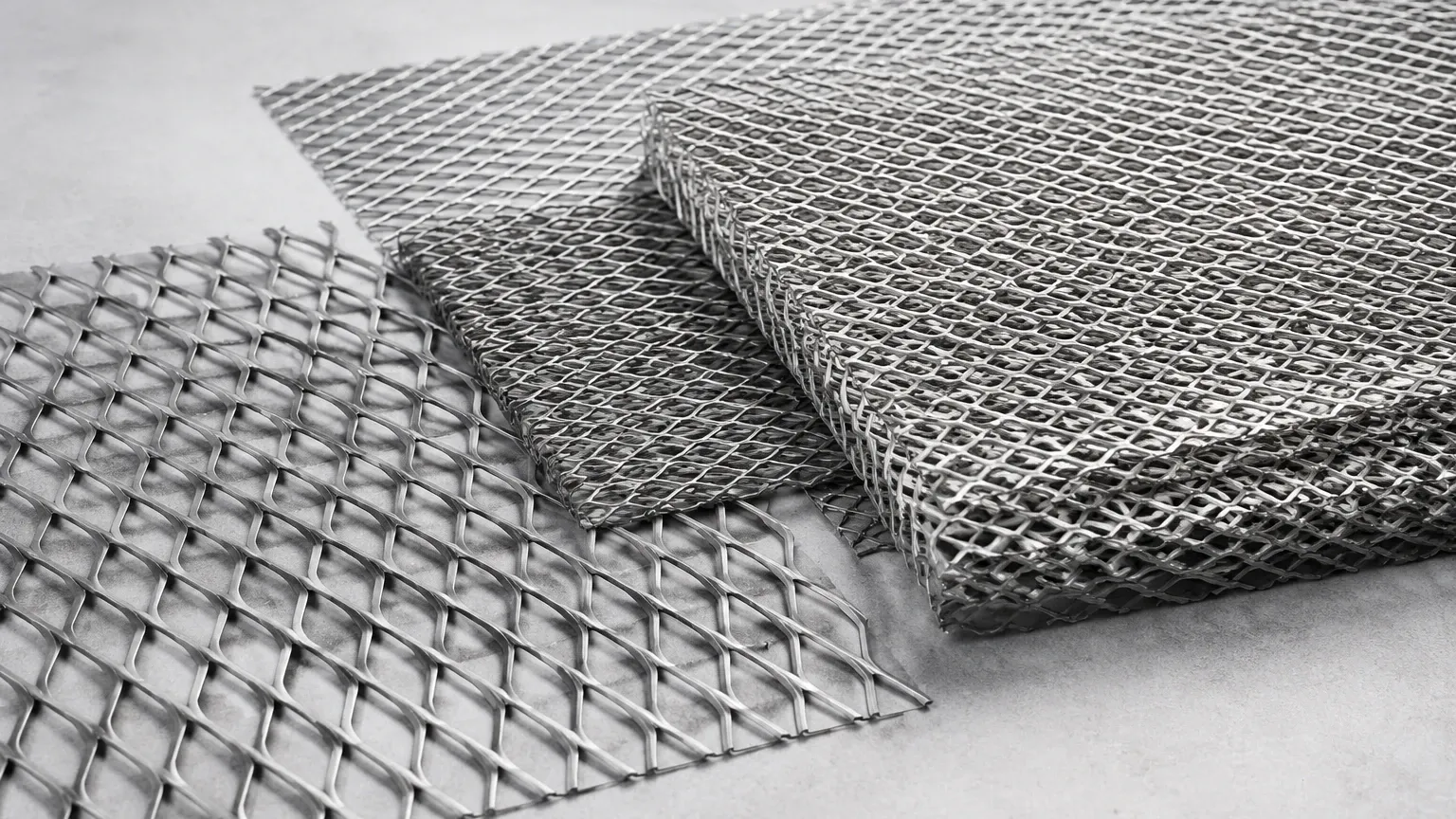
Expanded metal is a unique material produced by slitting and stretching a single metal sheet simultaneously. This process creates a continuous, jointless mesh with diamond-shaped openings. Unlike woven wire mesh, expanded metal offers superior structural rigidity because there are no welds or weaves that can unravel or break under stress. When sourcing Perforated & Expanded Metal for industrial projects, technical teams must evaluate the specific mechanical demands of their application to ensure long-term reliability.
Technical Specifications and Manufacturing Principles
The manufacturing process of expanded metal is inherently efficient, producing virtually no waste compared to perforated metal, where the "slugs" are punched out and discarded. This makes it a cost-effective choice for large-scale industrial projects. However, the technical performance of the mesh depends on several critical parameters that must be specified during the procurement phase.
Geometric Parameters
When discussing expanded metal mesh Kenya requirements with a manufacturer, engineers must define the following:
* SWD (Short Way of Design): The distance from the center of one bond to the center of the next bond across the short diamond axis.
* LWD (Long Way of Design): The distance across the long diamond axis.
* Strand Width: The amount of metal fed into the machine for each stroke.
* Strand Thickness: The original thickness of the base metal sheet.
* Open Area: The percentage of the mesh that allows for the passage of air, light, or fluids. This is a critical metric for filtration and ventilation applications.
Raised vs. Flattened Mesh
Standard expanded metal, often referred to as "raised" mesh, features strands that are set at a sharp angle to the plane of the sheet. This provides maximum strength and a high-grip surface. In contrast, flattened expanded metal is passed through a cold-rolling mill, which reduces the thickness and creates a smooth, level surface. Flattened mesh is often preferred in filtration assemblies where the mesh serves as a support layer for finer filter media, as the smooth surface prevents abrasion of the delicate inner layers.
Material Selection for the Kenyan Industrial Environment
Kenya’s diverse geography—from the humid, salt-rich coastal regions of Mombasa to the high-altitude industrial zones of Nairobi—necessitates careful material selection to prevent premature failure due to corrosion or mechanical fatigue.
Stainless Steel (Grades 304 and 316)
For most industrial filtration and processing applications, stainless steel is the gold standard.
* Grade 304: Suitable for general industrial use, providing excellent strength and basic corrosion resistance. It is widely used in food processing equipment where hygiene is paramount.
* Grade 316: Contains molybdenum, which provides superior resistance to chlorides and pitting. This grade is essential for chemical processing plants and coastal installations where atmospheric salt levels are high.
Carbon Steel and Galvanized Steel
In applications where corrosion is less of a concern, such as structural reinforcement or secondary security barriers, carbon steel offers a cost-effective alternative. To enhance durability, these meshes are often hot-dip galvanized, providing a protective zinc coating that can withstand the Kenyan climate for extended periods.
Applications in Filtration and Industrial Processing
While expanded metal is commonly associated with walkways and grilles, its role in precision filtration is vital. As a manufacturer specializing in custom stainless steel filtration solutions, Kaifil provides expanded metal components designed to withstand the rigors of high-pressure environments.
Support Structures for Filter Cartridges
In hydraulic and high-pressure fluid systems, expanded metal serves as the internal core or external cage for filter cartridges. Its rigid structure prevents the collapse of the pleats in the filter media, ensuring consistent flow rates and preventing bypass. The high open area of expanded metal ensures that the support structure does not contribute significantly to the total pressure drop of the system.
Primary Filtration and Strainers
In the food and beverage industry—particularly in tea and coffee processing, which are major sectors in Kenya—expanded metal mesh is used as a primary strainer to remove large particulates from process streams. Its durability allows it to be cleaned and reused multiple times, reducing the total cost of ownership compared to disposable filter elements.
Chemical and Pharmaceutical Processing
In these sectors, expanded metal is often used in catalyst recovery and gas-liquid separation. The ability to customize the diamond size and strand width allows engineers to fine-tune the turbulence and residence time within a reactor or separator vessel.
Evaluating Suppliers for Expanded Metal Mesh Kenya
Procuring industrial-grade expanded metal in Kenya often involves a choice between local stockists and global OEM manufacturers. For standard construction projects, local stock may suffice. However, for technical applications requiring specific tolerances and material certifications, partnering with a specialized manufacturer like Kaifil offers several advantages.
Customization and Engineering Support
Standard off-the-shelf mesh rarely meets the exact needs of a custom filtration system. Technical teams should look for suppliers capable of providing custom LWD/SWD dimensions and specific material thicknesses. Furthermore, the ability to provide secondary processing—such as cutting to size, forming, and welding—is essential for integrating the mesh into existing industrial equipment.
Quality Assurance and Certification
Industrial filters must perform reliably under pressure. A reputable supplier should provide material test reports (MTRs) that verify the chemical composition of the steel. This ensures that a component specified as Grade 316 stainless steel actually contains the necessary molybdenum to resist corrosion in a chemical plant.
Critical Pre-Purchase Checklist for Technical Teams
Before finalizing a purchase order for expanded metal mesh Kenya, engineering and purchasing departments should confirm the following technical details:
1. Filtration Accuracy Requirements: If the mesh is being used for particle retention, what is the required SWD to ensure no oversized particles pass through?
2. Load-Bearing Capacity: Will the mesh be subject to mechanical loads or high-pressure differentials? This will dictate the required strand thickness and whether a raised or flattened profile is appropriate.
3. Chemical Compatibility: Is the material resistant to the specific chemicals, cleaning agents, and temperatures present in the process environment?
4. Installation Method: How will the mesh be secured? Will it be welded into a frame, or does it require specific edge treatments to prevent fraying or injury during handling?
5. Total Cost of Ownership: While carbon steel may be cheaper initially, will the longevity and reduced maintenance of stainless steel provide a better return on investment over the lifecycle of the equipment?
Maintenance and Longevity in Industrial Systems
To ensure the longevity of expanded metal components, regular inspection and maintenance protocols are necessary. In filtration systems, the mesh should be inspected for signs of "blinding" (permanent clogging of the openings) or mechanical fatigue at the bond points.
In Kenyan industrial settings, where dust and high humidity can be prevalent, cleaning cycles should be established based on pressure drop readings across the filter. Stainless steel expanded metal can typically be cleaned using ultrasonic baths, high-pressure water jets, or chemical cleaning, depending on the nature of the contaminants. Proper maintenance not only extends the life of the mesh but also protects downstream equipment from damage caused by bypass or structural failure.
By focusing on technical precision and material integrity, Kenyan industries can leverage Perforated & Expanded Metal to improve the efficiency and durability of their operations. Whether used as a simple guard or a complex filtration component, the quality of the mesh is the foundation of system performance.
