


Expanded Metal Grate
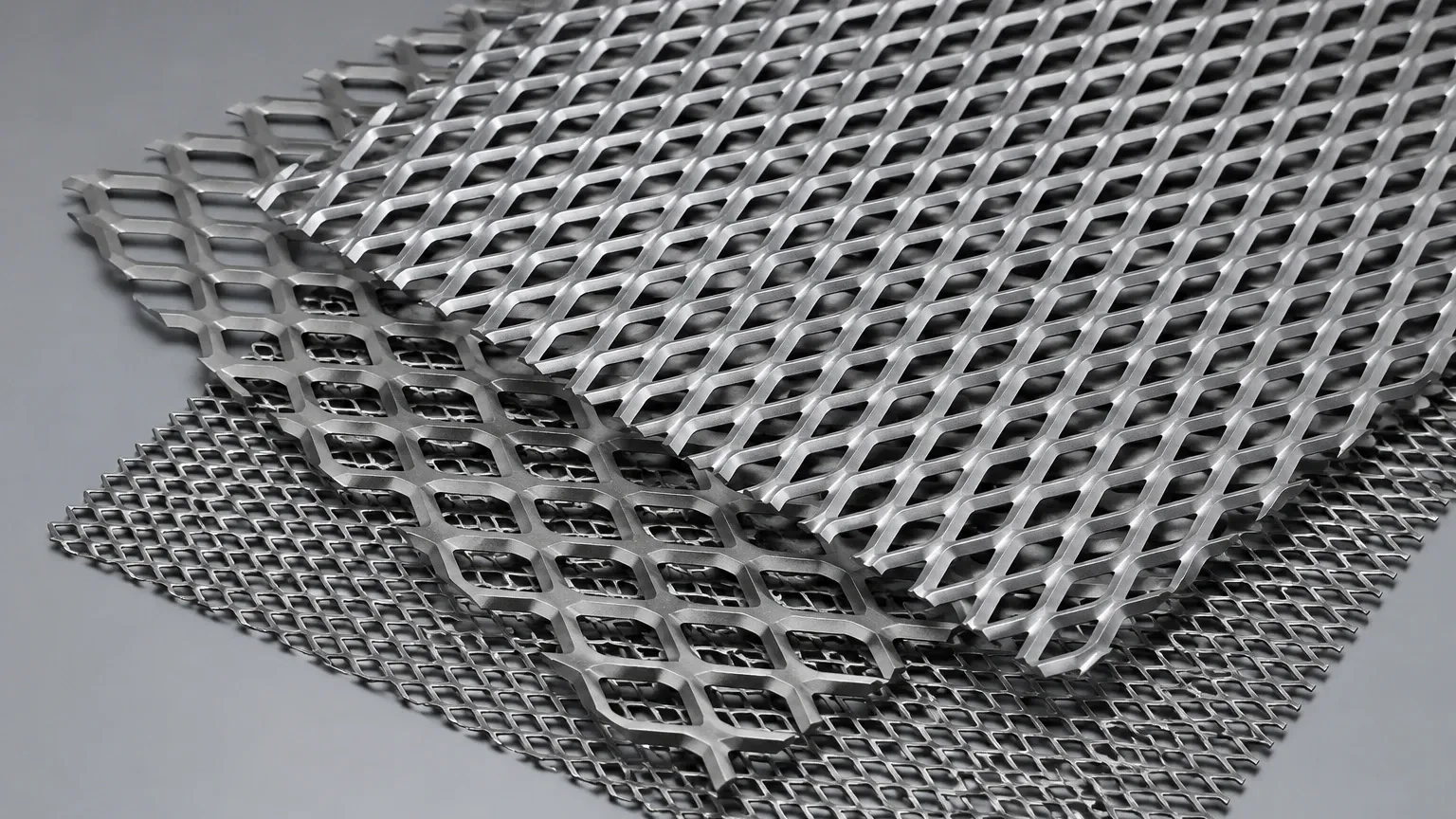
In industrial engineering and facility design, the selection of structural and filtration components requires a balance between mechanical strength, material durability, and functional permeability. The expanded metal grate represents a specialized category of processed metal that addresses these requirements through a unique manufacturing process. Unlike woven mesh or perforated sheets, expanded metal is produced by simultaneously slitting and stretching a solid metal plate or sheet. This cold-forming process creates a continuous, one-piece structure with diamond-shaped openings, offering distinct advantages in load-bearing capacity and structural integrity.
For engineers and procurement professionals, understanding the technical nuances of an expanded metal grate is essential for optimizing system performance, whether the material is intended for heavy-duty walkways, protective guards, or as a support substrate in complex filtration assemblies. As a manufacturer specializing in high-performance Perforated & Expanded Metal solutions, Kaifil emphasizes the importance of precise material selection and geometric configuration to meet the rigorous demands of industrial environments.
Understanding the Engineering of Expanded Metal Grate
The fundamental characteristic of an expanded metal grate is its monolithic construction. Because the material is slit and stretched rather than punched or woven, there are no joints, welds, or intersections that can fail under stress. This inherent continuity allows for efficient stress distribution across the entire panel.
Key Geometric Terminology
To specify an expanded metal grate accurately, engineers must utilize standardized terminology that defines the dimensions of the diamond pattern:
* LWD (Long Way of Design): The distance from the center of one bond to the center of the next bond across the long axis of the diamond.
* SWD (Short Way of Design): The distance from the center of one bond to the center of the next bond across the short axis of the diamond.
* Strand Width: The amount of metal fed into the expanding machine between each stroke.
* Strand Thickness: The original thickness of the base metal sheet.
* Bonds: The intersections where the strands meet, which remain part of the original solid metal.
Standard vs. Flattened Grating
Expanded metal is typically available in two primary forms: raised (standard) and flattened. In its raised state, the strands and bonds are set at a uniform angle to the plane of the sheet, providing a high strength-to-weight ratio and excellent anti-slip properties. Flattened expanded metal undergoes an additional cold-rolling process that levels the strands and bonds into a single plane, resulting in a smooth surface often used for secondary filtration layers or decorative partitions where a flush finish is required.
Material Selection and Chemical Compatibility
In industrial B2B applications, the choice of material is the primary determinant of the grate's service life and performance in corrosive or high-temperature environments. While expanded metal can be produced from various alloys, stainless steel remains the industry standard for high-performance applications.
Stainless Steel Grades
* Grade 304/304L: The most common grade, offering excellent cost-efficiency and resistance to atmospheric corrosion. It is widely used in food processing and general industrial settings.
* Grade 316/316L: Contains molybdenum, which significantly enhances resistance to pitting and crevice corrosion in chloride-rich environments. This is the preferred choice for marine, pharmaceutical, and chemical processing applications.
* Specialty Alloys: For extreme environments involving high temperatures or highly aggressive chemicals, alloys such as Duplex stainless steel or Monel may be utilized to ensure structural stability and prevent premature oxidation.
Surface Treatments
Depending on the application, additional surface treatments may be necessary. Passivation is standard for stainless steel expanded metal grate components to remove surface contaminants and enhance the protective chrome-oxide layer. For carbon steel variants, hot-dip galvanizing or powder coating may be applied to mitigate oxidation, though these are less common in high-precision filtration contexts where material purity is paramount.
Structural Integrity and Load-Bearing Considerations
When utilized as a grate, the primary function of the expanded metal is often to support weight—whether it is the weight of personnel on a catwalk or the hydraulic pressure exerted on a filter element. The load-bearing capacity of an expanded metal grate is influenced by the orientation of the diamonds and the thickness of the strands.
Load Directionality
Expanded metal is an anisotropic material, meaning its mechanical properties vary depending on the direction of the applied load. The LWD should generally run perpendicular to the support members to maximize the structural strength of the panel. If the orientation is reversed, the grate may experience significant deflection under much lower loads.
Weight-to-Strength Ratio
One of the most significant advantages of using an expanded metal grate over solid plate or traditional bar grating is the weight reduction. By expanding the metal, a single ton of raw material can produce multiple tons of finished product without sacrificing the integrity of the individual strands. This allows engineers to design lighter support structures, reducing overall project costs and simplifying installation in complex industrial layouts.
Applications in Industrial Filtration and Support Systems
While expanded metal is often associated with architectural or safety applications, its role in industrial filtration is critical. In many high-pressure filtration systems, fine wire mesh or synthetic filter media lack the structural rigidity to withstand differential pressures. Here, the expanded metal grate serves as a robust support cage or internal core.
Support for Filter Media
In stainless steel filter cartridges, an expanded metal cylinder often provides the necessary reinforcement for pleated mesh layers. The diamond pattern allows for a high percentage of open area, ensuring that the support structure does not significantly contribute to pressure drop while providing a rigid framework that prevents the filter media from collapsing under high flow rates.
Coarse Filtration and Pre-Filtering
In water treatment and chemical processing, expanded metal grates are frequently used as primary strainers. Their ability to capture large debris while maintaining high flow rates makes them ideal for protecting sensitive downstream equipment such as pumps and valves. The sharp edges of raised expanded metal can also assist in breaking up solid aggregates in certain slurry processing applications.
Drainage and Aeration
In the food and beverage industry, expanded metal grates are utilized in drying racks and drainage systems. The angled strands of a raised grate facilitate the runoff of liquids while allowing for multi-directional airflow, which is essential for uniform cooling or dehydration processes.
Customization Parameters for OEM Integration
For original equipment manufacturers (OEMs), off-the-shelf expanded metal products rarely meet the precise tolerances required for specialized machinery. Customization is a core component of Kaifil’s service model, ensuring that the expanded metal grate integrates seamlessly into the final assembly.
Precision Dimensional Tolerances
In filtration housings, even a millimeter of deviation can lead to bypass or mechanical interference. Custom manufacturing allows for exact control over the SWD and LWD dimensions, as well as the overall sheet size. Precision shearing and leveling ensure that the edges are clean and the panels are flat, facilitating easier welding or mechanical fastening during the OEM fabrication process.
Variable Open Area
By adjusting the strand width and the degree of expansion, manufacturers can precisely control the percentage of open area. This is a critical variable for engineers who must balance the need for structural support with the requirement for minimal flow resistance. A custom expanded metal grate can be designed to provide an open area ranging from 20% to over 80%.
Edge Configurations
Standard expanded metal often has "random" edges where diamonds are cut mid-strand. For safety and assembly purposes, many industrial applications require "bonded" edges, where the cut is made through the bond to provide a smooth, solid perimeter. This is particularly important for grates that will be handled frequently by personnel or those that require perimeter welding.
Evaluating Total Cost of Ownership and Maintenance
When specifying components for industrial use, the initial purchase price is only one factor in the total cost of ownership (TCO). The durability and maintenance requirements of an expanded metal grate significantly impact long-term operational expenses.
Durability and Replacement Cycles
Because it is a single-piece construction, expanded metal does not suffer from the vibration-induced fatigue that can cause woven wire mesh to fray or bar grating welds to crack. In high-vibration environments, such as those found near industrial compressors or on mobile equipment, the expanded metal grate offers a longer service life, reducing the frequency of replacement.
Ease of Cleaning
The open diamond pattern is inherently self-cleaning to an extent, as it does not provide many crevices where debris can accumulate. In hygienic applications, such as pharmaceutical or food production, stainless steel expanded metal can be easily sanitized using high-pressure steam or chemical CIP (Clean-In-Place) systems. The lack of overlapping wires (as found in woven mesh) eliminates potential bacterial traps.
Installation Efficiency
The lightweight nature of expanded metal makes it easier to transport and install, often requiring fewer personnel and lighter lifting equipment than traditional steel grating. This reduces the labor costs associated with both initial installation and periodic maintenance shutdowns.
Technical Confirmation Before Procurement
Before finalizing a specification for an expanded metal grate, engineers should confirm several critical data points with their manufacturer to ensure the product is fit for purpose:
1. Load Requirements: Define the maximum concentrated and distributed loads the grate will encounter.
2. Environmental Factors: Identify the specific chemicals, temperatures, and moisture levels the material must withstand.
3. Flow Characteristics: Determine the required open area percentage to maintain system pressure within acceptable limits.
4. Fabrication Needs: Specify if the material requires secondary operations such as circular shearing, U-edging, or specialized welding.
By addressing these technical considerations, procurement teams can avoid common pitfalls such as material fatigue, premature corrosion, or hydraulic inefficiency. As a dedicated provider of industrial filtration and metal components, Kaifil supports global customers in navigating these complexities to deliver reliable, high-performance solutions.
For detailed technical specifications or to discuss custom project requirements, engineers are encouraged to consult with manufacturing experts who understand the intersection of material science and industrial application. Proper selection of an expanded metal grate is not merely a purchasing decision but a fundamental engineering choice that impacts the safety, efficiency, and longevity of the entire industrial system.
