


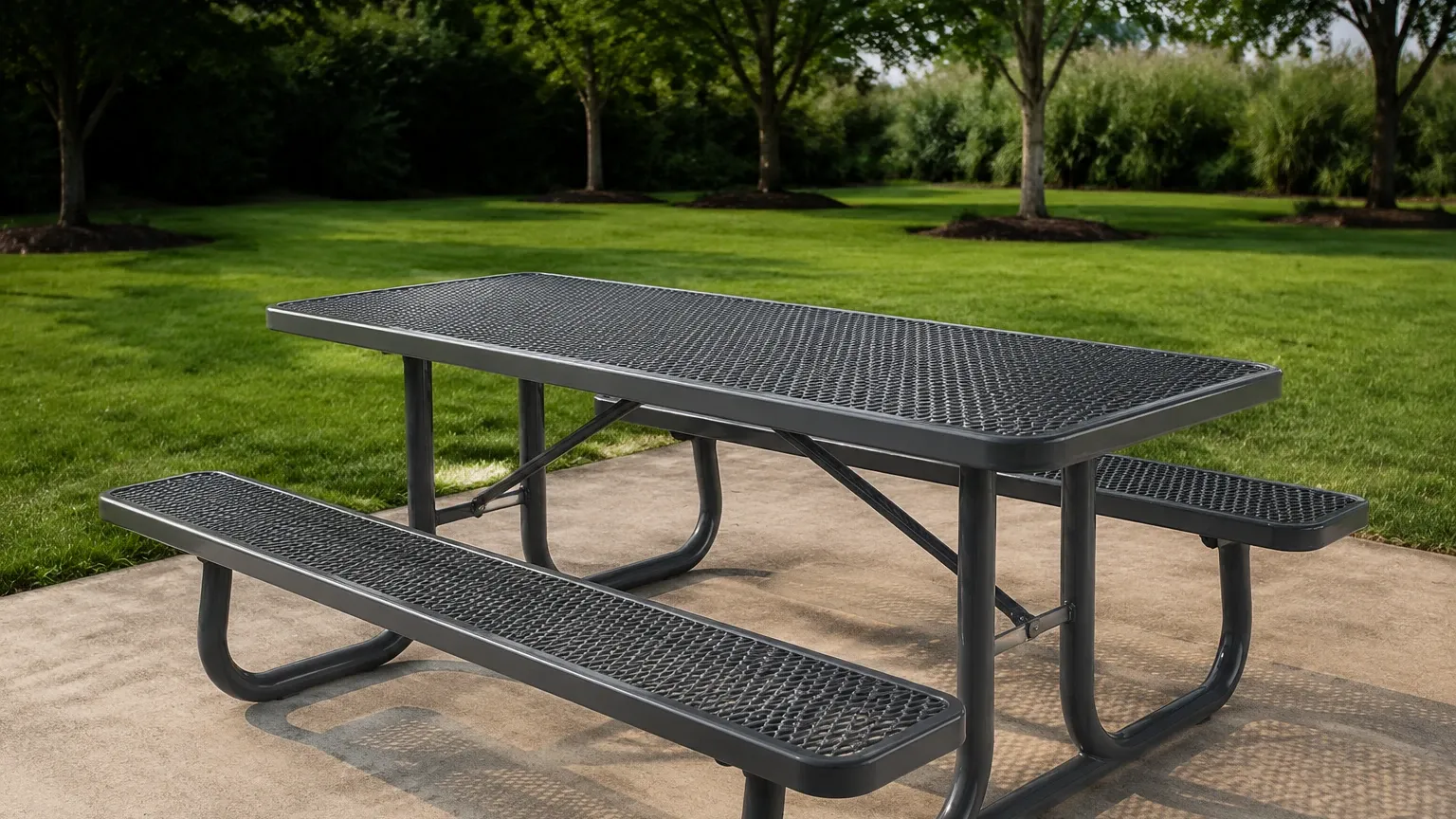
Expanded Metal Picnic Table
In the realm of outdoor infrastructure and industrial site furnishing, the expanded metal picnic table represents a standard for durability, low maintenance, and structural integrity. For facility managers, urban planners, and industrial procurement officers, selecting the right outdoor furniture involves more than aesthetic considerations; it requires a deep understanding of material science, load-bearing capacities, and environmental resistance.
Expanded metal is a versatile material created by simultaneously slitting and stretching a metal sheet, resulting in a continuous mesh without joins or welds. This unique manufacturing process makes it an ideal candidate for heavy-duty applications, including the tops and seats of industrial-grade picnic tables. By analyzing the technical specifications of Perforated & Expanded Metal, professionals can better evaluate why this material remains the preferred choice for high-traffic environments.
Understanding Expanded Metal in Outdoor Infrastructure
Expanded metal is distinct from other mesh types because it is not woven or welded. The process of expanding metal involves a machine that shears and stretches the base material (typically carbon steel, aluminum, or stainless steel) into a diamond-shaped pattern. Because the material is expanded rather than punched, there is zero waste in the production process, making it a cost-effective and sustainable option for large-scale manufacturing.
In the context of an expanded metal picnic table, the material serves several functional purposes:
1. Drainage and Airflow: The open diamond pattern allows rainwater to pass through easily, preventing pooling and accelerating the drying process after a storm. It also permits airflow, which keeps the seating surface cooler in direct sunlight.
2. Vandal Resistance: The structural continuity of the mesh makes it difficult to cut or damage without heavy industrial tools.
3. Weight Efficiency: Expanded metal provides a high strength-to-weight ratio. It offers the structural support of a solid plate while using significantly less material, making the tables easier to ship and install without sacrificing stability.
Technical Specifications of Expanded Metal Mesh
When specifying an expanded metal picnic table for an industrial or commercial project, engineers must look at several key metrics that define the performance of the mesh. These include the gauge of the metal, the size of the openings, and whether the metal is "raised" or "flattened."
Raised vs. Flattened Expanded Metal
* Raised (Standard) Expanded Metal: This is the material as it comes off the expanding machine. The strands and bonds are set at a uniform angle to the plane of the sheet. This provides extra strength and a slip-resistant surface, which is often used for industrial walkways.
* Flattened Expanded Metal: For picnic tables, the raised mesh is often passed through a cold-roll reducing mill. This flattens the strands and bonds into the same plane, creating a smooth, level surface. Flattened expanded metal is preferred for seating and tabletops because it is more comfortable for users and provides a stable surface for items like laptops or food trays.
Gauge and Opening Size
The "gauge" refers to the thickness of the original metal sheet. For heavy-duty outdoor furniture, a 9-gauge or 11-gauge steel is common. The opening size is measured by the Long Way of the Design (LWD) and the Short Way of the Design (SWD). A smaller opening size increases the surface area and structural rigidity, while a larger opening reduces weight and cost.
Manufacturing Process: Slitting and Stretching
The integrity of an expanded metal picnic table begins with the manufacturing process. Unlike perforated metal, which is created by punching holes and removing material, expanded metal is formed by a series of precise slits. As the blades move, they stretch the metal, creating the characteristic diamond pattern.
This process preserves the structural integrity of the metal because the strands remain part of a solid piece of steel. There are no welds to break or wires to unravel. For manufacturers like Kaifil, precision in the expanding process ensures that the mesh is uniform, which is critical when the material must be welded to a tubular steel frame for table construction.
Material Selection for Longevity and Durability
While carbon steel is the most common material for expanded metal picnic tables due to its cost-efficiency, other alloys are used depending on the environment.
* Carbon Steel: High strength and widely available. It must be coated to prevent oxidation.
* Stainless Steel (304 or 316): Often used in coastal environments or high-end architectural projects. Stainless steel expanded metal offers superior corrosion resistance and does not require additional coatings, though it comes at a higher initial cost. In industrial filtration and precision components, stainless steel is the gold standard for its chemical compatibility.
* Aluminum: Lightweight and naturally resistant to corrosion. Aluminum tables are easier to move but may lack the heavy-duty impact resistance of steel in high-vandalism areas.
Surface Coatings and Corrosion Protection
Because most expanded metal picnic tables are made from carbon steel, the choice of coating is the most significant factor in determining the product's lifespan. There are three primary types of finishes used in the industry:
1. Thermoplastic Coating (Plastisol)
This is the industry standard for expanded metal furniture. The metal is dipped into a liquid plastic (PVC) or coated with a dry powder that melts into a thick, rubberized layer. Thermoplastic coatings are highly resistant to UV rays, impact, and moisture. They also provide a "soft touch" surface that is more comfortable for users and does not get as hot as bare metal.
2. Powder Coating
Powder coating involves applying a dry polyester or epoxy powder electrostatically and then curing it under heat. It provides a hard, durable finish available in a wide range of colors. While aesthetically pleasing, powder coating is thinner than thermoplastic and may be more susceptible to chipping in high-impact environments.
3. Hot-Dip Galvanization
For purely industrial settings where aesthetics are secondary to longevity, hot-dip galvanization provides a zinc coating that chemically bonds with the steel. This offers the best protection against rust, even if the surface is scratched, as the zinc acts as a sacrificial anode.
Engineering Considerations for Load and Safety
When designing or purchasing an expanded metal picnic table, engineering teams must consider the static and dynamic loads the table will encounter. A standard 6-foot or 8-foot table must support several hundred pounds of weight across its span without significant deflection.
Frame Design
The expanded metal top is usually supported by a frame made of 2-3/8" O.D. (Outer Diameter) steel tubing. The gauge of the frame should complement the gauge of the mesh. A common failure point in lower-quality tables is the weld between the expanded metal and the frame. High-quality manufacturers use continuous welds or heavy-duty tack welds at every contact point to ensure the mesh does not pull away from the frame under heavy loads.
Safety Features
Safety is a paramount concern in public and industrial spaces. The edges of the expanded metal must be finished with a "bullnose" or a perimeter frame of solid steel to prevent sharp edges from being exposed. Furthermore, the diamond openings must be sized appropriately to prevent finger entrapment while still allowing for debris to fall through.
Procurement and Customization for Industrial Applications
For B2B buyers, procurement involves evaluating the total cost of ownership (TCO) rather than just the initial purchase price. An expanded metal picnic table with a high-quality thermoplastic coating may have a lifespan of 15-20 years, whereas a cheaper, painted alternative may require replacement or significant maintenance within 5 years.
Confirmation Checklist for Engineers and Purchasing Teams
Before finalizing a purchase or a custom order, professionals should confirm the following specifications:
* Material Grade: Is it standard A36 carbon steel, or is a higher grade like 304 stainless steel required for the environment?
* Mesh Type: Is the mesh flattened for user comfort or raised for maximum strength?
* Coating Thickness: For thermoplastic coatings, what is the mil-thickness? (Typically 80-100 mils is standard for high-traffic areas).
* Mounting Options: Does the application require portable, surface-mount (bolted to concrete), or in-ground (permanent) installation?
* ADA Compliance: Does the table design include an extended top to accommodate wheelchairs?
The Role of Precision Manufacturing
While expanded metal picnic tables are often seen as simple outdoor furniture, the quality of the component materials—specifically the mesh—is derived from industrial manufacturing standards. Companies that specialize in precision metal components, such as those used in filtration and industrial screening, bring a level of expertise in material consistency and tolerances that directly impacts the durability of the final product.
In industrial filtration, the uniformity of expanded metal determines the flow rate and particle retention. In structural applications like picnic tables, that same uniformity ensures that load is distributed evenly across the sheet, preventing sagging over time. By sourcing materials from manufacturers who understand the technical nuances of Perforated & Expanded Metal, furniture producers can ensure their products meet the rigorous demands of industrial environments.
Conclusion
The expanded metal picnic table is a testament to the utility of expanded metal as a structural material. Its ability to provide a durable, self-draining, and low-maintenance surface makes it indispensable for parks, corporate campuses, and industrial facilities. By focusing on technical specifications such as gauge, flattening, and coating types, procurement professionals can select solutions that offer the best long-term value and performance. Whether for a simple rest area or a complex industrial site, the engineering behind the mesh is what ultimately determines the success of the installation.
