


Stainless Expanded Metal Sheet
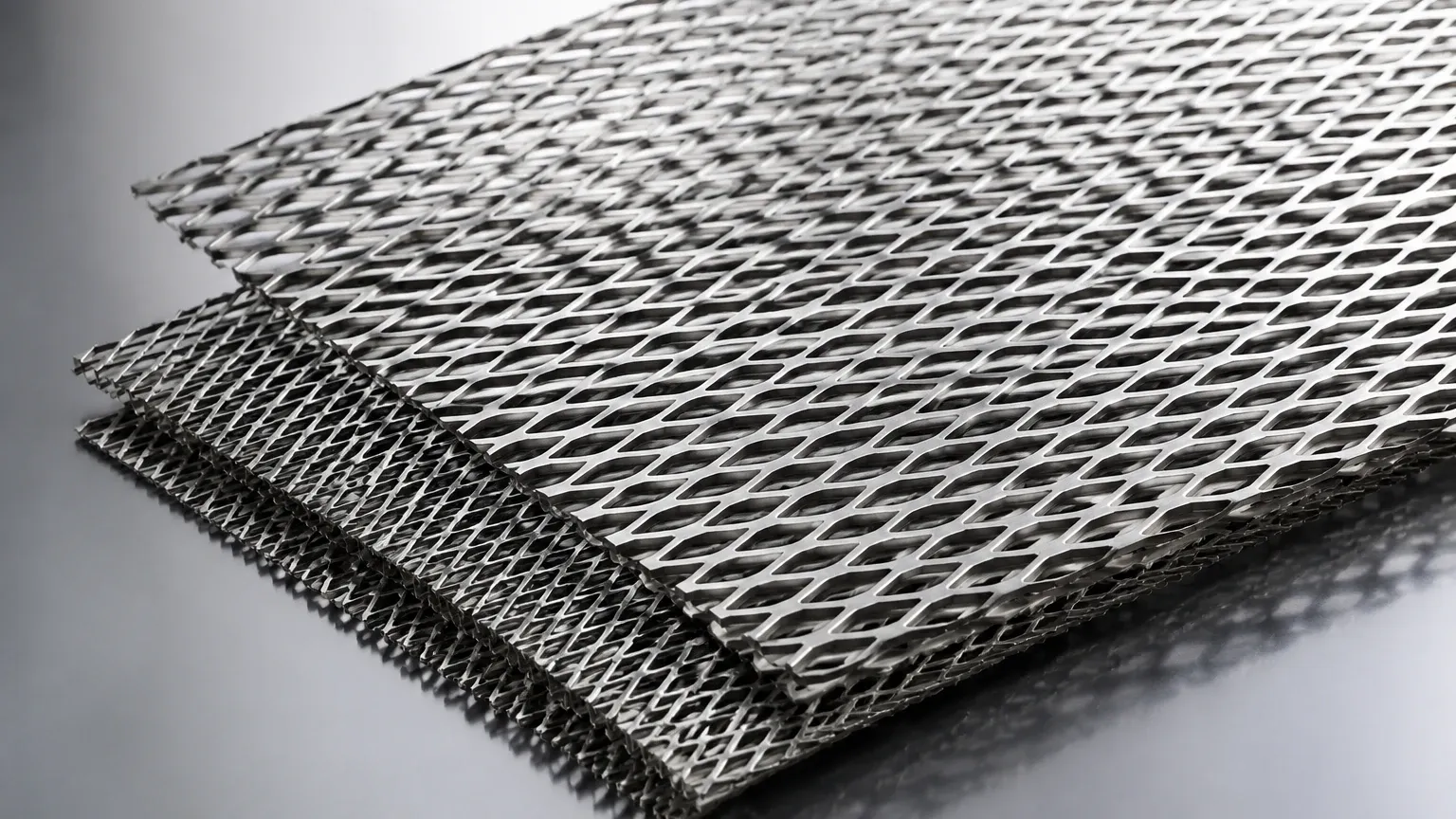
In the realm of industrial filtration and structural engineering, the stainless expanded metal sheet represents a unique intersection of material efficiency and mechanical strength. Unlike perforated materials that involve punching out sections of metal, expanded metal is manufactured by simultaneously slitting and stretching the base material. This process results in a diamond-shaped pattern that remains part of a single, continuous sheet of metal, offering distinct advantages in terms of structural integrity and weight-to-strength ratios.
For engineers and procurement professionals, selecting the correct Perforated & Expanded Metal solution requires a deep understanding of the manufacturing variables, material grades, and the specific demands of the application environment. As a specialist in custom stainless steel filtration solutions, Kaifil provides precision-engineered components that leverage these properties to meet rigorous industrial standards.
The Manufacturing Process and Structural Mechanics
The production of a stainless expanded metal sheet is a cold-forming process. A solid sheet or coil of stainless steel is fed through an expanding machine equipped with a set of knives. As the knives slit the metal, the machine stretches it outward. This creates a mesh-like structure without any joins, welds, or seams. Because no material is lost during the expansion process, it is often a more cost-effective alternative to perforated metal, where the "slugs" or punched-out circles represent material waste.
From an engineering perspective, the resulting structure is essentially a series of interconnected trusses. This geometry allows the material to distribute loads more effectively than woven wire mesh. In filtration applications, this structural rigidity is critical. When used as a support layer for finer filter media, the expanded metal prevents the media from collapsing or deforming under high differential pressures.
Material Selection: 304 vs. 316L and Beyond
The choice of alloy is the first critical decision in the specification process. While stainless expanded metal can be produced from various grades, the industrial filtration and chemical processing sectors typically focus on the 300-series austenitic stainless steels.
Grade 304 Stainless Steel
Grade 304 is the most common specification for general industrial use. It offers excellent corrosion resistance in most atmospheric environments and is highly weldable. It is frequently used in food processing equipment and general industrial filtration where extreme chemical exposure is not a primary concern.
Grade 316 and 316L Stainless Steel
For more demanding environments, such as marine applications, pharmaceutical production, or chemical processing, Grade 316 or 316L (low carbon) is the standard. The addition of molybdenum provides superior resistance to pitting and crevice corrosion, particularly in chloride-rich environments. 316L is specifically preferred for components that require extensive welding, as the lower carbon content minimizes carbide precipitation that can lead to intergranular corrosion.
High-Temperature and Specialty Alloys
In specialized applications involving high-temperature exhaust or aggressive acids, alloys like 321 or even duplex stainless steels may be utilized. These materials ensure that the expanded metal sheet maintains its mechanical properties and oxidation resistance at elevated temperatures, which is vital for flame arrestors and high-temp gas filtration.
Technical Specifications for Engineering Selection
When specifying a stainless expanded metal sheet, engineers must move beyond simple thickness measurements. The performance of the mesh is defined by several geometric parameters:
* SWD (Short Way of Design): The distance from the center of one bond to the center of the next bond measured across the short diamond diagonal.
* LWD (Long Way of Design): The distance from the center of one bond to the center of the next bond measured across the long diamond diagonal.
* Strand Width: The amount of metal fed into the knives for each slit. This determines the "thickness" of the mesh profile when viewed from the side.
* Strand Thickness: The original thickness of the base stainless steel sheet.
* Open Area Percentage: This is perhaps the most critical value for filtration. It determines the flow rate and pressure drop across the screen. Unlike perforated metal, where the open area is a simple calculation of hole size versus pitch, the open area in expanded metal is influenced by the angle of the strands and the degree of expansion.
Flattened vs. Raised Expanded Metal
A primary distinction in the procurement of expanded metal is whether the material should be "Raised" (standard) or "Flattened."
Raised Expanded Metal
In its standard form, the strands and bonds are set at a uniform angle to the plane of the sheet. This creates a three-dimensional surface that provides excellent grip and high structural rigidity. In filtration, the raised profile can be advantageous for creating turbulence in fluid flow, which can sometimes prevent the rapid buildup of a filter cake on the surface.
Flattened Expanded Metal
Flattened expanded metal is manufactured by passing the standard raised sheet through a cold-roll reducing mill. This process flattens the strands and bonds into the same plane, resulting in a smooth, flat surface. Flattened mesh is slightly thinner and wider than the original raised sheet. It is often preferred when the mesh needs to be bonded to other layers of media or when a smooth surface is required to prevent abrasion of adjacent components.
Applications in Industrial Filtration
Kaifil utilizes the stainless expanded metal sheet in a variety of high-performance filtration components. Its versatility allows it to serve multiple roles within a single filtration system.
Support and Pleat Spacing
In pleated filter cartridges, expanded metal is often used as an inner or outer support core. Its rigidity ensures that the pleats remain evenly spaced and do not bunch together under flow, which would otherwise reduce the effective filtration area and increase pressure drop.
Pre-Filtration and Coarse Screening
For water treatment and industrial cooling systems, expanded metal serves as a robust pre-filter. It is capable of removing large debris and protecting more sensitive downstream components, such as high-precision wire mesh filters or membranes. Its high open area allows for high flow volumes with minimal energy loss.
Flame and Spark Arrestors
The thermal conductivity of stainless steel combined with the tortuous path provided by the expanded mesh makes it an ideal material for flame and spark arrestors. The mesh dissipates heat rapidly, preventing the passage of flames through ventilation or exhaust systems in hazardous environments.
Customization and OEM Capabilities
Standard off-the-shelf expanded metal often fails to meet the precise tolerances required for high-end industrial machinery. Kaifil specializes in providing customized solutions where the mesh geometry is tailored to specific filtration requirements.
Customization options include:
* Precision Slitting: Cutting the expanded metal to exact widths for seamless integration into filter housings.
* Custom Diamond Sizes: Adjusting the SWD and LWD to achieve a specific open area or to match the particle size distribution of the process fluid.
* Annealing and Surface Treatment: Providing stress-relieved material or specialized finishes (such as electropolishing) to enhance corrosion resistance and cleanliness in pharmaceutical and food applications.
Key Considerations for Procurement and Engineering
Before finalizing a specification for a stainless expanded metal sheet, purchasing teams and engineers should confirm several factors to ensure the longevity and efficiency of the component:
1. Direction of the Diamond: The orientation of the LWD and SWD relative to the flow or the structural load can significantly impact performance. In many cases, the LWD should run parallel to the length of the part for maximum strength.
2. Edge Requirements: Expanded metal has naturally sharp edges where the diamonds are cut. For many applications, these edges need to be "random sheared" or "bond sheared" to fit within a frame, or deburred to ensure safety during maintenance.
3. Tolerances: Standard commercial tolerances for expanded metal are often broader than those for perforated sheets. If the component is being used in a precision-fit assembly, specific tolerances must be negotiated during the design phase.
4. Total Cost of Ownership: While expanded metal may have a lower initial material cost than perforated metal, the costs of additional processing (like flattening or specialized shearing) should be factored into the total budget.
Conclusion
The stainless expanded metal sheet is a foundational component in modern industrial filtration, offering a balance of strength, permeability, and material efficiency that few other materials can match. Whether used as a protective cage for a hydraulic filter or a precision-engineered screen in a chemical reactor, its performance is dependent on the technical accuracy of its specification.
By partnering with a manufacturer like Kaifil, engineers gain access to deep technical expertise in Perforated & Expanded Metal and custom filtration design. Understanding the nuances between grades, profiles, and mesh geometries ensures that the final product not only meets the immediate filtration needs but also provides long-term reliability in the most demanding industrial environments.
