


Expanded Metal Uk
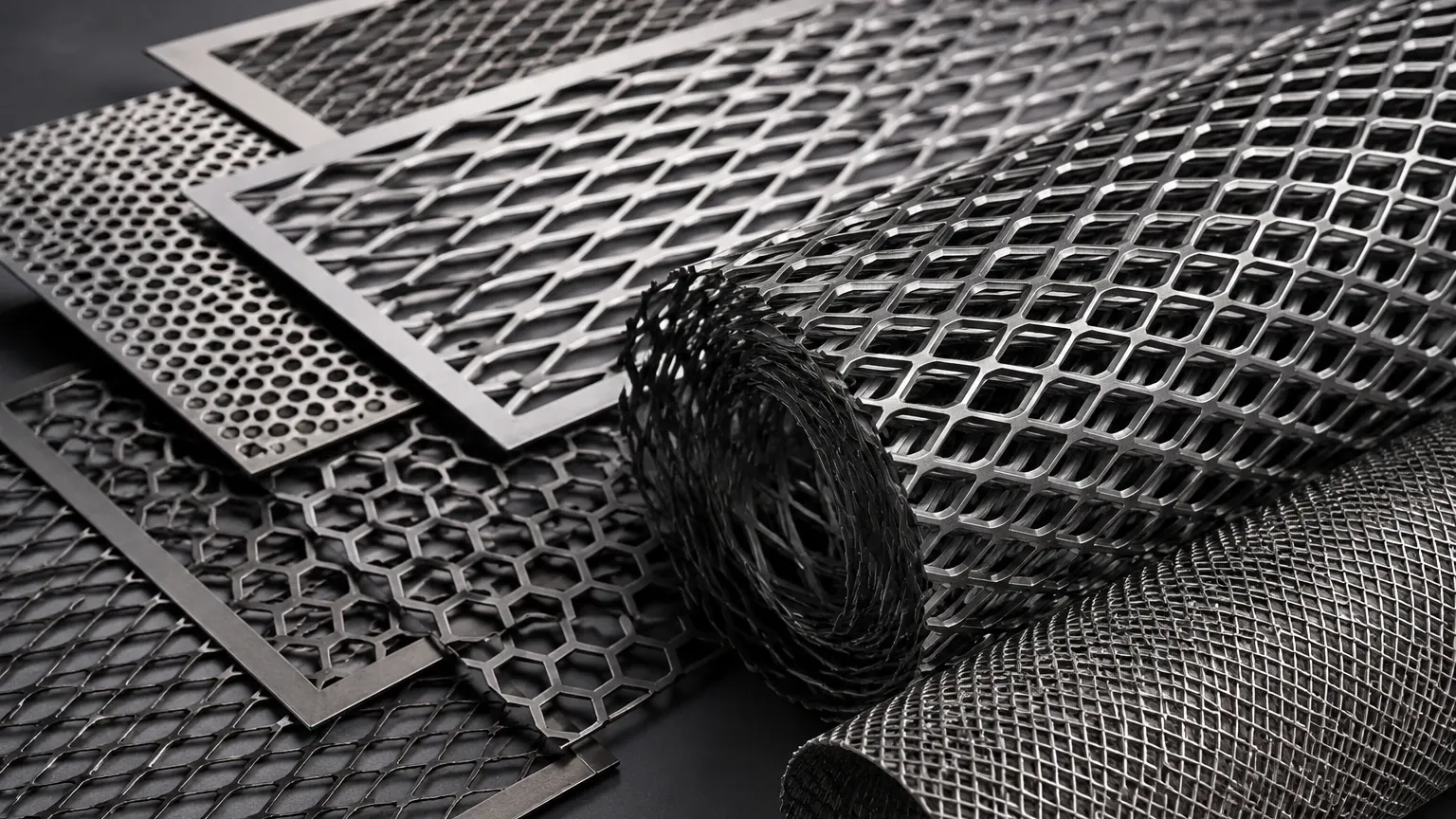
In the landscape of industrial manufacturing and filtration, expanded metal remains a cornerstone material due to its structural integrity and cost-effective production process. For engineering and procurement teams sourcing expanded metal uk solutions, understanding the technical nuances of this material is essential for ensuring long-term performance in demanding environments. Expanded metal is produced by simultaneously slitting and stretching a solid sheet of metal, creating a diamond-shaped mesh pattern that is integral to the sheet rather than woven or welded. This process results in a high strength-to-weight ratio, making it an ideal candidate for filtration supports, architectural cladding, and industrial safety components.
At Kaifil, we specialize in the precision manufacturing of Perforated & Expanded Metal specifically designed for high-performance filtration systems. By focusing on stainless steel alloys and precision tolerances, we provide the technical foundation required for sectors ranging from chemical processing to pharmaceutical manufacturing.
Technical Fundamentals of Expanded Metal Production
Unlike perforated metal, which involves punching holes and generating scrap material, expanded metal is a zero-waste product. The manufacturing process involves a reciprocating knife that slits the metal while the sheet is stretched. This creates a series of uniform openings. For engineers, the geometry of these openings is defined by several critical parameters:
* Long Way of Diamond (LWD): The distance from the center of one joint to the center of the next joint across the long axis of the diamond.
* Short Way of Diamond (SWD): The distance across the short axis of the diamond.
* Strand Width: The amount of metal between the openings.
* Strand Thickness: The gauge of the original base metal.
* Bond: The intersection where two strands meet.
There are two primary forms of expanded metal: raised (or standard) and flattened. Raised expanded metal features strands that are turned at an angle to the plane of the sheet, providing a slip-resistant surface and high rigidity. Flattened expanded metal is cold-rolled after the expansion process, resulting in a smooth, level surface. In filtration applications, flattened mesh is often preferred to prevent turbulence and facilitate easier cleaning of the filter media.
Material Selection for Industrial Environments
When sourcing expanded metal uk components, material selection is the most significant factor influencing the lifecycle of the product. Industrial applications in the UK and European markets frequently demand resistance to corrosive chemicals, high temperatures, and high-pressure differentials.
Stainless Steel (304 and 316)
Stainless steel is the industry standard for filtration and chemical processing. Grade 304 offers excellent corrosion resistance for general industrial use, while Grade 316 contains molybdenum, providing superior resistance to chlorides and pitting. This is particularly critical in marine environments or pharmaceutical processes where hygiene and chemical stability are paramount.
Special Alloys
For extreme environments, such as those found in petrochemical plants or high-temperature exhaust systems, specialized alloys like Inconel or Monel may be required. These materials maintain their mechanical properties at temperatures where standard carbon steel or basic stainless grades would fail or oxidize rapidly.
Perforated vs. Expanded Metal: Engineering Trade-offs
Engineers must often choose between Perforated & Expanded Metal for their projects. While both serve similar functions in terms of screening and support, their mechanical characteristics differ significantly.
1. Weight and Cost: Expanded metal is generally lighter per square meter than perforated metal of the same thickness because the stretching process increases the area of the original sheet. This also makes it more cost-effective as there is no material waste.
2. Structural Integrity: Because the strands and bonds of expanded metal are part of a single piece of metal, the material does not unravel. If a single strand is cut, the rest of the mesh remains intact. Perforated metal, while also rigid, relies on the "bridge" of metal between holes for its strength.
3. Open Area and Flow Rates: Perforated metal allows for more precise control over the open area percentage and hole geometry (round, square, slotted). Expanded metal's open area is determined by the degree of stretching and the knife profile, which can sometimes limit the precision of flow rate calculations compared to perforated options.
In filtration, expanded metal is frequently used as a support cage for finer wire mesh or pleated filter elements. Its rigidity prevents the delicate filter media from collapsing under high pressure.
Key Evaluation Criteria for Filtration Applications
When specifying expanded metal for a filtration project, several performance metrics must be evaluated to ensure system efficiency.
Pressure Drop and Flow Characteristics
The orientation of the strands in raised expanded metal can significantly affect fluid dynamics. If the mesh is oriented against the flow, it can create significant turbulence and a higher pressure drop. Conversely, flattened expanded metal provides a more predictable flow path. Engineers should calculate the effective open area to ensure the filter does not become a bottleneck in the system.
Mechanical Load and Support
In hydraulic and high-pressure water treatment systems, the expanded metal must withstand the force of the fluid without deforming. The "bond" strength is a critical metric here. A thicker strand width and smaller diamond size generally increase the load-bearing capacity of the mesh.
Filtration Accuracy
While expanded metal itself is rarely used for fine micron-level filtration, it serves as the primary coarse filter or the structural backbone for secondary media. The SWD (Short Way of Diamond) dimension determines the maximum size of particles that can pass through the mesh. For applications requiring precise particle retention, expanded metal is often paired with multi-layer sintered wire mesh.
Common Risks and Quality Considerations
Sourcing expanded metal uk products requires a rigorous quality control approach. Low-quality expanded metal can introduce several risks to an industrial process:
* Burrs and Sharp Edges: The slitting process naturally creates sharp edges. In food and beverage or pharmaceutical applications, these burrs can trap contaminants or shed metal particles into the product stream. High-quality manufacturers employ deburring and polishing processes to mitigate this risk.
* Material Fatigue: If the expansion process is not controlled, micro-cracks can form at the bonds. Under cyclic loading or vibration, these cracks can propagate, leading to premature failure of the filter element.
* Dimensional Inconsistency: Variations in the LWD or SWD across a single sheet can lead to uneven flow distribution and localized stress points. Consistency in the expansion stroke is vital for high-precision components.
To avoid these risks, it is essential to request material mill certificates and verify that the manufacturer adheres to international standards such as ISO 9001.
Customization and Technical Support
Every industrial application has unique requirements regarding flow, chemistry, and space constraints. Off-the-shelf expanded metal rarely meets the exacting standards of specialized filtration systems. Customization options typically include:
* Custom Mesh Sizes: Tailoring the LWD and SWD to match specific flow requirements.
* Bespoke Fabrications: Cutting, rolling, and welding expanded metal into cylindrical filter cartridges or conical strainers.
* Surface Treatments: Electropolishing, passivating, or coating the metal to enhance corrosion resistance or reduce friction.
At Kaifil, we work closely with engineering teams to develop customized filtration solutions. Our expertise in stainless steel fabrication allows us to produce components that integrate seamlessly into existing industrial housings while optimizing filtration performance. By understanding the specific challenges of the UK industrial sector—from stringent environmental regulations to the need for high-efficiency processing—we provide the technical guidance necessary for successful project execution.
Conclusion: Making Informed Sourcing Decisions
Selecting the right expanded metal uk supplier involves more than comparing prices per sheet. For B2B buyers and engineers, the focus must be on technical compatibility, material longevity, and the manufacturer's ability to provide documented quality assurance. Whether you are designing a new chemical reactor or upgrading a water treatment facility, the structural and functional properties of expanded metal offer a versatile solution for complex filtration challenges.
By prioritizing high-grade stainless steel and precision manufacturing, companies can reduce downtime, lower maintenance costs, and ensure the purity of their end products. For those seeking detailed specifications or custom designs, exploring the full range of Perforated & Expanded Metal options is the first step toward optimizing your industrial filtration infrastructure.
