


Expanded Metal Xg 11
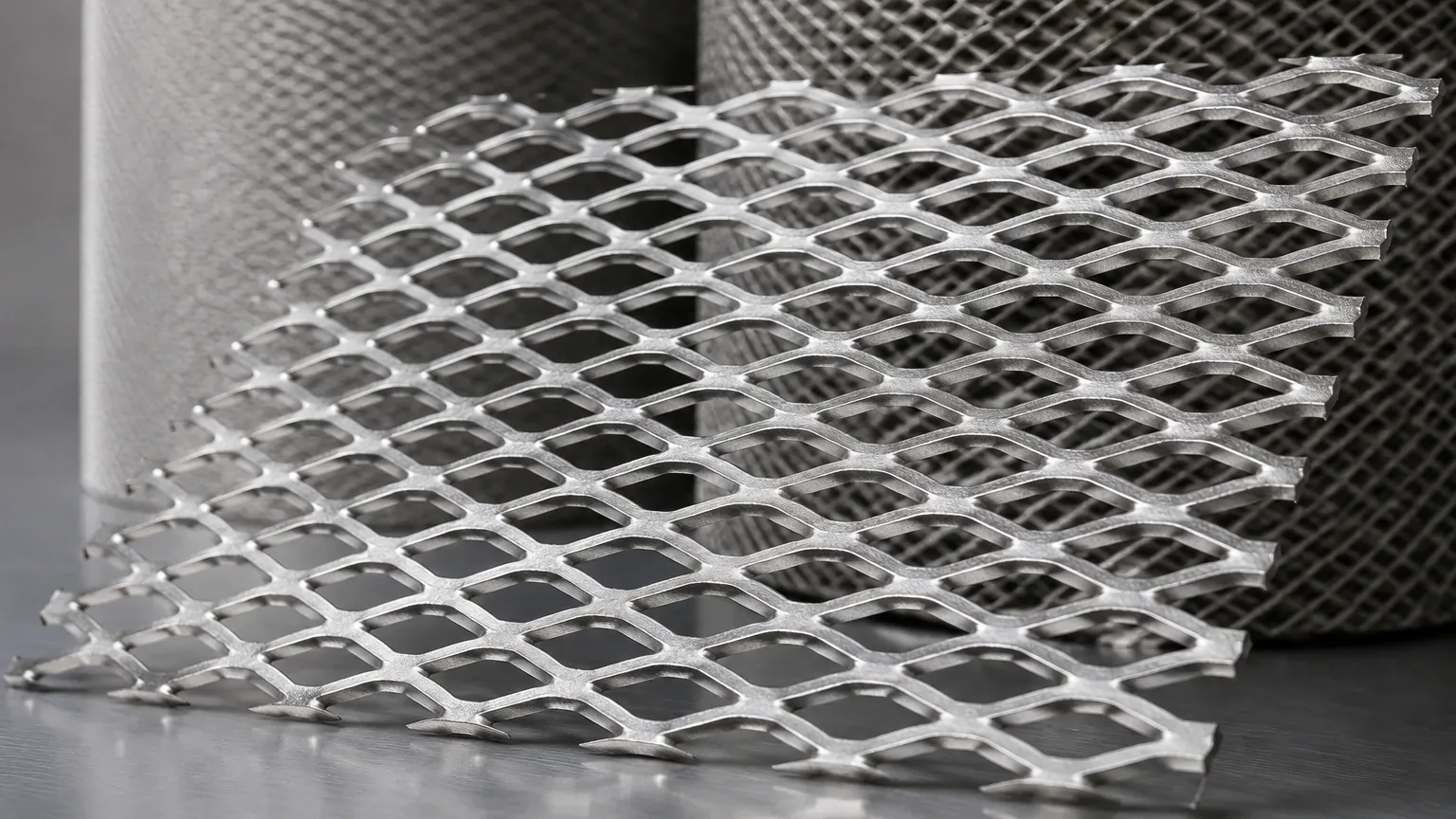
In the landscape of industrial filtration and structural support, the selection of materials is dictated by the balance between mechanical strength, open area, and environmental resistance. Among the various configurations of Perforated & Expanded Metal, the specification known as expanded metal XG 11 stands out as a robust solution for heavy-duty applications. Unlike perforated sheets, which are created by punching holes and generating scrap, expanded metal is produced through a process of simultaneous slitting and stretching. This results in a continuous, jointless mesh that retains the inherent strength of the original metal sheet while providing a high strength-to-weight ratio.
For engineers and procurement specialists, understanding the technical nuances of expanded metal XG 11 is essential for ensuring the longevity and efficiency of filtration systems. Whether utilized as a support cage for fine wire mesh or as a primary debris filter in high-flow environments, this specific grade offers distinct geometric and structural properties that influence pressure drop, flow rates, and mechanical stability.
Technical Specifications and Geometry of Expanded Metal XG 11
The designation "XG 11" refers to a specific pattern and weight class within the expanded metal hierarchy. To evaluate its suitability for a project, one must analyze the four primary dimensions that define its structure: the Long Way of the Diamond (LWD), the Short Way of the Diamond (SWD), the strand width, and the strand thickness.
Typically, expanded metal XG 11 is characterized by a larger diamond opening, often used in applications where high permeability is required without sacrificing the rigidity of the panel. The LWD usually measures approximately 30mm to 38mm, while the SWD falls within the 12mm to 15mm range. These dimensions are critical because they determine the "clear opening" through which fluids or gases pass.
The strand thickness and width are equally vital. In the XG 11 specification, the strands are often robust, providing the necessary cross-sectional area to resist deformation under hydraulic pressure. Because the metal is expanded rather than woven, there are no intersecting wires to rub or fray, which is a significant advantage in high-vibration industrial settings. This monolithic structure ensures that the mesh remains dimensionally stable even when subjected to thermal expansion or mechanical stress.
Material Integrity and Corrosion Resistance in Industrial Environments
While expanded metal XG 11 can be manufactured from various alloys, stainless steel remains the preferred choice for industrial filtration. At Kaifil, the focus is on utilizing high-grade stainless steel, such as 304 or 316L, to ensure that the expanded metal can withstand aggressive chemical environments and high-temperature processing.
1. Stainless Steel 304: Suitable for general industrial use where moisture and mild chemicals are present. It provides excellent structural support for filter cartridges used in water treatment and food processing.
2. Stainless Steel 316L: The "L" denotes low carbon, which is crucial for components that require welding. 316L offers superior resistance to chlorides and acids, making it the standard for pharmaceutical and chemical processing applications where expanded metal XG 11 acts as a protective outer shroud for sensitive filter media.
3. Specialty Alloys: For extreme environments involving high-temperature oxidation or highly corrosive brines, alloys like Monel or Inconel may be used in an expanded format, though stainless steel covers the vast majority of B2B filtration needs.
The choice of material directly impacts the total cost of ownership. While stainless steel has a higher initial procurement cost than carbon steel, its resistance to oxidation eliminates the need for secondary coatings (like galvanization), which can flake off and contaminate the process stream.
The Role of XG 11 in Multi-Stage Filtration Systems
In complex industrial filtration, expanded metal XG 11 rarely acts alone. It is most frequently employed as a structural component in multi-layer filter assemblies. Its primary roles include:
Media Support and Reinforcement
Fine wire mesh filters, while excellent at removing micron-sized particles, lack the structural rigidity to withstand high differential pressures. By placing a layer of expanded metal XG 11 behind the fine mesh, engineers can create a reinforced composite. The expanded metal absorbs the mechanical load of the fluid flow, preventing the fine mesh from collapsing or "ballooning."
Protective Outer Shrouds
In many industrial filter cartridges, the inner pleated media is vulnerable to damage during installation, cleaning, or from large, high-velocity debris. An outer cylinder made of expanded metal XG 11 serves as a rugged shield. The diamond-shaped openings allow for an even distribution of flow across the entire surface area of the filter, preventing localized high-pressure zones that could cause premature media failure.
Coarse Pre-Filtration
In systems where large particulates (such as scale, wood chips, or stones) are present, XG 11 can serve as a primary strainer. Its robust strands are capable of stopping large debris before it reaches more delicate downstream components, thereby extending the replacement cycle of the entire filtration system.
Structural Advantages: Flattened vs. Raised Expanded Metal
When specifying expanded metal XG 11, engineers must decide between the "raised" (standard) and "flattened" varieties. This choice significantly affects the performance of the filtration component.
* Raised Expanded Metal: This is the product as it comes off the expanding machine. The strands are set at an angle to the plane of the sheet. This creates a three-dimensional surface that can enhance turbulence, which is sometimes desirable in heat exchange or specific mixing applications. However, the angled strands also increase the overall thickness of the sheet and can create sharp edges.
* Flattened Expanded Metal: After the expansion process, the sheet is passed through a cold-rolling reducing mill. This flattens the strands and bonds into the same plane as the sheet. Flattened expanded metal XG 11 is preferred for filter support because it provides a smooth surface that will not abrade the fine wire mesh or filter cloth placed against it. It also results in a more consistent thickness, which is critical for maintaining tight tolerances in cylindrical filter assemblies.
Engineering Considerations for Custom Filtration Solutions
Integrating expanded metal XG 11 into a custom filtration design requires careful calculation of the effective open area. The open area percentage determines the velocity of the fluid as it passes through the mesh. If the open area is too low, the pressure drop (delta P) will increase, forcing pumps to work harder and increasing energy consumption.
For XG 11, the open area is generally high, often exceeding 60-70%, depending on the strand width. Engineers must verify that the structural integrity of the remaining metal is sufficient to support the maximum expected pressure surge. At Kaifil, custom filtration solutions involve analyzing these variables to ensure that the final product—whether it is a custom wire mesh filter or a precision metal component—meets the specific demands of the application.
Another consideration is the "bond" or the intersection of the diamonds. In expanded metal, the bond is the strongest part of the mesh. When rolling expanded metal into a cylinder for a filter cartridge, the orientation of the LWD and SWD matters. Rolling the sheet along the LWD provides different structural characteristics than rolling it along the SWD, particularly regarding the hoop strength of the resulting cylinder.
Procurement and Quality Assurance for Industrial Filters
When sourcing expanded metal XG 11 for industrial use, purchasing teams should confirm several key factors to ensure they are receiving a product that meets engineering standards.
1. Dimensional Tolerance: In precision filtration, even a few millimeters of deviation in the LWD or SWD can lead to bypass issues or assembly failures. Ensure the manufacturer adheres to strict tolerance levels.
2. Surface Finish: For food and beverage or pharmaceutical applications, the expanded metal must be free of burrs, oils, and processing residues. Electropolishing or ultrasonic cleaning may be required to achieve the necessary hygiene standards.
3. Weldability: Since XG 11 is often welded into frames or cylinders, the material must be free of excessive carbon or contaminants that could lead to brittle welds. Specifying 316L stainless steel is a common way to mitigate this risk.
4. Total Cost of Ownership: Beyond the initial price per square meter, consider the lifespan of the material. A high-quality expanded metal component that resists corrosion and mechanical fatigue will significantly reduce maintenance costs and downtime over the life of the filtration system.
By focusing on these technical details, engineers can leverage the unique properties of expanded metal XG 11 to create filtration solutions that are both durable and efficient. The versatility of Perforated & Expanded Metal continues to make it a cornerstone of modern industrial design, providing the necessary infrastructure for clean, safe, and effective processing across global industries.
