


Expanded Metal Xg21
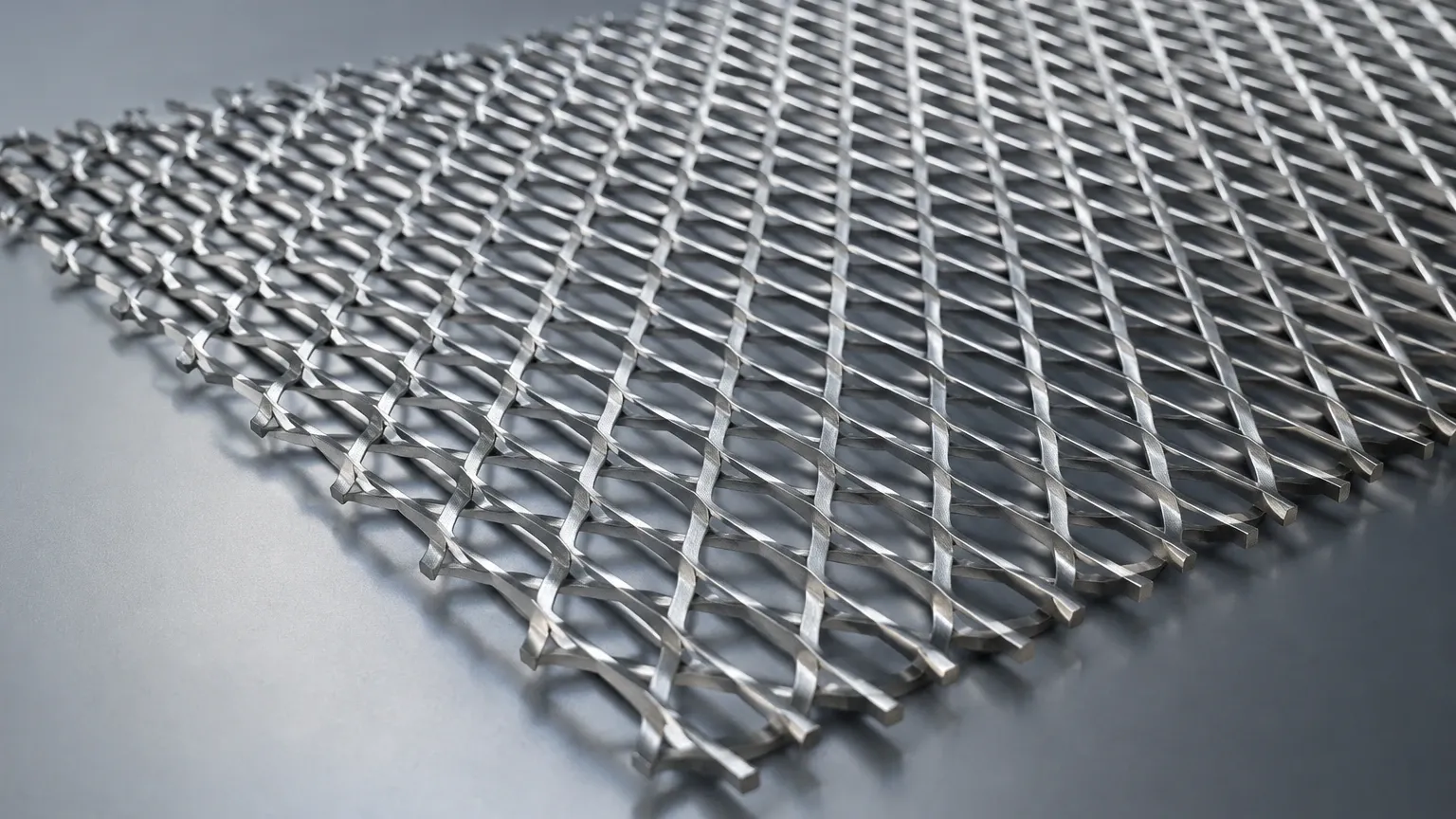
In the landscape of industrial filtration and structural engineering, material selection is dictated by the balance between mechanical strength and functional permeability. Expanded metal XG21 represents a specific industrial standard within the broader category of Perforated & Expanded Metal that is frequently specified for heavy-duty support and coarse filtration applications. Unlike perforated sheets, expanded metal is manufactured by simultaneously slitting and stretching a single sheet of metal, creating a diamond-shaped pattern without the material waste associated with punching holes.
For engineers and procurement specialists, understanding the technical nuances of the XG21 specification is essential for ensuring system integrity, particularly in high-pressure hydraulic systems, chemical processing, and large-scale water treatment facilities. This guide examines the technical specifications, material considerations, and engineering applications of expanded metal XG21.
Technical Specifications of Expanded Metal XG21
The designation "XG21" refers to a standardized mesh configuration defined by its geometric dimensions and the thickness of the base material. In industrial contexts, expanded metal is measured by several key parameters: the Long Way of the Diamond (LWD), the Short Way of the Diamond (SWD), the strand width, and the strand thickness.
Standard XG21 typically features a nominal mesh size where the LWD is approximately 30.48 mm (1.2 inches) and the SWD is approximately 11.23 mm (0.44 inches). The thickness of the material used for XG21 is generally around 3.0 mm, providing a robust profile suitable for structural reinforcement.
One of the most critical aspects of expanded metal XG21 is whether it is supplied in a "raised" or "flattened" state.
1. Raised Expanded Metal: In its standard form, the strands and bonds are set at a uniform angle to the plane of the sheet. This creates a three-dimensional surface that offers high slip resistance and maximum rigidity. In filtration, the raised profile can help break up laminar flow, though it may increase pressure drop.
2. Flattened Expanded Metal: This is produced by passing the raised expanded metal through a cold-rolling reducing mill. Flattening turns the strands and bonds down to provide a smooth, flat surface. This is often preferred when the XG21 serves as a support layer for finer wire mesh, as the flat surface prevents the delicate mesh from being punctured or deformed under pressure.
Material Selection: Stainless Steel and Industrial Alloys
While expanded metal XG21 can be manufactured from various materials, industrial filtration solutions provided by Kaifil emphasize the use of stainless steel due to its superior durability in demanding environments. The choice of alloy significantly impacts the total cost of ownership and the replacement cycle of the component.
Stainless Steel 304/304L
Grade 304 is the most common choice for expanded metal used in general industrial applications. It provides excellent corrosion resistance to most oxidizing acids and is highly weldable. It is suitable for food and beverage applications where hygiene and ease of cleaning are paramount.
Stainless Steel 316/316L
For more aggressive environments, such as chemical processing or marine applications, Grade 316 is the standard. The addition of molybdenum enhances resistance to pitting and crevice corrosion in chloride-rich environments. For components requiring extensive welding, the low-carbon version (316L) is utilized to prevent carbide precipitation.
Specialty Alloys
In high-temperature or highly corrosive hydraulic and pharmaceutical applications, engineers may specify XG21 in specialty alloys like Monel, Inconel, or Hastelloy. These materials maintain their structural integrity at temperatures where standard stainless steels might fail, ensuring that the filtration system remains operational under extreme stress.
Role of XG21 in Multi-Layer Filtration Systems
In many industrial filtration assemblies, expanded metal XG21 does not act as the primary filter medium but rather as the structural backbone. Precision filtration often requires fine wire mesh or sintered metal fibers, which lack the inherent stiffness to withstand high differential pressures.
Support for Fine Mesh
When used as a support core or outer guard in a filter cartridge, expanded metal XG21 provides the necessary mechanical strength to prevent the collapse of the pleats or the rupture of the fine mesh. The diamond pattern allows for a high percentage of open area, which minimizes the restriction of fluid flow while providing multiple contact points to distribute mechanical loads evenly.
Coarse Pre-Filtration
In large-scale water treatment or intake systems, XG21 can serve as a primary coarse filter. It is effective at removing large debris, such as stones, wood chips, or plastic waste, before the fluid enters more sensitive downstream equipment. Its robust 3.0 mm thickness ensures that it can withstand the impact of heavy solids without deforming.
Flow Distribution
The geometry of expanded metal XG21 can be leveraged to optimize flow dynamics. By orienting the diamond pattern in a specific direction relative to the fluid flow, engineers can encourage turbulence where necessary or help distribute the flow more evenly across the surface of a secondary filter medium.
Engineering Evaluation: Load Bearing and Flow Dynamics
When integrating expanded metal XG21 into a design, engineers must perform several calculations to ensure the material meets the application's requirements. Two primary factors are the open area percentage and the load-bearing capacity.
Open Area Calculation
The open area of XG21 determines the flow rate and the pressure drop across the filter. For a standard XG21 configuration, the open area typically ranges between 60% and 70%. A higher open area reduces the initial pressure drop but may compromise the structural rigidity of the sheet. Engineers must balance these two competing factors based on the viscosity of the fluid and the required flow velocity.
Mechanical Load Capacity
Unlike perforated metal, the strands of expanded metal are interconnected at an angle, which allows the material to distribute weight more efficiently. When XG21 is used as a walkway or a heavy-duty screen, its load-bearing capacity is determined by the LWD orientation. The sheet is significantly stronger when the LWD spans the distance between supports. In filtration, this structural property is vital for cartridges that must endure frequent pressure surges or backwashing cycles.
Customization and OEM Manufacturing Standards
As a professional manufacturer, Kaifil provides customized filtration solutions that go beyond off-the-shelf specifications. While XG21 is a standard designation, specific application requirements often necessitate modifications in dimensions, tolerances, and finishing.
Precision Cutting and Forming
Expanded metal XG21 can be supplied in standard sheets or cut to specific sizes for integration into filter housings. Advanced manufacturing capabilities allow for precision shearing, ensuring that the edges are clean and within tight tolerances. For cylindrical filter cartridges, the material must be rolled to a specific diameter and welded. Kaifil’s expertise in welding stainless steel ensures that the seam of the expanded metal cylinder is as strong as the base material.
Surface Treatments
Depending on the application, XG21 may undergo various surface treatments. Electropolishing is common in the pharmaceutical and food industries to remove surface impurities and create a mirror-like finish that resists bacterial growth. For industrial applications requiring extra corrosion protection, hot-dip galvanizing or specialized coatings can be applied to carbon steel variants of the mesh.
Annealing and Stress Relieving
The process of expanding metal introduces internal stresses into the material. For high-precision components, Kaifil can perform annealing processes to relieve these stresses, ensuring that the XG21 remains dimensionally stable during subsequent machining or when exposed to fluctuating temperatures in the field.
Procurement Considerations and Quality Assurance
When purchasing expanded metal XG21 for industrial projects, procurement teams should confirm several factors to avoid common risks such as material fatigue or premature corrosion.
1. Material Certification: Ensure that the supplier provides Mill Test Reports (MTRs) to verify the chemical composition and mechanical properties of the stainless steel or alloy used.
2. Dimensional Tolerance: Confirm the allowable variance in LWD, SWD, and strand thickness. In precision filtration, even minor deviations can lead to improper fitment within a housing.
3. Edge Configuration: Specify whether the material should have "random sheared" edges or "bond sheared" edges. Bond shearing provides a finished edge with no open diamonds, which is safer for handling and easier to weld.
4. Flattening Quality: If flattened XG21 is required, verify that the rolling process has not introduced cracks or excessive thinning of the strands.
By partnering with a manufacturer that understands the engineering demands of industrial filtration, companies can ensure that their use of Perforated & Expanded Metal components contributes to the overall efficiency and longevity of their systems. Expanded metal XG21 remains a staple in the industry because of its versatility, strength, and cost-effectiveness compared to other heavy-duty mesh options.
Conclusion
Expanded metal XG21 is more than just a structural mesh; it is a critical component in the design of durable and efficient industrial filtration systems. Whether utilized as a rigid support for fine wire mesh or as a standalone coarse screen, its specific geometry and material properties offer engineers a reliable solution for managing high-pressure and high-flow environments. Through careful material selection, precise manufacturing, and an understanding of the mechanical forces at play, XG21 can be optimized to meet the most demanding industrial requirements, ensuring long-term performance and reduced maintenance costs.
