


Expanded Metal Xs31
In industrial engineering and filtration design, selecting the appropriate structural support material is critical for ensuring the longevity and efficiency of a system. Expanded metal XS31 is a specific industrial specification widely recognized for its balance of strength, open area, and weight. While originally standardized under frameworks like BS 405, the XS31 designation has become a common reference point for engineers requiring a robust diamond-pattern mesh for security, structural reinforcement, and, most notably, industrial filtration support.
As a specialized manufacturer of custom stainless steel filtration solutions, Kaifil utilizes Perforated & Expanded Metal to create durable components for demanding environments. Understanding the technical nuances of the XS31 specification is essential for procurement teams and engineers who must balance filtration accuracy with mechanical integrity.
Understanding the Technical Specifications of XS31
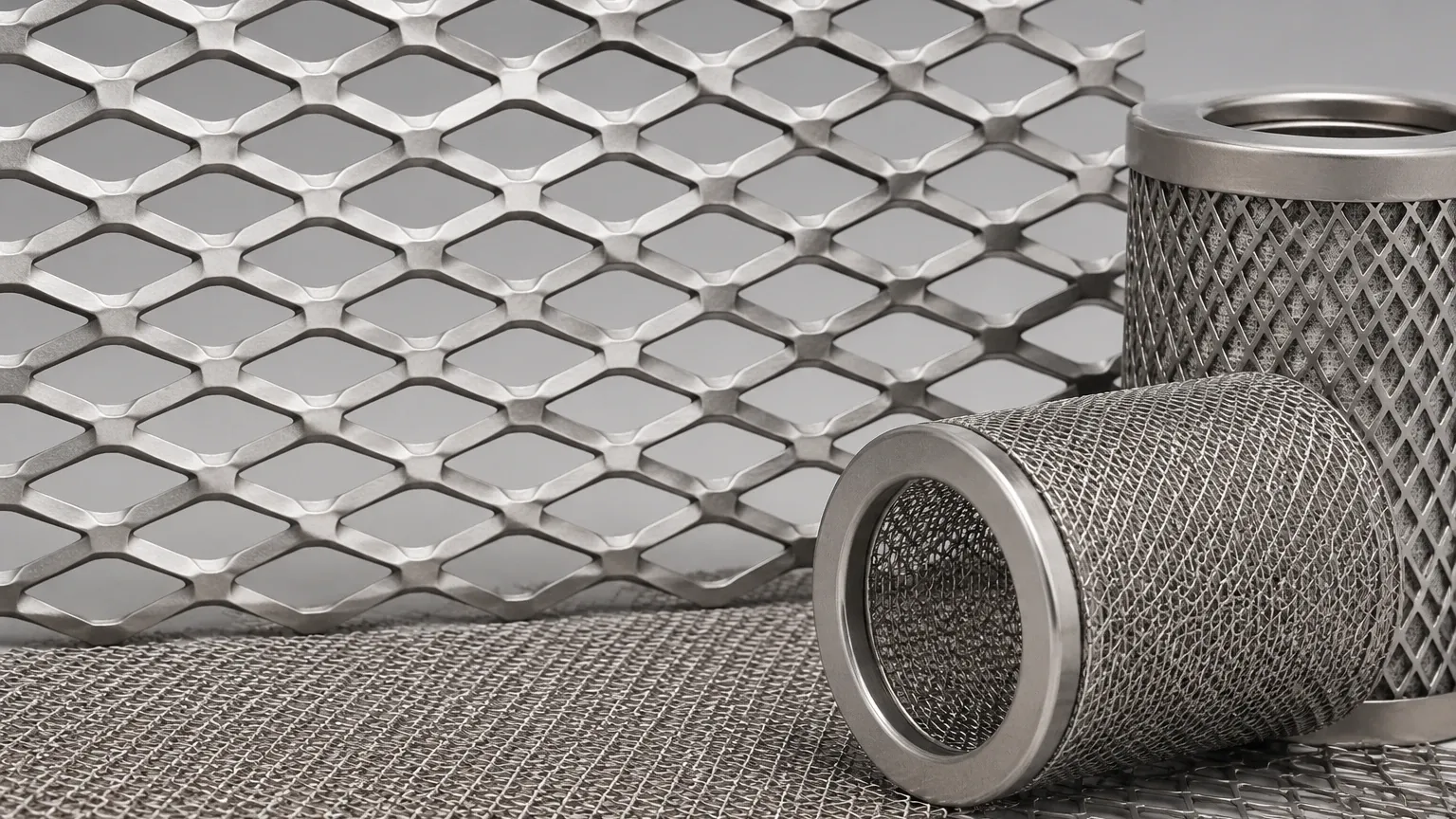
Expanded metal is produced by simultaneously slitting and stretching a solid metal sheet. This process creates a continuous piece of mesh without joins or welds, resulting in a high strength-to-weight ratio. The "XS31" designation refers to a specific set of geometric and material properties.
Geometric Dimensions
The performance of XS31 is defined by its diamond dimensions, typically measured by the Long Way of Diamond (LWD) and the Short Way of Diamond (SWD):
* LWD (Long Way of Diamond): Approximately 30.48 mm (1.2 inches). This is the distance from the center of one joint to the center of the next joint across the long axis.
* SWD (Short Way of Diamond): Approximately 12.70 mm (0.5 inches). This defines the width of the diamond opening.
* Strand Width: Usually around 2.31 mm. This is the amount of metal between the openings.
* Nominal Thickness: Typically 1.6 mm (approximately 16 gauge), though this can vary slightly based on the base material used.
Open Area and Weight
XS31 provides an open area of approximately 64%. This high percentage of open space is vital for applications requiring minimal pressure drop, such as air or liquid filtration. In terms of weight, when manufactured from mild steel, it typically weighs about 3.47 kg/m². However, for industrial filtration, stainless steel variants are often preferred for their chemical resistance and durability.
Material Selection: Stainless Steel vs. Mild Steel
While XS31 is commonly available in mild steel or aluminum, industrial process environments—such as chemical processing, food and beverage, and pharmaceuticals—require materials that can withstand corrosive agents and high temperatures. Kaifil specializes in manufacturing these components from high-grade stainless steel.
Grade 304 Stainless Steel
Grade 304 is the most common stainless steel used for expanded metal in general industrial applications. It offers excellent corrosion resistance to most oxidizing acids and is highly durable. It is suitable for water treatment and general industrial guarding where extreme chemical exposure is not a primary concern.
Grade 316L Stainless Steel
For more aggressive environments, such as those found in marine applications or chemical processing plants, Grade 316L is the preferred choice. The addition of molybdenum provides superior resistance to chlorides and pitting. In filtration, 316L is often the standard for filter cartridge cages and support structures to ensure the component does not contaminate the process fluid through oxidation or chemical breakdown.
Applications in Industrial Filtration and Protection
Expanded metal XS31 serves several critical functions within an industrial facility. Its unique structure allows it to act as both a primary filter for large debris and a secondary support for finer filter media.
Filter Media Support
In high-pressure hydraulic or chemical filtration systems, fine wire mesh or pleated paper media often lack the structural rigidity to withstand fluid velocity. XS31 is frequently used as an internal core or an outer shroud for filter cartridges. Its diamond structure provides uniform support across the surface of the fine media, preventing collapse or deformation under pressure.
Debris Screens and Intake Guards
Because of its 64% open area, XS31 is an efficient material for intake screens in water treatment plants or cooling systems. It effectively blocks large particulates, organic matter, and debris from entering sensitive machinery while maintaining a high flow rate. The rigid, one-piece construction ensures that the mesh will not unravel if a single strand is cut or damaged.
Safety Guarding and Enclosures
Beyond filtration, XS31 is used for machine guards and safety partitions. It allows for clear visibility and airflow while providing a physical barrier that meets industrial safety standards. Its strength makes it difficult to penetrate, yet it remains light enough for easy installation and maintenance.
Engineering Considerations: Raised vs. Flattened XS31
When specifying XS31 for a project, engineers must decide between "Raised" (Standard) and "Flattened" versions. This choice significantly impacts the performance of the material in a filtration assembly.
Raised (Standard) Expanded Metal
Raised expanded metal is the product as it comes off the machine. The strands and bonds are set at a uniform angle to the plane of the sheet. This creates a textured surface that provides additional structural rigidity and can help in breaking up fluid flow patterns, which may be desirable in certain mixing or aeration applications. However, the sharp edges of the raised strands can potentially damage delicate fine-mesh filter layers if they are in direct contact.
Flattened Expanded Metal
Flattened XS31 is produced by passing the raised expanded metal through a cold-rolling reducing mill. This process flattens the strands and bonds into the same plane as the sheet. The result is a smooth, flat surface. For filtration applications where the expanded metal serves as a support for a fine wire mesh or synthetic membrane, the flattened version is almost always preferred. It provides a consistent contact surface that distributes mechanical stress evenly and eliminates the risk of the support structure piercing the primary filtration layer.
Evaluating Quality and Avoiding Common Risks
Procuring expanded metal for industrial use involves more than just verifying dimensions. Low-quality manufacturing can lead to system failures or increased maintenance costs. When evaluating XS31 components, consider the following risks:
1. Strand Necking and Inconsistency: In lower-quality expanded metal, the stretching process can lead to "necking," where the metal strands become dangerously thin at certain points. This creates weak spots that may fail under vibration or pressure surges. High-quality manufacturing ensures uniform strand width across the entire sheet.
2. Burrs and Sharp Edges: For filtration and safety applications, the presence of burrs can be catastrophic. In a filter assembly, a loose burr can migrate downstream, damaging pumps or contaminating the final product. In safety guarding, it poses a risk to personnel. Quality suppliers utilize deburring and polishing processes to ensure a clean finish.
3. Material Integrity: Without proper material certification, there is a risk that the metal may contain impurities that lead to premature corrosion. This is particularly dangerous in the pharmaceutical and food sectors. Always confirm that the material meets the specified ASTM or ISO standards for the intended grade of stainless steel.
4. Flatness Tolerances: For large-scale industrial screens, the flatness of the sheet is critical for proper installation. Warped or bowed sheets can create gaps in the filtration housing, allowing bypass—where unfiltered fluid escapes around the edges of the filter.
Selection Guide: Pre-Procurement Confirmation
Before finalizing an order for XS31 expanded metal, engineering and purchasing teams should confirm several key parameters to ensure the product is fit for purpose.
Determine the Flow Requirements
Calculate the required flow rate and the maximum allowable pressure drop. With a 64% open area, XS31 is generally efficient, but if the fluid is highly viscous or if the flow rate is exceptionally high, engineers should verify if a larger diamond pattern or a different Perforated & Expanded Metal specification might be more appropriate.
Assess Chemical and Thermal Exposure
Identify all chemicals present in the process, including cleaning agents used during maintenance cycles. High temperatures can also affect the structural integrity of the metal. Ensure the chosen stainless steel grade (304, 316L, or specialty alloys) is rated for the specific operating temperature and chemical environment.
Confirm Mechanical Load
Will the XS31 be subjected to external mechanical loads, such as the weight of a technician during maintenance or high-pressure pulses in a hydraulic system? The orientation of the diamonds (LWD vs. SWD) affects the load-bearing capacity. Generally, the LWD should run across the span for maximum strength.
Define Customization Needs
Standard sheets are often not sufficient for specialized filter housings. Consider whether the application requires:
* Custom Circular or Cylindrical Forming: For filter cartridges.
* Specific Edge Treatments: Such as U-edging or solid borders for easier welding into a frame.
* Surface Finishes: Such as electropolishing for food-grade applications to ensure the highest level of cleanliness and corrosion resistance.
The Kaifil Advantage in Custom Filtration
As an experienced manufacturer, Kaifil understands that industrial filtration components are rarely "one size fits all." By integrating advanced manufacturing capabilities with deep engineering knowledge, we provide XS31 and other expanded metal solutions tailored to specific industrial challenges. Our focus on precision ensures that every component—whether it is a simple debris screen or a complex multi-layered filter support—meets the rigorous demands of the chemical, pharmaceutical, and food processing industries.
By selecting the right specification and material grade, engineers can significantly reduce the total cost of ownership through extended replacement cycles and improved system reliability. For technical assistance in selecting the correct expanded metal profile or to discuss custom fabrication requirements, engineers are encouraged to review product options and application support to ensure their filtration systems operate at peak performance.
