


Exterior Perforated Metal Panels
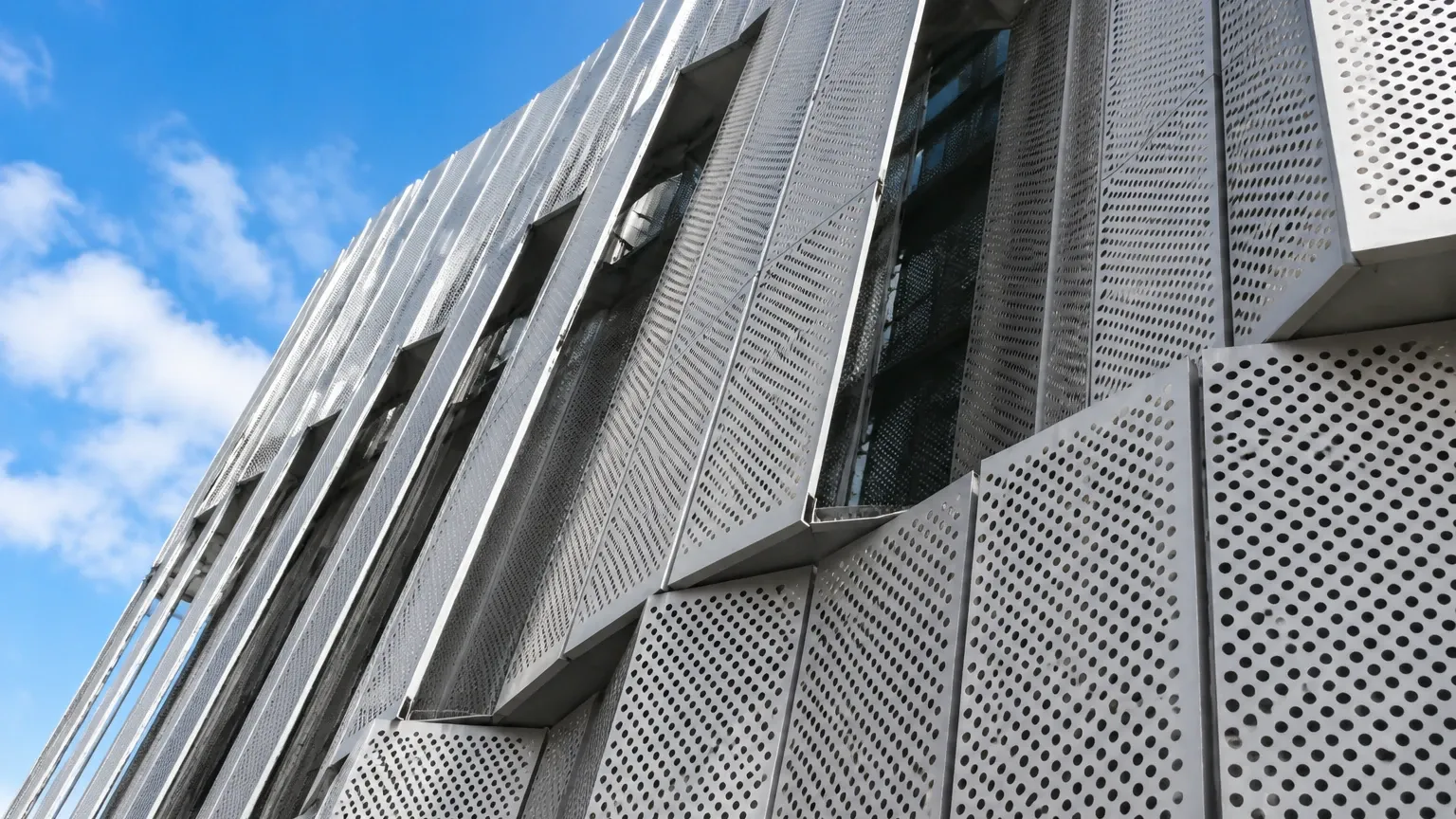
In industrial and architectural engineering, exterior perforated metal panels serve as a critical interface between a structure and its environment. These components are not merely decorative elements; they are engineered solutions designed to manage airflow, light transmission, sound attenuation, and structural protection. For engineers and procurement specialists, selecting the correct Perforated & Expanded Metal requires a deep understanding of material science, mechanical loads, and environmental stressors.
Exterior perforated metal panels are manufactured by punching or laser-cutting a series of holes into metal sheets. This process creates a medium that maintains the inherent strength of the base metal while introducing specific levels of porosity. When applied to building envelopes, filtration intakes, or safety barriers, these panels must withstand decades of exposure to UV radiation, moisture, and mechanical vibration.
Material Selection for Exterior Environments
The longevity of exterior perforated metal panels is primarily dictated by the base alloy and its resistance to corrosion. In industrial applications, where the cost of replacement and downtime is high, selecting the appropriate material is the most significant engineering decision.
Stainless Steel (Grades 304 and 316)
Stainless steel is the industry standard for high-performance exterior panels. Grade 304 offers excellent corrosion resistance for most standard outdoor environments. However, for coastal regions or industrial zones with high chemical exposure, Grade 316 is preferred. The addition of molybdenum in Grade 316 significantly enhances resistance to chloride-induced pitting, which is essential for panels used in marine environments or near chemical processing plants.
Aluminum Alloys
Aluminum is frequently selected for its high strength-to-weight ratio and natural oxide layer that resists corrosion. It is particularly effective for large-scale facades where reducing the dead load on the building structure is a priority. Common alloys include 3003-H14 or 5005-H34, which provide a balance of formability and durability.
Galvanized and Carbon Steel
While carbon steel is cost-effective, it requires hot-dip galvanization or high-performance powder coatings for exterior use. Even with these treatments, it is generally less durable than stainless steel or aluminum in high-humidity or corrosive settings. It is typically reserved for heavy-duty industrial guards or structural components where thickness and impact resistance are more critical than long-term surface aesthetics.
Technical Specifications and Open Area Calculations
The performance of exterior perforated metal panels is defined by their geometric configuration. Engineers must balance the "Open Area Percentage" with the structural requirements of the panel.
Calculating Open Area
The open area is the ratio of the area of the holes to the total area of the sheet, expressed as a percentage. This metric determines how much light, air, or liquid can pass through the panel. For a standard 60-degree staggered round hole pattern, the formula is:
Open Area % = (D² × 90.69) / P²
Where:
* D = Hole Diameter
* P = Center-to-Center Pitch
For example, a panel with higher open area (above 50%) provides excellent ventilation and visibility but may lack the rigidity required for high-wind zones. Conversely, a low open area (below 20%) offers superior shading and structural strength but may create significant wind resistance (drag).
Hole Patterns and Geometries
* Round Holes: The most common and efficient pattern for manufacturing. They provide the best balance of strength and open area.
* Square Holes: Often used for higher open area requirements, though they can be more prone to stress concentrations at the corners.
* Slotted Holes: Ideal for applications requiring directional flow or specific aesthetic linear patterns.
* Expanded Metal: Unlike perforated metal, expanded metal is slit and stretched, creating a diamond-shaped mesh. This process produces no waste and creates a three-dimensional profile that is exceptionally rigid and provides built-in shading due to the angle of the strands.
Engineering Considerations for Exterior Installation
Installing exterior perforated metal panels involves complex mechanical considerations that go beyond simple fastening. Failure to account for environmental forces can lead to panel deformation, fastener failure, or structural damage.
Wind Load and Pressure
Exterior panels act as sails. Engineers must calculate the wind pressure (both positive and negative/suction) based on the local building codes and the height of the installation. The open area percentage directly affects the drag coefficient. A panel with 40% open area does not simply experience 60% of the wind load; the aerodynamics are more complex, often requiring wind tunnel testing or computational fluid dynamics (CFD) modeling for large-scale projects.
Thermal Expansion and Contraction
Metals expand and contract with temperature fluctuations. For a 10-meter run of aluminum, the change in length between a cold winter night and a hot summer day can be several millimeters. Mounting systems must utilize slotted holes or floating clips to allow for this movement without buckling the panels or shearing the fasteners.
Drainage and Moisture Management
Stagnant water is the primary cause of localized corrosion (crevice corrosion). Panels should be designed with adequate drainage paths. In perforated designs, the hole edges should be clean and free of burrs where moisture can trap. Furthermore, the interface between the panel and the support structure must prevent "galvanic corrosion"—this occurs when two dissimilar metals (e.g., aluminum panels and a steel frame) are in contact in the presence of an electrolyte (rainwater).
Industrial and Functional Applications
While often associated with architectural facades, exterior perforated metal panels are vital components in several industrial sectors served by manufacturers like Kaifil.
Filtration and Intake Protection
In large-scale HVAC systems, water treatment plants, and power generation facilities, perforated panels serve as the first line of defense. They act as coarse filters or "trash racks," preventing large debris from entering sensitive machinery while allowing maximum fluid or air intake. The durability of stainless steel ensures these panels do not degrade despite constant exposure to the elements.
Acoustic Barriers
Perforated metal is an essential component in outdoor noise control. When used as the facing for sound-absorbent material, the perforations allow sound waves to pass through the metal and be trapped by the insulation behind it. This is commonly used for highway noise barriers and cooling tower enclosures.
Solar Shading and HVAC Efficiency
By strategically selecting the open area and hole size, exterior perforated metal panels can reduce solar heat gain on building envelopes by up to 70%. This significantly reduces the load on industrial cooling systems, leading to lower operational costs and improved energy efficiency.
Customization and OEM Manufacturing Requirements
Standard off-the-shelf panels rarely meet the precise needs of complex industrial projects. Customization is often necessary to ensure the panels integrate perfectly with existing structural frames or filtration housings. When sourcing custom Perforated & Expanded Metal, engineers should provide the following technical data:
1. Material Grade: Specify the exact alloy (e.g., SS316L) based on the chemical environment.
2. Gauge/Thickness: Determined by the span between supports and the expected mechanical load.
3. Hole Size and Shape: Defined by the filtration requirement or the desired aesthetic.
4. Pitch and Orientation: Staggered patterns are generally stronger than straight-row patterns.
5. Margins: The unperforated areas around the edges of the sheet, which are critical for welding or bolting.
6. Post-Processing: Requirements for leveling (to ensure flatness), degreasing, or specialized coatings.
Maintenance and Lifecycle Management
One of the primary advantages of stainless steel and aluminum exterior perforated metal panels is their low maintenance requirement. However, "low maintenance" does not mean "no maintenance." To achieve a 30+ year lifecycle, a basic inspection and cleaning regimen should be established.
* Cleaning: Periodic washing with low-pressure water and mild detergents removes accumulated salts, soot, and pollutants that can eventually break down protective oxide layers.
* Inspection: Regular checks of the fastening points are necessary to ensure that vibration or thermal cycling hasn't loosened the hardware.
* Replacement Cycles: In high-wear industrial environments, such as intake screens for water treatment, panels should be monitored for erosion or impact damage. Because these panels are often modular, individual sections can be replaced without disturbing the entire installation.
Conclusion: Evaluating Total Cost of Ownership
When specifying exterior perforated metal panels, the initial purchase price is only one component of the total cost. Engineers must weigh the higher upfront cost of premium materials like Grade 316 stainless steel against the long-term costs of maintenance, coating re-application, and potential structural failure of cheaper alternatives.
By focusing on precise technical specifications—including open area calculations, wind load resistance, and material compatibility—procurement teams can ensure that their filtration or architectural systems perform reliably in the most demanding outdoor environments. Partnering with a manufacturer that understands the nuances of industrial filtration and metal fabrication, such as Kaifil, allows for the development of customized solutions that meet both functional performance and structural longevity requirements.
