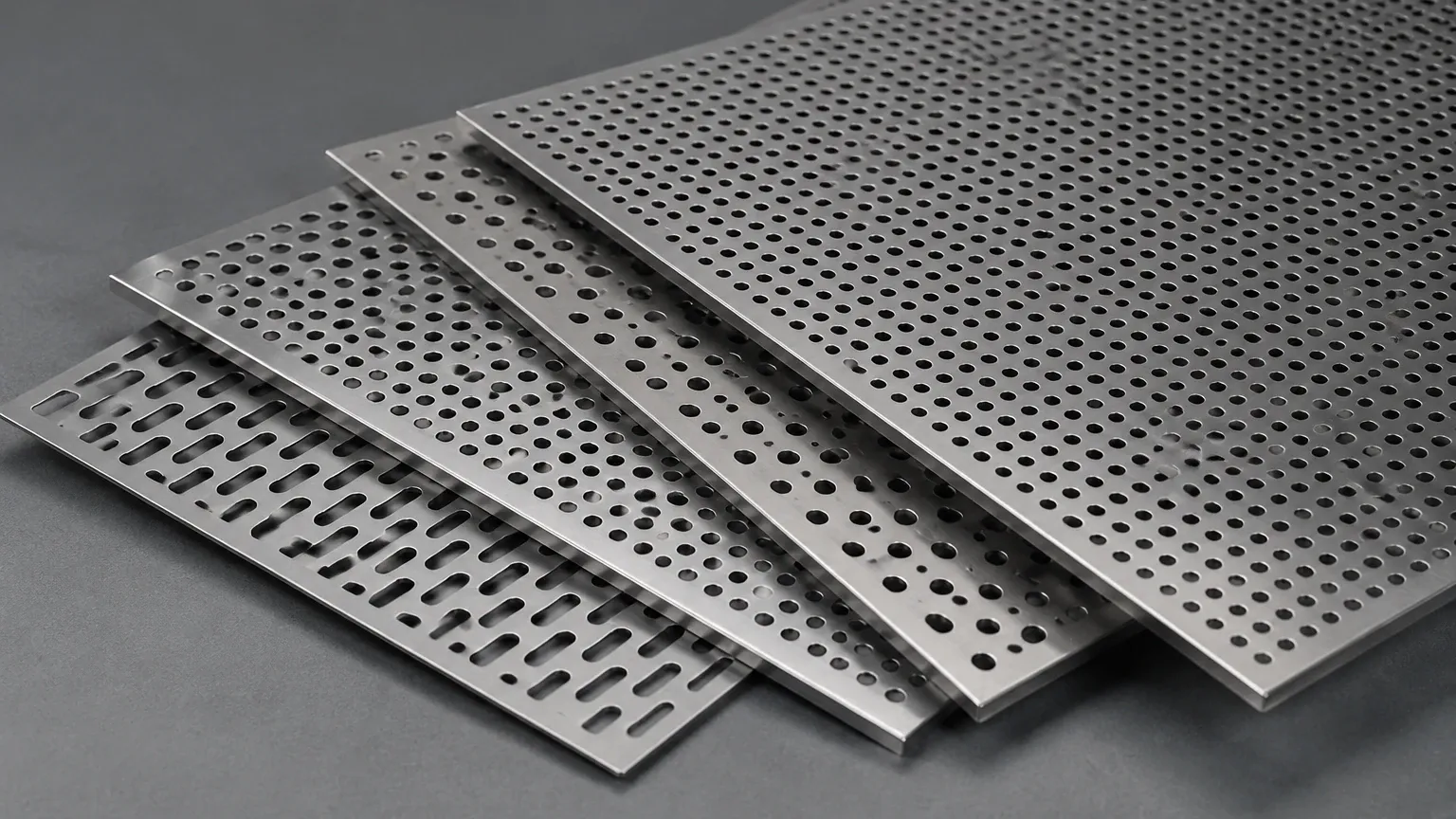
Flat Perforated Metal
In industrial filtration and structural engineering, the term "flat perforated metal" refers to metal sheets or coils that have been mechanically punched to create a pattern of holes and subsequently processed through precision leveling to ensure a uniform, planar surface. While the punching process naturally introduces internal stresses and physical deformation, high-quality industrial components require a high degree of flatness to ensure proper fitment, welding integrity, and consistent flow dynamics. For engineers and procurement specialists, understanding the technical nuances of these materials—often categorized under the broader heading of Perforated & Expanded Metal—is essential for optimizing the performance of filtration systems and industrial equipment.
The Importance of Precision Leveling for Perforated Sheets
The primary challenge in manufacturing perforated metal is the physical stress exerted on the material during the punching process. As the die penetrates the metal, the surrounding material is displaced and compressed, which typically results in "oil canning," bowing, or cambering. For applications such as filter cartridge support cores or vibrating screens, these distortions can lead to catastrophic failure or assembly misalignment.
To achieve true flat perforated metal, manufacturers utilize roller leveling. This process involves passing the perforated sheet through a series of staggered rollers that apply controlled pressure, stretching the material beyond its yield point to neutralize internal stresses. This is particularly critical when working with stainless steel, which has a high work-hardening rate. A flat surface is not merely an aesthetic requirement; it is a functional necessity for automated welding processes, where even a slight curvature can prevent a clean seam or cause gaps in a filter assembly.
Material Selection and Chemical Compatibility
When specifying Perforated & Expanded Metal for industrial use, material selection is the first line of defense against premature failure. Kaifil specializes in stainless steel solutions, which are preferred in demanding environments due to their superior corrosion resistance and mechanical strength.
1. Grade 304/304L: The standard for general industrial applications. It offers excellent formability and weldability, making it suitable for food processing, architectural guards, and general water treatment.
2. Grade 316/316L: Contains molybdenum, which provides enhanced resistance to chlorides and pitting. This is the preferred choice for chemical processing, pharmaceutical manufacturing, and marine environments.
3. Specialty Alloys: For high-temperature or highly acidic environments, alloys like Duplex stainless steel or Hastelloy may be required to maintain structural integrity over long service cycles.
Engineers must consider the chemical composition of the filtrate, the operating temperature, and the potential for galvanic corrosion when selecting the base metal. Using a lower-grade material in a corrosive environment can lead to "rouging" or localized pitting, which eventually compromises the filtration accuracy and structural safety of the component.
Geometric Specifications and Flow Dynamics
The performance of flat perforated metal in a filtration system is governed by its geometric configuration. This includes the hole shape, hole size, and the arrangement (pitch).
Hole Patterns
Round holes are the most common due to their structural stability and ease of manufacture. However, square, slotted, and hexagonal patterns are utilized for specific flow requirements. In filtration, a 60-degree staggered pattern is the industry standard because it provides the highest open area and maximum strength-to-weight ratio.
Open Area Calculation
The "open area" is the percentage of the sheet that consists of holes. This figure is critical for calculating pressure drop (delta P) and flow velocity. A higher open area reduces resistance to flow but decreases the mechanical strength of the sheet. Engineers must balance these two factors: a sheet that is too thin or has too much open area may collapse under high differential pressure, while a sheet with too little open area will cause the system to work harder, increasing energy costs and shortening the life of the pump.
Pitch and Bridge
The distance between the centers of two adjacent holes is known as the pitch, while the material remaining between the holes is the bridge. Maintaining a consistent bridge width is vital for the structural integrity of the flat perforated metal, especially when the material is subjected to high-pressure backwashing or mechanical vibration.
Perforated vs. Expanded Metal: Engineering Trade-offs
In many industrial contexts, Perforated & Expanded Metal are discussed interchangeably, but they serve different engineering purposes.
* Perforated Metal: Created by punching holes and removing material. This allows for extreme precision in hole size and placement. It is the superior choice for fine filtration where specific micron ratings or exact flow rates are required.
* Expanded Metal: Created by slitting and stretching the metal simultaneously. This process produces no waste and results in a 3D truss-like structure. While expanded metal is highly cost-effective and provides excellent grip and strength, it lacks the precise aperture control of flat perforated metal. In filtration, expanded metal is often used as an outer protective cage or a coarse pre-filter rather than a primary filtration media.
Customization and OEM Considerations
Industrial applications rarely follow a one-size-fits-all approach. Customization is often necessary to meet specific housing dimensions or filtration requirements. When ordering custom flat perforated metal, several technical factors must be confirmed:
* Margins: These are the unperforated areas along the edges of the sheet. Specifying "no margins" (finished-end patterns) or "standard margins" (random-end patterns) affects how the sheet will be welded or bolted into a frame.
* Tolerances: Standard commercial tolerances may not suffice for precision filtration. Engineers should define acceptable variances in hole diameter, sheet thickness, and overall dimensions.
* Surface Finish: For the food and pharmaceutical industries, a 2B or electropolished finish may be required to prevent bacterial growth and ensure ease of cleaning (CIP/SIP protocols).
* Burr Removal: The punching process can leave sharp edges (burrs) on the exit side of the hole. For filtration applications involving delicate wire mesh overlays, deburring is mandatory to prevent tearing the mesh.
Structural Integrity in High-Pressure Applications
Flat perforated metal often serves as the "backbone" of a filter element. In high-pressure hydraulic systems or deep-well water filtration, the perforated core must withstand significant radial and axial loads. If the material is not sufficiently flat or if the weld quality is poor, the core may buckle, leading to a bypass of unfiltered fluid or total system shutdown.
Engineers should evaluate the "yield strength" of the perforated sheet, taking into account the reduction in strength caused by the holes. This is often calculated using an "effective yield strength" formula that adjusts for the open area percentage. By selecting the correct thickness and material grade, the service life of the filtration component can be significantly extended, reducing the total cost of ownership.
Maintenance and Replacement Cycles
While stainless steel perforated components are designed for durability, they are not immune to wear. In abrasive environments, such as mining or wastewater treatment, the edges of the holes can round off over time, altering the filtration characteristics. Regular inspection should focus on:
* Blinding or Clogging: Accumulation of solids that cannot be removed by standard cleaning.
* Erosion: Thinning of the bridges due to high-velocity abrasive particles.
* Stress Corrosion Cracking: Particularly in high-temperature, chloride-rich environments.
Because flat perforated metal is often used as a support structure, its failure can lead to the failure of more expensive secondary media (like fine wire mesh). Therefore, establishing a proactive replacement cycle based on differential pressure monitoring is a best practice for industrial operations.
Conclusion for Procurement and Engineering Teams
Selecting the right Perforated & Expanded Metal requires a deep understanding of both the manufacturing process and the operational environment. Flat perforated metal provides the precision and structural reliability needed for the most demanding filtration tasks. By focusing on material grade, open area calculations, and the necessity of precision leveling, technical teams can ensure their filtration systems operate at peak efficiency with minimal downtime.
When sourcing these components, it is vital to partner with a manufacturer like Kaifil that understands the nuances of industrial filtration. Whether you require a standard sheet for a protective guard or a custom-engineered support core for a pharmaceutical filter, confirming technical specifications early in the design phase is the key to long-term performance.