


Flat Expanded Metal Size Chart
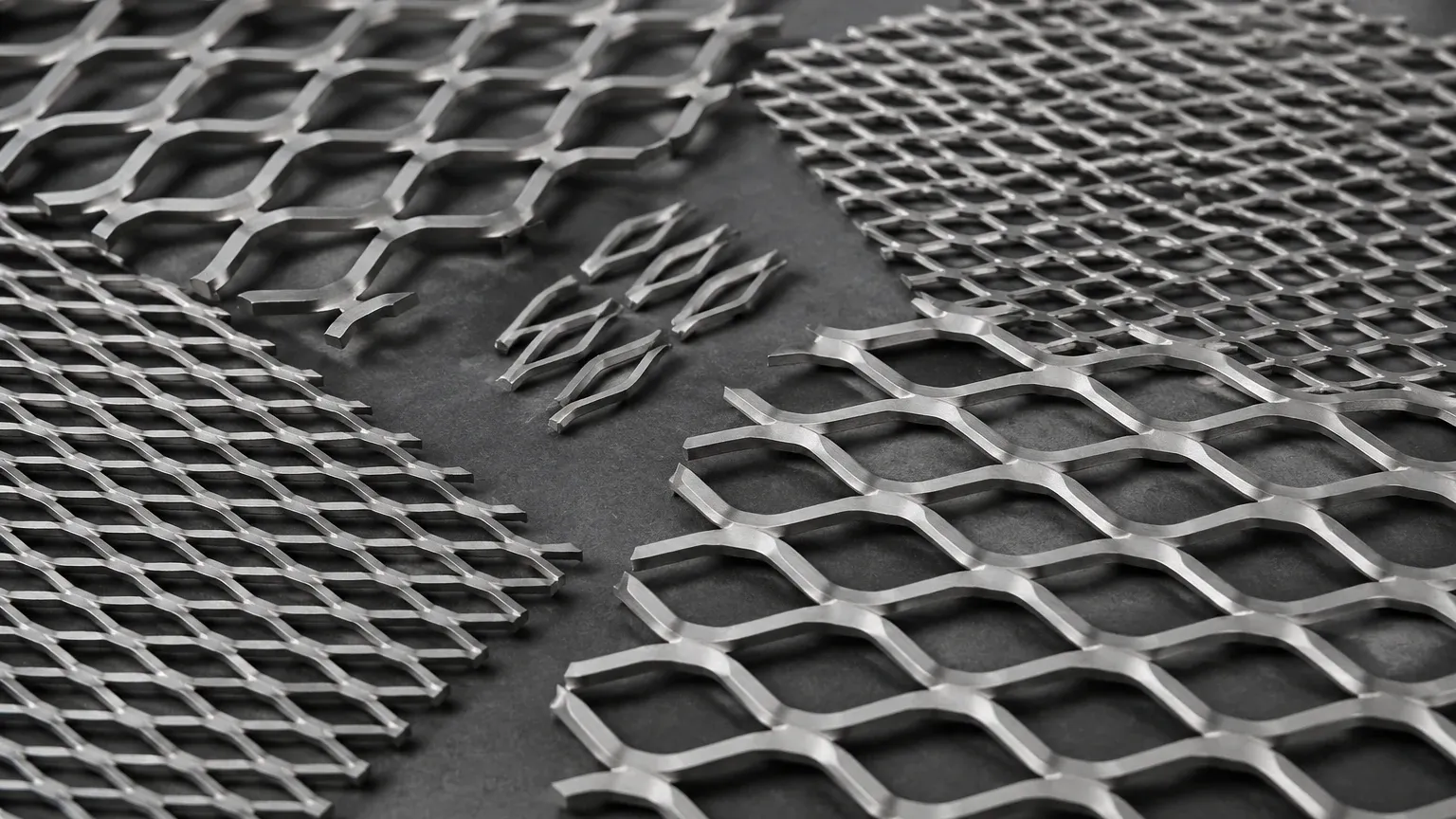
In industrial filtration and structural engineering, selecting the correct material specifications is critical for ensuring system integrity and performance. Flat expanded metal is a primary choice for support structures, filtration media, and protective screens due to its unique combination of strength and open area. Unlike standard expanded metal, which has a raised, architectural texture, flat expanded metal undergoes a cold-rolling process that levels the strands and bonds, resulting in a smooth, two-dimensional surface. To specify this material accurately, engineers rely on a flat expanded metal size chart to match dimensional requirements with application-specific demands.
Understanding how to interpret these charts is essential for procurement and design teams. This guide examines the technical parameters of Perforated & Expanded Metal, focusing on the dimensional variables, material behaviors, and selection criteria necessary for high-performance industrial applications.
Understanding Expanded Metal Terminology
Before navigating a flat expanded metal size chart, it is necessary to define the specific nomenclature used by manufacturers. Expanded metal is produced by simultaneously slitting and stretching a metal sheet. The resulting diamond-shaped openings are defined by several key measurements:
* SWD (Short Way of Design): The distance from the center of a bond to the center of the next bond across the short axis of the diamond.
* LWD (Long Way of Design): The distance from the center of a bond to the center of the next bond across the long axis of the diamond.
* SWO (Short Way of Opening): The actual width of the opening, measured from the inside of the strands.
* LWO (Long Way of Opening): The actual length of the opening, measured from the inside of the strands.
* Strand Width: The amount of metal between the openings.
* Strand Thickness: The gauge of the original base metal. In flattened expanded metal, this is the thickness after the cold-rolling process.
When reviewing a size chart, these dimensions dictate the mechanical properties of the sheet. For filtration applications, the SWO and LWO are particularly important as they determine the size of particles that can pass through or be retained by the mesh.
The Flattening Process and Its Impact on Dimensions
Standard expanded metal (also known as "raised") leaves the expanding machine with the strands set at an angle to the plane of the sheet. While this provides excellent grip and structural rigidity, it is often unsuitable for filtration layers where a smooth surface is required to prevent damage to delicate filter media or to facilitate easy cleaning.
Flat expanded metal is created by passing the standard raised sheet through a heavy-duty cold-rolling reducing mill. This process has several effects that engineers must account for:
1. Thickness Reduction: The flattening process reduces the thickness of the original strand. Typically, the final thickness of a flattened sheet is slightly less than the original gauge of the metal.
2. Elongation: As the metal is pressed flat, the LWD (Long Way of Design) often increases slightly—usually by about 5% to 10%—while the SWD remains relatively constant.
3. Surface Smoothness: The bonds and strands are forced into the same plane, creating a smooth, flat surface on both sides of the sheet.
4. Structural Changes: While flattening makes the sheet thinner, it can also increase the overall width of the sheet slightly. It is important to consult a specific flat expanded metal size chart to see the "after-flattening" dimensions rather than relying on the base metal gauge.
Technical Data: Typical Flat Expanded Metal Size Chart
Industrial manufacturers provide size charts to help engineers select the appropriate weight and opening size. Below is a representation of common specifications found in a standard flat expanded metal size chart for stainless steel and carbon steel variants. Note that these values are nominal and can vary based on custom manufacturing tolerances.
| Style Designation | Nominal Opening (SWD x LWD) | Strand Width (Inches) | Flattened Thickness (Inches) | Approx. Open Area (%) | Weight (lbs/sq. ft) |
| :— | :— | :— | :— | :— | :— |
| 1/4" #20 | 0.250 x 1.000 | 0.080 | 0.030 | 36% | 0.78 |
| 1/2" #18 | 0.500 x 1.200 | 0.095 | 0.040 | 60% | 0.60 |
| 1/2" #16 | 0.500 x 1.200 | 0.095 | 0.050 | 58% | 0.78 |
| 1/2" #13 | 0.500 x 1.200 | 0.105 | 0.070 | 54% | 1.30 |
| 3/4" #16 | 0.923 x 2.100 | 0.115 | 0.050 | 74% | 0.51 |
| 3/4" #13 | 0.923 x 2.100 | 0.115 | 0.070 | 72% | 0.74 |
| 3/4" #9 | 0.923 x 2.100 | 0.165 | 0.120 | 63% | 1.71 |
| 1-1/2" #13 | 1.330 x 3.200 | 0.115 | 0.070 | 82% | 0.44 |
| 1-1/2" #9 | 1.330 x 3.200 | 0.165 | 0.120 | 75% | 1.11 |
*Note: The style designation (e.g., 3/4" #9) refers to the nominal width of the diamond and the gauge of the metal before flattening.*
Material Selection for Corrosive Environments
In the chemical processing, pharmaceutical, and food industries, material selection is as important as the dimensional data found in a flat expanded metal size chart. While carbon steel is suitable for dry, non-corrosive environments, most industrial filtration applications require stainless steel.
* Stainless Steel 304: The most common grade, offering excellent corrosion resistance and durability for general industrial use, including food and beverage processing.
* Stainless Steel 316/316L: Contains molybdenum, providing superior resistance to chlorides and pitting. This is the standard for marine environments, pharmaceutical manufacturing, and aggressive chemical filtration.
* Specialty Alloys: For extreme temperatures or highly acidic environments, materials like Monel, Inconel, or Titanium can be expanded and flattened to meet specific engineering requirements.
When selecting a material, engineers must consider the "Total Cost of Ownership." While stainless steel has a higher initial cost than carbon steel, its longevity and resistance to degradation in harsh environments significantly reduce replacement frequency and downtime.
Engineering Considerations: Open Area and Pressure Drop
For engineers designing filtration systems, the "Approximate Open Area" column in a flat expanded metal size chart is a critical metric. The open area determines the flow rate and the pressure drop across the filter component.
1. Flow Dynamics: A higher open area percentage allows for higher flow rates and lower initial pressure drops. However, this must be balanced against the structural requirement of the filter. If the strands are too thin (resulting in a very high open area), the mesh may fail under high-pressure hydraulic loads.
2. Support for Fine Media: Flat expanded metal is frequently used as a support cage or drainage layer for fine wire mesh or pleated filter media. The smooth surface of the flattened metal ensures that the fine mesh is not punctured or abraded during pressure pulses or cleaning cycles.
3. Customization of Openings: If a standard size chart does not provide the exact open area required for a specific flow calculation, custom expansion ratios can be engineered. By adjusting the feed rate of the metal into the expanding machine, manufacturers can create bespoke diamond shapes that optimize the balance between strength and permeability.
Customization and OEM Capabilities
While standard size charts cover a wide range of industrial needs, many specialized applications require custom configurations. As a professional manufacturer, Kaifil specializes in tailoring Perforated & Expanded Metal solutions to meet exact project specifications.
Customization options include:
* Non-Standard Gauges: Producing expanded metal from specific foil or plate thicknesses not found in general stock.
* Variable Diamond Sizes: Adjusting the SWD and LWD to create unique filtration patterns or to fit specific housing dimensions.
* Secondary Fabrication: Providing flattened expanded metal in the form of cut-to-size sheets, welded cylinders, or multi-layered filter cartridges.
* Surface Finishes: In addition to flattening, components can be electropolished, passivated, or coated to enhance corrosion resistance and cleanliness, which is particularly vital in pharmaceutical and food-grade applications.
Procurement Checklist: What to Confirm Before Ordering
To ensure the material received matches the engineering intent, purchasing teams should confirm the following details with their supplier:
1. Material Grade: Specify the exact alloy (e.g., SS316L vs. SS304).
2. Flattened vs. Raised: Explicitly state if the application requires the smooth surface of flattened metal.
3. Dimensional Tolerances: Confirm the allowable variance in SWD, LWD, and overall sheet thickness. Standard industrial tolerances are usually sufficient, but precision filtration may require tighter controls.
4. Sheet Orientation: Specify the direction of the diamonds. In some applications, the orientation (LWD parallel to the length or width of the sheet) affects the structural rigidity and flow characteristics.
5. Edge Requirements: Determine if the sheet should have "random sheared" edges or "bonded" edges (where the diamonds are left intact at the perimeter).
Conclusion
A flat expanded metal size chart is an indispensable tool for industrial designers, providing the foundational data needed to select materials that balance flow efficiency with structural durability. By understanding the nuances of the flattening process, the importance of material grades like stainless steel 316, and the relationship between strand dimensions and open area, engineers can optimize their filtration systems for long-term reliability.
Kaifil provides a comprehensive range of stainless steel filtration solutions, combining advanced manufacturing expertise with a deep understanding of industrial application requirements. Whether you require standard specifications or a fully customized metal component, our engineering team is equipped to deliver high-performance results. For more information on dimensions, materials, and custom fabrication, Review product options and application support to find the ideal solution for your next project.
