


Flat Expanded Metal Sheet
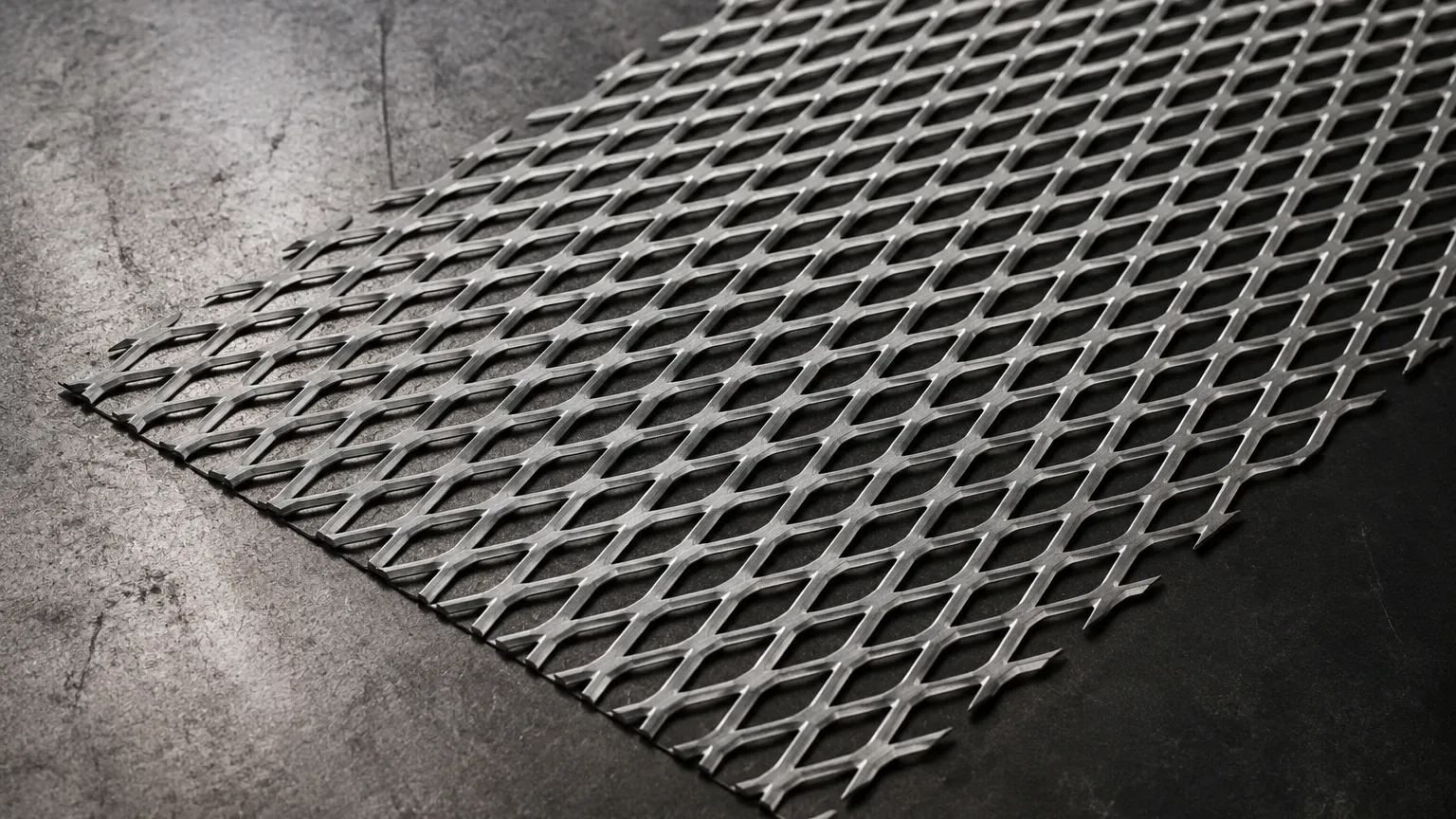
In industrial engineering and filtration design, the selection of structural support materials is as critical as the selection of the primary filter media itself. Among the most versatile materials used for reinforcement, protection, and fluid management is the flat expanded metal sheet. Unlike standard expanded metal, which retains a raised, angular surface, flattened expanded metal undergoes secondary processing to create a smooth, two-dimensional surface that is essential for precision industrial applications.
For engineers and procurement specialists, understanding the technical nuances of flat expanded metal sheet—from its manufacturing tolerances to its performance in corrosive environments—is vital for ensuring the longevity and efficiency of filtration systems and industrial components.
Understanding the Manufacturing Process of Flat Expanded Metal
To evaluate the suitability of a flat expanded metal sheet for a specific project, one must first understand how it differs from standard (raised) expanded metal. The process begins with a solid metal sheet, typically stainless steel, carbon steel, or aluminum. This sheet is simultaneously slit and stretched by a reciprocating press. This expansion creates a diamond-shaped pattern of openings without any material waste, as no metal is punched out during the process.
In its "standard" or "raised" state, the strands and bonds are set at a uniform angle to the plane of the sheet. While this provides excellent grip and structural rigidity, the raised edges can be problematic in filtration or aesthetic applications. To produce a flat expanded metal sheet, the raised material is passed through a cold-roll reducing mill. This secondary operation flattens the strands and bonds into the same plane, resulting in a smooth, level surface.
This cold-rolling process does more than just smooth the surface; it also reduces the thickness of the original strands and slightly elongates the diamond pattern. For technical teams, this means that the final specifications of a flattened sheet will differ slightly from the base expanded material, a factor that must be accounted for during the design phase.
Key Technical Specifications and Terminology
When specifying Perforated & Expanded Metal for industrial use, engineers must use standardized terminology to ensure the manufacturer meets the required tolerances. The performance of a flat expanded metal sheet is defined by several key parameters:
* SWD (Short Way of Design): The distance from a point on a bond to a corresponding point on the next bond measured across the short diamond diagonal.
* LWD (Long Way of Design): The distance across the long diamond diagonal.
* SWO (Short Way of Opening): The actual width of the opening, excluding the strand width.
* LWO (Long Way of Opening): The actual length of the opening.
* Strand Width: The amount of metal fed into the machine between slits.
* Strand Thickness: The thickness of the base metal. In flattened sheets, this refers to the thickness after the cold-rolling process.
For filtration applications, the "Open Area" percentage is perhaps the most critical metric. This determines the flow rate and pressure drop across the filter. Because flat expanded metal sheet is produced without removing material, calculating the open area requires precise measurements of the strand width relative to the diamond dimensions.
Applications in Industrial Filtration and Support
Kaifil specializes in custom stainless steel filtration solutions, where flat expanded metal sheet serves several high-performance roles. Its primary advantage in these environments is its smooth surface, which prevents damage to sensitive filter media.
1. Filter Media Support and Pleat Spacing
In pleated filter cartridges, the filter media (such as wire mesh or synthetic membranes) requires structural support to withstand high differential pressures. A flat expanded metal sheet can be used as an inner core or an outer wrap. Because it is flat, it provides a consistent contact surface that does not puncture or abrade the media, even under mechanical stress or hydraulic shock.
2. Protective Guards and Housings
In chemical processing and water treatment, filtration components are often exposed to debris or high-velocity flows. Expanded metal serves as a robust protective guard. The flattened variety is often preferred for housings where a low profile is required or where the component must be easily cleaned to prevent bacterial growth—a common requirement in food and beverage or pharmaceutical sectors.
3. Pre-filtration Screens
For coarse filtration, a flat expanded metal sheet can act as a primary screen to remove large particulates before the fluid reaches finer stages. Its rigid structure allows it to be used in high-flow environments where woven wire mesh might deform or bypass.
Material Selection: The Importance of Stainless Steel
While expanded metal can be produced from various alloys, stainless steel is the standard for industrial filtration due to its mechanical strength and chemical resistance. Kaifil typically utilizes the following grades for custom filtration components:
* Type 304: The most common grade, offering excellent corrosion resistance in standard industrial environments. It is suitable for most water treatment and general chemical applications.
* Type 316/316L: Contains molybdenum, which provides superior resistance to chlorides and pitting. This is the preferred choice for marine environments, pharmaceutical production, and aggressive chemical processing.
* Specialty Alloys: For extreme temperatures or highly acidic environments, materials like Monel or Inconel may be used, though stainless steel remains the most cost-effective solution for the majority of B2B filtration needs.
Engineering Considerations: Flat vs. Perforated Metal
Engineers often choose between Perforated & Expanded Metal when designing filtration systems. While both provide open area and structural integrity, flat expanded metal sheet offers specific advantages:
1. Material Efficiency: Expanded metal is produced by stretching, meaning a smaller amount of raw material can cover a larger area compared to perforated metal, where material is punched out and scrapped. This often leads to a lower total cost for the component.
2. Weight-to-Strength Ratio: The interconnected bonds of expanded metal provide inherent structural strength. Even after flattening, the sheet maintains high rigidity relative to its weight.
3. Flow Characteristics: The geometry of the diamond openings in expanded metal can influence fluid turbulence differently than the round or square holes of perforated sheets, which may be beneficial in certain mixing or diffusion applications.
Quality Evaluation and Common Procurement Risks
When sourcing flat expanded metal sheet for critical industrial applications, technical professionals must be aware of potential quality variances that can impact performance.
Surface Consistency and Burrs
The flattening process should result in a smooth surface, but lower-quality manufacturing can leave micro-burrs at the bonds. In filtration, these burrs can cause "media migration" (small pieces of the filter media breaking off) or create turbulence that disrupts flow. It is essential to confirm that the manufacturer employs precision cold-rolling and deburring processes.
Flatness and Camber
Camber refers to the bow or curve in a sheet of metal. In expanded metal, some degree of camber is natural due to the stretching process. However, for use in automated assembly lines or as part of a precision filter cartridge, the sheet must meet strict flatness tolerances. Excessive camber can lead to misalignment during welding or forming.
Dimensional Accuracy
Because the flattening process elongates the sheet, maintaining the exact SWD and LWD requires tight control over the rolling mill. Engineers should verify the manufacturer’s ability to hold tolerances, especially if the expanded metal must fit into a pre-machined housing or frame.
Pre-Purchase Checklist for Technical Teams
Before finalizing a specification for a flat expanded metal sheet, procurement and engineering teams should confirm the following details with their supplier:
1. Exact Material Grade: Ensure the alloy (e.g., 316L) matches the chemical compatibility requirements of the process fluid.
2. Flattened vs. Standard: Explicitly state that the application requires a flattened surface to avoid receiving raised material.
3. Opening Dimensions: Provide the required SWO and LWO, as these directly impact filtration efficiency and pressure drop.
4. Sheet Orientation: Specify whether the diamonds should run parallel to the length or width of the sheet, as this affects the bending strength and flow direction.
5. Finishing Requirements: Determine if the part requires passivating (for stainless steel), electropolishing, or specialized coating to meet industry standards (such as FDA compliance for food contact).
Conclusion
The flat expanded metal sheet is a foundational component in modern industrial filtration and structural design. By providing a smooth, rigid, and cost-effective solution for media support and protection, it enables engineers to build more durable and efficient systems. Whether used in a complex chemical reactor or a simple water treatment plant, the performance of the expanded metal depends on precise manufacturing and informed material selection.
As a professional manufacturer, Kaifil provides customized filtration solutions tailored to the specific demands of your industry. By focusing on technical accuracy and high-quality stainless steel production, we help technical teams overcome filtration challenges and optimize their equipment performance. For detailed specifications or to discuss a custom design, Review product options and application support to ensure your project utilizes the most effective filtration components available.
