


Flattened Expanded Metal Mesh
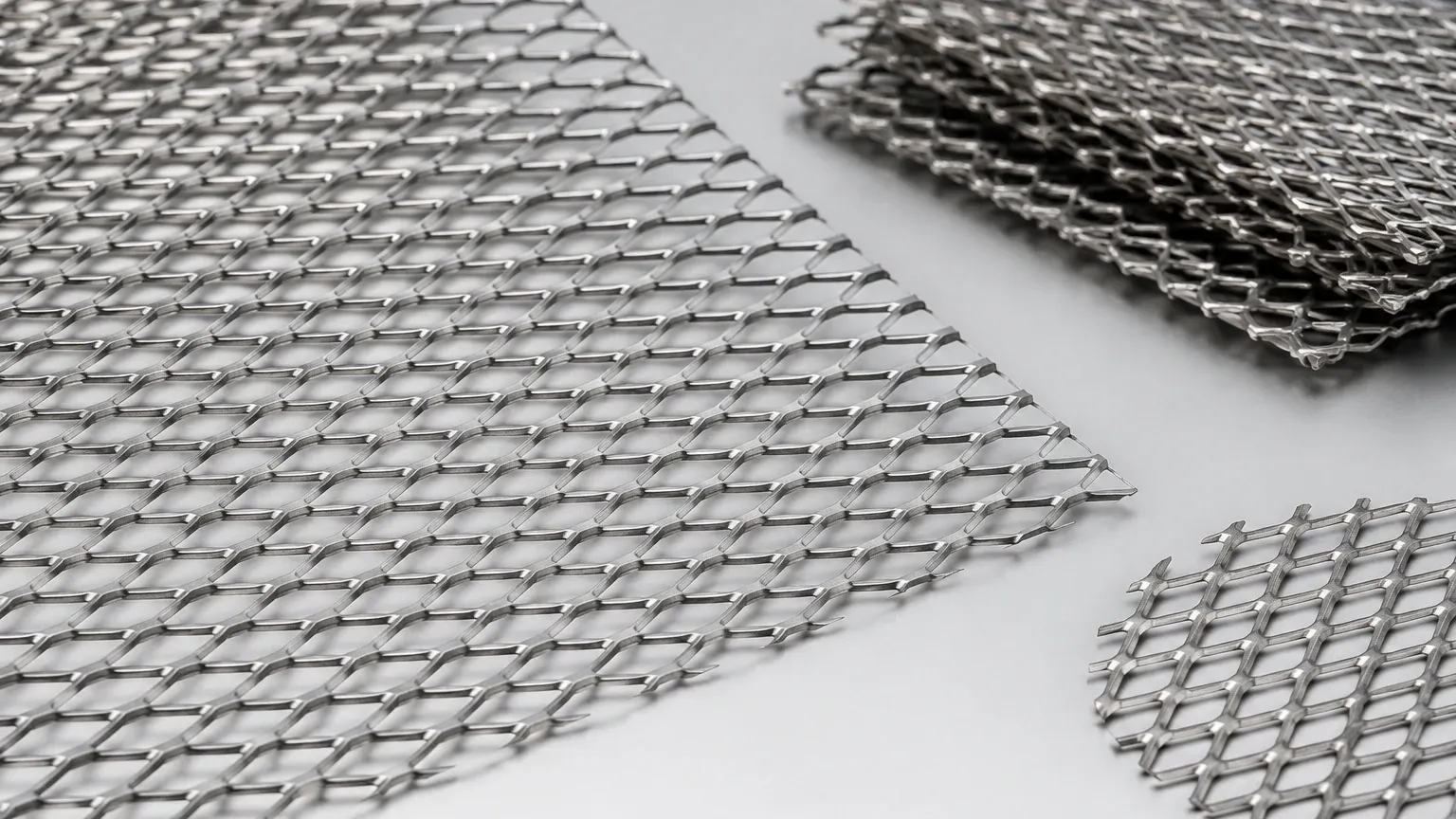
In industrial engineering and manufacturing, material selection often dictates the efficiency, safety, and longevity of a system. Among the various forms of processed metal, flattened expanded metal mesh stands out as a versatile component used across diverse sectors, from chemical processing to architectural design. Unlike standard expanded metal, which retains a raised, three-dimensional texture, the flattened variant undergoes secondary processing to create a smooth, two-dimensional surface. This structural modification makes it an essential choice for applications requiring precise thickness, surface uniformity, and specific flow characteristics.
For engineers and procurement professionals, understanding the technical nuances of flattened expanded metal mesh is critical for optimizing filtration systems and structural assemblies. This guide explores the manufacturing process, technical specifications, and engineering considerations necessary for selecting the right Perforated & Expanded Metal solutions for demanding industrial environments.
The Manufacturing Process: From Standard to Flattened Mesh
To understand the properties of flattened expanded metal mesh, one must first look at how expanded metal is produced. The process begins with a solid sheet or coil of metal—typically stainless steel, carbon steel, or aluminum. A machine simultaneously slits and stretches the metal in a single motion. This creates a series of diamond-shaped openings without any waste of material, as no metal is punched out during the expansion phase.
At this stage, the product is known as "standard" or "raised" expanded metal. The strands and bonds are set at a sharp angle to the plane of the sheet, providing a high strength-to-weight ratio and excellent grip, but resulting in a rough, uneven surface.
To produce flattened expanded metal mesh, the standard mesh is passed through a heavy-duty cold-rolling reducing mill. This secondary process flattens the strands and bonds, turning the three-dimensional structure into a flat, level surface. The rolling process typically reduces the thickness of the original base metal by about 5% to 10%, while slightly elongating the diamond pattern. The result is a smooth, safe-to-handle material that maintains the structural integrity of the original mesh while offering a consistent profile suitable for precision applications.
Key Technical Specifications and Terminology
When specifying flattened expanded metal mesh for industrial projects, engineers must use standardized terminology to ensure accuracy in manufacturing and performance. The geometry of the mesh is defined by several key metrics:
* SWD (Short Way of Design): The distance from the center of a bond to the center of the next bond across the short axis of the diamond.
* LWD (Long Way of Design): The distance from the center of a bond to the center of the next bond across the long axis of the diamond.
* SWO (Short Way of Opening): The actual width of the opening measured from the inside of the bonds.
* LWO (Long Way of Opening): The actual length of the opening measured from the inside of the bonds.
* Strand Width: The amount of metal fed into the machine to produce one strand.
* Overall Thickness: In flattened mesh, this is the final thickness of the sheet after the cold-rolling process.
Material selection is equally important. For industrial filtration and chemical processing, stainless steel (Grades 304, 316, or 316L) is the preferred choice due to its superior corrosion resistance and ability to withstand high temperatures. In less corrosive environments, galvanized steel or aluminum may be utilized to reduce weight or cost.
Advantages of Flattened vs. Raised Expanded Metal
The choice between raised and flattened expanded metal depends entirely on the intended application. However, in B2B industrial contexts, flattened expanded metal mesh offers several distinct advantages:
1. Surface Uniformity and Safety
The primary benefit of flattening is the smooth surface. In applications where personnel may come into contact with the mesh—such as machine guards, partitions, or shelving—the lack of sharp, raised edges significantly reduces the risk of injury. Furthermore, a smooth surface prevents the snagging of materials or cleaning tools.
2. Precise Dimensional Control
Flattening provides a consistent thickness across the entire sheet. This is vital when the mesh is used as a component within a larger assembly, such as a filter housing or a multi-layered filtration cartridge. Standard expanded metal can have varying heights due to the angle of the strands, which may interfere with tight tolerances in precision engineering.
3. Enhanced Suitability for Filtration Support
In the world of industrial filtration, flattened expanded metal mesh is frequently used as a support medium for finer wire mesh or filter paper. The flat surface provides a stable, uniform foundation that prevents the finer media from sagging or tearing under pressure. This ensures a more even distribution of the fluid or gas being filtered, optimizing the efficiency of the entire system.
Industrial Applications and Filtration Solutions
Because of its durability and open-area characteristics, flattened expanded metal mesh is a staple in several high-stakes industries. Its role often bridges the gap between purely structural components and functional filtration elements.
Chemical and Petrochemical Processing
In these environments, equipment must resist aggressive chemicals and high pressures. Flattened stainless steel mesh is used in catalyst support grids, internal tower components, and as protective screens for sensitive instrumentation. The smooth surface facilitates easier cleaning and sterilization, which is critical for preventing cross-contamination.
Food and Beverage Industry
Hygiene is the priority in food processing. Flattened mesh is used for drying trays, sorting screens, and filtration support. Because it is a single piece of metal without joins or welds (unlike woven wire mesh), there are fewer crevices where bacteria can accumulate, making it easier to meet stringent sanitary standards.
Hydraulic and Water Treatment
In hydraulic systems, flattened mesh acts as a coarse pre-filter or a reinforcement layer for pleated filter elements. In water treatment, it serves as a robust screen to remove large debris before the water reaches finer filtration stages. Its ability to maintain structural integrity under high flow rates makes it indispensable for protecting downstream pumps and valves.
Engineering Considerations: Open Area and Pressure Drop
One of the most critical factors for an engineer selecting flattened expanded metal mesh is the "Open Area" percentage. This value determines the transparency of the mesh to light, air, or liquid. It is calculated based on the relationship between the strand width and the diamond dimensions.
In filtration applications, the open area directly impacts the pressure drop across the system. A higher open area results in lower resistance to flow but may compromise the structural strength of the mesh. Conversely, a lower open area provides greater support but increases the energy required to move fluid through the system.
When designing a custom filtration solution, it is necessary to balance these factors. For instance, if the mesh is intended to support a fine wire mesh in a high-pressure hydraulic filter, the engineer might specify a thicker flattened mesh with a moderate open area to ensure the assembly does not collapse under vacuum or pressure surges.
Quality Standards and Procurement Best Practices
To ensure the performance of flattened expanded metal mesh, purchasing teams and engineers should confirm specific quality parameters with their manufacturer. At Kaifil, we emphasize the importance of technical precision in every custom filtration component.
1. Dimensional Tolerances
Standard industrial tolerances for expanded metal can vary. For precision applications, it is essential to define the allowable variance in sheet size, diamond dimensions, and thickness. Flattening can sometimes cause slight camber (a bow in the sheet), so specifying flatness requirements is crucial for automated assembly processes.
2. Edge Finishing
Expanded metal can be supplied with "random" edges (where the diamonds are cut through) or "bonded" edges (where the cut follows the line of the bonds). For safety and ease of installation, bonded edges or specialized U-edging may be required.
3. Surface Treatment and Cleanliness
Depending on the industry, the mesh may require additional treatments such as passivating (for stainless steel), galvanizing, or powder coating. In pharmaceutical or food-grade applications, the mesh must be free of lubricants used during the expansion and rolling processes. Ultrasonic cleaning or specialized degreasing should be confirmed during the procurement phase.
4. Customization Options
Standard stock sizes may not always meet the needs of specialized industrial equipment. Working with a manufacturer that offers custom slitting, shearing, and forming allows for the delivery of "ready-to-install" components, reducing labor costs and material waste at the client's facility.
Conclusion
Flattened expanded metal mesh is a high-performance material that offers a unique combination of strength, smooth surface finish, and predictable flow characteristics. Whether it is serving as a protective barrier in a manufacturing plant or providing the structural backbone for a complex filtration cartridge, its role in modern industry is fundamental.
By understanding the technical specifications—from SWD/LWD dimensions to material grades and open area calculations—engineers can select a mesh that enhances the durability and efficiency of their systems. When precision and reliability are non-negotiable, choosing the right Perforated & Expanded Metal solution is the first step toward operational excellence. For those managing complex industrial projects, confirming these technical details early in the design phase ensures a cost-effective and high-performance outcome.
