


Flattened Expanded Metal Sheet
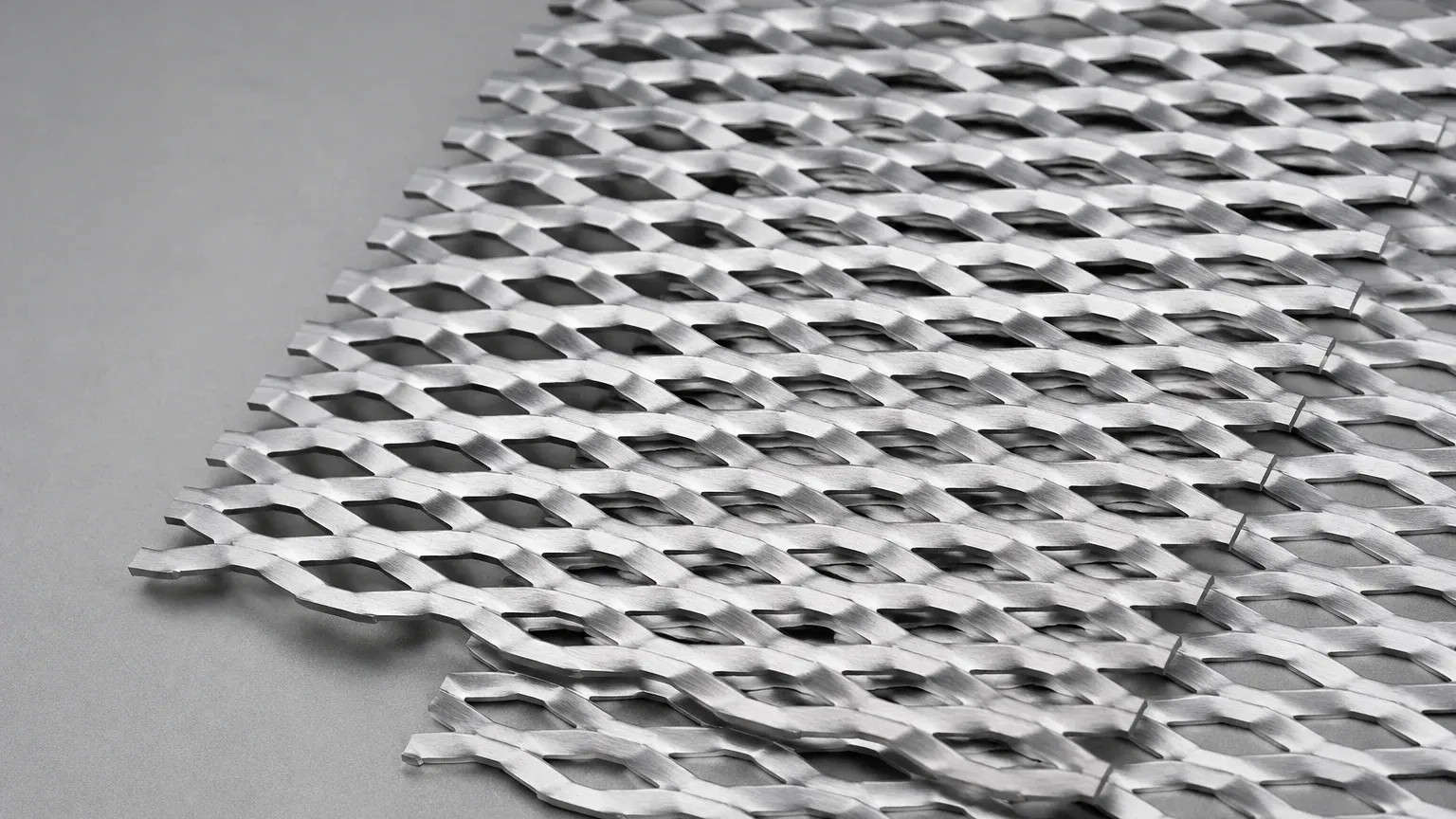
In industrial filtration and structural engineering, the selection of support media is as critical as the selection of the primary filtration layer. Among the various options available to engineers, the flattened expanded metal sheet stands out as a versatile, cost-effective, and structurally sound component. Unlike standard expanded metal, which retains a raised, angular profile from the stretching process, flattened expanded metal undergoes secondary processing to create a smooth, two-dimensional surface. This transformation is essential for applications where surface contact, flow dynamics, and mechanical stability are paramount.
For technical professionals and purchasing teams, understanding the nuances of how these sheets are manufactured, specified, and integrated into larger systems is key to optimizing performance and longevity. As a specialized manufacturer of stainless steel filtration solutions, Kaifil provides precision-engineered Perforated & Expanded Metal products designed to meet the rigorous demands of chemical processing, food production, and hydraulic systems.
Understanding the Manufacturing of Flattened Expanded Metal
The production of a flattened expanded metal sheet begins with the standard expansion process. A solid metal sheet or coil is fed through a machine that simultaneously slits and stretches the material. This creates a uniform pattern of diamond-shaped openings without any waste of material, as the process expands the original sheet to several times its initial length. At this stage, the material is known as "raised" or "standard" expanded metal, characterized by strands that are set at a sharp angle to the plane of the sheet.
To produce the flattened variant, the raised expanded metal is passed through a heavy-duty cold-rolling reducing mill. This secondary operation flattens the strands and bonds (the intersections of the strands) into a single plane. The result is a smooth, flat surface that is approximately the same thickness as the original base material, though often slightly thinner due to the pressure of the rollers.
From an engineering perspective, this process offers several advantages:
1. Surface Uniformity: The elimination of raised edges prevents the material from snagging or damaging adjacent filter media, such as fine wire mesh or synthetic fabrics.
2. Dimensional Stability: The cold-rolling process can slightly increase the length of the sheet (usually by about 5%), which must be accounted for in precision designs.
3. Structural Integrity: Because the metal is slit and stretched rather than punched, the structural continuity of the original sheet is maintained, providing excellent strength-to-weight ratios.
Technical Specifications and Dimensional Standards
When specifying a flattened expanded metal sheet for industrial use, engineers must use standardized terminology to ensure accuracy. The dimensions of the diamond openings and the thickness of the strands determine the material's open area, flow resistance, and mechanical strength.
Key Dimensional Variables
* Long Way of Design (LWD): The distance from the center of one bond to the center of the next bond across the long axis of the diamond.
* Short Way of Design (SWD): The distance from the center of one bond to the center of the next bond across the short axis of the diamond.
* Long Way of Opening (LWO): The actual clearance of the opening along the long axis.
* Short Way of Opening (SWO): The actual clearance of the opening along the short axis.
* Strand Width: The amount of metal between the openings.
* Strand Thickness: The gauge of the original metal sheet (or the final thickness after flattening).
For filtration applications, the percentage of open area is a critical metric. It determines the pressure drop across the filter and the velocity of the fluid or gas passing through. Flattened expanded metal typically offers a wide range of open area percentages, allowing engineers to balance the need for structural support with the requirement for high flow rates.
Material Selection for Industrial Filtration Environments
The environment in which the flattened expanded metal sheet will operate dictates the choice of material. While expanded metal can be made from carbon steel, aluminum, or copper, industrial filtration typically requires the corrosion resistance and durability of stainless steel.
Stainless Steel Grades
* Type 304/304L: The most common grade used in industrial applications. It offers good corrosion resistance and is suitable for most water treatment and general industrial uses.
* Type 316/316L: Contains molybdenum, which provides superior resistance to chlorides and pitting. This is the preferred choice for marine environments, chemical processing, and pharmaceutical applications.
* High-Nickel Alloys: For extreme temperatures or highly aggressive chemical environments, specialized alloys may be required to prevent premature failure of the support structure.
At Kaifil, the focus remains on high-quality stainless steel alloys that ensure the longevity of the filtration component. Selecting the correct grade is not just about chemical compatibility; it also involves considering the total cost of ownership. While 316L may have a higher upfront cost, its resistance to corrosion often results in longer replacement cycles and reduced downtime.
Engineering Advantages of the Flattened Profile
In the context of B2B industrial procurement, the choice of a flattened profile over a raised profile is usually driven by specific mechanical requirements.
Compatibility with Multi-Layer Media
In many high-pressure filtration systems, a fine wire mesh is used as the primary filtration layer. If this mesh were placed directly against a raised expanded metal sheet, the sharp edges of the strands could cause mechanical wear or "point loading," leading to the mesh tearing or deforming under pressure. The smooth surface of a flattened expanded metal sheet provides a uniform support base, distributing the load evenly across the mesh and extending the life of the filter element.
Flow Dynamics and Turbulence
While raised expanded metal can sometimes be used to induce turbulence (which may be desirable in certain heat exchange applications), filtration often requires laminar flow to minimize pressure drop. The flat profile of the strands reduces the resistance to fluid flow compared to the angled strands of the raised version. This is particularly important in hydraulic systems where maintaining a specific flow rate is vital for equipment performance.
Ease of Cleaning and Maintenance
Flattened surfaces are significantly easier to clean than raised surfaces. In food and beverage or pharmaceutical applications, where hygiene is critical, the absence of crevices and sharp angles reduces the risk of bacterial growth and material buildup. This makes flattened expanded metal more suitable for systems that require frequent Clean-in-Place (CIP) or manual sterilization procedures.
Applications in Industrial Filtration and Support Systems
The versatility of the flattened expanded metal sheet allows it to be used across a broad spectrum of industries. Its primary role is often as a structural skeleton for more delicate filtration components.
Filter Cartridge Cores and Shrouds
In the manufacturing of stainless steel filter cartridges, flattened expanded metal is frequently used as the inner core or the outer protective shroud. As a core, it provides the necessary collapse strength to withstand high differential pressures. As a shroud, it protects the pleated filter media from mechanical damage during handling and installation.
Pre-Filtration and Debris Removal
In water treatment and HVAC systems, larger gauge flattened expanded metal sheets serve as effective pre-filters. They capture large debris—such as leaves, plastic, or scale—before the fluid reaches the finer filtration stages. This protects the more expensive components of the system from clogging or physical impact.
Catalyst Support in Chemical Reactors
In chemical processing, expanded metal sheets are used to support catalyst beds. The flattened profile ensures that the catalyst pellets are distributed evenly and that the support structure does not interfere with the reaction kinetics by creating dead zones in the flow.
Selection Criteria for Purchasing and OEM Customization
When sourcing flattened expanded metal for industrial projects, purchasing teams should work closely with engineering to confirm several factors before finalizing an order. Generic off-the-shelf products may not meet the specific tolerances required for high-performance filtration.
Customization Options
Kaifil specializes in providing customized Perforated & Expanded Metal solutions tailored to specific OEM requirements. Customization can include:
* Specific Alloy Selection: Matching the metal to the exact chemical profile of the process fluid.
* Precision Leveling: Ensuring the sheet is perfectly flat for automated assembly processes.
* Edge Treatments: Providing sheets with solid borders (random or symmetrical) to facilitate welding or mechanical fastening into a frame.
* Surface Finishes: Options such as electro-polishing to enhance corrosion resistance and surface smoothness.
Confirming Project Requirements
Before taking the next step in procurement, ensure the following information is confirmed:
1. Maximum Differential Pressure: What is the highest pressure the sheet will need to withstand without deforming?
2. Chemical Exposure: Will the material be exposed to acids, bases, or high-chloride environments?
3. Temperature Extremes: Will the system operate at cryogenic temperatures or extreme heat?
4. Dimensional Tolerances: What are the allowable variances for LWD, SWD, and overall sheet thickness?
By addressing these technical details early in the design or procurement phase, companies can avoid the common risks of material failure, such as stress corrosion cracking or mechanical collapse. A well-specified flattened expanded metal sheet ensures that the entire filtration system operates at peak efficiency, providing a reliable and cost-effective solution for demanding industrial environments.
