


Galvanized Expanded Metal
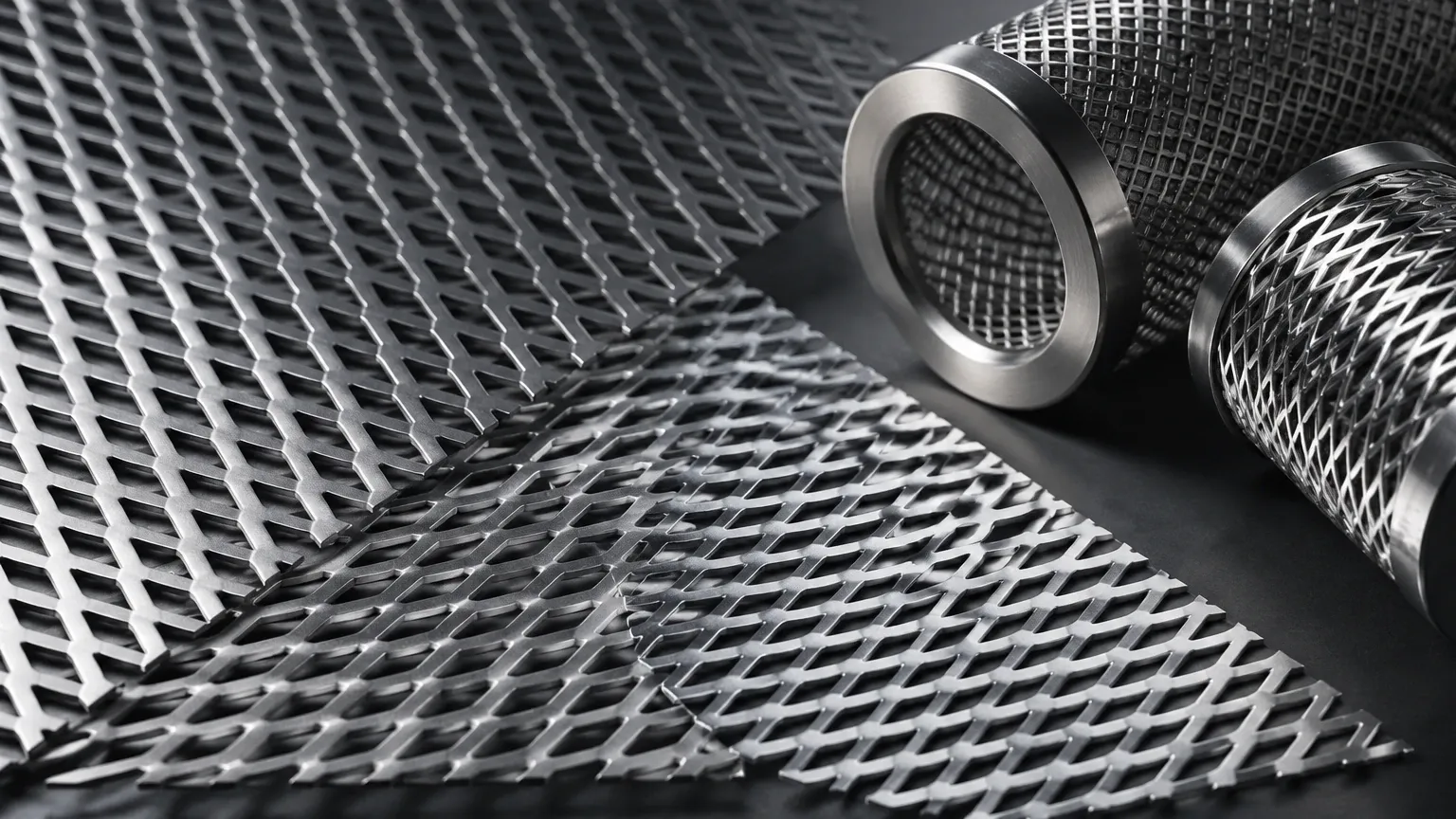
In the landscape of industrial materials, galvanized expanded metal stands as a critical component for structural support, safety, and filtration. Unlike traditional woven wire or perforated sheets, expanded metal is manufactured through a unique process of slitting and stretching, creating a diamond-shaped pattern that is integral to the sheet. When combined with a galvanized finish, this material offers a balance of mechanical strength, corrosion resistance, and cost-efficiency that is difficult to replicate with other metal processing techniques.
For engineers and procurement professionals, understanding the nuances of galvanized expanded metal is essential for optimizing the performance and lifespan of industrial equipment. This guide examines the manufacturing processes, technical specifications, and engineering considerations that define the application of this material in demanding environments.
Understanding the Manufacturing of Galvanized Expanded Metal
The production of expanded metal is fundamentally different from perforated metal. While perforated metal involves punching holes out of a solid sheet—resulting in material waste—expanded metal is created by simultaneously slitting and stretching the base metal. This process expands the sheet to several times its original length while maintaining its structural integrity as a single, jointless piece of metal.
The Expansion Process
Expanded metal is produced on a specialized press. The machine slits the metal at regular intervals and then stretches it. Because there are no welds or joins, the resulting mesh is inherently stronger than a welded wire alternative. The strands and bonds (the intersections of the strands) are set at a uniform angle to the plane of the sheet, providing increased rigidity and allowing for the passage of air, light, and fluids while maintaining a physical barrier.
The Galvanization Process
Galvanization is the application of a protective zinc coating to steel to prevent rusting. In the context of expanded metal, there are two primary methods:
1. Pre-galvanized Expanded Metal: The expansion process is performed on steel sheets that have already been galvanized. While cost-effective, this method leaves the slit edges of the diamond pattern exposed, as the zinc coating is broken during the cutting process. While the surrounding zinc provides some sacrificial protection to these edges, it may not be suitable for highly corrosive environments.
2. Hot-Dip Galvanized After Expansion: The steel is expanded first and then submerged in a bath of molten zinc. This ensures that every surface, including the cut edges and bonds, is fully encapsulated in a thick layer of zinc. This method provides superior corrosion resistance and is the standard for outdoor or chemically intensive applications.
Technical Specifications and Engineering Geometry
When specifying galvanized expanded metal for industrial projects, engineers must use standardized terminology to ensure the material meets mechanical requirements. The geometry of the diamond opening dictates the material's strength, weight, and open area percentage.
Key Measurements
* SWD (Short Way of Design): The distance from the center of one bond to the center of the next bond measured across the short diamond diagonal.
* LWD (Long Way of Design): The distance from the center of one bond to the center of the next bond measured across the long diamond diagonal.
* SWO (Short Way of Opening): The actual width of the opening, excluding the strand width.
* LWO (Long Way of Opening): The actual length of the opening, excluding the strand width.
* Strand Thickness: The thickness of the base metal used.
* Strand Width: The amount of metal fed into the machine for each slit-and-stretch cycle.
Standard vs. Flattened Expanded Metal
Expanded metal is available in two primary forms: raised (standard) and flattened.
* Raised Expanded Metal: The strands and bonds are turned at a sharp angle to the plane of the sheet. This creates a slip-resistant surface and provides maximum strength-to-weight ratio and rigidity.
* Flattened Expanded Metal: The raised expanded metal is passed through a cold-rolling reducing mill. This flattens the strands and bonds into a single plane, resulting in a smooth, level surface. Flattened metal is often preferred for applications where a smooth finish is required to prevent snagging or for easier integration into filter housings.
The Role of Galvanization in Corrosion Protection
For industrial filtration and structural components, the longevity of the material is often determined by its resistance to oxidation. Steel, while strong, is highly susceptible to rust when exposed to moisture or industrial chemicals. Galvanization addresses this through two mechanisms: barrier protection and galvanic (sacrificial) protection.
Zinc is more reactive than iron. When the galvanized coating is scratched or the edges are exposed (as in pre-galvanized sheets), the zinc will corrode preferentially to the underlying steel. This sacrificial action prevents the spread of rust under the coating, a phenomenon known as "creep."
In the manufacturing of Perforated & Expanded Metal, the choice of galvanization thickness—often measured in ounces per square foot—must be calibrated to the expected service life of the component. For heavy-duty industrial filtration systems, hot-dip galvanization after expansion is typically recommended to ensure the structural supports of the filter media do not fail prematurely due to localized corrosion.
Industrial Applications: Beyond Simple Filtration
Galvanized expanded metal is a staple in various sectors due to its versatility. At Kaifil, we recognize that while filtration is a primary use case, the mechanical properties of expanded metal lend themselves to a wide range of industrial functions.
Filtration Support and Pre-filtration
In high-pressure hydraulic or chemical filtration systems, the primary filter media (such as fine wire mesh or synthetic fabric) often lacks the structural strength to withstand the flow of fluids. Galvanized expanded metal is frequently used as a support core or outer cage for filter cartridges. Its high open area ensures minimal pressure drop, while the rigid diamond structure prevents the media from collapsing under differential pressure.
Safety and Security
The raised surface of standard expanded metal provides excellent traction, making it an ideal material for industrial walkways, stair treads, and ramps, particularly in environments where oil or water might be present. Additionally, its strength makes it suitable for machine guards, protecting operators from moving parts without obstructing visibility or airflow.
Architectural and HVAC Applications
In HVAC systems, galvanized expanded metal serves as a protective screen for air intakes and as a structural frame for large-scale air filters. Its ability to be formed and welded allows it to fit custom housing dimensions while providing a durable barrier against debris.
Comparing Expanded Metal to Perforated Metal
When designing a filtration or structural system, engineers often choose between expanded and perforated metal. Each has distinct advantages depending on the application requirements.
| Feature | Expanded Metal | Perforated Metal |
| :— | :— | :— |
| Material Waste | Virtually none; the sheet is stretched. | Significant; holes are punched out. |
| Cost | Generally lower due to less waste. | Higher due to material loss and tooling. |
| Strength | High strength-to-weight ratio. | High, but depends on the hole pattern. |
| Flexibility | Easier to form into curves/cylinders. | Can be rigid depending on thickness. |
| Open Area | Easily adjustable by changing the stretch. | Fixed by the punch pattern. |
For many B2B applications, galvanized expanded metal is the preferred choice when the primary goal is structural reinforcement or coarse filtration where cost-efficiency is a priority. However, for precision filtration requiring specific hole shapes or very small micron ratings, perforated metal or fine wire mesh may be necessary.
Selection Guide for Procurement and Engineering Teams
Selecting the right galvanized expanded metal involves more than just picking a diamond size. To ensure the component performs as expected in an industrial environment, the following factors must be confirmed:
1. Environmental Compatibility: Determine if the material will be exposed to acidic or alkaline substances. While zinc is excellent for moisture, certain chemicals can rapidly strip the galvanized layer. In such cases, stainless steel may be a more appropriate choice.
2. Mechanical Load: Calculate the required load-bearing capacity. The orientation of the diamonds (LWD vs. SWD) affects the strength; expanded metal is significantly stronger when the load is applied across the LWD.
3. Airflow and Pressure Drop: For filtration and HVAC applications, the percentage of open area is critical. A higher open area reduces energy consumption by lowering the resistance to flow but may reduce the structural rigidity of the sheet.
4. Fabrication Requirements: Will the metal be welded, bent, or coated further? Galvanized steel requires specific welding techniques to avoid the release of zinc fumes and to ensure the weld points are protected against rust post-fabrication.
Customization and Quality Assurance
As a professional manufacturer, Kaifil provides customized filtration solutions that integrate high-performance metal components. Whether you require specific gauge thicknesses, custom diamond dimensions, or particular galvanization standards, our engineering team works to ensure the final product meets your application's exact demands.
From material selection to the precision of the expansion process, quality control is paramount. We ensure that the galvanized coating is uniform and that the mechanical properties of the expanded metal are consistent across every batch. This commitment to quality ensures that your filtration systems and industrial structures remain reliable, even in the most demanding environments.
For engineers and purchasing teams looking to optimize their filtration performance and structural durability, choosing the right material is the first step toward long-term operational success. Understanding the technical benefits of galvanized expanded metal allows for more informed decisions that balance performance with total cost of ownership.
