


Grainger Perforated Metal
In the landscape of industrial procurement, sourcing specialized materials often begins with a search for reliable distributors. For many maintenance, repair, and operations (MRO) professionals, "grainger perforated metal" serves as a primary reference point for immediate, off-the-shelf needs. However, for engineers and technical purchasing teams involved in the design and optimization of complex filtration systems, the transition from standard stock to customized Perforated & Expanded Metal components is a critical step in ensuring long-term performance and efficiency.
Industrial filtration requires a precise balance of structural integrity, flow rate optimization, and chemical compatibility. While large-scale distributors provide essential access to standard sizes and common gauges, specialized manufacturers like Kaifil focus on the technical nuances that define high-performance filtration media. Understanding the engineering parameters of these materials is the first step in selecting the right solution for demanding applications in chemical processing, food and beverage production, and hydraulic systems.
The Role of Perforated and Expanded Metal in Filtration
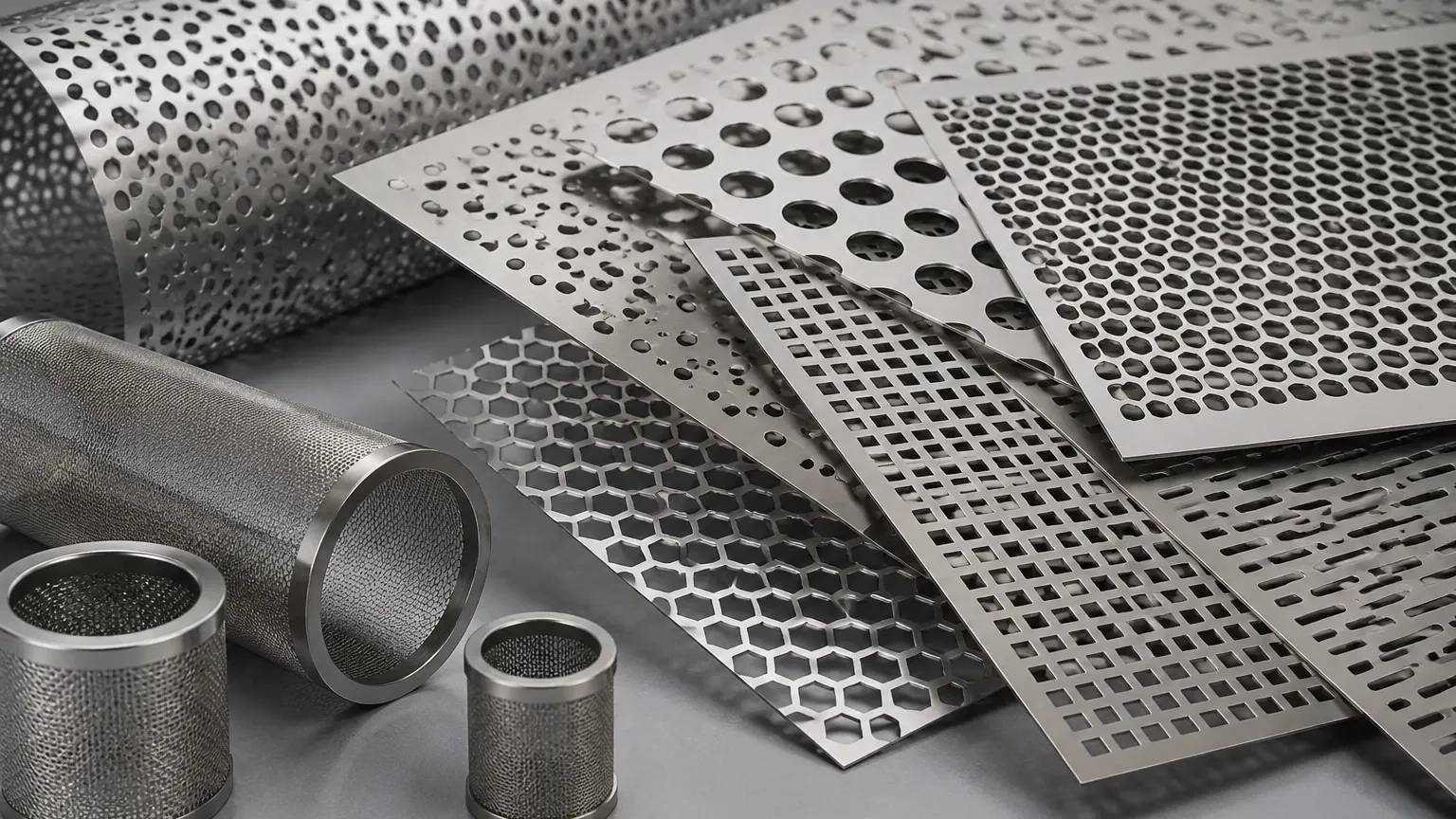
Both perforated and expanded metals serve as foundational components in industrial filtration. Their primary functions include acting as a support structure for finer wire mesh, serving as a primary coarse filter, or functioning as a protective outer cage for delicate filter cartridges.
Perforated Metal Characteristics
Perforated metal is produced by mechanically punching or laser-cutting holes into a solid metal sheet. This process allows for extreme precision in hole size, shape, and spacing. In filtration, the uniformity of the holes ensures consistent flow characteristics and predictable pressure drops across the media. Common hole patterns include round, square, slotted, and hexagonal, with round staggered patterns being the industry standard for general-purpose filtration due to their inherent strength and high open-area ratios.
Expanded Metal Characteristics
Unlike perforated metal, expanded metal is created by simultaneously slitting and stretching a sheet. This process results in a diamond-shaped pattern without any material waste. Expanded metal can be supplied in two forms: "raised" (as it comes off the machine) or "flattened" (passed through a cold-roll reducing mill). In filtration, expanded metal is often favored for its high strength-to-weight ratio and its ability to provide a mechanical bond when used in composite filter structures.
Evaluating Distributor Stock vs. Custom Manufacturing
When searching for grainger perforated metal, buyers typically encounter a selection of standard sheets, often in 36" x 48" or 48" x 96" dimensions. These are excellent for rapid repairs or general guarding applications. However, industrial filtration often demands specifications that exceed standard stock availability.
Dimensional Precision and Margins
Standard distributor sheets often feature "unfinished" margins, where the hole pattern is cut off at the edge of the sheet. For a filter manufacturer, custom-produced perforated metal allows for "finished" margins—solid borders around the perforated area. This is essential for welding components into cylindrical filter cartridges or securing them into frames without compromising the structural integrity of the joint.
Material Specialization
While distributors stock common grades like Carbon Steel or Stainless Steel 304, specialized filtration environments may require high-grade Stainless Steel 316L for superior corrosion resistance in acidic or saline environments. Custom manufacturing ensures that the specific alloy chemistry meets the rigorous standards of the pharmaceutical or food and beverage industries, where material traceability and surface finish are non-negotiable.
Technical Engineering Considerations for Selection
To move beyond a basic search for grainger perforated metal and toward a high-performance solution, engineers must evaluate several technical variables that impact the total cost of ownership and system reliability.
1. Open Area Calculations
The "open area" is the percentage of the sheet that is occupied by holes. This is perhaps the most critical metric for filtration as it directly correlates to the flow rate and pressure drop.
* Round Holes, Staggered (60°): % Open Area = (D² x 90.69) / P²
* Round Holes, Straight Line: % Open Area = (D² x 78.5) / P²
*(Where D = Hole Diameter and P = Pitch/Center-to-Center distance)*
A higher open area reduces resistance to flow but can decrease the structural rigidity of the filter element. Engineering a custom solution allows for the optimization of this ratio based on the specific viscosity and velocity of the fluid being filtered.
2. Gauge and Thickness
The thickness of the material must be sufficient to withstand the differential pressure (ΔP) encountered during the filtration cycle, especially as the filter cake builds up. Standard stock may be too thin for high-pressure hydraulic applications or too thick for applications requiring minimal weight. Custom manufacturing allows for precise gauge selection to balance durability with system weight constraints.
3. Hole Geometry and Orientation
While round holes are standard, slotted holes are often preferred for filtering elongated particles or fibers. The orientation of these slots (parallel or perpendicular to the flow) can significantly affect the efficiency of the cleaning cycle, whether through backwashing or mechanical scraping.
Applications Across Demanding Industries
The choice between standard and custom Perforated & Expanded Metal components is often dictated by the specific requirements of the application sector.
Chemical and Petrochemical Processing
In these environments, filters are exposed to aggressive chemicals and high temperatures. Sourcing materials with confirmed 316L or exotic alloy compositions is vital. Custom-fabricated perforated cores provide the necessary support for pleated mesh elements, preventing collapse under extreme pressure.
Food and Beverage Industry
Filtration components in this sector must adhere to strict sanitary standards. This involves not only the correct material selection but also specific surface treatments like electropolishing to ensure there are no burrs or crevices where bacteria can accumulate. Custom manufacturing allows for the production of seamless perforated tubes that are easier to clean and maintain.
Hydraulic and Water Treatment
For water intake screens or hydraulic return line filters, expanded metal is frequently used for its ability to deflect debris while maintaining high flow. In large-scale water treatment, the ability to order custom-sized panels that fit existing infrastructure without on-site cutting and welding significantly reduces installation costs.
Quality Assurance and Performance Expectations
When transitioning from a general distributor model to a technical manufacturer like Kaifil, the level of quality assurance increases. For critical filtration components, engineers should confirm the following before procurement:
* Flatness Tolerances: Ensuring the sheet remains flat after the perforation process is essential for automated assembly.
* Burr Control: In fine filtration, even small burrs can tear the wire mesh or contaminate the downstream fluid.
* Concentricity: For cylindrical filter cartridges, the perforated core must be perfectly round to ensure uniform flow and proper fit within the housing.
Before taking the next step in your procurement process, it is advisable to Review product options and application support to ensure the selected specifications align with your system’s performance requirements.
Total Cost of Ownership: Beyond the Initial Purchase
While the unit price of a standard sheet of grainger perforated metal may appear lower than a custom-engineered component, the total cost of ownership (TCO) tells a different story.
1. Reduced Labor: Custom-sized components arrive ready for assembly, eliminating the need for in-house cutting, de-burring, and flattening.
2. Extended Service Life: Selecting the exact alloy and gauge for the application reduces the frequency of filter failure and replacement.
3. Optimized Efficiency: Properly engineered open areas reduce energy consumption by minimizing the pressure drop across the filtration system.
In conclusion, while distributors play a vital role in the supply chain for standard MRO needs, the complexities of industrial filtration often require a more technical approach. By focusing on precise engineering parameters—such as open area, material grade, and custom dimensions—technical teams can move beyond the limitations of stock materials to develop filtration solutions that are more durable, efficient, and cost-effective in the long run. Whether you are designing a new system or upgrading an existing one, the transition to high-performance perforated and expanded metal is an investment in the reliability of your industrial process.
