


Imagewall Perforated Metal Panel Systems Zahner
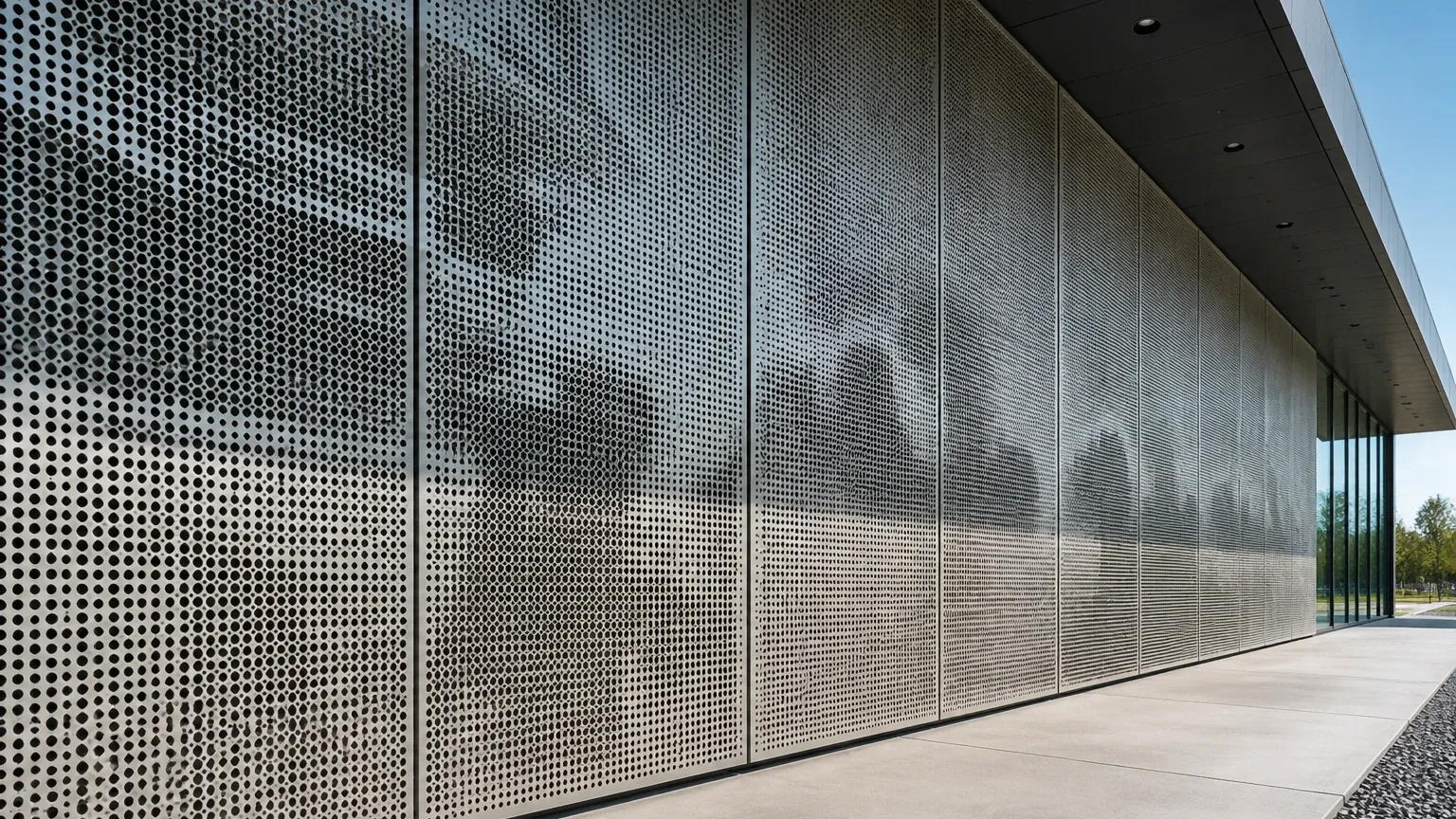
In the realm of advanced metal fabrication, the intersection of architectural aesthetics and industrial precision is most clearly defined by systems like the Imagewall perforated metal panel systems Zahner. While these systems are often recognized for their ability to translate complex digital imagery into physical metal surfaces, the underlying engineering principles—perforation accuracy, material integrity, and structural performance—are the same fundamental requirements found in high-performance industrial filtration and precision metal components.
For engineers and procurement professionals, understanding the technical nuances of Perforated & Expanded Metal is essential for selecting the right solution, whether the application is a decorative facade or a high-pressure industrial filter support. This guide explores the technical specifications, manufacturing considerations, and industrial applications of these metal systems, providing a framework for evaluating custom metal solutions.
The Engineering of Image-Based Perforation
Systems such as the imagewall perforated metal panel systems zahner utilize a process known as algorithmic perforation. Unlike standard perforated sheets that feature a uniform grid of holes, image-based systems vary the size, spacing, or shape of the perforations to create a visual gradient. From a technical perspective, this requires sophisticated CNC (Computer Numerical Control) punching or laser cutting capabilities.
Hole Geometry and Dithering
In industrial contexts, hole geometry is usually dictated by filtration requirements or airflow dynamics. In image-based systems, the geometry is dictated by "dithering"—the conversion of image pixels into physical holes. For an engineer, this translates to a complex "open area" calculation. Instead of a constant percentage of open area across the panel, the open area fluctuates. This variation must be carefully managed to ensure that the panel maintains its structural integrity and meets specific performance criteria, such as wind load resistance or hydraulic flow capacity.
Precision and Tolerance
Achieving the level of detail seen in high-end architectural systems requires tight manufacturing tolerances. In industrial filtration, these same tolerances are critical for ensuring that a filter cartridge fits perfectly within its housing or that a support tube can withstand the mechanical stresses of backwashing. High-precision perforation ensures that there are no burrs or sharp edges that could compromise the integrity of a filter media or cause turbulence in a fluid system.
Material Selection for Durability and Performance
The choice of material is perhaps the most critical decision in the specification of perforated and expanded metal systems. Whether the goal is architectural longevity or industrial chemical resistance, the material must be suited to its environment.
Stainless Steel: The Industrial Standard
Stainless steel is the preferred material for both high-end architectural panels and industrial filtration components due to its corrosion resistance and mechanical strength.
- Grade 304: Suitable for most indoor and mild outdoor architectural applications. In industrial settings, it is used for general-purpose filtration where chemical exposure is limited.
- Grade 316/316L: Contains molybdenum, providing superior resistance to chlorides and acids. This is the standard for marine environments in architecture and is mandatory for pharmaceutical, food and beverage, and chemical processing applications where hygiene and corrosion resistance are paramount.
Aluminum and Specialty Alloys
While aluminum is favored in architectural systems for its lightweight properties and anodizing options, it is less common in heavy industrial filtration due to its lower mechanical strength and susceptibility to certain corrosive agents. However, in aerospace or specific hydraulic applications where weight is a primary concern, aluminum perforated components are frequently utilized.
Comparing Perforated vs. Expanded Metal
When evaluating systems like the imagewall perforated metal panel systems zahner, it is important to distinguish between perforated and expanded metal, as they offer different mechanical properties and visual effects.
Perforated Metal
Perforated metal is created by punching holes into a solid sheet. This process allows for complete customization of hole shape (round, square, slotted, or custom patterns) and arrangement.
- Pros: High precision, predictable open area, smooth surface finish.
- Cons: Higher material waste (the "slugs" from the holes), which can increase costs for expensive alloys.
Expanded Metal
Expanded metal is produced by simultaneously slitting and stretching a sheet of metal. This creates a diamond-shaped mesh without any material waste.
- Pros: Excellent strength-to-weight ratio, no material waste, provides a 3D texture that can assist in mechanical bonding or fluid dispersion.
- Cons: Less precision in aperture size compared to perforation, and the edges are naturally sharper unless secondary processing (flattening) is performed.
In industrial filtration, expanded metal is often used as an outer guard or an inner support core for filter cartridges, providing structural rigidity while allowing for maximum flow.
Industrial Applications of Precision Perforated Components
While the imagewall perforated metal panel systems zahner highlights the aesthetic potential of metal, the same technology powers critical industrial processes. At Kaifil, we apply these high-precision manufacturing techniques to create reliable filtration solutions.
1. Filter Support Tubes and Baskets
Perforated metal cylinders serve as the backbone for many industrial filters. They must be perfectly round, with precise hole patterns that provide maximum open area while resisting collapse under high differential pressure. In chemical processing, these components must be fabricated with high-grade stainless steel to prevent contamination.
2. Acoustic Dampening and Airflow Control
In power generation and HVAC systems, perforated metal panels are used to manage sound and air distribution. The specific hole size and pitch are engineered to trap sound waves or create laminar airflow, much like how architectural panels are used to manage solar shading and building acoustics.
3. Food and Pharmaceutical Processing
In these industries, the surface finish of the perforated metal is as important as the hole size. Components must be free of pits, crevices, and burrs to prevent bacterial growth. Electropolishing is often applied to perforated stainless steel components to achieve a "mirror finish" that meets stringent sanitary standards.
Technical Evaluation Criteria for Engineers
When specifying custom Perforated & Expanded Metal for a project, engineers should confirm several key parameters to ensure performance and cost-effectiveness.
Open Area Calculations
The open area percentage determines both the visual transparency of an architectural panel and the pressure drop across an industrial filter.
- Formula for Round Holes (Staggered): `(D^2 * 90.69) / P^2`, where D is the hole diameter and P is the pitch.
- Impact: Too little open area increases pressure drop and energy consumption in fluid systems; too much open area can compromise the structural integrity of the panel.
Margin Requirements
Margins are the unperforated areas along the edges of the sheet. In systems like the imagewall perforated metal panel systems zahner, margins are critical for mounting and joining panels. In industrial filtration, margins are necessary for welding the perforated sheet into a cylinder or attaching it to a flange. Specifying "no margins" (perforation to the edge) usually increases manufacturing complexity and cost.
Flatness and Stress Relief
The process of punching thousands of holes into a metal sheet introduces significant internal stresses, which can cause the material to curl or bow. For large-scale architectural walls or precision filter plates, secondary leveling processes are required to ensure the final product is perfectly flat. Engineers should specify the required flatness tolerance (e.g., +/- 1/8" over 10 feet) during the quoting stage.
Common Risks and Mitigation Strategies
Specifying custom metal systems involves several risks that can impact the timeline and budget of a project.
1. Material Substitutions: Ensure that the supplier provides material certifications (MTRs) to verify that the stainless steel is the correct grade. Low-quality stainless steel can lead to premature tea-staining or pitting corrosion.
2. Burr Removal: In filtration, a single burr can tear a delicate wire mesh layer or release metal fragments into a clean fluid stream. Always confirm the deburring process used by the manufacturer.
3. Tooling Costs: Custom patterns in image-based systems may require custom punches. To mitigate costs, engineers should explore whether a manufacturer's existing tool library can approximate the desired design.
4. Environmental Stress Cracking: In high-vibration industrial environments, the sharp corners of square or rectangular perforations can act as stress concentrators, leading to cracks. Round holes are generally preferred for high-stress applications.
The Kaifil Advantage: From Concept to Component
At Kaifil, we understand that whether you are designing a landmark architectural feature or a critical industrial filtration system, the requirements for quality and precision remain the same. Our expertise in custom stainless steel filtration solutions allows us to bridge the gap between complex engineering designs and reliable manufactured products.
We provide a comprehensive range of services, including:
- Custom Perforation Patterns: Tailored to meet specific flow rates, filtration accuracies, or visual requirements.
- Advanced Material Sourcing: Ensuring that every component is built from high-grade, certified alloys suited for demanding environments.
- Precision Fabrication: Including rolling, welding, and finishing to deliver ready-to-install components.
- Technical Consultation: Assisting engineers in optimizing hole patterns and material thickness to balance performance and cost.
Conclusion: Taking the Next Step
Whether you are inspired by the visual complexity of imagewall perforated metal panel systems zahner or are solving a complex hydraulic filtration challenge, the success of your project depends on technical accuracy and material quality. Before moving forward with a purchase or specification, it is vital to confirm the environmental conditions, required flow characteristics, and mechanical load requirements of your application.
For those seeking high-performance metal solutions, we invite you to Review product options and application support to see how our precision manufacturing capabilities can support your next project. By focusing on engineering fundamentals and material science, Kaifil delivers perforated and expanded metal components that meet the most demanding industrial standards.
Download Imagewall Perforated Metal Panel Systems Zahner as a PDF
