


What Is Z Metal
In the field of industrial fabrication and filtration engineering, technical terminology often overlaps between structural support and functional media. One term that frequently arises during the design phase of filtration systems and industrial enclosures is "Z metal." To the uninitiated, the term might sound like a specific alloy, but for engineers and procurement professionals, it primarily refers to a specific structural profile—the Z-section or Z-bar—and its associated geometric configurations used in demanding environments.
Understanding what is z metal requires a look at its geometry, material composition, and its critical role in supporting high-performance filtration components like Perforated & Expanded Metal. This guide explores the technical specifications of Z-profile metal, its engineering advantages, and why it is a staple in the assembly of industrial filtration solutions.
Defining Z Metal: Geometry and Structural Logic
At its core, Z metal refers to a metal beam or strip that has been cold-formed or extruded into a shape resembling the letter "Z." It consists of a central web and two flanges that extend in opposite directions. This offset flange design distinguishes it from C-channels (where flanges face the same direction) or U-channels.
The Anatomy of a Z-Section
1. The Web: The vertical or diagonal middle section that determines the depth of the profile. In filtration housings, the web height often dictates the thickness of the filter media it can accommodate.
2. The Flanges: The top and bottom horizontal sections. Because they point in opposite directions, Z-sections can be overlapped or "nested," making them exceptionally efficient for continuous structural runs.
3. The Lips: In some precision-engineered Z-profiles, a small return or "lip" is added to the end of the flanges to increase stiffness and provide a seating surface for gaskets or mesh layers.
From a mechanical engineering perspective, the Z-shape offers a unique strength-to-weight ratio. It is designed to resist bending moments and provides excellent lateral support, which is why it is frequently used as a framing element for heavy-duty industrial strainers and perforated metal panels.
Material Selection for Z Metal in Filtration
While Z-sections can be made from various materials, industrial filtration applications—particularly those handled by manufacturers like Kaifil—demand high-performance alloys. The choice of material is dictated by the chemical environment, temperature, and pressure of the application.
Stainless Steel (304 and 316L)
Stainless steel is the gold standard for Z metal used in filtration.
* Grade 304: Offers excellent corrosion resistance and formability. It is suitable for general industrial applications, food processing, and water treatment where the environment is not excessively acidic or saline.
* Grade 316L: Contains molybdenum, providing superior resistance to chlorides and pitting. This is the preferred choice for chemical processing, pharmaceutical manufacturing, and marine environments where the Z-profile must maintain structural integrity despite constant exposure to aggressive media.
Carbon Steel and Galvanized Options
In less corrosive environments or where cost-efficiency is the primary driver, carbon steel Z-profiles may be used. These are typically hot-dip galvanized or powder-coated to prevent oxidation. However, in high-precision filtration, stainless steel remains the preferred choice to prevent downstream contamination from rust or coating flakes.
The Relationship Between Z Metal and Perforated & Expanded Metal
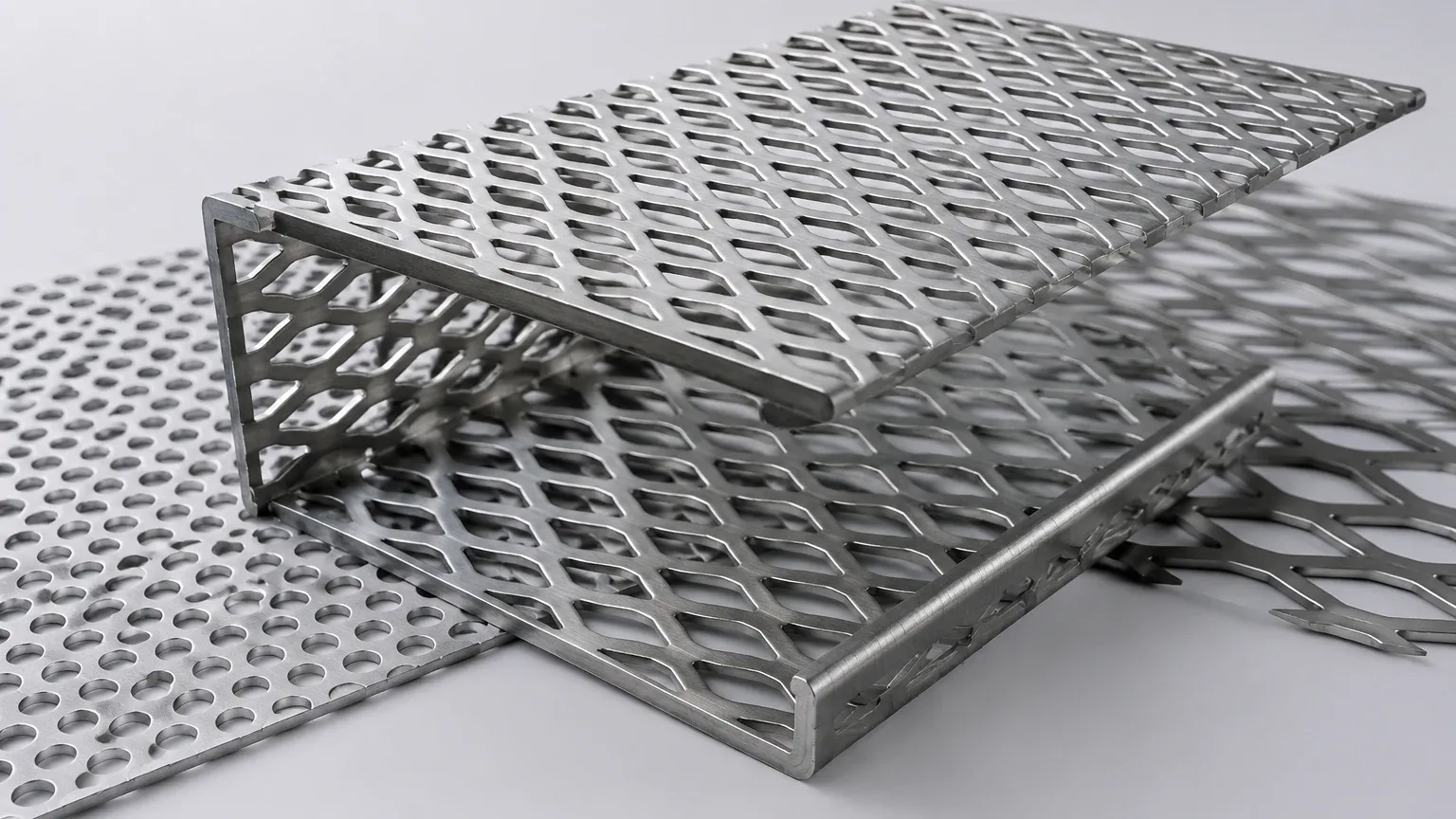
In industrial filtration, Z metal rarely stands alone. It usually functions as the "skeleton" or the framing system for Perforated & Expanded Metal sheets. This combination is essential for creating durable filter cartridges, vibrating screens, and intake strainers.
Structural Support for Perforated Sheets
Perforated metal provides the precise filtration accuracy required for industrial processes, but large sheets can sag or vibrate under high flow rates. Z metal bars are welded to the perimeter or used as internal cross-members to provide the necessary rigidity. The Z-profile allows the perforated sheet to sit flush against one flange while the other flange is secured to the main housing, creating a seamless and leak-proof transition.
Framing for Expanded Metal
Expanded metal, known for its high open-area ratio and cost-effectiveness, often lacks the finished edge required for safe handling and installation. Z metal frames provide a "pocket" into which the expanded metal edges can be tucked and welded. This not only protects the mesh from fraying but also ensures that the entire assembly can withstand the mechanical stresses of high-pressure hydraulic or gas filtration.
Engineering Advantages of the Z-Profile
Why do engineers specify Z metal over other shapes like L-angles or T-bars? The answer lies in several functional advantages:
1. Nesting and Overlapping
Because the flanges point in opposite directions, Z-sections can be nested together. This is particularly useful in modular filtration systems where multiple filter panels must be joined. The overlap creates a stronger joint than a simple butt-weld and helps in maintaining a consistent seal across a large surface area.
2. Improved Flow Dynamics
In certain orientations, the Z-profile can act as a baffle, helping to direct the flow of fluid or gas toward the filtration media. Unlike bulky I-beams, the slim profile of a Z-bar minimizes turbulence and pressure drop within the filter housing.
3. Torsional Rigidity
Z-sections offer better resistance to twisting (torsion) compared to flat bars or simple angles. In high-vibration environments, such as those found in mining or heavy chemical processing, this rigidity prevents the filtration media from cracking or fatiguing at the weld points.
Applications Across Industries
What is z metal used for in practical industrial scenarios? Its versatility makes it applicable across several sectors:
* Water Treatment: Used as framing for large-scale intake screens and trash racks where debris must be filtered out of high-volume water flows.
* Chemical Processing: Serving as the internal support structure for catalyst recovery filters and gas-liquid separators.
* Food and Beverage: Providing the framework for stainless steel sieves and drying trays where hygiene and ease of cleaning are paramount.
* HVAC and Air Filtration: Acting as the mounting tracks for heavy-duty pre-filters in industrial air handling units.
Customization and OEM Considerations
When sourcing Z metal components for filtration, off-the-shelf solutions rarely suffice. Industrial applications often require specific dimensions, hole patterns for drainage, or specialized finishes. As a professional manufacturer, Kaifil specializes in integrating Z-profile supports with custom filtration media to meet exact engineering specifications.
Key Customization Factors:
* Dimensional Accuracy: Precise web height and flange width are critical for ensuring the filter fits perfectly into the existing housing.
* Pre-drilled Mounting Holes: To simplify installation, Z-profiles can be CNC-machined with mounting holes that align with the filter vessel's bolt pattern.
* Surface Finish: Options such as electropolishing or passivating are essential for pharmaceutical and food-grade applications to ensure the metal surface is free of microscopic burrs and contaminants.
Procurement Guide: What Engineers Should Confirm
Before finalizing a purchase order involving Z metal or framed Perforated & Expanded Metal, engineers should verify the following technical details to ensure long-term performance and cost-effectiveness:
1. Load Requirements: What is the maximum pressure differential ($ΔP$) the filter assembly will face? The thickness and height of the Z-profile must be calculated to prevent structural failure under peak loads.
2. Chemical Compatibility: Ensure the chosen metal grade (e.g., 316L vs. 304) is compatible with the process fluid, especially at elevated temperatures.
3. Filtration Accuracy: If the Z metal is part of a perforated assembly, confirm that the framing does not significantly reduce the effective filtration area (EFA).
4. Replacement Cycles: Consider how the Z-profile affects the ease of maintenance. Is the frame designed for quick removal, or is it a permanent part of the housing?
5. Total Cost of Ownership: While carbon steel might be cheaper initially, the longevity and reduced maintenance of stainless steel Z metal often result in a lower total cost over the lifespan of the filtration system.
Conclusion
So, what is z metal? It is more than just a piece of shaped steel; it is a critical structural component that enables high-performance filtration media to operate in the most demanding industrial environments. Whether it is providing the rigid frame for a perforated stainless steel basket or acting as a mounting track for expanded metal screens, the Z-profile's unique geometry offers a blend of strength, versatility, and efficiency that other shapes cannot match.
By selecting the right material and working with an experienced manufacturer like Kaifil, engineers can ensure that their filtration systems are built on a foundation of structural integrity. From custom dimensions to specialized material grades, the proper application of Z metal is a key factor in achieving reliable, durable, and cost-effective industrial filtration performance.
