


Inch and a Half Expanded Metal
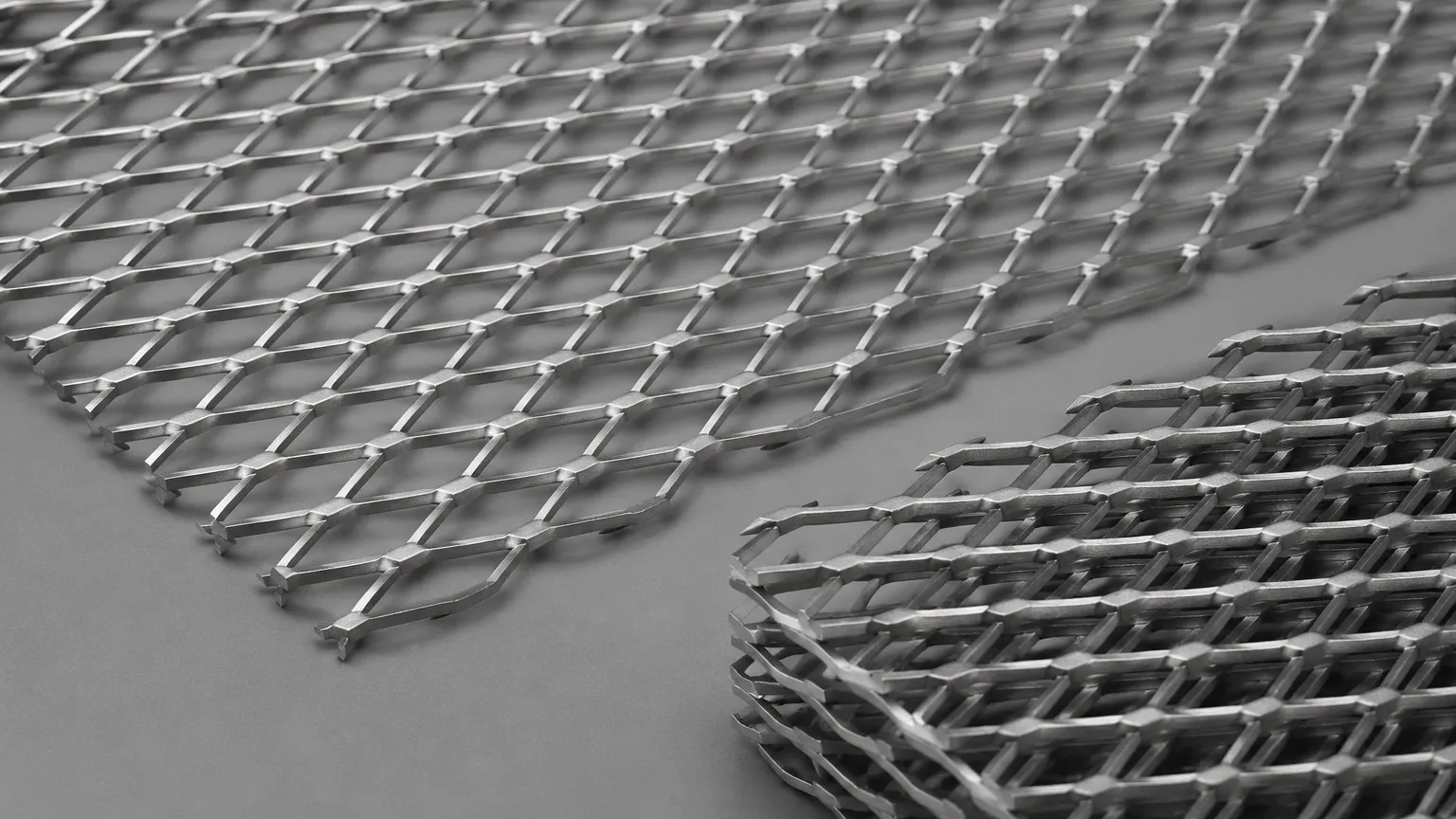
In industrial engineering and filtration design, selecting the correct structural support material is as critical as the selection of the primary filtration media itself. Inch and a half expanded metal represents a specific category of metal mesh characterized by its diamond-shaped openings, typically measuring 1.5 inches along the long way of the diamond (LWD). This specific size offers a balance between structural rigidity and high open-area percentages, making it a staple in heavy-duty industrial applications, particularly within the chemical processing, water treatment, and petrochemical sectors.
At Kaifil, we specialize in the precision manufacturing of Perforated & Expanded Metal solutions, focusing on stainless steel alloys that provide the durability required for demanding environments. Understanding the technical nuances of inch and a half expanded metal—from its manufacturing process to its mechanical properties—is essential for engineers tasked with designing efficient and long-lasting filtration systems.
Technical Specifications and Geometry
To properly specify inch and a half expanded metal, one must understand the four primary dimensions that define its geometry: Long Way of Design (LWD), Short Way of Design (SWD), Strand Width, and Strand Thickness.
1. Long Way of Design (LWD): For this specific product, the LWD is nominally 1.5 inches. This is measured from the center of one bond to the center of the next bond across the long axis of the diamond opening.
2. Short Way of Design (SWD): This is the measurement across the short axis of the diamond. While the LWD is fixed at 1.5 inches, the SWD can vary depending on the expansion ratio, typically ranging from 0.5 inches to 1.2 inches.
3. Strand Width: This refers to the amount of metal fed into the precision dies between each punch. A wider strand increases the overall weight and strength of the mesh but reduces the open area.
4. Strand Thickness: This is the thickness of the base material (the gauge of the metal sheet or coil).
When these factors are combined, they determine the "Open Area Percentage." For a standard inch and a half expanded metal configuration, the open area is often between 60% and 80%, allowing for high flow rates with minimal pressure drop—a critical factor in hydraulic and fluid processing applications.
Raised vs. Flattened Expanded Metal
Engineers must choose between two primary finishes: raised (standard) and flattened. Each serves distinct functional purposes in an industrial context.
Raised Expanded Metal
Raised expanded metal is the product as it comes off the expanding machine. The strands and bonds are set at a uniform angle to the plane of the sheet. This creates a three-dimensional surface that provides excellent slip resistance and mechanical grip. In filtration, the raised profile is often used as a pre-filter or a coarse strainer where the angular strands can help break up large debris or turbulent flow before it reaches finer media layers.
Flattened Expanded Metal
Flattened expanded metal is produced by passing the raised expanded sheet through a cold-roll reducing mill. This process flattens the strands and bonds into a single plane, resulting in a smooth, flat surface. For B2B filtration applications, flattened inch and a half expanded metal is often preferred. It is easier to weld, more compatible with multi-layer mesh laminates, and reduces the risk of abrasion against delicate filter membranes or wire mesh layers. It also ensures a consistent thickness across the entire sheet, which is vital for maintaining tolerances in cylindrical filter cartridges.
Material Selection for Industrial Environments
While expanded metal can be made from various materials, industrial filtration and processing require alloys that can withstand chemical corrosion and thermal stress. Kaifil focuses on high-grade stainless steels to ensure long-term performance.
* Stainless Steel 304: This is the most common grade used for general industrial applications. It offers good corrosion resistance and is cost-effective for water treatment and food processing environments where extreme acidity is not present.
* Stainless Steel 316L: For more aggressive environments, such as pharmaceutical manufacturing or chemical processing involving chlorides, 316L is the standard. The addition of molybdenum provides superior resistance to pitting and crevice corrosion.
* Specialty Alloys: In high-temperature or highly corrosive gas filtration, materials like Monel, Inconel, or Duplex stainless steels may be utilized in the expansion process to ensure structural integrity.
Choosing the right material for your inch and a half expanded metal ensures that the support structure does not become a point of failure due to oxidation or chemical degradation, which could lead to downstream contamination.
The Role of 1.5-Inch Mesh in Filtration Systems
In the context of industrial filtration, inch and a half expanded metal rarely acts as the primary filter for fine particulates. Instead, it serves several critical secondary roles:
1. Structural Support Cores
In large-scale liquid filter cartridges, the internal pressure can be significant. A core made of 1.5-inch expanded metal provides the necessary hoop strength to prevent the collapse of the filter media under high differential pressure (ΔP). Its large openings ensure that the fluid can pass into the center tube with negligible resistance after being cleaned by the outer layers.
2. Outer Protective Cages
For filters used in harsh environments—such as oil and gas extraction or heavy machinery hydraulics—an outer cage of expanded metal protects the inner wire mesh from mechanical damage during installation, handling, and operation. The 1.5-inch diamond size is large enough to allow the free passage of the process fluid while being rigid enough to deflect large external impacts.
3. Pleat Support and Spacing
In pleated filter elements, maintaining uniform pleat spacing is essential for maximizing the effective filtration area. Inch and a half expanded metal can be used as a pleat support layer, ensuring that the folds of the wire mesh do not bunch together under flow, which would otherwise create "dead zones" and reduce the filter's service life.
Engineering Considerations: Load and Flow
When integrating inch and a half expanded metal into a project, engineers must perform two primary calculations: load-bearing capacity and flow dynamics.
Load-Bearing Capacity: Because expanded metal is a single piece of material without joins or welds (unlike woven wire mesh), it distributes loads efficiently. However, the orientation of the diamonds matters. The LWD should generally be oriented perpendicular to the direction of the load for maximum strength. If the mesh is being used as a walkway or a heavy-duty support grate, the deflection under specific weights must be calculated based on the material gauge and strand width.
Flow Dynamics: The "effective open area" of the mesh determines the velocity of the fluid as it passes through. If the open area is too low, it can cause localized high-velocity zones that might erode finer mesh layers or cause premature blinding of the filter. The 1.5-inch specification is often chosen specifically because it provides a very high open area while maintaining the rigidity of a much thicker solid plate.
Procurement and Customization for OEM Applications
For purchasing teams and OEM engineers, procuring inch and a half expanded metal requires clear communication of technical requirements to the manufacturer. Standard off-the-shelf sheets may not meet the tight tolerances required for precision filtration components.
At Kaifil, we provide customized solutions that include:
* Custom Sheet Sizes: Reducing waste by providing the exact dimensions needed for your production line.
* Edge Treatments: Providing "random sheared" or "bond sheared" edges depending on whether the part will be welded into a frame or left exposed.
* Cylindrical Forming: Precision rolling of expanded metal into tubes for use as filter cores or cages, with seam welding performed to industrial standards.
* Surface Finishes: Including electropolishing for pharmaceutical or food-grade applications to ensure a burr-free, easy-to-clean surface.
Common Risks and Quality Assurance
One common risk in sourcing expanded metal is "camber" or "out-of-square" sheets, which can occur during the expansion process if the tension is not correctly managed. For automated assembly lines, even a small amount of camber can lead to manufacturing delays. It is also vital to confirm that the material is free from "burrs" or sharp edges, especially in filtration applications where a stray metal sliver could damage a downstream pump or contaminate the final product.
Before finalizing a purchase, engineers should confirm:
1. Material Certifications: Ensure the alloy meets ASTM or ISO standards.
2. Dimensional Tolerances: Specify the allowable variance in LWD, SWD, and overall sheet thickness.
3. Flattening Quality: If ordering flattened mesh, ensure there is no "ghosting" or uneven thinning of the strands.
Conclusion
Inch and a half expanded metal is a versatile, high-strength component that plays a vital role in the structural integrity of industrial filtration systems. By offering a high open-area-to-weight ratio and the inherent durability of stainless steel, it allows engineers to design systems that are both efficient and robust.
Whether used as a support core, a protective cage, or a coarse strainer, the performance of the mesh depends on precise manufacturing and correct material selection. Kaifil’s expertise in Perforated & Expanded Metal ensures that your filtration components are engineered to meet the specific demands of your application, providing a reliable foundation for your most critical industrial processes.
