


Knp Perforated Metal Panels
In industrial engineering and high-performance filtration, the selection of structural components often dictates the overall efficiency and longevity of a system. Knp perforated metal panels represent a specialized category of industrial materials designed to meet rigorous standards for precision, durability, and specific flow characteristics. Whether utilized as a primary filtration medium, a support structure for fine wire mesh, or a component in acoustic and architectural systems, these panels must be engineered with a deep understanding of material science and mechanical tolerances.
For engineers and procurement professionals, navigating the specifications of Perforated & Expanded Metal requires a focus on technical metrics rather than generic marketing claims. This guide examines the engineering principles behind knp perforated metal panels, their application in demanding environments, and the critical factors that ensure successful integration into industrial projects.
Understanding the Engineering of KNP Perforated Metal Panels
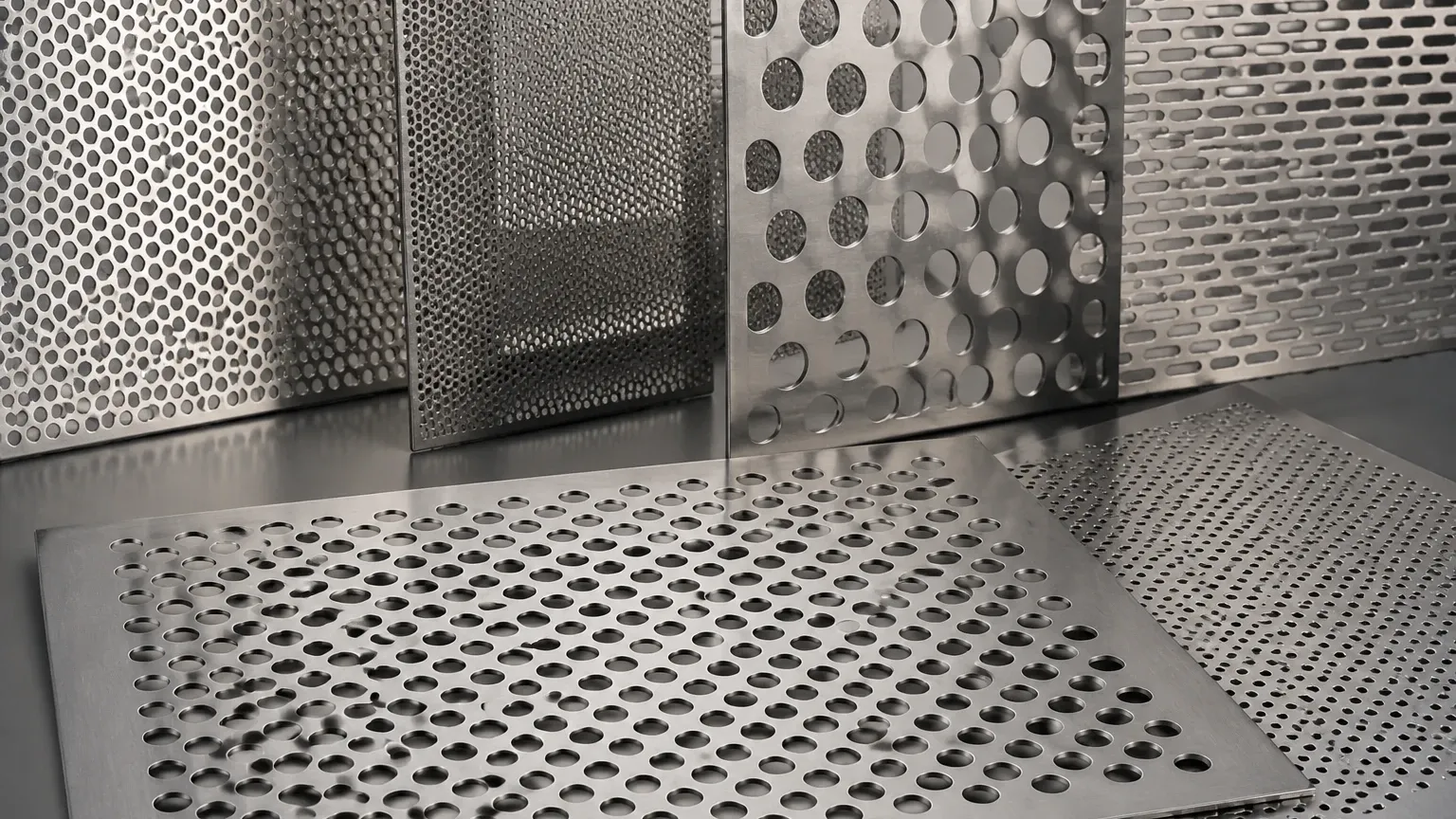
Knp perforated metal panels are defined by their precise hole patterns and the structural integrity of the base material. Unlike standard decorative perforated sheets, industrial-grade panels are manufactured to maintain strict dimensional stability under mechanical stress. The "KNP" designation often refers to specific standardized patterns or proprietary configurations used in heavy-duty industrial applications, including noise attenuation, fluid dynamics control, and high-pressure filtration supports.
Perforation vs. Expansion
While both perforated and expanded metals serve similar roles in providing open area for flow, the manufacturing processes yield different mechanical properties:
1. Perforated Metal: Created by punching holes into a solid metal sheet. This process allows for high precision in hole size, shape (round, square, slotted, or hexagonal), and spacing (pitch). It maintains the flatness of the sheet and provides a predictable open area percentage, which is critical for calculating pressure drops in filtration systems.
2. Expanded Metal: Produced by simultaneously slitting and stretching the metal. This results in a diamond-shaped pattern with no material waste. While expanded metal offers an excellent strength-to-weight ratio, it may lack the specific hole geometry required for precision filtration tasks that knp perforated metal panels are designed to handle.
In most technical applications, perforated panels are preferred when specific flow rates and particle retention sizes are non-negotiable.
Material Selection and Corrosion Resistance
The performance of knp perforated metal panels is heavily dependent on the alloy selected. Since these components are frequently exposed to corrosive chemicals, high temperatures, or abrasive fluids, material selection is the first line of defense against premature failure.
* Stainless Steel 304/304L: The most common choice for general industrial use. It offers excellent formability and good corrosion resistance in mildly corrosive environments.
* Stainless Steel 316/316L: Contains molybdenum, which significantly enhances resistance to chlorides and pitting. This is the standard for marine, chemical processing, and pharmaceutical applications where knp perforated metal panels must withstand aggressive cleaning agents or saline environments.
* Specialty Alloys: For extreme conditions, materials like Hastelloy, Monel, or Duplex stainless steel may be specified to handle high-temperature oxidation or extreme acidic concentrations.
When specifying materials, engineers must also consider the "L" (low carbon) variants of stainless steel if welding is required during the assembly of filter cartridges or panel frames. Low carbon content prevents carbide precipitation during welding, maintaining the corrosion resistance of the heat-affected zone.
Critical Technical Specifications for KNP Panels
To ensure that knp perforated metal panels perform as intended, several technical parameters must be precisely defined during the design and procurement phase.
1. Open Area Percentage
The open area is the ratio of the total area of the holes to the total area of the sheet. This is the most critical factor in determining the flow capacity and pressure drop across the panel. For filtration applications, a higher open area reduces resistance but can compromise the structural strength of the panel. Engineers must find the optimal balance based on the fluid velocity and the expected mechanical load.
2. Hole Pattern and Pitch
The arrangement of the holes—whether staggered (60-degree or 45-degree) or straight-line—affects both the flow distribution and the strength of the "bridge" (the metal between the holes). A 60-degree staggered pattern is the most common for knp perforated metal panels because it provides the highest degree of structural uniformity and efficient open area.
3. Hole Diameter and Gauge
The relationship between the hole diameter and the sheet thickness (gauge) is governed by the "one-to-one" rule in traditional punching: the hole diameter should generally not be less than the thickness of the material. Attempting to punch holes smaller than the material thickness increases internal stress and the risk of tool breakage, which can lead to inconsistencies in the final product.
Applications in Industrial Filtration and Beyond
Knp perforated metal panels are versatile components found in various sectors. Their primary role is often as a robust skeleton for more delicate filtration media.
Filtration Support and Protection
In high-pressure hydraulic or chemical filtration, fine wire mesh is often too fragile to withstand the differential pressure on its own. Knp perforated metal panels are used as internal cores or external shrouds for filter cartridges. They provide the necessary mechanical support to prevent the mesh from collapsing or pleats from deforming under flow surges.
Acoustic and Sound Attenuation
In power generation and heavy machinery environments, perforated panels are integrated into silencers and acoustic enclosures. The specific hole patterns in knp panels are engineered to allow sound waves to pass through into absorbing material while maintaining a durable protective surface that can withstand vibration and heat.
Heat Exchange and Ventilation
The predictable open area of these panels makes them ideal for heat exchange surfaces where airflow must be controlled. They are used in drying equipment, grain processing, and electronic enclosures to manage thermal loads while providing a barrier against debris.
Quality Control and Avoiding Common Procurement Risks
When sourcing knp perforated metal panels, technical professionals must be aware of common manufacturing defects that can compromise a project. Quality control should focus on the following areas:
* Burrs and Surface Finish: The punching process can leave sharp edges or burrs on the exit side of the hole. In filtration and food processing, these burrs can trap contaminants or damage filter bags. Specifying "deburred" or "electropolished" finishes is essential for high-purity applications.
* Flatness and Camber: Large perforated sheets tend to develop internal stresses that cause bowing or twisting. For panels that must be fit into tight frames or automated assemblies, maintaining a high degree of flatness is critical. Stress-relieving processes or precision leveling may be required.
* Hole Uniformity: Inconsistent hole sizes or missing perforations can lead to uneven flow distribution, creating "hot spots" or areas of high localized pressure that can cause premature failure of the filtration system.
Selection Guide: Confirming Requirements Before Purchase
Before finalizing a specification for knp perforated metal panels, the following checklist should be used to confirm that the product meets the application's technical demands:
1. Environmental Compatibility: Does the selected alloy match the chemical and thermal profile of the process fluid? Is there a risk of galvanic corrosion if the panel is in contact with dissimilar metals?
2. Mechanical Load: What is the maximum differential pressure the panel will face? Does the thickness and bridge width provide a sufficient safety factor against deformation?
3. Dimensional Tolerances: Are the tolerances for hole diameter, pitch, and overall panel dimensions clearly defined? Industrial applications often require tighter tolerances than standard commercial grades.
4. Secondary Processing: Does the project require the panels to be rolled, welded into cylinders, or powder-coated? Ensure the manufacturer has the capability to perform these operations without compromising the perforation pattern.
5. Certification Requirements: Are material mill test reports (MTRs) required for traceability? This is standard in the pharmaceutical, aerospace, and oil and gas industries.
Conclusion
Knp perforated metal panels are more than just sheets of metal with holes; they are precision-engineered components that play a vital role in industrial efficiency and safety. By focusing on material integrity, precise open area calculations, and rigorous quality standards, engineers can ensure that their Perforated & Expanded Metal solutions provide reliable service in even the most demanding environments.
Working with a manufacturer that understands the nuances of custom filtration and metal fabrication is essential. From initial material selection to the final finishing processes, every step in the production of knp perforated metal panels must be aligned with the technical requirements of the end-use application. This disciplined approach to specification and procurement minimizes the total cost of ownership by reducing maintenance needs and extending the operational lifespan of industrial equipment.
