


Knp Perforated Metal Acoustical Panels
In industrial and commercial environments, noise control is not merely a matter of comfort but a critical requirement for safety, regulatory compliance, and equipment longevity. Among the various solutions available for sound attenuation, knp perforated metal acoustical panels have emerged as a standard for high-performance noise reduction. These panels utilize the structural benefits of Perforated & Expanded Metal combined with specialized acoustic media to manage sound waves effectively in demanding environments.
For engineers and facility managers, understanding the technical nuances of these panels is essential for optimizing acoustic performance while maintaining the structural integrity of the installation. This guide examines the engineering principles, material considerations, and selection criteria for implementing perforated metal acoustical solutions.
The Engineering Principles of Perforated Metal Acoustics
The effectiveness of knp perforated metal acoustical panels lies in the physics of sound wave interaction with perforated surfaces. Unlike solid barriers that reflect sound, perforated metal acts as a transparent or semi-transparent face that allows sound waves to pass through into an absorbent core.
The Helmholtz Resonator Effect
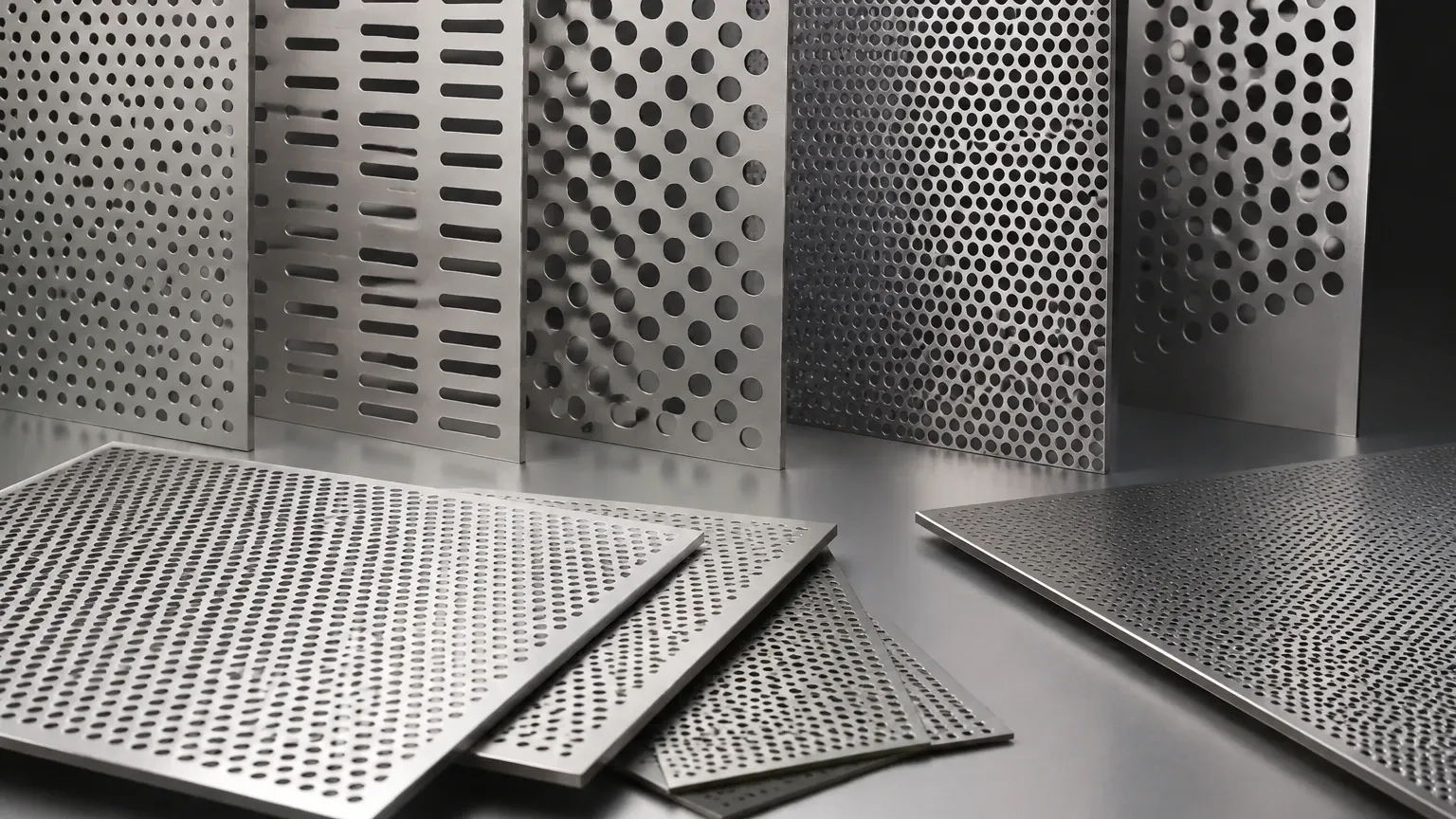
Each hole in a perforated metal sheet can act as the neck of a Helmholtz resonator. When sound waves hit the surface, the air within the holes vibrates. If the panel is designed correctly, this vibration encounters resistance, converting acoustic energy into low-grade thermal energy. The specific frequency range targeted for absorption is determined by the hole diameter, the thickness of the metal, and the spacing (pitch) between the holes.
Open Area and Transparency
In the context of acoustic panels, the "open area" percentage is a primary design variable. For most industrial applications, an open area of 20% to 40% is sufficient to allow sound waves to reach the internal acoustic insulation without significantly compromising the structural rigidity of the panel. If the open area is too low, the panel reflects too much sound; if it is too high, the metal may lack the mechanical strength required for industrial mounting.
Components of KNP Acoustical Panels
A typical KNP (often referring to specific noise panel configurations used in industrial silencing) is a composite structure. While the face is comprised of Perforated & Expanded Metal, the internal assembly determines the overall Noise Reduction Coefficient (NRC).
1. Perforated Face Sheet: Usually made from stainless steel, galvanized steel, or aluminum. This layer protects the acoustic media from mechanical damage and provides the aesthetic finish.
2. Acoustic Absorbent Core: This is typically a high-density mineral wool or fiberglass board. The thickness of this core (often 2 to 4 inches) dictates the panel's ability to absorb low-frequency sounds.
3. Protective Scrim: A thin, acoustically transparent fabric or film is often placed between the perforated metal and the absorbent core. This prevents fibers from the insulation from migrating through the perforations, which is critical in food processing or pharmaceutical environments.
4. Solid Backing: In many configurations, the rear of the panel is a solid metal sheet, which acts as a barrier to prevent sound transmission to the other side (improving the Sound Transmission Class, or STC).
Material Selection for Industrial Environments
When specifying knp perforated metal acoustical panels, material selection is dictated by the operating environment. Engineering teams must evaluate the following factors:
Corrosion Resistance
In chemical processing or marine environments, standard carbon steel will fail prematurely. Stainless steel (Grade 304 or 316) is the preferred choice for its resistance to oxidation and chemical exposure. 316 stainless steel, in particular, offers superior resistance to chlorides, making it ideal for coastal or heavy industrial settings.
Weight and Structural Load
Aluminum perforated panels are significantly lighter than steel, which can be a deciding factor for ceiling-mounted installations or large-scale enclosures where the weight of the acoustic system impacts the primary structure's load-bearing requirements.
Thermal Stability
In high-temperature applications, such as engine test cells or exhaust silencers, the expansion coefficients of the metal must be considered. Perforated metal allows for better heat dissipation than solid sheets, but the choice of acoustic media must also be rated for the specific temperature range.
Evaluating Performance Metrics: NRC and STC
To make an informed purchasing decision, engineers must distinguish between two primary acoustic ratings:
* Noise Reduction Coefficient (NRC): This is a scalar representation of the amount of sound energy absorbed by a surface. An NRC of 0.0 means total reflection, while an NRC of 1.0 means total absorption. High-quality knp perforated metal acoustical panels typically achieve NRC ratings between 0.90 and 1.05, depending on the thickness of the internal insulation.
* Sound Transmission Class (STC): This measures how well a partition blocks sound from traveling from one room to another. While the perforated face handles absorption (NRC), the solid backing and the overall mass of the panel contribute to the STC. For machine enclosures, a high STC is vital to protect workers outside the enclosure.
Customization and Manufacturing Precision
Standard off-the-shelf panels often fail to meet the specific geometric or acoustic requirements of complex industrial projects. Customization in the manufacturing of Perforated & Expanded Metal components allows for optimization in several areas:
* Hole Patterns: While round holes are most common due to manufacturing efficiency, square or slotted holes may be used for specific aesthetic or airflow requirements.
* Margin Specifications: Custom panels can be manufactured with solid "dead" margins around the edges, which simplifies welding or mechanical fastening to frames without damaging the perforation pattern.
* Forming and Fabrication: Perforated sheets can be corrugated or folded to increase their stiffness, allowing for longer spans between supports without sagging.
Common Risks and Mitigation Strategies
Implementing knp perforated metal acoustical panels involves risks that can compromise both performance and safety if not addressed during the design phase.
Moisture and Clogging
In environments with high humidity or oil mist, the perforations can become clogged over time. This drastically reduces the acoustic transparency of the panel. To mitigate this, engineers should specify larger hole diameters or use specialized oleophobic scrims that repel oils while allowing sound to pass.
Mechanical Vibration
If the perforated metal is too thin or not properly tensioned within its frame, it can vibrate at its own resonant frequency, potentially adding to the noise problem rather than solving it. Ensuring proper gauge thickness (typically 16 to 22 gauge for industrial panels) and secure fastening is essential.
Fiber Migration
In cleanroom or food-grade applications, the risk of mineral wool fibers entering the environment is a major concern. Using encapsulated acoustic bags or high-performance scrims ensures that the absorbent material remains contained within the panel structure.
Installation and Maintenance Best Practices
The longevity of an acoustic system depends on correct installation. Panels should be mounted using vibration-isolating fasteners if they are attached directly to noisy machinery. This prevents the mechanical energy of the machine from being transmitted into the panel structure.
Maintenance requirements for perforated metal panels are generally low. However, periodic inspections should be conducted to check for:
* Surface corrosion, especially at fastening points.
* Accumulation of dust or debris in the perforations.
* Integrity of the acoustic core (checking for sagging or moisture absorption).
For cleaning, low-pressure compressed air or vacuuming is usually sufficient to clear the holes. In wash-down environments, the panels must be designed with drainage paths to prevent water from pooling inside the acoustic media.
Conclusion: Selecting the Right Solution
Choosing the right knp perforated metal acoustical panels requires a balance between acoustic theory and practical engineering. By focusing on the specific needs of the application—whether it is high-frequency hiss from a pneumatic system or low-frequency rumble from a large generator—purchasing teams can select the appropriate material, open area, and panel thickness.
Working with a manufacturer that understands the complexities of Perforated & Expanded Metal ensures that the final product meets both the acoustic and mechanical demands of the project. Before proceeding with a large-scale procurement, it is recommended to confirm the required NRC/STC ratings, environmental exposure levels, and mounting constraints with the technical team to ensure a reliable, long-term filtration and noise control solution.
