


Making Expanded Metal
In the realm of industrial filtration and structural engineering, the process of making expanded metal represents a unique intersection of mechanical precision and material efficiency. Unlike many other metal fabrication techniques that rely on subtractive processes, expanded metal is created through a simultaneous slitting and stretching method. For engineers and procurement specialists at firms like Kaifil, understanding the technical nuances of this manufacturing process is essential for selecting the appropriate media for high-performance filtration systems.
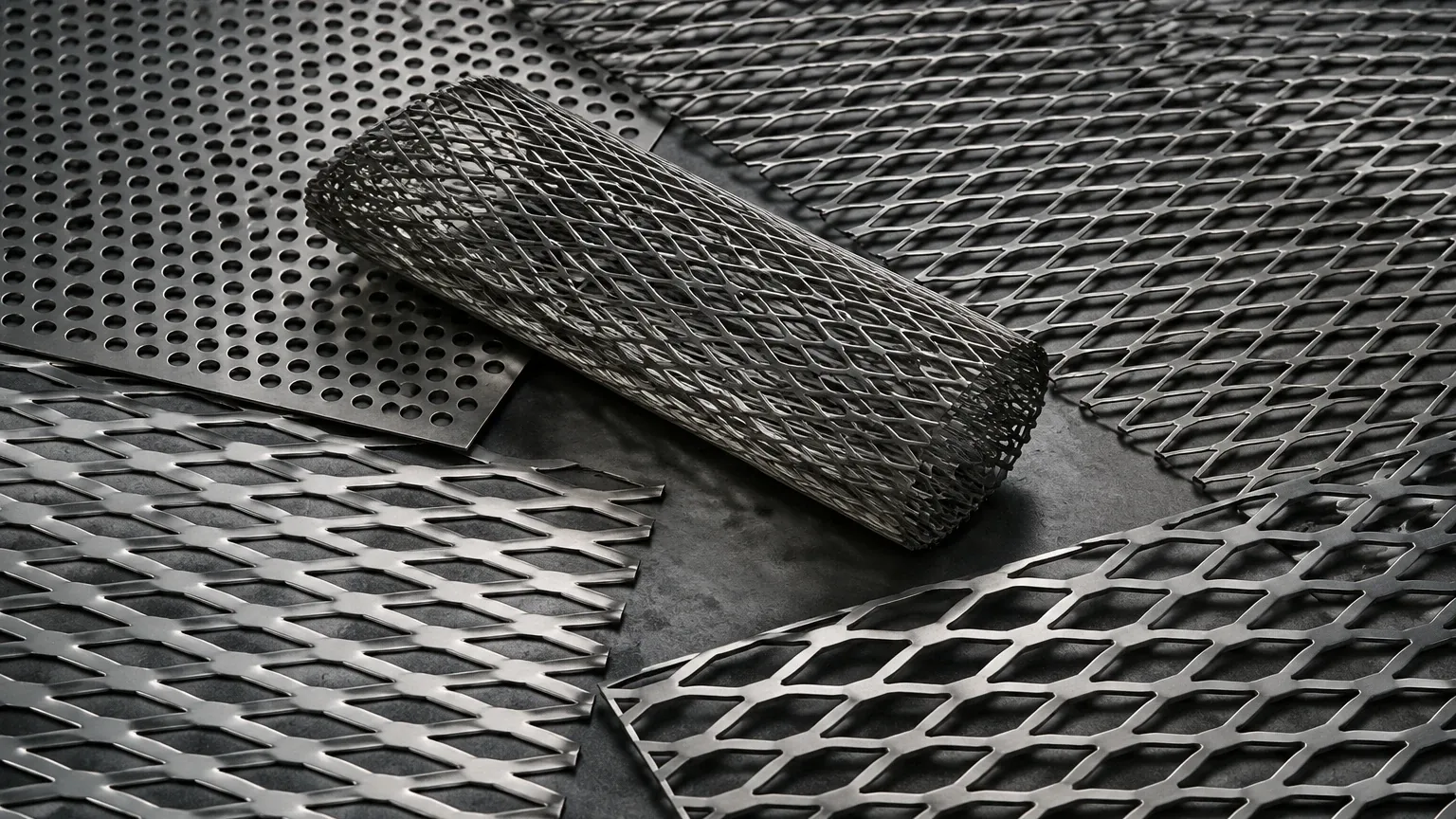
Expanded metal is characterized by its diamond-shaped openings and its continuous, one-piece construction. Because the material is stretched rather than punched, the process produces virtually no waste, making it a highly cost-effective alternative to perforated metal in many industrial applications. This article provides a technical deep dive into the engineering principles, material considerations, and quality benchmarks involved in the production and application of expanded metal.
The Core Mechanics of Expanding Metal
The fundamental process of making expanded metal involves a reciprocating knife that slits the metal sheet while simultaneously stretching it laterally. This occurs on a specialized expansion press. The knife moves in a predetermined pattern, creating a series of offsets that result in a uniform diamond mesh.
The Slit and Stretch Sequence
As the metal sheet or coil is fed into the machine, the upper tool (the knife) descends to create a row of slits. Because the knife is shaped with a specific profile, it doesn't just cut; it pushes the metal downward and outward. This mechanical force expands the slits into diamond-shaped voids. The sheet then advances, and the knife shifts horizontally by half a diamond's width before the next stroke. This staggered pattern ensures that the "bonds"—the points where the strands meet—remain intact, providing the material with its inherent structural integrity.
Material Efficiency and Sustainability
One of the primary advantages of this method is its resource efficiency. In perforated metal production, the "slugs" or circles punched out of the sheet become scrap material that must be recycled. In contrast, making expanded metal involves no removal of material. A single sheet of stainless steel can be expanded to several times its original length, depending on the strand width and the size of the openings. This results in a high strength-to-weight ratio that is particularly beneficial in the design of lightweight filtration housings and support cages.
Geometric Parameters and Engineering Definitions
When specifying Perforated & Expanded Metal for industrial use, engineers must navigate a specific set of terminologies that define the performance characteristics of the mesh. These dimensions dictate the flow rate, pressure drop, and mechanical strength of the final component.
* SWD (Short Way of Diamond): The distance from the center of one bond to the center of the next bond measured across the short diamond diagonal.
* LWD (Long Way of Diamond): The distance from the center of one bond to the center of the next bond measured across the long diamond diagonal.
* SWO (Short Way of Opening): The clear distance between the inside edges of the diamond across the short diagonal.
* LWO (Long Way of Opening): The clear distance between the inside edges of the diamond across the long diagonal.
* Strand Width: The amount of metal fed under the knives for each stroke.
* Strand Thickness: The gauge or thickness of the original base metal sheet.
By adjusting these parameters, manufacturers can customize the "open area" percentage. In filtration, the open area is a critical calculation; it determines the velocity of the fluid passing through the mesh and the potential for particulate bypass. A higher open area reduces pressure drop but may sacrifice the structural rigidity required to support fine wire mesh layers in high-pressure hydraulic applications.
Material Selection: Why Stainless Steel Dominates Industrial Filtration
While expanded metal can be made from aluminum, carbon steel, or copper, the industrial filtration sector—where Kaifil focuses its expertise—heavily favors stainless steel. The choice of material is dictated by the operating environment, including temperature, chemical exposure, and sanitation requirements.
Stainless Steel 304 and 316L
Grade 304 stainless steel is the standard for many general-purpose industrial filters due to its excellent formability and resistance to atmospheric corrosion. However, in chemical processing or marine environments, Grade 316L is often required. The addition of molybdenum in 316L provides superior resistance to pitting and crevice corrosion, especially in chloride-rich environments. Furthermore, the "L" (low carbon) designation is vital for components that require welding, as it prevents carbide precipitation that could lead to intergranular corrosion.
High-Temperature and Specialty Alloys
In specialized applications such as gas turbine filtration or high-temperature exhaust systems, exotic alloys like Inconel or Monel may be used. The process of making expanded metal from these harder alloys requires specialized tooling and slower press speeds to maintain dimensional accuracy and prevent tool wear.
Standard vs. Flattened: Selecting the Right Profile
There are two primary finishes available after the initial expansion process: standard (raised) and flattened. Each serves distinct purposes within a filtration assembly.
Standard Expanded Metal
Standard expanded metal comes off the press with the strands and bonds set at a sharp angle to the plane of the sheet. This creates a three-dimensional surface that offers high rigidity. In filtration, the raised profile can be advantageous for creating turbulence in a fluid stream, which can help prevent the rapid buildup of a filter cake on the primary media. Additionally, the raised edges provide excellent mechanical grip for bonding or overmolding.
Flattened Expanded Metal
Flattened expanded metal is produced by passing the standard expanded sheet through a cold-rolling reducing mill. This process flattens the strands and bonds into a single plane, resulting in a smooth, level surface. Flattened mesh is often preferred when the expanded metal serves as an inner or outer support for delicate wire mesh or pleated filter paper. The smooth surface prevents the expanded metal from abrading or puncturing the finer filtration layers during pressure surges or mechanical vibration.
Performance Advantages in Filtration and Support
The unique structure of expanded metal provides several engineering advantages that are difficult to replicate with other materials. For B2B buyers evaluating filtration components, these factors directly impact the total cost of ownership and system reliability.
Structural Integrity
Because expanded metal is a single piece of material without joins or welds (unlike woven wire mesh), it does not unravel. If a single strand is cut, the remaining bonds continue to hold the structure together. This makes it an ideal material for the outer cages of industrial filter cartridges, where it protects the internal media from impact and handling damage.
Flow Dynamics and Pressure Drop
The angular orientation of the strands in standard expanded metal can be engineered to direct flow. In certain gas-liquid separation applications, the mesh acts as a mist eliminator, providing a large surface area for droplets to coalesce without significantly obstructing the gas flow. Engineers must balance the LWD and SWD to ensure that the structural support does not create excessive "dead zones" where flow is restricted, which could lead to uneven loading of the filter media.
Customization and OEM Integration
Manufacturers like Kaifil specialize in tailoring the expansion process to meet specific OEM requirements. This includes producing custom sheet sizes that eliminate the need for secondary trimming, or developing specific diamond patterns that align with the pleat geometry of a filter element. Customization ensures that the expanded metal integrates seamlessly into the final assembly, reducing labor costs and improving the overall aesthetic and functional quality of the product.
Critical Quality Indicators for Engineering Procurement
When sourcing expanded metal for critical industrial applications, technical professionals should confirm several quality benchmarks to ensure long-term performance. The process of making expanded metal, while efficient, requires strict process control to avoid common defects.
1. Burr Management: The slitting process can leave sharp edges or burrs. In filtration, loose burrs are a major contamination risk. High-quality expanded metal should undergo deburring or specialized cleaning to ensure no metal fragments enter the downstream flow.
2. Dimensional Tolerance: Consistency in the LWD and SWD is vital for automated assembly processes. Variations in the expansion ratio can lead to sheets that are out of square or have inconsistent open areas.
3. Flatness and Camber: For flattened expanded metal, the sheet must be free from "oil canning" or waves. A flat sheet is essential for ensuring a uniform bond when the material is welded to end caps or support rings.
4. Material Certification: Always verify that the raw material meets ASTM or ISO standards. For pharmaceutical or food-grade applications, ensuring the stainless steel is free from surface contaminants and has the correct alloy composition is a non-negotiable requirement.
Conclusion
Making expanded metal is a sophisticated manufacturing process that offers significant benefits for industrial filtration, including material efficiency, structural strength, and versatile flow characteristics. By understanding the differences between standard and flattened profiles, the importance of geometric parameters like SWD and LWD, and the necessity of high-grade stainless steel, engineers can design more effective and durable filtration solutions.
Whether used as a primary filter medium or a robust support structure, expanded metal remains a cornerstone of modern industrial design. For those seeking precision-engineered components, reviewing specialized Perforated & Expanded Metal options is the first step toward optimizing filtration performance and ensuring the longevity of critical industrial systems.
