


Ms Expanded Metal Mesh
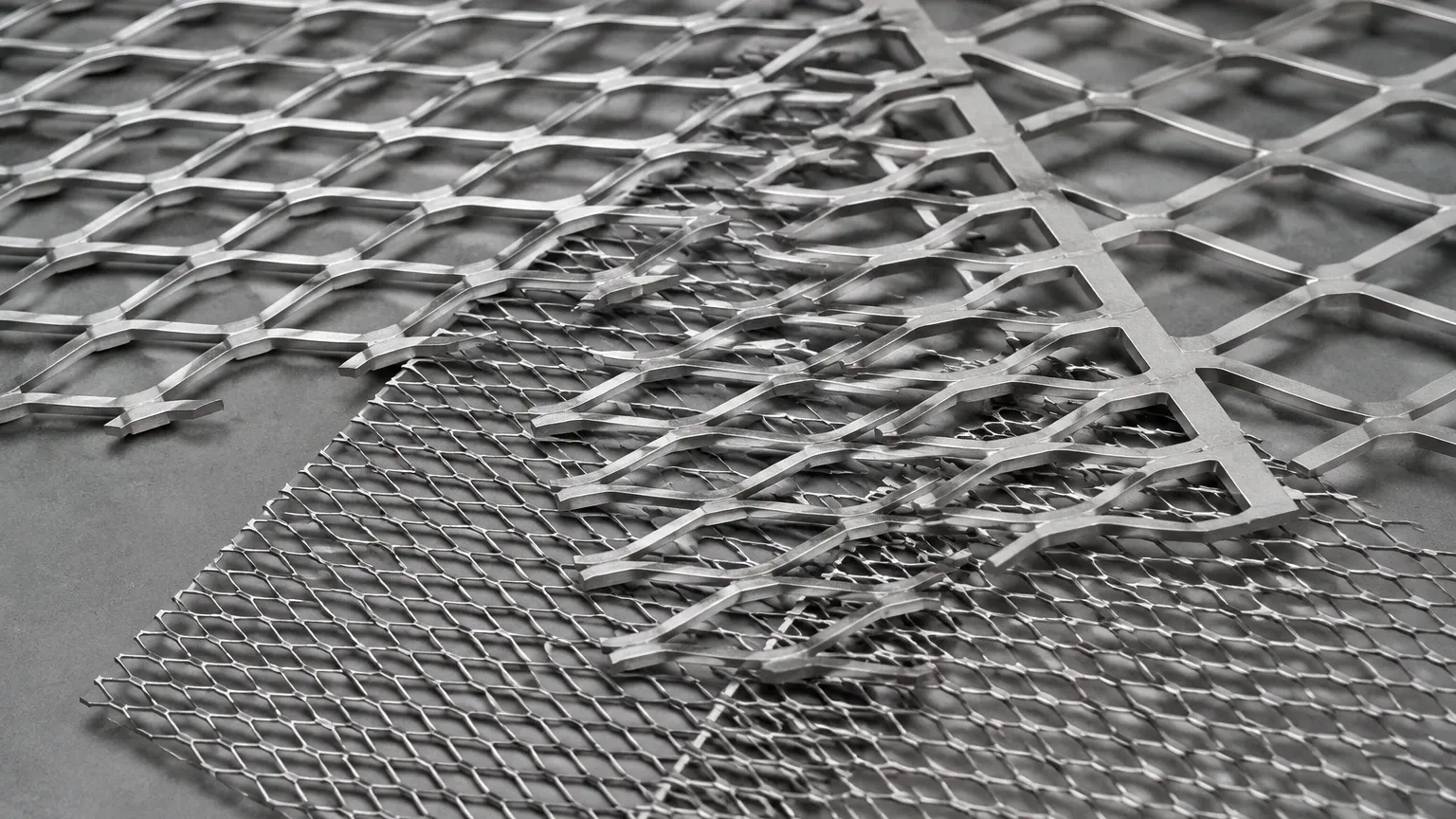
In the landscape of industrial filtration and structural support, ms expanded metal mesh serves as a fundamental component for engineers seeking a balance between mechanical strength, cost-efficiency, and open-area precision. Unlike woven wire or perforated sheets, expanded metal is produced through a process of simultaneous slitting and stretching, resulting in a continuous, jointless mesh that retains the inherent structural integrity of the base metal. For technical professionals managing filtration systems or industrial equipment design, understanding the specific properties of mild steel (MS) in its expanded form is essential for optimizing performance and ensuring long-term durability.
As a specialized manufacturer of filtration solutions, Kaifil provides high-performance Perforated & Expanded Metal components tailored to demanding industrial environments. This guide examines the technical nuances of ms expanded metal mesh, its application as a support structure for finer filter media, and the engineering criteria necessary for informed selection.
The Role of MS Expanded Metal Mesh in Industrial Filtration
Ms expanded metal mesh is frequently utilized as a primary filtration layer or a secondary support structure. In filtration assemblies, the mesh acts as a rigid skeleton that protects delicate filter media, such as fine stainless steel wire mesh or synthetic membranes, from high-pressure differentials and mechanical impact.
The "expanded" nature of the material offers a unique advantage: because the metal is stretched rather than punched, there is zero material waste during production. This makes it a highly sustainable and cost-effective alternative to perforated metal in many high-volume industrial applications. In liquid filtration, gas scrubbing, and air intake systems, the three-dimensional geometry of the expanded strands can also help in diffusing flow and reducing turbulence, which is critical for maintaining consistent filtration efficiency.
Technical Specifications: Understanding Geometry and Dimensions
When specifying ms expanded metal mesh for an engineering project, it is vital to use standardized terminology to ensure the finished product meets the required tolerances. The performance of the mesh is dictated by several key geometric factors:
1. Long Way of Diamond (LWD): The distance from the center of one joint to the center of the next joint across the long axis of the diamond opening.
2. Short Way of Diamond (SWD): The distance across the short axis of the diamond opening.
3. Strand Width: The amount of metal fed into the machine between the slitting and stretching process.
4. Strand Thickness: The original thickness of the mild steel sheet or coil.
5. Overall Thickness: The total thickness of the mesh after it has been expanded. In "raised" expanded metal, the strands are set at an angle to the plane of the sheet, increasing the overall thickness and providing more surface area for flow diffusion.
Engineers must also decide between Raised (Standard) and Flattened expanded metal. Raised mesh provides higher rigidity and a slip-resistant surface, while flattened mesh is passed through a cold-rolling mill to create a smooth, level surface. Flattened ms expanded metal mesh is often preferred when the component must be bonded to other layers or when a low-profile support structure is required within a compact filter housing.
Material Performance: Mild Steel vs. Stainless Steel Alternatives
The choice of mild steel as a base material is primarily driven by its excellent weldability, formability, and lower initial cost compared to stainless steel or exotic alloys. However, because mild steel is susceptible to oxidation and corrosion, its application in filtration requires careful consideration of the operating environment.
In non-corrosive environments, such as dry air filtration or hydraulic oil systems with controlled moisture levels, ms expanded metal mesh offers superior structural support at a fraction of the cost of stainless steel. For applications involving moisture, chemicals, or extreme temperatures, engineers often specify post-production treatments to enhance the lifespan of the MS mesh. Common coatings include:
* Hot-Dip Galvanizing: Provides a thick layer of zinc that offers cathodic protection, making the mesh suitable for outdoor or humid industrial settings.
* Electro-Galvanizing: Offers a thinner, smoother zinc coating, often used for aesthetic or light-duty industrial parts.
* Powder Coating/Plastic Coating: Provides a barrier against chemical exposure and can be used to color-code components for easier maintenance identification.
If the application involves food processing, pharmaceutical production, or highly acidic chemical streams, Kaifil typically recommends transitioning to stainless steel variants to ensure compliance with hygiene and safety standards.
Manufacturing Precision: Perforated & Expanded Metal Comparison
Engineers often face the decision between using Perforated & Expanded Metal for their filtration housings and support cages. While both serve similar functions, their mechanical properties differ significantly.
Perforated Metal is created by punching holes into a sheet. This allows for extremely precise hole sizes and shapes (round, square, slotted) and leaves a wide "margin" or solid border around the edges, which simplifies welding and assembly. However, the punching process creates scrap material, which increases the cost, especially when using thicker gauges.
Expanded Metal, by contrast, is characterized by its high strength-to-weight ratio. The interconnected strands distribute loads more effectively than a perforated sheet of the same weight. Because the mesh is a single piece of metal without welds or joints, it cannot unravel. This makes ms expanded metal mesh an ideal choice for heavy-duty filter baskets and protective grilles where impact resistance is a priority.
Engineering Evaluation: Selecting the Right Mesh for Your Application
To select the optimal ms expanded metal mesh, engineers should evaluate the following performance metrics:
Open Area Percentage
The open area determines the pressure drop across the filter and the flow rate of the medium. A higher open area reduces resistance but may compromise the structural integrity of the mesh. Calculating the open area in expanded metal is more complex than in perforated metal due to the angle of the strands, but it is a critical step in preventing system bottlenecks.
Mechanical Load and Support
Will the mesh be subjected to high-pressure pulses? In hydraulic systems, the support mesh must withstand significant stress without deforming. Ms expanded metal mesh is excellent at resisting tensile stress, but the orientation of the diamonds (LWD vs. SWD) relative to the load direction can affect its deflection characteristics.
Compatibility with Filter Media
If the expanded metal is supporting a fine wire cloth, the surface finish is paramount. Any burrs or sharp edges resulting from the expansion process can puncture or abrade the finer mesh. At Kaifil, we emphasize precision manufacturing to ensure that our expanded metal components are clean and safe for integration with delicate filtration layers.
Common Risks and Quality Control in Procurement
When sourcing ms expanded metal mesh, several quality risks must be addressed to avoid premature failure in the field:
1. Camber and Out-of-Squareness: If the expansion process is not tightly controlled, the resulting sheet may have a bow (camber) or uneven edges, making it difficult to fit into a precision filter housing.
2. Edge Conditions: Expanded metal naturally has "open" diamonds at the edges. For many B2B applications, these edges must be sheared or framed to prevent injury and to ensure a secure weld.
3. Material Fatigue: In systems with high vibration or cyclic pressure, the joints (bonds) of the expanded metal can become points of stress concentration. Ensuring high-quality base material (mild steel with consistent carbon content) is essential to prevent cracking.
Kaifil’s quality assurance protocols involve rigorous inspection of strand dimensions and mesh uniformity, ensuring that every batch of ms expanded metal mesh meets the specific tolerances required by our global partners.
Installation and Maintenance: Ensuring Filtration Longevity
The integration of ms expanded metal mesh into a filtration system requires proper welding or mechanical fastening techniques. Because mild steel is easily welded using MIG, TIG, or spot welding, it is highly adaptable for custom filter designs. However, engineers must ensure that any protective coatings damaged during welding are repaired to prevent localized corrosion.
In terms of maintenance, expanded metal is relatively easy to clean. In coarse filtration applications, the diamond pattern allows for effective backwashing or manual cleaning. However, if the mesh is used as a support for a disposable filter element, the mesh itself should be inspected for signs of corrosion or deformation during every replacement cycle. If the MS mesh shows significant pitting or structural weakening, it should be replaced to prevent a catastrophic failure of the entire filter assembly.
Conclusion
Ms expanded metal mesh remains a cornerstone of industrial design due to its versatility, strength, and economic value. Whether used as a protective guard, a flow diffuser, or a robust support for precision filter media, it provides engineers with a reliable solution for managing complex fluid and gas streams. By understanding the geometric specifications, material limitations, and manufacturing differences between Perforated & Expanded Metal, purchasing teams and engineering departments can select the most appropriate components for their specific application needs.
Kaifil continues to support global industries by providing customized metal filtration components that adhere to strict quality standards. When performance and durability are non-negotiable, choosing the right manufacturer for your expanded metal requirements is the first step toward an optimized and cost-effective filtration system.
