


Ms Expanded Metal
In the landscape of industrial filtration and structural engineering, material selection is a critical determinant of performance, longevity, and cost-efficiency. Among the various options available, ms expanded metal (mild steel expanded metal) stands out as a versatile and economical solution for a wide array of applications. While Kaifil specializes in high-performance stainless steel filtration, understanding the technical properties and industrial utility of mild steel variants is essential for engineers and purchasing teams tasked with optimizing filtration systems and industrial infrastructure.
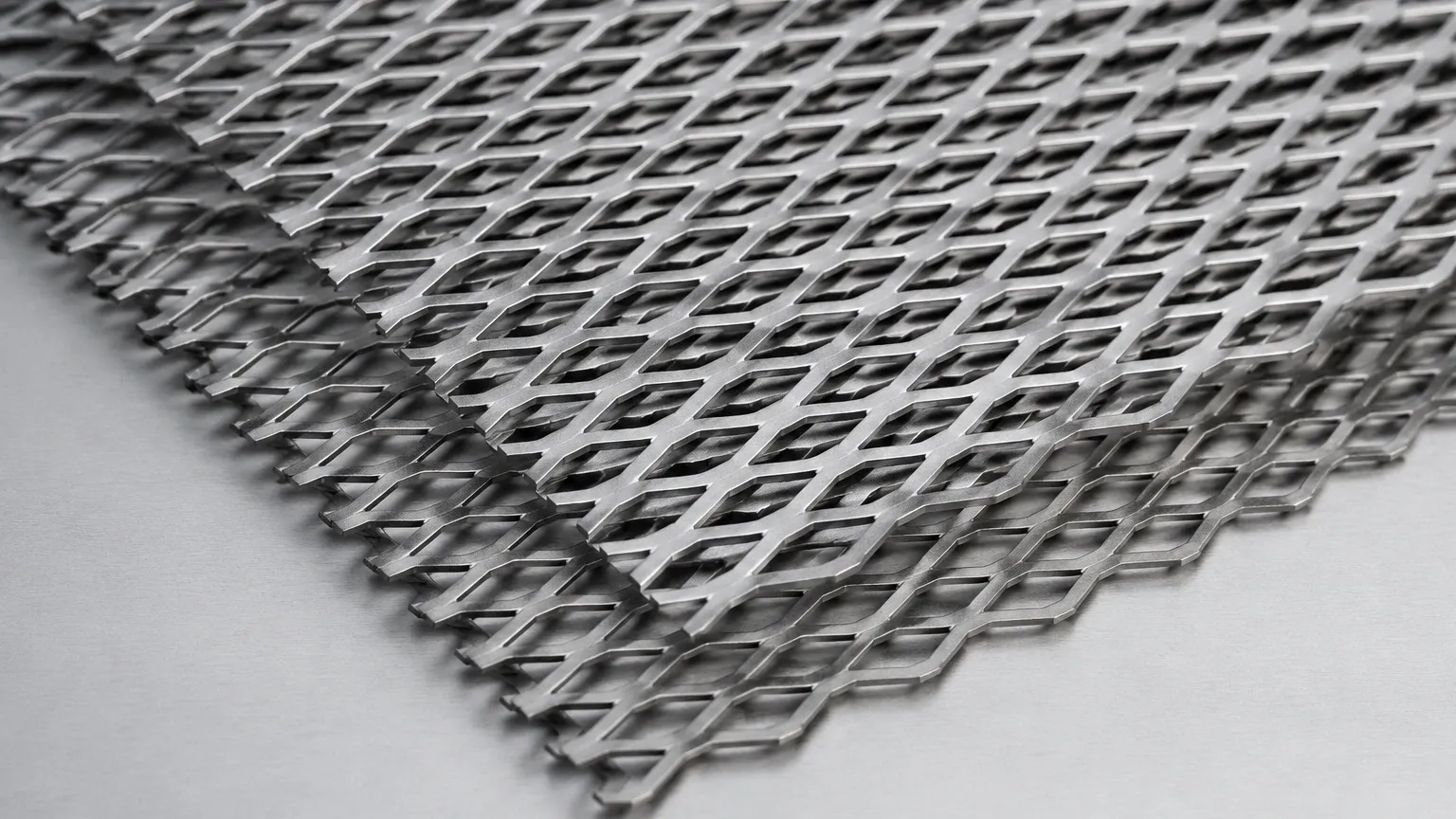
Perforated & Expanded Metal products are foundational components in many mechanical systems. MS expanded metal, specifically, is produced by slitting and stretching a single sheet of low-carbon steel, creating a diamond-shaped pattern that offers a unique combination of strength, ventilation, and weight reduction. This article provides a technical deep dive into the specifications, manufacturing nuances, and selection criteria for ms expanded metal in industrial contexts.
Understanding the Manufacturing Process of MS Expanded Metal
The production of ms expanded metal is a precision engineering process that distinguishes it from other metal mesh products like woven wire or perforated sheets. The process involves a machine that simultaneously slits and stretches the mild steel sheet. Because the metal is expanded rather than punched, there is virtually no material waste, making it one of the most sustainable and cost-effective metal processing methods.
Standard vs. Flattened Expanded Metal
There are two primary forms of ms expanded metal available to industrial users:
1. Standard (Raised) Expanded Metal: In this form, the strands and bonds are set at a uniform angle to the plane of the sheet. This creates a three-dimensional surface that provides excellent grip and high structural rigidity. In filtration, the raised profile can be used to create turbulence or provide a larger surface area for specific mechanical separation tasks.
2. Flattened Expanded Metal: This is produced by passing the standard expanded sheet through a cold-roll reducing mill. The process flattens the strands and bonds, resulting in a smooth, flat surface. Flattened ms expanded metal is often preferred when the material needs to be bonded to other filter media or when a thin profile is required for tight tolerances in hydraulic or chemical processing equipment.
Technical Specifications and Terminology
To accurately specify ms expanded metal for an industrial project, engineers must be familiar with the industry-standard terminology used to define the mesh geometry. These specifications directly impact the mechanical properties and filtration efficiency of the component.
* SWD (Short Way of Design): The distance from the center of one bond to the center of the next bond measured across the short diamond diagonal.
* LWD (Long Way of Design): The distance from the center of one bond to the center of the next bond measured across the long diamond diagonal.
* SWO (Short Way of Opening): The actual width of the diamond opening, measured from the inside of the bonds.
* LWO (Long Way of Opening): The actual length of the diamond opening, measured from the inside of the bonds.
* Strand Thickness: The thickness of the base mild steel material.
* Strand Width: The amount of metal fed into the machine for each slit and stretch cycle.
By manipulating these variables, manufacturers can produce ms expanded metal with varying degrees of "open area." For filtration applications, the open area percentage is a critical metric, as it determines the flow rate and pressure drop across the filter element.
MS Expanded Metal vs. Perforated Metal: Key Differences
While both Perforated & Expanded Metal are used for similar industrial purposes, they possess distinct characteristics that influence their selection. Perforated metal is created by punching holes into a sheet, which results in material loss (the "slugs"). In contrast, expanded metal is stretched, meaning a 1-meter sheet of raw material can produce several meters of expanded mesh.
From an engineering perspective, expanded metal offers a higher strength-to-weight ratio. The interconnected strands distribute loads more efficiently than the independent holes of a perforated sheet. However, perforated metal allows for more precise control over hole shapes (round, square, slotted) and pitch, which can be necessary for high-precision filtration where exact particle retention is the primary goal. MS expanded metal is typically chosen when structural support, cost-efficiency, and high open areas are the priorities.
Role of MS Expanded Metal in Filtration Systems
In industrial filtration, ms expanded metal is rarely the primary filtration medium for fine particles. Instead, it serves several critical secondary roles that ensure the integrity of the entire filtration assembly.
1. Support and Reinforcement
In high-pressure hydraulic or chemical processing systems, fine stainless steel wire mesh or synthetic filter media lack the structural rigidity to withstand significant differential pressures. MS expanded metal is frequently used as a support pleat or a rigid outer cage. It provides the mechanical backbone that prevents the primary filter media from collapsing or deforming under flow stress.
2. Pre-Filtration and Trash Racks
For water treatment or large-scale industrial intake systems, ms expanded metal acts as an effective pre-filter. It captures large debris, such as leaves, plastic, or stones, before they can reach and damage more expensive, fine-mesh secondary filters. The diamond pattern is particularly effective at trapping irregular shapes.
3. Flow Diffusion
When placed upstream of a filter element, the three-dimensional structure of standard expanded metal can help diffuse the flow of liquids or gases. This prevents "channeling," where the fluid hits a specific area of the filter media with high velocity, leading to premature wear and localized bypass.
Material Grades and Surface Treatments
One of the primary considerations when using ms expanded metal is its susceptibility to corrosion. Unlike stainless steel, mild steel (low carbon steel) will oxidize rapidly when exposed to moisture or corrosive chemicals. Therefore, surface treatment is a vital step in the specification process.
* Hot-Dip Galvanizing: This is the most common treatment for industrial ms expanded metal. Coating the steel in a layer of zinc provides cathodic protection, making it suitable for outdoor use or applications involving non-corrosive fluids.
* Powder Coating: For applications where chemical resistance or aesthetic integration is required, powder coating offers a durable barrier. However, it is essential to ensure the coating is uniform across all strand intersections to prevent under-film corrosion.
* Electro-Galvanizing: This provides a thinner zinc layer than hot-dip galvanizing and is generally used for indoor applications or where precise tolerances must be maintained.
In environments involving aggressive chemicals or food-grade requirements, engineers should transition from ms expanded metal to stainless steel (304 or 316L) to ensure compliance and prevent contamination.
Engineering Considerations for Selection and Customization
When selecting ms expanded metal for an OEM project, several engineering factors must be evaluated to ensure the component meets the application's demands.
Load-Bearing Capacity
Engineers must calculate the required load-bearing capacity, especially if the expanded metal is used as a walkway, platform, or heavy-duty filter support. The orientation of the mesh is crucial; the LWD should generally run perpendicular to the support members to maximize the sheet's strength.
Flow Resistance
The "percent open area" determines the resistance to flow. A higher open area reduces pressure drop but also reduces the structural strength of the mesh. Finding the optimal balance is key to energy-efficient filtration. Manufacturers like Kaifil can provide technical data sheets specifying the open area for different mesh configurations.
Customization and OEM Capabilities
Standard off-the-shelf expanded metal rarely meets the specific needs of complex industrial equipment. Customization options include:
* Custom Sheet Sizes: Reducing waste by ordering exact dimensions for filter housings.
* Variable Strand Widths: Adjusting the width to increase strength or change the aesthetic appearance.
* Material Thickness: Selecting the gauge that balances weight and durability.
Cost Analysis and Total Cost of Ownership (TCO)
From a procurement standpoint, ms expanded metal is highly attractive due to its low initial purchase price compared to stainless steel or aluminum. However, a professional B2B evaluation must consider the Total Cost of Ownership (TCO).
In environments where mild steel requires frequent replacement due to corrosion or where the cost of a filtration system failure is high, the long-term savings of stainless steel often outweigh the initial savings of mild steel. Conversely, for dry, non-corrosive industrial environments or as a sacrificial pre-filter, ms expanded metal provides the best return on investment.
Conclusion
Ms expanded metal remains a staple in the industrial sector due to its unique mechanical properties and cost-effectiveness. Whether used as a support structure for high-precision filters or as a protective barrier in heavy machinery, its role in modern engineering is indispensable. By understanding the nuances of SWD/LWD dimensions, the benefits of flattening, and the necessity of proper surface treatments, engineers can effectively integrate Perforated & Expanded Metal into their designs to achieve reliable and efficient performance.
For teams looking to optimize their filtration solutions, working with a manufacturer that understands the interplay between structural support and filtration efficiency is vital. While ms expanded metal offers a robust baseline, the transition to custom-engineered metal components ensures that every industrial application operates at its peak potential.
