


Moz Perforated Metal
In the realm of industrial design and mechanical engineering, perforated metal serves as a fundamental component that bridges the gap between structural integrity and functional permeability. While many professionals search for moz perforated metal with an eye toward architectural aesthetics and high-end finishes, the technical requirements for industrial filtration and heavy-duty processing often demand a deeper dive into material science and precision manufacturing. Understanding the nuances of hole patterns, open area percentages, and alloy selections is essential for engineers who must balance visual requirements with rigorous performance standards.
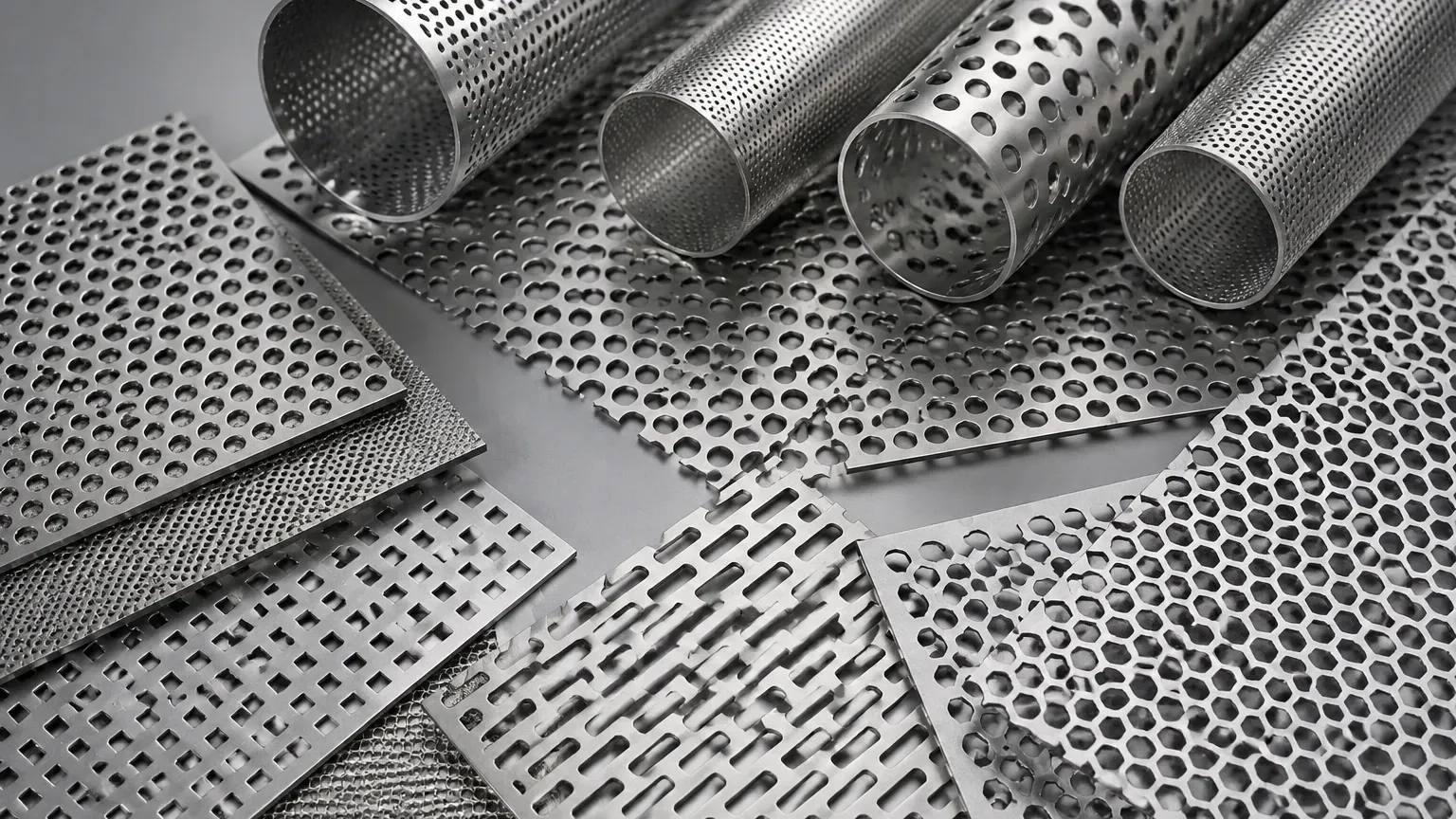
Perforated metal is produced by mechanically punching or laser-cutting sheets of metal to create a pattern of holes, slots, or decorative shapes. In industrial contexts, these components are rarely just decorative; they serve as the primary screening media or the structural support for finer filtration layers. Whether the application involves chemical processing, food production, or hydraulic systems, the selection of Perforated & Expanded Metal requires a strict adherence to tolerances and material compatibility.
Technical Specifications: The Foundation of Performance
When evaluating moz perforated metal or any high-specification perforated sheet, engineers must first define the geometric parameters that will dictate the product's behavior under load and flow. The three primary variables are the hole shape, the hole arrangement (pitch), and the open area.
Hole Shapes and Arrangements
Round holes are the most common choice for industrial filtration due to their structural strength and the ease of manufacturing. They are typically arranged in a 60-degree staggered pattern, which is the most popular configuration because it provides the highest degree of open area and uniform strength in all directions. Other arrangements include straight-line patterns, which are easier to align for certain mechanical fasteners but offer less structural stability under high pressure.
Square holes and slotted holes are also utilized, particularly when the material being filtered has a specific geometry. Slotted holes are often preferred in applications like grain drying or sorting, where the length of the particle exceeds its width. However, for high-pressure filtration housings, round holes remain the industry standard for minimizing stress concentrations.
Calculating Open Area
The open area is the percentage of the total sheet area that is occupied by the perforations. This is a critical metric for calculating flow rates and pressure drops across a filter. For a standard 60-degree staggered round hole pattern, the formula is:
Open Area % = (D² × 90.69) / P²
Where *D* is the hole diameter and *P* is the center-to-center pitch. A higher open area allows for greater flow but reduces the mechanical strength of the sheet. Finding the "sweet spot" between these two competing factors is the hallmark of effective filtration engineering.
Material Selection for Industrial Environments
While architectural moz perforated metal may focus on aluminum or coated mild steels for weight and color versatility, industrial filtration components almost exclusively rely on stainless steel. The choice of alloy is dictated by the chemical environment, temperature, and required lifespan of the component.
Stainless Steel 304 vs. 316L
Grade 304 stainless steel is the workhorse of the industry, offering excellent corrosion resistance and formability for general-purpose applications. However, in environments involving chlorides, acids, or high-salinity water, Grade 316L is the preferred choice. The addition of molybdenum in 316L provides superior resistance to pitting and crevice corrosion, which is vital for maintaining the integrity of the perforation edges over time.
Specialty Alloys
For extreme environments, such as those found in petrochemical processing or deep-sea oil and gas applications, specialty alloys like Duplex stainless steel or Monel may be required. These materials offer higher yield strengths and resistance to stress-corrosion cracking, ensuring that the perforated support structure does not fail under the immense pressures typical of these sectors.
The Intersection of Aesthetic and Industrial Standards
The term moz perforated metal is often associated with the high-quality finishes and unique patterns used in architectural cladding and interior design. For engineers, this association highlights the importance of surface finish and precision. In industrial filtration, while the "look" may be secondary, the quality of the finish is paramount for functional reasons.
Surface Finishing and Deburring
In a filtration system, a rough edge or a burr left over from the punching process can lead to several problems. First, it can cause turbulence in the fluid flow, leading to inefficient filtration. Second, burrs can trap particles that should be washed away during backpulsing or cleaning cycles, leading to premature clogging. Finally, in food and pharmaceutical applications, any surface irregularity can harbor bacteria. Therefore, high-quality industrial perforated metal must undergo rigorous deburring and, in many cases, electropolishing to ensure a smooth, passive surface.
Flatness and Stress Relieving
The process of punching thousands of holes into a metal sheet introduces significant internal stresses, which can cause the material to curl or bow. For architectural panels, this might be a minor nuisance, but for a filter cartridge that must fit into a precision-machined housing, flatness is non-negotiable. Industrial manufacturers utilize roller leveling and stress-relieving processes to ensure that the final Perforated & Expanded Metal product meets strict dimensional tolerances.
Engineering Considerations for Custom Filtration Solutions
Customization is often the deciding factor in the success of a filtration project. Off-the-shelf perforated sheets may not provide the exact flow characteristics or structural support needed for a specialized hydraulic system or chemical reactor. When designing custom components, engineers should consider the following factors:
1. The 1-to-1 Rule: As a general rule of thumb, the hole diameter should not be smaller than the thickness of the material. Attempting to punch holes smaller than the material thickness increases the risk of tool breakage and results in inconsistent hole geometry. If finer filtration is needed, the perforated metal should serve as a support for a fine wire mesh.
2. Margins and Blank Areas: Custom perforated sheets allow for the inclusion of unperforated margins. These solid areas are essential for welding the sheet into a cylinder or bolting it into a frame. Providing precise dimensions for these margins ensures that the structural integrity of the final assembly is maintained at its most vulnerable points—the joints.
3. End Patterns: Engineers must specify whether they require "finished" or "unfinished" end patterns. A finished pattern ensures that the holes are complete at the edges of the sheet, whereas an unfinished pattern may result in partial holes. For filtration cartridges, unfinished patterns are generally avoided as they create sharp edges and weak points during the welding process.
Quality Control and Performance Expectations
In a B2B procurement environment, the reliability of the supplier's quality control system is as important as the material itself. When sourcing Perforated & Expanded Metal, purchasing teams should verify that the manufacturer adheres to international standards such as ISO 9001.
Inspection Criteria
Key inspection points for perforated metal include:
* Hole Diameter Accuracy: Ensuring the holes are within the specified micron or millimeter range to maintain filtration efficiency.
* Pitch Consistency: Variations in pitch can lead to uneven flow distribution across the filter surface.
* Material Certification: Verification of the chemical composition of the stainless steel to ensure it meets the requirements for the specific operating environment.
Total Cost of Ownership
While the initial price of a perforated component is a factor, the total cost of ownership is determined by the component's durability and the frequency of replacement. High-quality stainless steel perforated metal, though more expensive upfront than mild steel alternatives, offers a significantly longer service life in corrosive environments. Furthermore, precision-manufactured components reduce the risk of system downtime caused by filter failure or bypass leaks.
Common Risks and Mitigation Strategies
One of the primary risks in using perforated metal in high-pressure systems is fatigue failure. The areas between the holes, known as the "bars," are subject to constant stress cycles as pressure fluctuates. If the bars are too narrow or the material is too thin, cracks can propagate between the holes, leading to a catastrophic failure of the filter element.
To mitigate this risk, engineers should perform a thorough stress analysis during the design phase. This includes considering the maximum differential pressure the filter will encounter, especially during startup or when the filter is heavily loaded with contaminants. Increasing the material thickness or choosing a pattern with wider bars can significantly enhance the fatigue life of the component.
Another risk is galvanic corrosion, which occurs when the perforated metal is in contact with a different metal in the presence of an electrolyte. Ensuring that the filter housing, support structures, and the perforated media itself are made from compatible materials (or are properly insulated) is critical for long-term performance.
Conclusion: Strategic Sourcing for Industrial Success
Whether an engineer is looking for the refined quality associated with moz perforated metal or a rugged solution for a wastewater treatment plant, the principles of selection remain the same: material integrity, geometric precision, and application-specific design. Perforated and expanded metals are versatile tools that, when engineered correctly, provide the backbone for efficient and durable industrial filtration systems.
By focusing on technical specifications rather than generic marketing claims, purchasing teams can ensure they receive components that not only meet the immediate needs of the project but also contribute to the long-term reliability of the entire industrial process. When the requirement is for high-performance Perforated & Expanded Metal, working with a manufacturer that understands the rigors of industrial filtration is the most effective path to success.
