


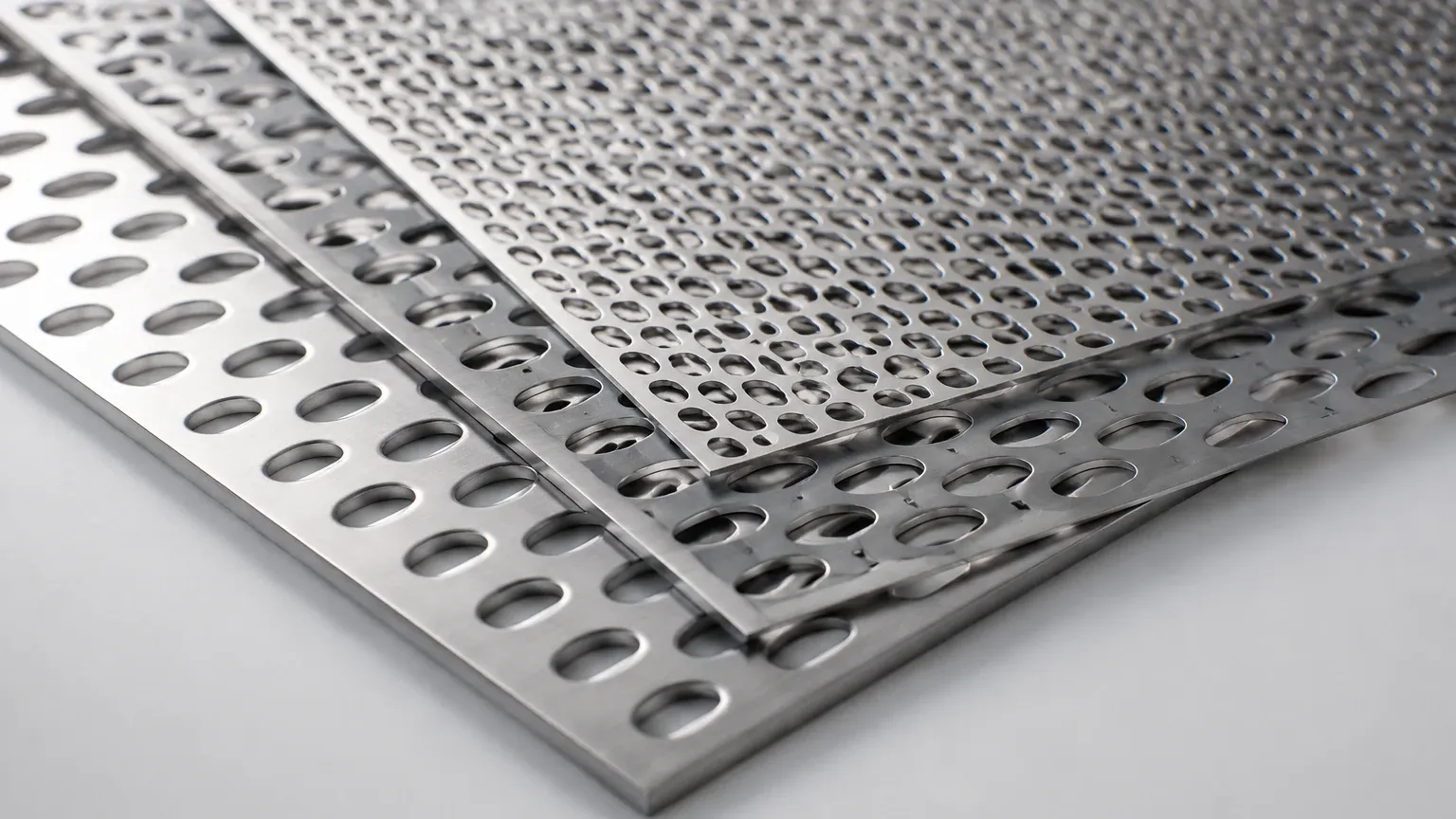
Oval Perforated Metal Sheet
In the field of industrial filtration and material separation, the selection of aperture geometry is a critical engineering decision that dictates flow rates, structural integrity, and the efficiency of the separation process. While round holes are the most common configuration, the oval perforated metal sheet—often referred to as a slotted perforated sheet—serves specialized functions where standard circular apertures fall short. As a core component within the broader category of Perforated & Expanded Metal, oval-holed sheets provide a unique balance of high open-area ratios and directional filtration capabilities.
For engineers and procurement professionals, understanding the technical nuances of oval perforations is essential for optimizing the performance of filtration systems, vibratory screens, and architectural panels. This guide examines the technical specifications, material considerations, and industrial applications of oval perforated metal, providing the factual foundation necessary for informed selection.
Engineering Characteristics of Oval Perforations
The geometry of an oval perforated metal sheet is defined by several key parameters: the hole length, the hole width (or diameter of the ends), and the pitch (the distance between the centers of adjacent holes). Unlike round holes, oval apertures have a directional orientation that can significantly influence the mechanical properties of the sheet.
Hole Geometry and Orientation
There are two primary types of oval configurations: the "end-radius" slot, where the ends are semicircular, and the "side-radius" or true elliptical shape. In industrial contexts, the end-radius slot is more common due to the ease of manufacturing with standard punch-and-die sets. The orientation of these slots—whether they run parallel to the length of the sheet (longitudinal) or across the width (transverse)—affects how the material handles stress and how fluids or particles interact with the surface.
Pattern Arrangements
Oval perforations are typically arranged in one of two patterns:
1. Staggered Pattern: The holes in subsequent rows are offset. This is generally preferred for filtration and screening because it provides a more uniform distribution of apertures across the surface and increases the overall open area while maintaining structural rigidity.
2. Straight Pattern: The holes are aligned vertically and horizontally. This pattern is often selected for aesthetic architectural applications or specific sorting processes where a linear flow path is required.
Open Area Calculations
The percentage of open area is a vital metric for determining flow capacity and pressure drop. For a staggered oval pattern, the calculation must account for the elongated shape. A higher open area reduces the resistance to fluid flow but may decrease the sheet's ability to withstand high-pressure differentials. Engineers must balance these factors based on the specific requirements of the hydraulic or chemical processing system.
Material Selection and Durability
Kaifil specializes in manufacturing filtration components from high-performance alloys, as the material of the oval perforated metal sheet determines its longevity in demanding environments. While various metals can be perforated, stainless steel remains the industry standard for industrial filtration.
Stainless Steel Grades
* Grade 304: The most common stainless steel used for perforated metal. It offers excellent corrosion resistance and formability, making it suitable for food processing and general industrial applications.
* Grade 316L: Containing molybdenum, 316L provides superior resistance to chlorides and acids. This is the preferred choice for marine environments, pharmaceutical manufacturing, and aggressive chemical processing where pitting corrosion is a risk.
* Specialty Alloys: For extreme conditions involving high temperatures or highly corrosive media, alloys such as Duplex stainless steel or Monel may be utilized to ensure the structural integrity of the filter component.
Mechanical Properties
The perforation process introduces stress into the metal sheet. Therefore, the choice of material must consider the "bridge" width—the distance between the holes. If the bridge is too narrow, the sheet may warp or fail under mechanical load. High-tensile stainless steel allows for narrower bridges and higher open areas without compromising the durability of the final component.
Industrial Filtration and Separation Applications
The unique elongated shape of an oval perforated metal sheet makes it indispensable in specific separation processes where round holes would lead to clogging or inefficient sorting.
Particle Orientation and Sorting
In industries such as agriculture and food processing, oval perforations are used to sort seeds, grains, or legumes based on their shape. Because many natural products are elongated, an oval hole allows them to pass through when oriented correctly, while blocking oversized or incorrectly shaped debris. This principle is also applied in the pulp and paper industry to separate fibers from contaminants.
Fluid Dynamics and Clogging Prevention
In liquid filtration, oval apertures can help mitigate "blinding" or clogging. The elongated shape provides a larger exit path for particles that might otherwise become wedged in a circular hole. This is particularly useful in vibratory separators and centrifuge baskets, where the motion of the equipment combined with the oval geometry facilitates the continuous movement of solids across the filter surface.
Support Structures for Fine Mesh
Often, a perforated metal sheet serves as a rigid support (or drainage layer) for a finer wire mesh filter. The oval holes provide a sturdy foundation that can withstand high pressure while offering a large surface area for the fluid to pass through the secondary mesh layer. This configuration is common in high-pressure hydraulic filters and large-scale water treatment systems.
Manufacturing Processes and Precision
Producing a high-quality oval perforated metal sheet requires advanced CNC punching technology and precise tool maintenance. The manufacturing process involves several critical steps that impact the final performance of the filtration component.
Precision Punching
The holes are created using a high-speed press that punches the pattern into a metal coil or sheet. Precision is paramount; even minor deviations in the pitch or hole dimensions can lead to uneven flow distribution or structural weak points. Kaifil utilizes advanced manufacturing capabilities to ensure that every aperture meets the specified tolerances.
Leveling and Flattening
The punching process naturally causes the metal sheet to curl or distort due to the removal of material and the introduction of internal stresses. After perforation, the sheets must go through a leveling process to restore flatness. This is essential if the sheet is to be subsequently rolled into a filter cartridge or welded into a frame.
Surface Finishing and Deburring
Perforation leaves sharp edges and burrs on the "exit" side of the hole. In filtration applications, these burrs can trap particles, cause turbulence, or even break off and contaminate the filtrate. Deburring processes, such as mechanical sanding or electrochemical polishing, are employed to ensure a smooth surface. For pharmaceutical and food-grade applications, electropolishing is often used to achieve a high-purity finish that prevents bacterial growth and facilitates easy cleaning.
Selection Criteria for Engineers and Purchasing Teams
When specifying an Perforated & Expanded Metal solution with oval holes, technical professionals should confirm several variables to ensure the product is fit for purpose.
Dimensional Specifications
* Sheet Thickness: Typically ranges from 0.5mm to 10mm, depending on the pressure requirements and material choice.
* Hole Size: The width and length of the oval. It is a general rule of engineering that the hole width should not be smaller than the sheet thickness to avoid tool breakage and ensure clean cuts.
* Pitch and Margin: The distance between holes and the unperforated area around the edges of the sheet. Custom margins are often necessary for welding or mounting the sheet into a housing.
Load-Bearing Requirements
Engineers must calculate the maximum pressure drop across the filter. If the oval perforated metal sheet is the primary structural element, it must be thick enough to resist deformation. In cases where the sheet is rolled into a cylinder (a filter cartridge), the orientation of the ovals can affect the crush strength of the tube.
Total Cost of Ownership
While the initial purchase price is a factor, the total cost of ownership includes the service life and maintenance requirements. A precision-manufactured stainless steel sheet with properly deburred oval holes will have a longer service life and lower replacement frequency than a lower-quality alternative, especially in abrasive or corrosive environments.
Maintenance and Service Life in Industrial Environments
The longevity of an oval perforated metal sheet depends heavily on the operating conditions and the maintenance protocol. In heavy-duty industrial applications, regular inspection is required to identify signs of wear or chemical degradation.
Cleaning Protocols
One of the advantages of stainless steel perforated metal is its cleanability. For systems handling sticky or viscous fluids, the smooth surface of the oval holes allows for effective backwashing or ultrasonic cleaning. Ensuring that the apertures remain clear of build-up is essential for maintaining the designed flow rate and preventing pressure spikes.
Wear Patterns
In abrasive applications, such as mining or aggregate screening, the leading edges of the oval holes will eventually wear down. This increases the aperture size and reduces the accuracy of the separation. Selecting a material with higher hardness or applying surface treatments can extend the time between replacements.
Replacement Cycles
Replacement cycles should be determined based on performance data. When the pressure drop across the filter remains high even after cleaning, or when the filtrate quality begins to degrade, it is likely that the perforated sheet has reached the end of its functional life. Working with a manufacturer like Kaifil allows for the rapid production of custom-dimensioned replacement components to minimize facility downtime.
Conclusion
The oval perforated metal sheet is a highly versatile component that provides specialized solutions for complex filtration and separation challenges. By offering a unique combination of directional flow, high open area, and structural durability, it surpasses the capabilities of standard round-hole patterns in many industrial contexts.
Whether used as a standalone screen in food processing or as a robust support structure in chemical filtration, the performance of these sheets depends on precise manufacturing and appropriate material selection. For engineers and technical teams, partnering with a manufacturer that understands the complexities of Perforated & Expanded Metal ensures that the final product will meet the rigorous demands of the application, providing reliable and cost-effective filtration performance over the long term.
