


Perforated Metal Cabinet Door Inserts
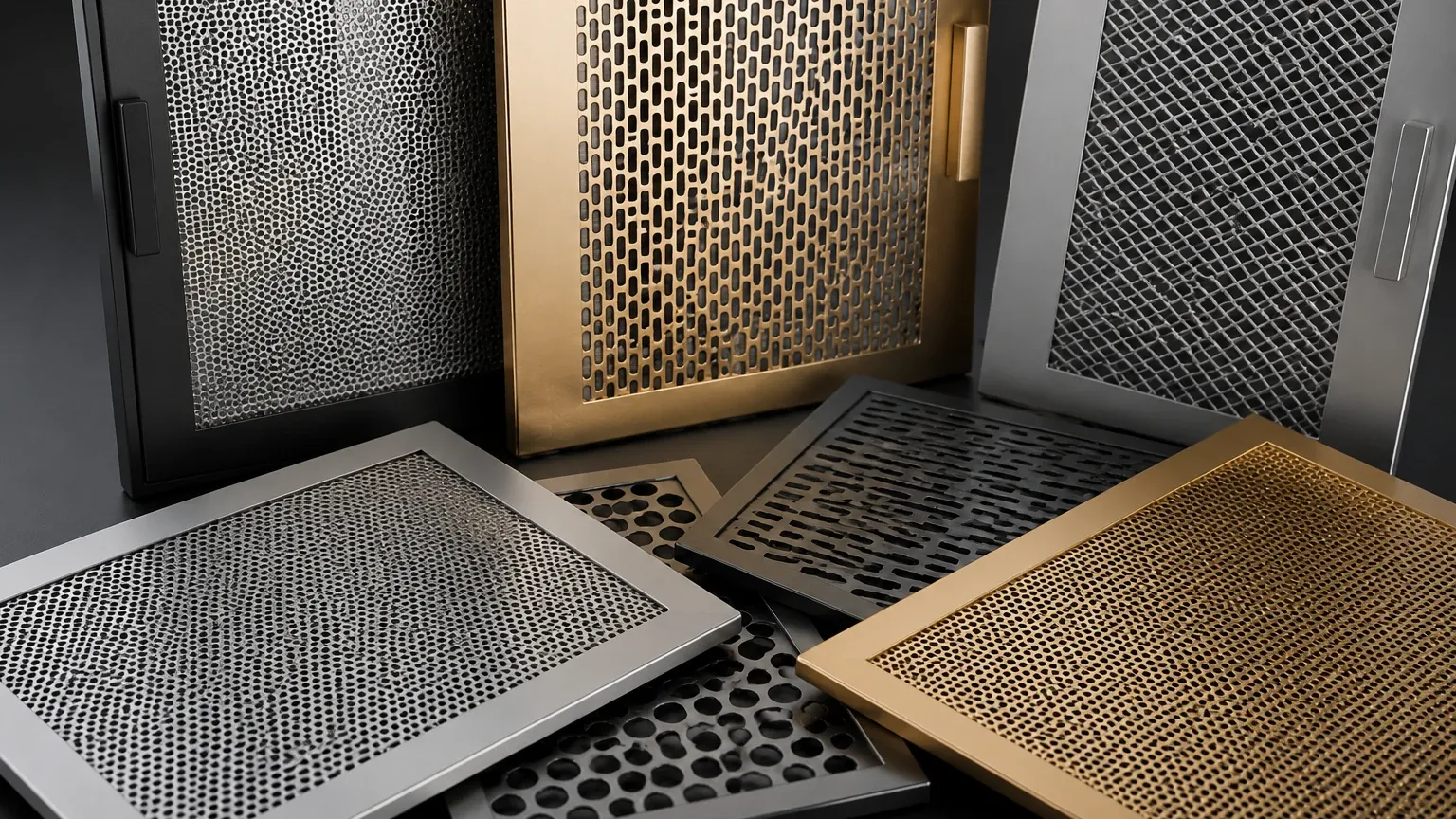
In industrial and commercial environments, the design of storage and equipment housing goes far beyond aesthetics. For engineers and facility managers, cabinet doors must often fulfill complex functional requirements, including thermal management, visibility, security, and resistance to harsh environmental conditions. Perforated metal cabinet door inserts have emerged as a critical component in these applications, providing a versatile solution that balances structural integrity with airflow and visibility.
Unlike solid panels, perforated inserts allow for the constant exchange of air, which is vital for housing electronic components, chemical reagents, or perishable goods. As a specialized manufacturer of filtration and precision metal components, Kaifil understands that the selection of these inserts requires a deep understanding of material science, open area calculations, and manufacturing tolerances. This guide explores the technical considerations necessary for selecting and implementing perforated metal inserts in industrial cabinetry.
Understanding the Functional Role of Metal Inserts in Industrial Cabinetry
Perforated metal cabinet door inserts serve several primary functions in a B2B context. In server rooms and electrical enclosures, heat dissipation is the most critical factor. Without adequate ventilation, sensitive electronics can fail prematurely due to thermal stress. Perforated panels allow for passive or active cooling while still providing a physical barrier against unauthorized access or large debris.
In laboratory and pharmaceutical settings, visibility is often a safety requirement. Perforated inserts allow personnel to verify the contents of a cabinet without opening the door, reducing the frequency of exposure to controlled environments. Furthermore, in food processing or wash-down environments, the use of stainless steel perforated panels ensures that moisture does not become trapped within the cabinet, preventing the growth of mold or bacteria.
The transition from solid doors to perforated inserts is often driven by the need to meet specific industry standards, such as NEMA or IP ratings for enclosures, where airflow must be balanced against the ingress of particles. Choosing the right Perforated & Expanded Metal configuration is essential to achieving these performance targets.
Material Selection for Perforated Metal Cabinet Door Inserts
The longevity and performance of a cabinet insert are fundamentally tied to its material composition. Because these components are often exposed to cleaning chemicals, high humidity, or mechanical impact, selecting a resilient substrate is the first step in the engineering process.
Stainless Steel (Grade 304 and 316)
Stainless steel is the industry standard for high-performance perforated metal cabinet door inserts. Grade 304 offers excellent corrosion resistance for most indoor industrial applications and is cost-effective. However, for environments involving high salt exposure, marine conditions, or aggressive chemical cleaners (such as in pharmaceutical or heavy chemical processing), Grade 316 is preferred due to its molybdenum content, which provides superior resistance to pitting and crevice corrosion.
Carbon Steel
For dry, indoor environments where cost is a primary concern and corrosion risk is low, carbon steel may be used. These inserts typically require a secondary finish, such as powder coating or galvanization, to prevent oxidation. While functional, they lack the inherent durability and hygiene advantages of stainless steel.
Aluminum
Aluminum is selected when weight reduction is a priority. It offers natural corrosion resistance through the formation of an oxide layer and is easily machined. However, it has a lower structural strength-to-weight ratio compared to stainless steel, which may necessitate thicker gauges for large cabinet doors to prevent sagging or warping.
Technical Specifications: Hole Patterns and Open Area Calculations
The performance of perforated metal cabinet door inserts is defined by the geometry of the perforations. Engineers must calculate the "Open Area Percentage" to ensure the insert meets the specific airflow or filtration requirements of the application.
Round Hole Perforations
Round holes are the most common and versatile pattern. They offer the best structural strength and are the easiest to manufacture with high precision. Staggered round hole patterns (typically at 60 degrees) maximize the open area while maintaining the rigidity of the metal sheet. For cabinet doors, round holes provide a clean, professional appearance that is easy to clean and maintain.
Square Hole Perforations
Square holes offer a higher open area percentage compared to round holes of the same size. This makes them ideal for applications requiring maximum ventilation, such as high-density server racks. However, square holes introduce higher stress concentrations at the corners, which can lead to cracking if the panel is subjected to heavy vibration or mechanical stress.
Slotted and Decorative Patterns
Slotted holes are often used when directional airflow is required or when the insert must act as a coarse screen for specific materials. While decorative patterns exist, industrial applications generally prioritize geometric regularity to ensure uniform airflow and predictable structural behavior.
Calculating Open Area
The open area is the ratio of the total area of the holes to the total area of the sheet, expressed as a percentage. For example, a 40% open area provides a significant barrier while allowing substantial airflow. If the open area exceeds 60-70%, the structural integrity of the insert may be compromised, requiring additional bracing or a heavier gauge of metal.
Comparing Perforated vs. Expanded Metal for Door Inserts
When specifying metal inserts, engineers often choose between perforated and expanded metal. Both fall under the category of Perforated & Expanded Metal solutions, but they are produced through different processes and offer distinct mechanical properties.
Perforated Metal is created by punching holes into a solid sheet. This process allows for extreme precision in hole size and placement. It leaves a flat, smooth surface that is easy to integrate into cabinet frames. The margins (the solid areas around the edges of the holes) can be customized to facilitate welding or mechanical fastening.
Expanded Metal is produced by simultaneously slitting and stretching the metal sheet. This creates a diamond-shaped mesh pattern. Expanded metal is highly cost-effective because the process involves no material waste. It also provides a high strength-to-weight ratio and a three-dimensional texture that can enhance grip or provide unique aesthetic qualities. However, expanded metal can have sharp edges unless it is flattened (leveled) after production, and it is generally more difficult to clean than perforated metal, making it less suitable for food-grade or sterile environments.
For most high-end industrial cabinetry, perforated metal is the preferred choice due to its flat profile, precise open area control, and ease of maintenance.
Engineering Considerations for Airflow and Thermal Management
When designing perforated metal cabinet door inserts, the primary engineering challenge is often thermal management. In an enclosed cabinet housing heat-generating equipment, the air must circulate to prevent "hot spots."
1. Pressure Drop: Every perforated panel creates a resistance to airflow, known as pressure drop. Engineers must ensure that the fans or natural convection currents within the cabinet can overcome this resistance. A higher open area reduces pressure drop but decreases the panel's ability to shield against electromagnetic interference (EMI) or physical ingress.
2. Airflow Velocity: The size of the perforations affects the velocity of the air passing through the door. Smaller holes can create more turbulence, which may be beneficial for cooling in some configurations but can also increase noise levels in high-velocity systems.
3. EMI/RFI Shielding: In electronics cabinets, the perforated insert may need to provide shielding against electromagnetic interference. The hole size must be significantly smaller than the wavelength of the radiation being shielded. This requires a precise balance between hole diameter and the need for ventilation.
Manufacturing and Customization Capabilities
Standard off-the-shelf perforated sheets rarely meet the exact requirements of custom industrial cabinetry. Successful implementation relies on OEM capabilities that allow for precise tailoring of the insert to the cabinet frame.
* Custom Dimensions and Margins: Industrial cabinet doors often require specific "blank" margins around the perimeter of the perforated area. These solid borders are essential for secure mounting, whether the insert is being welded, bolted, or held in place by a retaining U-channel.
* Precision Leveling: The perforation process can introduce internal stresses into the metal, causing it to curl or bow. High-quality inserts undergo a leveling process to ensure they are perfectly flat, which is critical for a flush fit within the cabinet door frame.
* Edge Treatments: For safety and ease of installation, edges can be deburred or hemmed. In some designs, the perforated metal is formed into a 3D shape or "pan" to provide additional stiffness without increasing the metal gauge.
* Finishing: Beyond the base material, finishes such as electropolishing for stainless steel can enhance corrosion resistance and provide a mirror-like finish suitable for sterile environments. Powder coating is also available in a wide range of colors to match corporate branding or safety coding.
Maintenance and Longevity in Demanding Environments
The total cost of ownership for perforated metal cabinet door inserts is influenced by their maintenance requirements. In industrial settings, dust, grease, and chemical residues can accumulate in the perforations, potentially blocking airflow and creating a fire hazard or hygiene issue.
Stainless steel inserts are highly favored because they can withstand high-pressure washing and aggressive degreasers. The smooth surface of a perforated round hole is less likely to trap contaminants compared to the complex geometry of expanded metal or woven wire mesh.
Regular inspections should check for:
* Blockages: Ensuring the open area remains clear of debris to maintain thermal performance.
* Structural Integrity: Checking for signs of sagging or mechanical damage, especially in high-traffic areas where cabinets may be struck by carts or machinery.
* Fastener Security: Verifying that the mounting points remain secure, as vibration from internal equipment can loosen mechanical fixings over time.
Conclusion: Selecting the Right Partner for Filtration and Enclosure Solutions
Perforated metal cabinet door inserts are more than just decorative panels; they are engineered components that play a vital role in the safety, efficiency, and durability of industrial equipment. By carefully considering material grades, hole patterns, and open area requirements, engineers can optimize their cabinetry for any environment.
At Kaifil, we leverage our extensive experience in precision metal fabrication and industrial filtration to provide high-performance Perforated & Expanded Metal solutions. Whether you require standard patterns or custom-engineered inserts for specialized OEM applications, our focus on quality and technical accuracy ensures that your filtration and enclosure components meet the most demanding industrial standards. By selecting the right materials and specifications at the design stage, purchasing teams can ensure long-term reliability and reduced maintenance costs for their facility's infrastructure.
