


Perforated Metal Ceiling Tiles
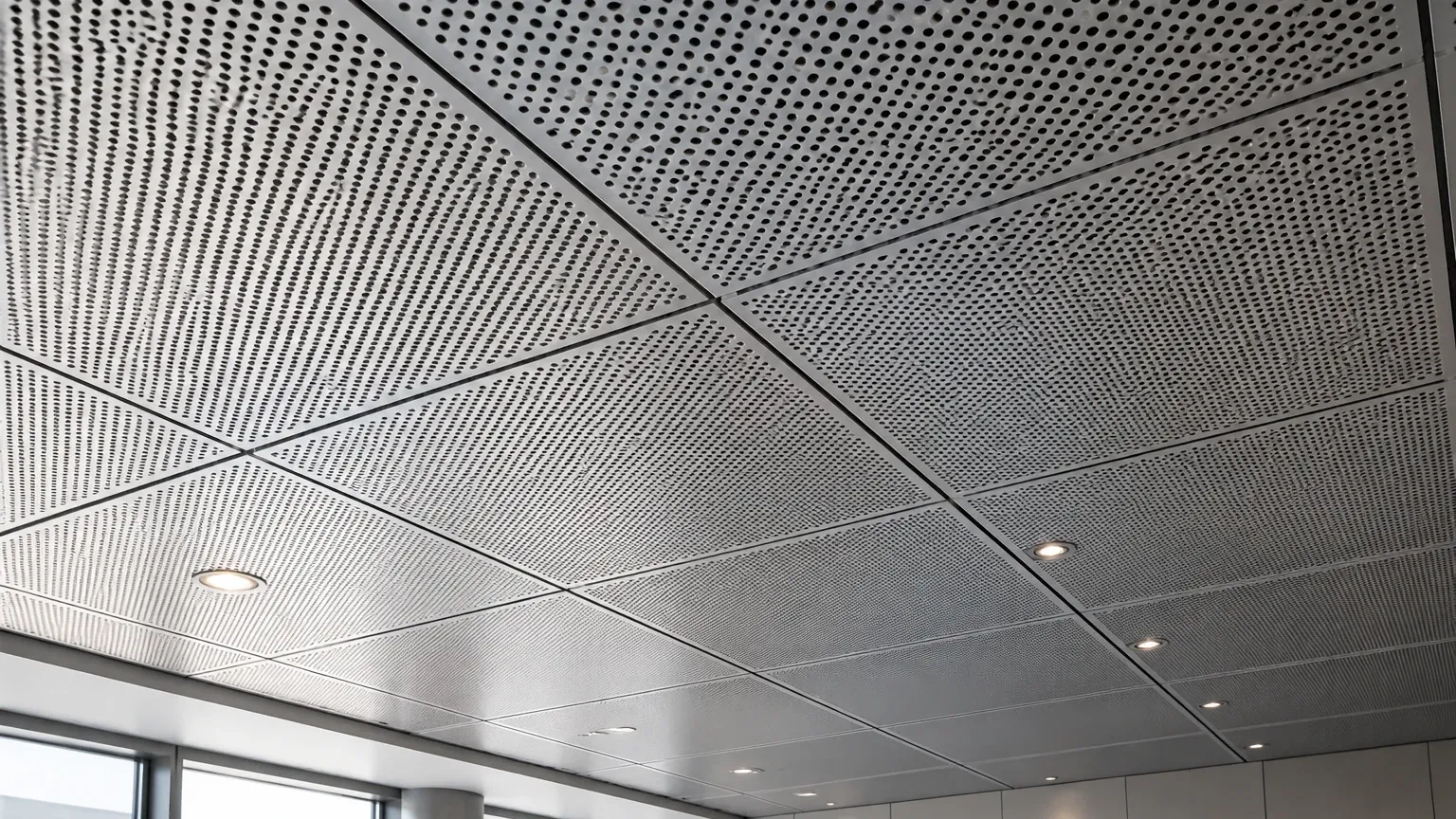
In modern industrial and commercial architecture, the selection of ceiling materials has evolved beyond simple aesthetics to incorporate critical functional requirements such as acoustic control, ventilation efficiency, and long-term durability. Perforated metal ceiling tiles have emerged as a primary solution for engineers and facility managers seeking a balance between structural integrity and environmental performance. Unlike traditional mineral fiber or gypsum-based systems, metal-based solutions offer superior resistance to moisture, fire, and physical impact, making them ideal for demanding environments ranging from pharmaceutical cleanrooms to high-traffic transport hubs.
Understanding the technical nuances of Perforated & Expanded Metal is essential for specifying the correct system. This guide explores the engineering considerations, material properties, and performance metrics that define the utility of perforated metal ceiling tiles in professional applications.
Technical Specifications and Material Selection
The performance of perforated metal ceiling tiles is fundamentally dictated by the base material and the specific perforation pattern chosen. In industrial settings, material selection is often the first point of failure if environmental factors are not properly accounted for.
Material Options
1. Stainless Steel (304 and 316 Grades): For environments requiring high hygiene standards or resistance to corrosive vapors, such as chemical processing plants or commercial kitchens, stainless steel is the preferred choice. Grade 316, in particular, offers enhanced resistance to chlorides, making it suitable for coastal installations or facilities using aggressive cleaning agents.
2. Aluminum: Known for its high strength-to-weight ratio, aluminum is the most common material for large-scale ceiling installations. Its natural oxide layer provides inherent corrosion resistance, and it is easily finished with powder coatings or anodizing.
3. Galvanized Steel: This provides a cost-effective alternative for indoor industrial spaces where moisture levels are controlled. The zinc coating protects the base carbon steel from oxidation, though it is less resistant to chemical exposure than stainless steel.
Perforation Patterns and Open Area
The "open area" percentage is a critical engineering metric. It is calculated based on the hole diameter and the pitch (the distance between the centers of adjacent holes). For example, a 60-degree staggered pattern is often used to maximize open area while maintaining the structural rigidity of the tile. Engineers must calculate the open area to ensure it meets the requirements for HVAC airflow and fire suppression (sprinkler) transparency.
Engineering Performance: Acoustics and Airflow
One of the primary technical reasons for specifying perforated metal ceiling tiles is their ability to manage sound and air movement within a space.
Acoustic Absorption
While metal is inherently reflective of sound, the perforation process allows sound waves to pass through the tile into the ceiling plenum. To achieve high Noise Reduction Coefficient (NRC) ratings, these tiles are typically paired with acoustic fleece or mineral wool insulation backings. The size and spacing of the perforations act as a mechanical filter for sound frequencies; smaller, more frequent holes generally provide better high-frequency absorption, which is vital in noisy industrial environments or open-plan offices.
Ventilation and HVAC Integration
In facilities such as data centers or laboratories, the ceiling often acts as a return air plenum. Perforated tiles allow for consistent air distribution without the need for unsightly localized grilles. By adjusting the open area percentage across different zones of the ceiling, engineers can fine-tune the static pressure and airflow velocity, ensuring that sensitive equipment remains cooled or that air exchange rates meet regulatory standards.
Comparing Perforated and Expanded Metal for Ceiling Applications
When evaluating Perforated & Expanded Metal for ceiling systems, it is important to distinguish between the two manufacturing methods, as they offer different mechanical properties.
* Perforated Metal: Created by punching holes into a solid sheet. This process allows for extreme precision in hole shape (round, square, slotted, or custom) and placement. It provides a flat, uniform surface that is easy to clean and integrate with standard T-grid systems.
* Expanded Metal: Produced by shearing and stretching a single sheet of metal simultaneously. This creates a diamond-shaped mesh pattern. Expanded metal is often more cost-effective as there is no material waste (scrap) during production. From an engineering standpoint, expanded metal provides a three-dimensional texture that can be used for directional shading or unique acoustic diffusion, though it may be more challenging to clean in sterile environments compared to flat perforated sheets.
Customization and Manufacturing Capabilities
Industrial projects rarely conform to a "one-size-fits-all" standard. Customization is often required to accommodate lighting fixtures, fire safety equipment, and structural columns. Professional manufacturers like Kaifil specialize in providing tailored solutions that meet specific project tolerances.
Precision Fabrication
Advanced CNC punching and laser cutting technologies allow for the creation of complex borders and non-perforated zones within a single tile. This is crucial for maintaining the structural integrity of the tile where it interfaces with the suspension system. Furthermore, custom edge profiles—such as tegular, flush, or concealed—can be engineered to meet specific aesthetic and accessibility requirements.
Finishing and Coating
Beyond the base metal, the finish plays a vital role in both durability and light reflectance. Powder coating is the industry standard, offering a wide range of RAL colors and textures. For industrial applications, high-durability coatings can be applied to resist UV degradation, microbial growth, or chemical staining. Light reflectance values (LR) are also a consideration; high-LR finishes can reduce the energy required for artificial lighting by bouncing natural and electric light more efficiently throughout the space.
Procurement and Implementation Considerations
For purchasing teams and engineers, the total cost of ownership (TCO) of perforated metal ceiling tiles often outweighs the initial capital expenditure when compared to cheaper materials. To ensure a successful procurement process, several factors should be confirmed with the manufacturer:
1. Load-Bearing Requirements
While ceiling tiles are not typically structural, they must support their own weight plus any integrated components like LED drivers, smoke detectors, or security cameras without sagging. Engineers should verify the deflection limits of the specified metal thickness (gauge) over the required span.
2. Compatibility with Suspension Systems
Most perforated metal tiles are designed to fit standard 15mm or 24mm T-grid systems. However, for heavy-duty industrial applications, a "clip-in" or "hook-on" system may be required to prevent tiles from shifting due to air pressure changes or vibration from overhead machinery.
3. Maintenance and Life Cycle
Metal ceilings are virtually maintenance-free compared to mineral fiber, which can sag, stain, or harbor mold if exposed to leaks. Confirming the cleaning protocols—especially for stainless steel in food and beverage or pharmaceutical sectors—is essential. Typically, a simple wipe-down with non-abrasive cleaners is sufficient to maintain the integrity of the finish for decades.
4. Regulatory Compliance
Ensure that the selected tiles meet local building codes, specifically regarding fire ratings (Class A/Class 0) and seismic bracing requirements. In specialized industries, compliance with cleanroom standards (ISO classes) or FDA/USDA requirements for food contact surfaces may also be necessary.
Conclusion
Perforated metal ceiling tiles represent a sophisticated intersection of industrial engineering and architectural design. By carefully selecting the appropriate material, perforation pattern, and finish, technical professionals can solve complex challenges related to acoustics, ventilation, and durability. Whether the application is a high-tech manufacturing facility or a public infrastructure project, the use of high-quality metal filtration and screening components ensures a long-lasting, high-performance ceiling solution. For those evaluating specific technical requirements for their next project, reviewing professional Perforated & Expanded Metal options is the recommended step to ensure all engineering and safety benchmarks are met.
