


Perforated Metal Canopy
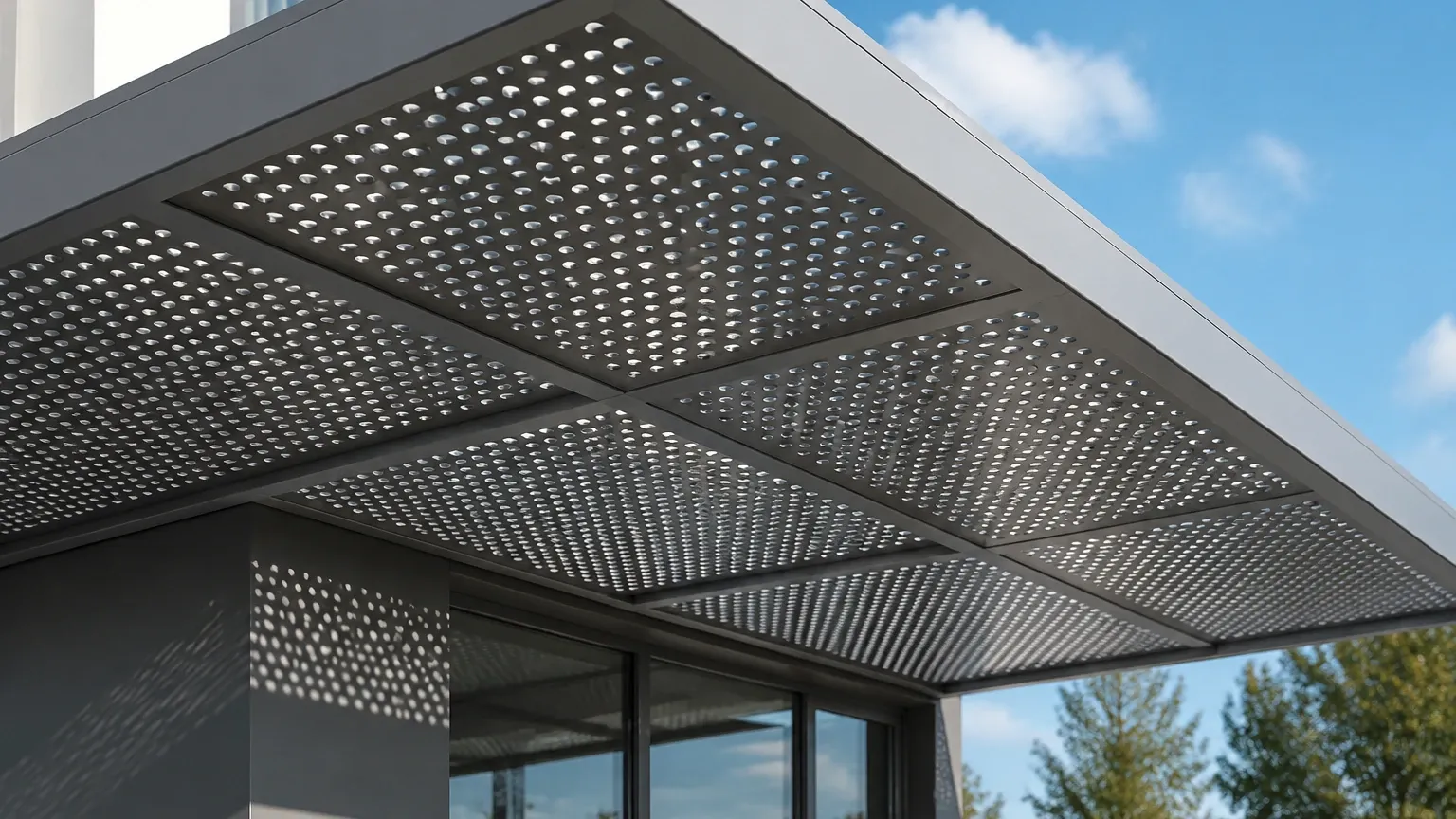
In industrial and architectural engineering, a perforated metal canopy serves as a critical structural element designed to provide environmental protection, light management, and ventilation. Unlike solid metal structures, these canopies utilize precisely engineered hole patterns to balance weight, strength, and functionality. For procurement teams and engineers, selecting the right canopy involves a deep understanding of material science, fluid dynamics (for airflow), and structural load-bearing requirements.
As a specialized manufacturer of precision metal components, Kaifil provides high-performance Perforated & Expanded Metal solutions tailored for demanding industrial environments. This guide explores the technical specifications, engineering considerations, and selection criteria essential for implementing an effective perforated metal canopy.
Engineering Fundamentals of Perforated Metal Canopies
The performance of a perforated metal canopy is primarily dictated by its geometric configuration. Engineers must define the hole shape, size, and arrangement to meet specific site requirements. The most common configurations include round, square, and slotted holes, each offering different mechanical properties.
Hole Patterns and Pitch
Round holes are the industry standard due to their structural stability and ease of manufacturing. They are typically arranged in a 60-degree staggered pattern, which provides the highest degree of open area and strength-to-weight ratio. Straight-row patterns are also available but are generally less structurally efficient under high wind loads. The "pitch"—the distance between the centers of adjacent holes—is a critical measurement that determines the overall density of the perforations.
Calculating Open Area
The "Open Area" percentage is the most vital metric for any perforated metal canopy. It represents the total area of the holes relative to the total area of the sheet. This percentage directly influences:
- Light Transmission: Higher open areas allow more natural light, reducing the need for artificial lighting in industrial walkways or equipment shelters.
- Airflow and Ventilation: In chemical processing or HVAC applications, canopies must allow heat and gases to escape to prevent pressure buildup.
- Wind Load: A higher open area reduces the "sail effect," allowing wind to pass through the structure and reducing the stress on support columns and fasteners.
Material Selection for Industrial Environments
The longevity of a perforated metal canopy depends heavily on the alloy selected. Because these structures are often exposed to the elements, moisture, and industrial pollutants, corrosion resistance is a primary concern.
Stainless Steel (Grade 304 and 316)
Stainless steel is the preferred material for high-durability applications. Grade 304 offers excellent corrosion resistance for standard outdoor environments. However, in coastal areas or chemical processing plants where chloride exposure is high, Grade 316 is recommended. Grade 316 contains molybdenum, which significantly enhances resistance to pitting and crevice corrosion.
Aluminum Alloys
Aluminum is frequently specified for canopies where weight reduction is a priority. It is naturally corrosion-resistant due to its oxide layer and offers a high strength-to-weight ratio. While not as robust as stainless steel in high-impact industrial zones, it is an excellent choice for large-scale architectural canopies where structural load on the building frame must be minimized.
Specialized Coatings
For added protection, materials can be finished with PVDF coatings, powder coating, or galvanization. In industrial filtration and protection contexts, passivation of stainless steel is often required to remove surface contaminants and maximize the protective oxide layer.
Structural Considerations and Wind Load Management
One of the primary engineering advantages of using Perforated & Expanded Metal for a canopy is the reduction in wind resistance. A solid metal sheet acts as a wing or a sail, creating significant uplift or downward pressure during high-wind events.
Aerodynamic Performance
Perforations break up the airflow, creating turbulence that dissipates energy. This allows for lighter support structures and fewer anchoring points compared to solid canopies. Engineers must calculate the "Drag Coefficient" based on the open area percentage to ensure the canopy can withstand local building code requirements for wind speed.
Deflection and Gauge Thickness
The thickness of the metal (gauge) must be balanced against the span of the canopy. Thicker gauges provide more rigidity but increase the weight. For industrial canopies, it is common to use 11-gauge to 16-gauge stainless steel. If the span between supports is large, the metal may require "breaking" or flanging (folding the edges) to increase the moment of inertia and prevent sagging or oil-canning (visible waviness in the metal surface).
Comparing Perforated and Expanded Metal for Canopies
When specifying a metal canopy, engineers often choose between perforated and expanded metal. While they may appear similar from a distance, their manufacturing processes and mechanical properties differ significantly.
Perforated Metal
Perforated metal is created by punching holes into a solid sheet. This process allows for extreme precision in hole placement and size. It maintains a flat surface and provides a clean, professional aesthetic. It is ideal for applications requiring specific filtration levels or precise light diffusion patterns.
Expanded Metal
Expanded metal is produced by shearing and stretching a single sheet, creating diamond-shaped openings. This process is highly cost-effective because there is no material waste (unlike the "slugs" produced in perforating). Expanded metal canopies provide a more three-dimensional texture, which is excellent for solar shading as the angled strands can block direct sunlight while still allowing airflow. However, expanded metal can be more difficult to frame and may have sharper edges than perforated options.
Customization and OEM Manufacturing Capabilities
In industrial B2B sectors, off-the-shelf solutions rarely meet the specific needs of a facility. Customization is essential for integrating a perforated metal canopy into existing infrastructure. Kaifil specializes in OEM manufacturing, allowing for precise control over every specification.
Precision Fabrication
Customization goes beyond just hole patterns. It includes:
- Margins: Leaving solid borders around the perforated area to facilitate welding or bolting to a frame.
- Forming: Bending the perforated sheets into curves, angles, or corrugated profiles to enhance structural strength or aesthetic appeal.
- Bolt Hole Integration: Pre-drilling mounting holes during the perforation process to ensure perfect alignment during field installation.
Engineering Collaboration
When working with a manufacturer like Kaifil, engineers can provide CAD drawings or performance requirements (such as "must provide 40% shade and withstand 120 mph winds"). The manufacturing team then translates these requirements into a production plan, selecting the appropriate material grade, gauge, and perforation pattern to meet the target performance.
Maintenance and Longevity in Demanding Applications
While a perforated metal canopy is designed for durability, its service life is extended through proper maintenance and engineering foresight. In industrial environments, the accumulation of dust, chemicals, or biological matter can lead to localized corrosion if not addressed.
Cleaning Protocols
Because of the holes, perforated canopies can trap debris more easily than solid surfaces. Regular pressure washing or chemical cleaning (compatible with the specific alloy) is recommended. For stainless steel canopies in chemical plants, periodic rinsing prevents the buildup of corrosive particulates that could bypass the material's natural passivity.
Inspection Points
Regular inspections should focus on:
- Attachment Points: Checking for galvanic corrosion if the canopy is attached to a different type of metal (e.g., a stainless canopy on a carbon steel frame).
- Stress Cracks: Monitoring the areas around the perforations for signs of fatigue, especially in high-vibration environments near industrial machinery.
- Drainage: Ensuring that the canopy frame does not allow water to pool, which can lead to accelerated oxidation in the crevices between the perforated sheet and the support structure.
Conclusion: Selecting the Right Solution
A perforated metal canopy is a sophisticated engineering component that requires careful specification. By understanding the relationship between material grade, open area, and structural requirements, engineers can design systems that provide long-term protection and efficiency. Whether the goal is solar shading, equipment protection, or architectural integration, the use of high-quality Perforated & Expanded Metal ensures a balance of performance and durability.
For technical professionals and purchasing teams, the key to a successful project lies in early collaboration with the manufacturer. Confirming tolerances, material certifications, and fabrication capabilities before production begins minimizes risks and ensures the final product meets the rigorous demands of industrial applications. Kaifil remains committed to delivering these precision-engineered solutions, supporting global industries with reliable, custom-manufactured filtration and structural components.
