


Perforated Metal Cladding
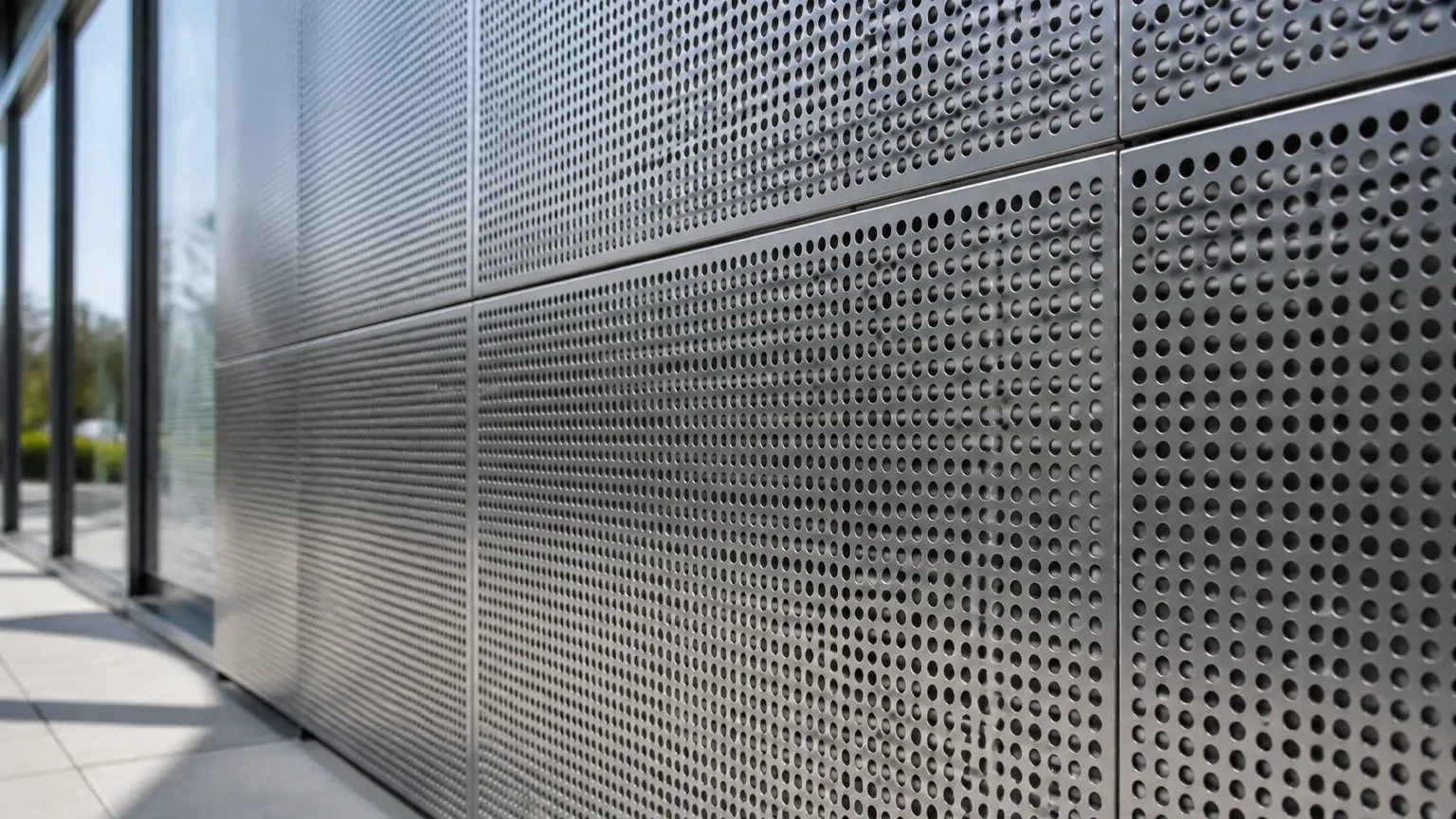
In industrial and architectural engineering, perforated metal cladding serves as a multifunctional skin that balances structural protection with environmental control. While often recognized for its aesthetic contribution to modern building envelopes, the technical utility of perforated systems extends deep into industrial sectors, including chemical processing, water treatment, and heavy machinery housing. For engineers and procurement specialists, selecting the right cladding involves a rigorous evaluation of material properties, perforation patterns, and mechanical performance.
As a specialized manufacturer of precision metal components, Kaifil provides high-performance solutions in the realm of Perforated & Expanded Metal. Understanding the engineering nuances behind these materials is essential for ensuring long-term durability and operational efficiency in demanding environments.
Understanding the Role of Perforated & Expanded Metal in Industrial Cladding
Perforated metal cladding is manufactured by mechanically punching or laser-cutting holes into metal sheets. Expanded metal, conversely, is created by simultaneously slitting and stretching the material, resulting in a diamond-shaped mesh without any scrap loss. Both formats are integral to industrial infrastructure, providing ventilation, sound attenuation, and security.
In industrial filtration and equipment housing, the choice between perforated and expanded formats depends on the required rigidity and the specific flow characteristics needed. Perforated sheets offer higher precision in hole placement and size, which is critical for applications requiring specific filtration grades or airflow resistance. Expanded metal provides an inherent structural strength due to its interconnected strands, making it an excellent choice for protective screens and high-impact areas.
Material Engineering: Selecting the Right Alloy for Durability
The performance of perforated metal cladding is fundamentally dictated by its base material. In industrial settings where exposure to corrosive chemicals, high humidity, or extreme temperatures is common, material selection is the primary factor in determining the system's lifespan.
Stainless Steel (304 and 316 Grades)
Stainless steel is the industry standard for high-durability cladding. Grade 304 offers excellent corrosion resistance for most general industrial applications. However, for marine environments or chemical processing plants where chloride exposure is a risk, Grade 316 is preferred. The addition of molybdenum in 316 stainless steel significantly enhances its resistance to pitting and crevice corrosion, ensuring that the cladding maintains its structural integrity over decades.
Aluminum Alloys
Aluminum is favored for its high strength-to-weight ratio and natural oxide layer that resists atmospheric corrosion. It is particularly useful in large-scale cladding projects where reducing the dead load on the building's structural frame is a priority. Aluminum can also be anodized or powder-coated to provide additional chemical resistance and specific thermal properties.
Specialized Alloys and Carbon Steel
In less corrosive environments, galvanized or carbon steel may be used, often treated with high-performance coatings. For specialized filtration or high-temperature industrial processes, exotic alloys may be specified to withstand specific thermal cycling or chemical interactions.
Critical Design Parameters: Open Area, Pitch, and Hole Geometry
When specifying perforated metal cladding, engineers must define several geometric parameters that influence both the physical performance and the environmental impact of the installation.
The Open Area Percentage
The "open area" refers to the total area of the holes relative to the total area of the sheet, expressed as a percentage. This is a critical calculation for engineers managing HVAC requirements or natural ventilation. A higher open area allows for greater airflow and light transmission but may reduce the structural rigidity of the panel. Conversely, a lower open area provides better shielding from wind and debris but requires more robust structural support due to increased wind loading.
Hole Patterns and Pitch
* Round Holes: The most common and cost-effective pattern, offering a balance of strength and open area. They can be arranged in 60-degree staggered, 45-degree staggered, or straight-line configurations.
* Square Holes: Provide a high open area and are often used for applications requiring maximum visibility or airflow.
* Slotted Holes: Ideal for drainage or specific filtration tasks where elongated particles must be managed.
Pitch refers to the center-to-center distance between adjacent holes. By adjusting the pitch and the hole diameter, manufacturers like Kaifil can fine-tune the filtration and structural characteristics of the cladding to meet exact project specifications.
Structural and Environmental Performance Considerations
Perforated metal cladding is more than a passive barrier; it is an active component in a facility's environmental management system. Engineers must account for several mechanical and physical factors during the design phase.
Wind Load and Static Pressure
Because perforated panels allow air to pass through, they experience different wind load dynamics than solid sheets. However, at high wind speeds, the turbulence created by the perforations can generate significant drag. Engineering teams must calculate the static pressure drop across the cladding to ensure that the underlying support structure can handle the peak loads during storm events.
Acoustic Performance
In industrial zones, perforated metal cladding is frequently used for noise mitigation. When combined with acoustic insulation materials, perforated panels act as a resonant absorber, dissipating sound energy through the small apertures. This is particularly effective for dampening high-frequency noise from machinery or exhaust systems.
Thermal Regulation and Solar Shading
In architectural and industrial building envelopes, perforated cladding acts as a solar screen. By blocking a percentage of direct sunlight while allowing natural ventilation, it reduces the cooling load on the building’s internal systems. This thermal regulation is a key factor in improving the energy efficiency of industrial facilities.
Customization and OEM Capabilities in Metal Fabrication
Every industrial application presents unique challenges, from the specific chemical composition of the environment to the precise dimensions of the equipment being protected. Customization is not merely a luxury but a technical necessity.
Kaifil’s expertise in custom stainless steel filtration and metal components allows for the production of cladding that meets rigorous OEM standards. This includes:
* Precision Tolerances: Ensuring that panels fit perfectly within existing structural frames or modular equipment housings.
* Edge Treatments: Custom margins (unperforated areas) can be designed into the panels to facilitate easier welding, bolting, or folding without compromising the hole pattern.
* Integrated Components: Cladding can be manufactured with integrated mounting brackets, reinforced ribs, or specialized coatings tailored to the specific industrial process.
By working closely with a manufacturer that understands the intersection of filtration technology and structural metalwork, purchasing teams can ensure that their Perforated & Expanded Metal components are optimized for both form and function.
Installation Best Practices and Long-term Maintenance
The longevity of perforated metal cladding is heavily dependent on the quality of the installation and the consistency of the maintenance cycle.
Installation Engineering
* Galvanic Corrosion Prevention: When mounting stainless steel cladding to a different metal (such as an aluminum or carbon steel frame), it is vital to use non-conductive isolators or gaskets to prevent galvanic corrosion.
* Thermal Expansion: Metal panels expand and contract with temperature fluctuations. Fastening systems must allow for this movement—often through the use of slotted mounting holes—to prevent buckling or oil-canning of the sheets.
* Structural Alignment: Ensuring that the substructure is perfectly plumb and level is essential for maintaining the visual and functional alignment of the perforation patterns across large surface areas.
Maintenance and Cleaning
While stainless steel and aluminum are low-maintenance, they are not "no-maintenance." In industrial environments, particulates can accumulate within the perforations, potentially restricting airflow or trapping corrosive agents against the metal surface.
* Cleaning Cycles: Regular pressure washing or chemical cleaning (using pH-neutral agents) should be scheduled based on the severity of the environment.
* Inspection: Periodic checks for fastener integrity and signs of localized corrosion (especially in crevices) help prevent minor issues from becoming structural failures.
Evaluating Total Cost of Ownership for Industrial Metal Systems
When procuring perforated metal cladding, the initial purchase price is only one component of the total cost of ownership (TCO). Engineers and purchasing managers should evaluate several factors to determine the true value of the investment:
1. Durability vs. Replacement Frequency: Choosing a higher-grade material (like 316 stainless steel) may have a higher upfront cost but significantly reduces the frequency of replacement in corrosive environments.
2. Operational Efficiency: Properly engineered cladding can reduce energy costs by optimizing natural ventilation and reducing the load on HVAC systems.
3. Ease of Installation: Precision-manufactured panels with custom margins and pre-drilled mounting points reduce onsite labor costs and minimize the risk of installation errors.
4. Maintenance Requirements: Systems designed with self-draining hole patterns and corrosion-resistant finishes require fewer man-hours for cleaning and upkeep.
Conclusion
Perforated metal cladding is a sophisticated engineering solution that requires a deep understanding of material science, fluid dynamics, and structural mechanics. Whether used for equipment protection, environmental control, or industrial filtration support, the quality of the perforation and the suitability of the material are paramount.
By partnering with a manufacturer like Kaifil, which specializes in precision stainless steel solutions, industrial professionals can access the technical expertise needed to specify and implement high-performance Perforated & Expanded Metal systems. From initial material selection to the final delivery of custom-fabricated components, focusing on technical accuracy and application-specific requirements ensures that the cladding will perform reliably in the most demanding industrial landscapes.
