


Perforated Metal Cylinder
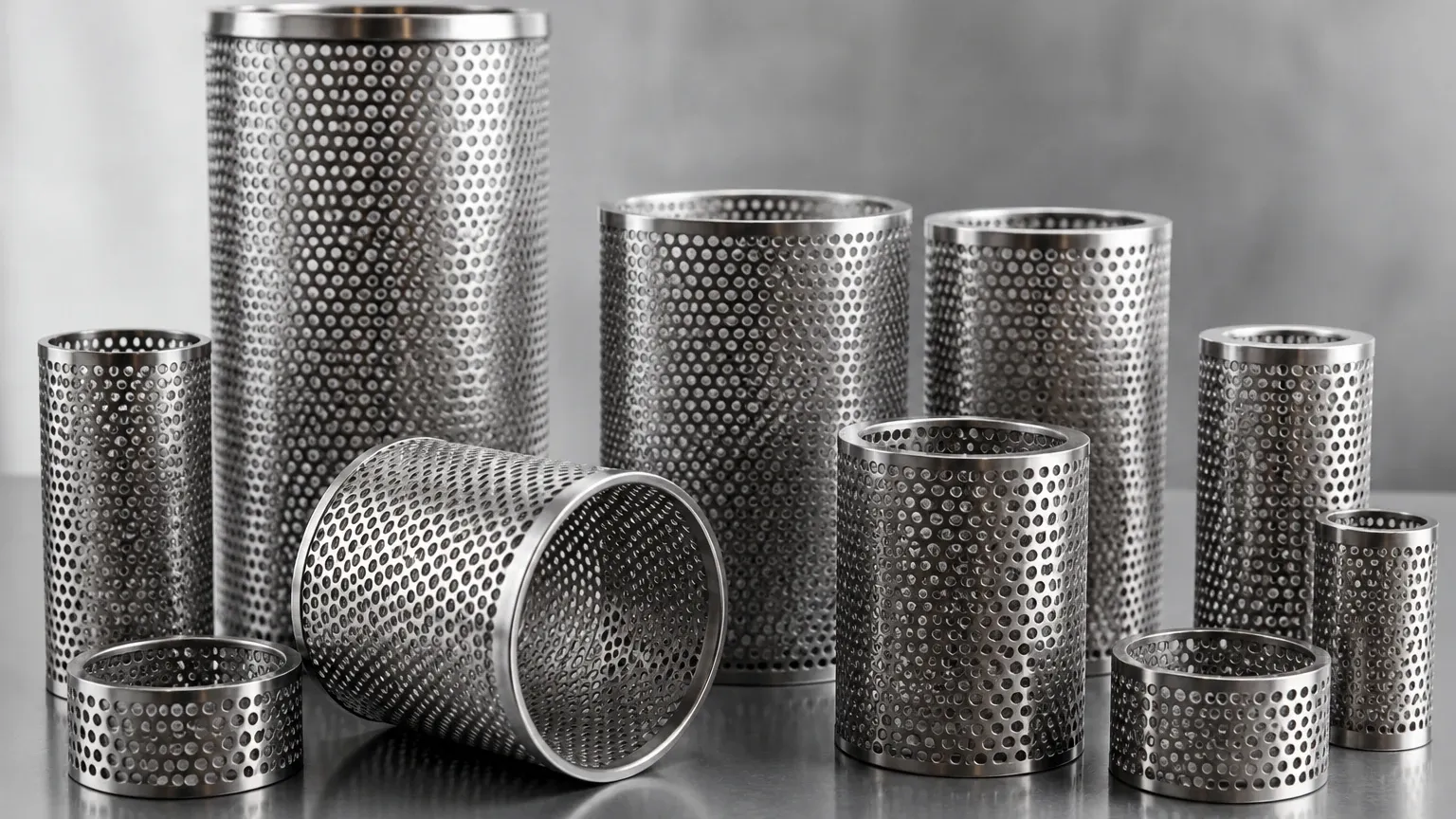
In industrial filtration and fluid processing, the perforated metal cylinder serves as a fundamental component for both primary separation and structural support. These cylindrical components, fabricated from various metal alloys—most commonly stainless steel—are engineered to withstand high-pressure environments while maintaining precise flow characteristics. For engineers and procurement specialists, selecting the correct perforated metal cylinder requires a deep understanding of material properties, hole geometry, and the mechanical stresses inherent in specific industrial applications.
As a core element in many filtration systems, these cylinders are often used as the structural backbone for finer mesh layers or as independent strainers for coarse filtration. Their durability and resistance to deformation make them indispensable in sectors ranging from chemical processing to food and beverage production.
Engineering Fundamentals of Perforated Metal Cylinders
A perforated metal cylinder is essentially a flat sheet of metal that has been mechanically punched with a pattern of holes, then rolled into a cylindrical shape and welded at the seam. The performance of the final product is dictated by several key engineering variables: material thickness (gauge), hole diameter, hole pitch (the distance between the centers of adjacent holes), and the resulting open area percentage.
Material Selection
The choice of material is the first and most critical decision in the engineering process. Because these cylinders are often exposed to corrosive fluids or high temperatures, stainless steel is the industry standard.
* Stainless Steel 304: Suitable for general industrial applications where basic corrosion resistance is required. It is cost-effective and performs well in most water treatment and hydraulic applications.
* Stainless Steel 316L: The preferred choice for chemical processing and marine environments. The addition of molybdenum provides superior resistance to chlorides and pitting corrosion.
* Specialty Alloys: For extreme environments involving high heat or highly aggressive chemicals, alloys such as Monel, Inconel, or Hastelloy may be utilized, though these are typically reserved for specialized petrochemical or aerospace applications.
Structural Integrity and Gauge
The thickness of the metal sheet, or gauge, directly impacts the cylinder's ability to resist collapsing under differential pressure. In high-flow systems, the fluid exerts significant force on the cylinder walls. Engineers must balance the need for a high open area (to minimize pressure drop) with the requirement for structural rigidity. Thicker gauges provide higher burst strength but may limit the minimum hole size achievable through standard punching processes.
Hole Patterns and Open Area Calculations
The efficiency of a Perforated & Expanded Metal component is largely defined by its hole pattern. The arrangement of perforations affects both the flow dynamics and the mechanical strength of the cylinder.
Staggered vs. Straight Patterns
* Staggered Pattern (60-degree): This is the most common configuration for industrial cylinders. The holes are offset, providing the highest open area and uniform strength across the surface. This pattern is ideal for maximizing flow rates while maintaining structural stability during the rolling and welding process.
* Straight Line Pattern: Holes are aligned in rows and columns. While easier to manufacture for certain specific alignment needs, this pattern generally offers lower mechanical strength and is more prone to deformation under high pressure.
Calculating Open Area
The open area percentage is a critical metric for determining the flow capacity and pressure drop across the filter. It is calculated based on the hole diameter (D) and the pitch (P). For a standard 60-degree staggered pattern, the formula is:
Open Area % = (D² × 90.69) / P²
An optimal design usually aims for an open area that allows for the required flow rate without compromising the cylinder's ability to support the filter media or withstand the system's operating pressure.
Manufacturing and Fabrication Techniques
The transition from a flat perforated sheet to a finished perforated metal cylinder involves several precise manufacturing steps. Each stage must be controlled to ensure the final product meets the tight tolerances required for industrial housings.
Punching and Perforating
Modern CNC perforating presses allow for high-speed, high-precision punching. The accuracy of the hole size and spacing is vital, especially when the cylinder serves as a support for a fine wire mesh. Any burrs or irregularities on the surface can damage the delicate mesh layers during assembly.
Rolling and Forming
Rolling the perforated sheet into a perfect cylinder requires specialized equipment to ensure the diameter remains consistent throughout the length of the component. Because the sheet has been perforated, it behaves differently under stress than solid metal. Skilled operators must account for the "spring-back" effect to achieve the exact specified outer diameter (OD) or inner diameter (ID).
Welding and Seam Integrity
The longitudinal seam is the most vulnerable point of the cylinder. Several welding methods are employed depending on the application:
* Spot Welding: Often used for light-duty applications or when the cylinder is a temporary component.
* TIG (Tungsten Inert Gas) Welding: Provides a clean, strong, and continuous seam. This is the standard for high-pressure industrial filters and food-grade applications where a smooth finish is required to prevent bacterial growth.
* Plasma Welding: Used for thicker materials where deep penetration and high seam strength are mandatory.
Finishing and Surface Treatment
After fabrication, cylinders may undergo various finishing processes. Passivation is standard for stainless steel to restore the protective oxide layer and remove any free iron from the surface. For applications in the pharmaceutical or food industries, electropolishing may be used to achieve a mirror-like finish that is easy to clean and sanitize.
Applications Across Demanding Industrial Sectors
Perforated metal cylinders are versatile components used in a wide array of industrial processes. Their primary function is usually to separate solids from liquids or gases, or to protect downstream equipment from debris.
Chemical and Petrochemical Processing
In these environments, cylinders are used in reactor internals, catalyst baskets, and large-scale strainers. The ability of stainless steel to resist aggressive solvents and high temperatures makes the perforated metal cylinder a reliable choice for maintaining process purity and protecting expensive pumps and valves.
Food and Beverage Industry
Hygiene is the priority in food processing. Perforated cylinders are used in juice extraction, dairy filtration, and brewery lautering tuns. The smooth surfaces and cleanable designs of these cylinders ensure compliance with strict safety standards while providing efficient separation of solids.
Hydraulic and Lubrication Systems
In hydraulic systems, these cylinders often act as the support core for pleated filter elements. They prevent the pleats from collapsing under the high-pressure pulses common in hydraulic machinery. The precision of the perforations ensures that the flow remains laminar and does not introduce turbulence that could lead to aeration of the hydraulic fluid.
Water Treatment and Desalination
Large perforated cylinders serve as intake screens and pre-filters in water treatment plants. They protect sensitive membranes and fine filtration stages from large debris, such as sand, shells, and organic matter. In these applications, the corrosion resistance of SS316L is particularly valuable for handling brackish or seawater.
Key Evaluation Criteria for Purchasing and Engineering Teams
When specifying a perforated metal cylinder for a project, engineers must look beyond simple dimensions. A comprehensive evaluation ensures the longevity and efficiency of the filtration system.
1. Filtration Accuracy: While the perforated metal itself provides relatively coarse filtration, the hole size must be precisely matched to the particles being removed or the mesh it is supporting.
2. Pressure Drop (ΔP): A cylinder with insufficient open area will cause a significant pressure drop, leading to increased energy consumption and potential system failure. Engineers should request flow-rate versus pressure-drop data during the design phase.
3. Mechanical Load: Consider the maximum differential pressure the cylinder will face. This determines the required wall thickness and the type of seam weld.
4. Compatibility: Ensure the material and any gaskets or end caps are chemically compatible with the process fluid at the operating temperature.
5. Customization Requirements: Many industrial housings require specific end-cap configurations (e.g., NPT threads, flanges, or O-ring grooves). Confirm that the manufacturer can integrate these features into the cylindrical design.
Maintenance, Cleaning, and Replacement Cycles
The total cost of ownership for a filtration system is heavily influenced by the maintenance requirements of its components. Perforated metal cylinders are favored because they are generally reusable and easy to clean compared to disposable synthetic filters.
Cleaning Methods
* Backwashing: Many automated systems use a reverse flow of fluid to dislodge particles trapped on the surface of the cylinder.
* Ultrasonic Cleaning: For cylinders used in precision applications, ultrasonic baths can remove fine contaminants from the perforations that manual scrubbing cannot reach.
* Chemical Cleaning: Soaking in specific detergents or acids can remove scale and organic buildup, provided the chemicals are compatible with the metal alloy.
Replacement Indicators
While durable, these cylinders are not permanent. They should be inspected regularly for:
* Erosion: High-velocity fluids containing abrasive particles can eventually wear down the edges of the holes, changing the filtration characteristics.
* Deformation: Any sign of buckling or "out-of-roundness" indicates that the cylinder has been subjected to pressures exceeding its design limit.
* Stress Corrosion Cracking: In certain chemical environments, small cracks can develop near the welds or hole edges, necessitating immediate replacement to avoid catastrophic failure.
Customization Options for Specific Filtration Challenges
Standard off-the-shelf components rarely meet the exacting needs of specialized industrial processes. Customization is often necessary to optimize performance. This can include non-standard diameters, variable hole patterns across the length of the cylinder, or the integration of multiple layers of different materials.
For projects requiring specific flow patterns or unique structural shapes, engineers often turn to custom-fabricated solutions. Whether it is a reinforced perforated metal cylinder for a high-viscosity chemical line or a lightweight aluminum screen for an air intake, the ability to tailor the design to the application is essential for achieving peak efficiency.
To explore detailed technical specifications and discuss customized designs for your specific industrial application, Review product options and application support to ensure your filtration system is built for reliability and performance.
