


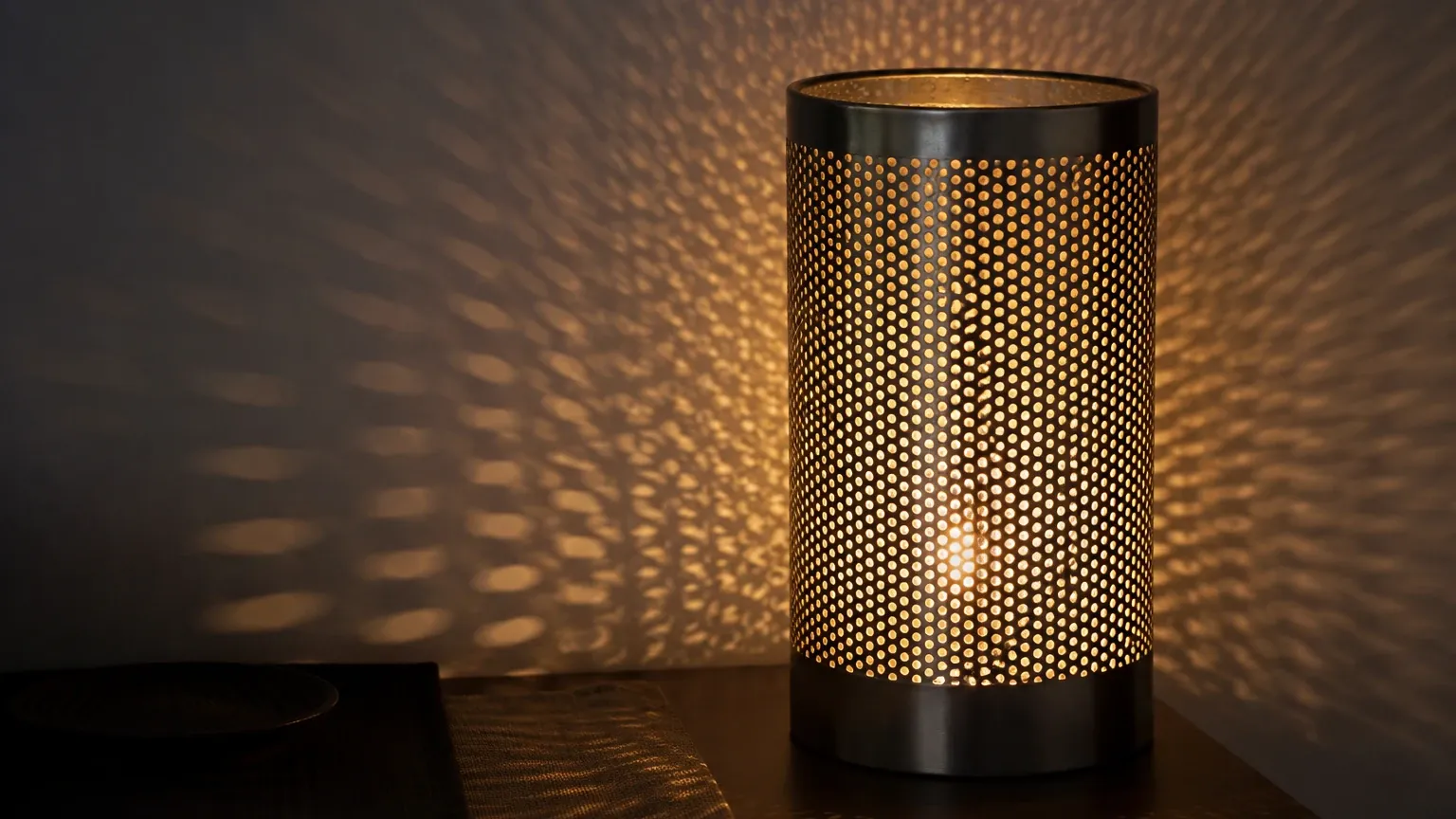
Perforated Metal Lamp
In industrial and architectural engineering, the selection of materials for lighting enclosures requires a balance between structural integrity, thermal management, and precise light control. A perforated metal lamp is not merely a decorative fixture; it is a precision-engineered component that utilizes the mechanical properties of Perforated & Expanded Metal to meet specific performance criteria. For engineers and procurement professionals, understanding the technical nuances of these materials is essential for ensuring long-term reliability in demanding environments.
At its core, a perforated metal lamp relies on a substrate—typically stainless steel, aluminum, or carbon steel—that has been mechanically punched or laser-cut with a series of holes. These holes serve multiple functional purposes, including heat dissipation, light diffusion, and weight reduction, while maintaining the protective qualities of a solid metal housing.
Understanding the Role of Perforated & Expanded Metal in Lighting Design
The integration of perforated materials into lighting systems addresses several engineering challenges. Unlike solid enclosures, which can trap heat and create harsh, concentrated light sources, perforated structures allow for controlled air circulation and light scatter.
Light Diffusion and Optical Control
The primary function of the perforation pattern in a perforated metal lamp is to manage the output of the internal light source. By varying the hole size, shape, and pitch, engineers can determine the exact percentage of "open area." This open area dictates the amount of light that passes through the material.
For example, a high open area percentage (above 50%) provides high visibility and brightness, suitable for industrial task lighting. Conversely, a lower open area (20-30%) creates a diffused effect, reducing glare and providing ambient illumination in architectural or high-traffic commercial spaces. The geometry of the holes—whether round, square, or slotted—also influences the directional quality of the light, allowing for specific beam shaping without the need for complex secondary optics.
Thermal Management and Airflow
Industrial lighting, particularly high-output LED systems, generates significant heat. If this heat is not dissipated, the lifespan of the electronic components and the LED chips themselves is drastically reduced. Perforated & Expanded Metal acts as a passive cooling system. The apertures allow for convective cooling, enabling hot air to escape the enclosure while cooler ambient air enters. This thermal regulation is critical in industrial settings where ambient temperatures may already be elevated.
Technical Specifications for Perforated Metal Components
When specifying components for a perforated metal lamp, engineers must define several critical parameters to ensure the final product meets the application's mechanical and optical requirements.
Hole Patterns and Geometry
* Round Holes: The most common and cost-effective pattern. Round holes offer high structural strength and are available in staggered or straight-row configurations. Staggered patterns typically provide higher open areas and better light diffusion.
* Square Holes: These provide a higher open area than round holes for the same hole diameter, making them ideal for applications requiring maximum light output and airflow.
* Slotted Holes: Often used for directional light control or in applications where the lamp must also serve as a protective screen against specific types of debris.
The Importance of Open Area Calculation
The "Open Area" is the ratio of the total area of the holes to the total area of the sheet, expressed as a percentage. This is calculated using the following formula for a staggered round hole pattern:
Open Area % = (D² × 90.69) / P²
*(Where D = Hole Diameter and P = Center-to-Center Pitch)*
Accurate calculation is vital because it directly impacts both the structural rigidity of the lamp housing and its luminous efficacy. A higher open area reduces the structural strength of the metal, which may require thicker gauges to compensate.
Material Selection for Industrial and Architectural Environments
The environment in which the perforated metal lamp will operate dictates the choice of material. As a manufacturer specializing in stainless steel filtration and metal components, Kaifil emphasizes the importance of corrosion resistance and durability.
Stainless Steel (Grades 304 and 316)
Stainless steel is the preferred choice for industrial filtration and lighting components in harsh environments. Grade 304 offers excellent corrosion resistance for most indoor and light industrial applications. However, for marine environments, chemical processing plants, or food and beverage facilities where frequent wash-downs occur, Grade 316 is recommended due to its superior resistance to chlorides and acids.
Aluminum
Aluminum is favored for its lightweight properties and natural resistance to atmospheric corrosion. It also has higher thermal conductivity than stainless steel, which can be advantageous for heat dissipation in high-wattage LED lamps. However, it lacks the extreme durability and high-temperature resistance of stainless steel.
Carbon Steel
While cost-effective, carbon steel requires secondary finishing, such as powder coating or galvanizing, to prevent oxidation. It is typically used in controlled indoor environments where the specific aesthetic of a coated perforated metal lamp is desired.
Engineering Benefits: Heat Management and Light Diffusion
In B2B applications, the reliability of equipment is paramount. The use of Perforated & Expanded Metal in lamp design provides specific engineering advantages that contribute to the total cost of ownership (TCO) by reducing maintenance and extending equipment life.
Durability and Impact Resistance
In industrial warehouses or manufacturing floors, lighting fixtures are often subject to physical impact or vibration. A perforated metal lamp housing provides a robust physical barrier that protects the internal light source and electronics better than plastic or glass alternatives. The inherent strength of the metal mesh ensures that the fixture maintains its shape and functionality even under mechanical stress.
Shielding and Safety
Perforated metal can also serve as an EMI (Electromagnetic Interference) shield. In sensitive industrial environments where electronic noise can interfere with control systems, a grounded metal enclosure with specific perforation sizes can help attenuate unwanted signals while still allowing for light and air passage. Additionally, the small aperture size can prevent the entry of insects or large particulate matter, which is a common cause of failure in industrial lighting.
Customization and Precision Manufacturing Processes
Achieving the desired performance for a perforated metal lamp requires precision in the manufacturing process. Standard off-the-shelf perforated sheets often do not meet the specific tolerances required for high-end industrial lighting components.
Precision Punching and Laser Cutting
For high-volume production, CNC punching is the most efficient method for creating perforated patterns. It allows for high repeatability and tight tolerances. For complex geometries or thicker materials, laser cutting provides the flexibility to create custom hole shapes and intricate designs that would be difficult to achieve with traditional tooling.
Forming and Welding
Once the flat sheet is perforated, it must be formed into the final lamp shape—typically cylindrical, conical, or rectangular. This requires specialized bending and rolling equipment to ensure the perforation pattern remains undistorted. At Kaifil, we utilize advanced welding techniques, such as TIG or laser welding, to join the edges of the perforated material, ensuring a seamless and structurally sound bond that can withstand industrial use.
Surface Finishing
The final step in manufacturing a perforated metal lamp is the surface treatment. For stainless steel, electropolishing is often used to remove surface contaminants and provide a high-luster finish that enhances light reflectivity. For other materials, powder coating provides a durable, UV-resistant finish available in various colors to meet architectural specifications.
Procurement Guide: Key Considerations for Engineers
Before initiating a purchase or custom order for perforated metal components, procurement teams and engineers should confirm the following technical details to ensure the product is fit for purpose:
1. Material Grade: Does the environment require the chemical resistance of 316 stainless steel, or is 304 sufficient?
2. Gauge Thickness: Is the material thick enough to support its own weight and resist impact, but thin enough to be formed accurately?
3. Hole Size and Pitch: Have the optical and thermal requirements been calculated to determine the optimal open area?
4. Margin Requirements: Do you require solid (unperforated) margins around the edges of the sheet for welding or mounting purposes?
5. Flatness Tolerances: Perforating metal can introduce internal stresses that cause the sheet to curl. Ensure the manufacturer has leveling capabilities to provide a flat, workable product.
Conclusion
The perforated metal lamp represents a sophisticated intersection of industrial utility and engineering precision. By selecting the appropriate Perforated & Expanded Metal specifications, engineers can solve complex problems related to heat, light, and durability.
Whether the application is a heavy-duty industrial task light or a precision-engineered architectural fixture, the choice of material and manufacturer is critical. Working with a specialist like Kaifil ensures that the filtration and structural components of your lighting system are manufactured to the highest standards of accuracy and quality, providing a reliable solution that performs consistently in any environment.
