


Katalog Perforated Metal
In the realm of industrial filtration and structural engineering, selecting the right components requires a deep understanding of material properties, geometric configurations, and manufacturing tolerances. A comprehensive katalog perforated metal serves as more than just a product list; it is a technical roadmap for engineers and procurement specialists to identify the specific parameters required for demanding applications. Whether the goal is high-precision liquid filtration, acoustic dampening, or structural ventilation, the nuances of perforated and expanded metal products dictate the efficiency and longevity of the final system.
At Kaifil, we specialize in the manufacturing of custom stainless steel filtration solutions. Understanding the technical data found in a professional catalog is the first step toward optimizing industrial performance. This guide explores the critical specifications, material considerations, and engineering trade-offs inherent in Perforated & Expanded Metal selection.
Understanding the Technical Specifications in a Katalog Perforated Metal
When reviewing a katalog perforated metal, the technical data usually centers on four primary variables: hole shape, hole size (diameter), pitch (center-to-center distance), and the resulting open area percentage. Each of these factors directly impacts the mechanical strength and the flow characteristics of the medium passing through the metal.
Hole Patterns and Geometry
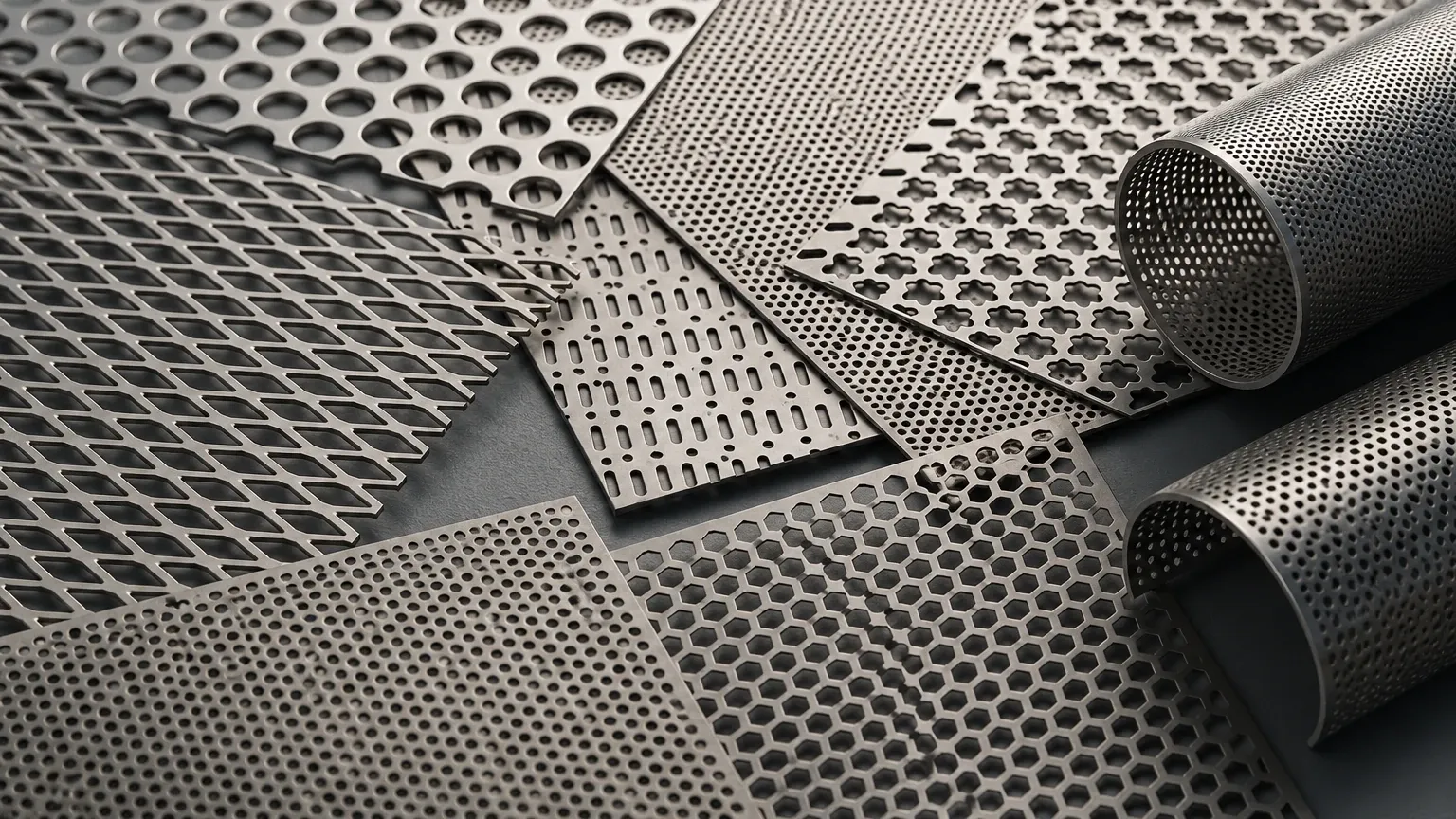
The most common patterns found in industrial catalogs include:
- Round Holes: The industry standard due to their versatility and structural integrity. They are typically arranged in a 60-degree staggered pattern, which provides the highest strength-to-open-area ratio.
- Square Holes: Often used for high-visibility applications or when a higher open area is required for maximum airflow. However, square holes can lead to stress concentrations at the corners.
- Slotted Holes: Ideal for sorting and grading applications, particularly in the food and beverage or agricultural sectors, where elongated particles must be separated.
- Hexagonal (Honeycomb) Holes: These offer a very high open area (up to 80%) while maintaining significant structural rigidity, often used in architectural and high-end ventilation applications.
The Importance of Pitch and Open Area
The "pitch" refers to the distance from the center of one hole to the center of the adjacent hole. In a katalog perforated metal, the relationship between the hole diameter (D) and the pitch (P) determines the "Open Area Percentage." This is a critical calculation for engineers designing filtration systems or heat exchangers.
For a standard 60-degree staggered round hole pattern, the formula for open area is:
`Open Area % = (D² × 90.69) / P²`
An accurate catalog will provide pre-calculated tables for these values, allowing engineers to quickly match the flow requirements of their specific application with the structural limits of the material.
Material Selection: Durability and Chemical Compatibility
Industrial filtration often occurs in harsh environments involving corrosive chemicals, extreme temperatures, or high-pressure differentials. Therefore, the material choice listed in a katalog perforated metal is as important as the hole pattern itself.
Stainless Steel (304 and 316L)
Stainless steel is the preferred choice for the majority of industrial filtration tasks. Type 304 provides excellent corrosion resistance for general applications, while Type 316L (low carbon) is essential for pharmaceutical, chemical processing, and marine environments where resistance to pitting and chloride corrosion is mandatory.
Carbon Steel and Galvanized Steel
For structural applications where corrosion is not the primary concern, or where the metal will be coated/painted, carbon steel offers a cost-effective solution with high tensile strength. Galvanized steel provides a middle ground, offering a protective zinc coating to prevent oxidation in outdoor or humid environments.
Aluminum and Specialized Alloys
Aluminum is selected for its high strength-to-weight ratio and natural resistance to atmospheric corrosion. In specialized aerospace or high-heat industrial processes, catalogs may also include exotic alloys like Monel or Inconel, though these are typically produced on a custom OEM basis.
Perforated vs. Expanded Metal: Engineering Distinctions
While often grouped together in a single katalog perforated metal, perforated and expanded metals are manufactured through different processes and serve distinct engineering purposes.
Perforated Metal
Perforated metal is created by punching holes into a solid sheet. This allows for extreme precision in hole placement and size. Engineers prefer perforated metal when specific margins (unperforated edges) are required for welding or mounting, or when a specific filtration micron rating must be maintained across the entire surface.
Expanded Metal
Expanded metal is produced by simultaneously slitting and stretching the sheet. This process creates diamond-shaped openings without any material waste. Because the metal is "expanded" rather than punched, the resulting mesh is often stronger per pound than the original sheet. It is an excellent choice for heavy-duty walkways, security screening, and coarse filtration where cost-efficiency and weight are primary drivers.
Customization and OEM Capabilities
Standard catalogs provide a baseline, but many industrial applications require custom configurations. When a standard katalog perforated metal does not meet the specific requirements of a project, Kaifil’s OEM capabilities become essential. Customization options typically include:
1. Variable Margins: Leaving specific areas of the sheet solid for structural reinforcement or to facilitate specialized welding techniques.
2. Complex Shapes: Beyond flat sheets, perforated metal can be rolled into cylinders for filter cartridges or formed into cones and baskets.
3. Surface Finishing: Options such as degreasing, deburring (to ensure no sharp edges remain in the holes), pickling, and electropolishing are vital for food-grade and pharmaceutical applications.
4. Multi-Stage Filtration: Combining perforated metal as a support core with fine wire mesh layers to create high-strength, high-precision filter elements.
Evaluation Criteria for Industrial Procurement
When evaluating a supplier's katalog perforated metal, purchasing teams and engineers should confirm several factors to ensure the product is fit for purpose:
Flatness and Stress Relief
The punching process introduces significant internal stress into the metal sheet. A high-quality supplier will utilize leveling rollers to ensure the finished product meets strict flatness tolerances. This is particularly important if the perforated sheet is to be integrated into a larger automated assembly.
Burrs and Hole Quality
In filtration, the presence of burrs (small fragments of metal attached to the edge of the hole) can cause turbulence, trap contaminants prematurely, or even break off and contaminate the downstream fluid. A professional catalog should specify the deburring standards applied to the product.
Dimensional Tolerances
Standard industrial tolerances for sheet size, hole diameter, and pitch must be clearly defined. For precision filtration, even a 1% deviation in open area can significantly alter the pressure drop across the filter, potentially leading to system failure or increased energy consumption.
Common Risks and How to Mitigate Them
One of the primary risks in sourcing from a katalog perforated metal is the "oil canning" effect—a visible waviness in the sheet caused by uneven stress distribution. This can be mitigated by choosing a manufacturer that understands the relationship between the thickness of the material and the size of the holes. As a general engineering rule, the hole diameter should not be smaller than the material thickness to avoid excessive tool wear and material distortion.
Another risk involves the selection of the wrong alloy for the environment. While 304 stainless steel is robust, it can fail rapidly in high-salinity or acidic environments where 316L is required. Always cross-reference the chemical compatibility of the filtered medium with the material specifications provided in the catalog.
Total Cost Considerations and Maintenance
While the initial purchase price is a factor, the total cost of ownership (TCO) for Perforated & Expanded Metal components is influenced by their durability and ease of maintenance.
- Cleaning Cycles: Perforated metal is generally easier to clean (via backwashing or ultrasonic cleaning) than woven wire mesh, as the smooth surface of the holes prevents particles from becoming deeply wedged.
- Replacement Frequency: Choosing a higher-grade material or a thicker gauge from the catalog may increase upfront costs but significantly extend the replacement cycle, reducing downtime in continuous industrial processes.
- Shipping and Logistics: Because metal is heavy, the location of the manufacturer and their ability to provide custom-sized sheets (reducing scrap waste) can impact the final landed cost.
Conclusion: Making an Informed Selection
A katalog perforated metal is an indispensable resource for modern industry, bridging the gap between raw material and engineered solution. By focusing on the technical details—hole geometry, open area calculations, material integrity, and manufacturing tolerances—engineers can ensure they select a product that meets the rigorous demands of their specific application.
Kaifil remains committed to providing high-performance filtration components tailored to the needs of the chemical, pharmaceutical, and water treatment industries. Whether you require a standard pattern from our catalog or a fully customized OEM filtration solution, our engineering team is available to support your selection process. For detailed specifications and to view our range of industrial metal solutions, we invite you to review our Perforated & Expanded Metal product options and application support materials. Confirming your technical requirements early in the design phase ensures a reliable, cost-effective, and durable filtration outcome.
