


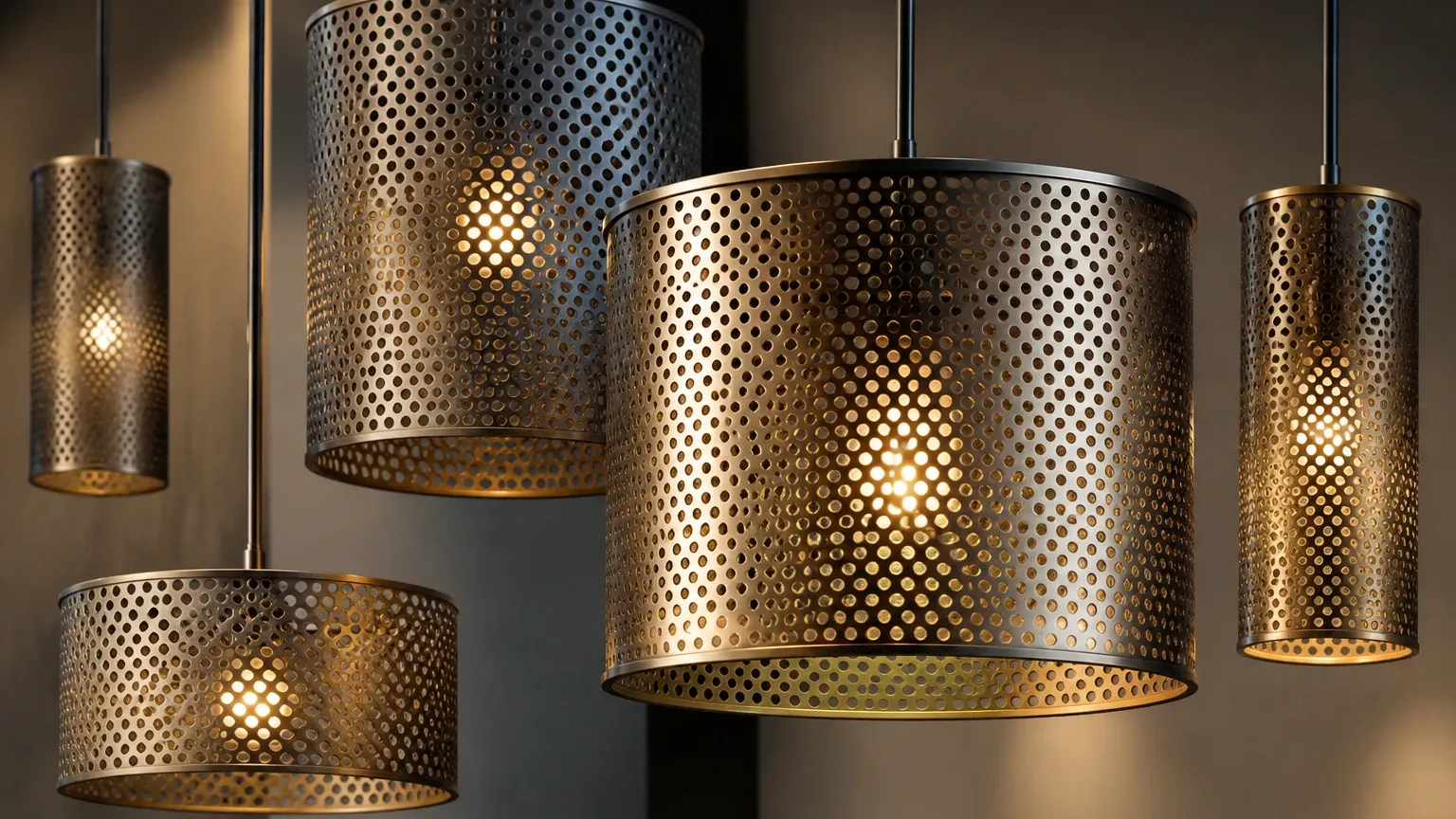
Perforated Metal Light Fixture
In industrial and commercial engineering, the selection of materials for lighting enclosures is a critical decision that impacts thermal management, light distribution, and structural longevity. A perforated metal light fixture is more than an aesthetic choice; it is a precision-engineered component designed to balance opacity with transparency, and protection with ventilation. Utilizing Perforated & Expanded Metal in lighting design allows engineers to meet stringent performance requirements while ensuring the internal components, such as LEDs and drivers, remain within optimal operating temperatures.
As a manufacturer specializing in precision metal components and filtration solutions, Kaifil provides high-performance metal materials that serve as the backbone for durable lighting systems. Understanding the technical nuances of hole patterns, open area percentages, and material grades is essential for procurement teams and design engineers looking to optimize their lighting infrastructure.
The Engineering Role of Perforated & Expanded Metal in Lighting
Perforated and expanded metals are primary materials used in the fabrication of industrial light fixtures due to their unique physical properties. While perforated metal is created by punching a series of holes into a solid sheet, expanded metal is produced by shearing and stretching the material, creating a diamond-shaped mesh without any material waste.
In the context of a perforated metal light fixture, these materials provide three primary functions:
1. Light Diffusion and Control: The size, shape, and spacing of the perforations determine how light is emitted. By adjusting the open area, engineers can create specific lighting effects, reduce glare, and ensure uniform light distribution across a workspace.
2. Thermal Management: High-output industrial lighting, particularly LED systems, generates significant heat. Perforated enclosures act as passive heat sinks, allowing for natural convection and airflow that prevents component failure and extends the lifespan of the fixture.
3. Mechanical Protection: Industrial environments often expose lighting to physical impact, dust, and debris. A stainless steel perforated shroud provides a robust barrier that protects sensitive optical components while maintaining the necessary transparency for illumination.
Material Selection: Why Stainless Steel Dominates Industrial Applications
When specifying a perforated metal light fixture for demanding environments, the choice of substrate is paramount. While aluminum and carbon steel are used in light-duty commercial settings, stainless steel is the standard for industrial filtration and high-performance equipment enclosures.
Stainless Steel 304 vs. 316
For most indoor industrial applications, Stainless Steel 304 offers an excellent balance of strength and corrosion resistance. However, in chemical processing plants, coastal facilities, or food and beverage environments where aggressive cleaning agents are used, Stainless Steel 316 is preferred. The addition of molybdenum in 316 stainless steel significantly enhances its resistance to pitting and crevice corrosion, ensuring the fixture maintains its structural integrity and finish over decades of service.
Durability and Heat Resistance
Unlike plastic or composite housings, metal fixtures do not degrade under UV exposure or high temperatures. Stainless steel maintains its mechanical properties even when subjected to the thermal cycles common in high-bay lighting or outdoor floodlights. This stability ensures that the perforation pattern remains dimensionally accurate, preventing shifts in light output or structural warping.
Technical Parameters: Open Area and Hole Patterns
The performance of a perforated metal light fixture is largely dictated by its geometric configuration. Engineers must calculate the "Open Area Percentage" to ensure the material meets both lighting and cooling requirements.
Calculating Open Area
The open area is the ratio of the area of the holes to the total area of the sheet, expressed as a percentage. For lighting applications, an open area between 30% and 60% is common. A higher open area allows for more light transmission and better cooling but reduces the structural rigidity of the fixture. Conversely, a lower open area provides more shielding and strength but may trap heat.
Hole Patterns and Their Effects
* Round Holes (Staggered): This is the most common pattern for light fixtures. A 60-degree staggered layout provides the highest strength-to-weight ratio and uniform light diffusion.
* Square Holes: Square perforations offer a higher open area than round holes of the same width, making them ideal for fixtures requiring maximum airflow and high lumen output.
* Custom Geometric Patterns: For architectural or specialized industrial lighting, custom patterns can be engineered to direct light at specific angles or create branded visual effects without compromising the protective qualities of the metal.
Thermal Management and Airflow Efficiency
One of the most significant challenges in modern lighting design is managing the heat generated by LED drivers and chips. Excessive heat leads to "lumen depreciation," where the light output permanently dims, and can eventually cause total system failure.
Using perforated metal for the fixture housing creates a "chimney effect." As the air inside the fixture warms, it rises and escapes through the upper perforations, drawing cooler air in through the bottom. This constant cycle of passive ventilation is often more reliable and cost-effective than active cooling systems like fans, which are prone to mechanical failure and require additional power.
In expanded metal fixtures, the angled strands of the mesh can be oriented to further enhance airflow or to deflect light in a specific direction. This dual-purpose functionality makes expanded metal an efficient choice for high-heat industrial environments.
Manufacturing and Customization for OEM Projects
As a professional manufacturer, Kaifil understands that standard off-the-shelf components rarely meet the specific needs of complex industrial projects. Customization is essential for integrating a perforated metal light fixture into a larger system.
Precision Fabrication
The manufacturing process involves high-speed CNC punching or laser cutting to ensure that every perforation is burr-free and accurately positioned. This precision is vital for fixtures that require secondary forming, such as rolling into cylinders for pendant lights or bending into U-channels for linear high-bay housings.
Secondary Operations
To deliver a ready-to-install component, several secondary processes are often required:
* Leveling: Ensuring the perforated sheet is perfectly flat after the punching process, which can introduce internal stresses.
* Degreasing and Cleaning: Removing all manufacturing oils to ensure the metal is compatible with cleanroom or food-grade environments.
* Surface Finishing: While stainless steel is often left with its natural mill finish, it can be electropolished for maximum corrosion resistance or powder-coated to match specific industrial safety colors.
Evaluation Criteria for Engineering and Purchasing Teams
When sourcing perforated or expanded metal for lighting applications, technical professionals should confirm several key factors to ensure the longevity and performance of the final product:
1. Dimensional Tolerances: Ensure the supplier can maintain tight tolerances on hole diameters and margins (the unperforated area around the edges). Inconsistent margins can lead to assembly issues during the final fixture build.
2. Edge Conditions: Specify whether the edges should be "safe edges" (unperforated) or "finished-to-pattern." Safe edges are generally preferred for light fixtures to provide a smooth surface for mounting and to increase structural stiffness.
3. Material Certification: Request Mill Test Reports (MTRs) to verify the chemical composition and mechanical properties of the stainless steel. This is particularly important for projects in regulated industries like pharmaceuticals or food processing.
4. Flatness Requirements: Perforating can cause metal to curl. Confirm that the manufacturer uses precision leveling equipment to provide sheets or components that meet flatness specifications, preventing gaps in the fixture assembly.
Conclusion: Optimizing Filtration and Lighting Infrastructure
Whether used in a high-efficiency filtration system or a specialized perforated metal light fixture, the quality of the metal component defines the reliability of the entire unit. By selecting the appropriate grade of Perforated & Expanded Metal, engineers can achieve a balance of durability, thermal efficiency, and precision light control.
Kaifil’s expertise in custom stainless steel fabrication ensures that every component is manufactured to meet the rigorous demands of industrial environments. From material selection and filtration accuracy to customized designs for lighting and protective enclosures, we provide the technical support and manufacturing capabilities necessary to move your project from the design phase to successful implementation. For engineers and purchasing teams, partnering with a manufacturer that understands the intersection of material science and industrial application is the most effective way to ensure long-term performance and a lower total cost of ownership.
