


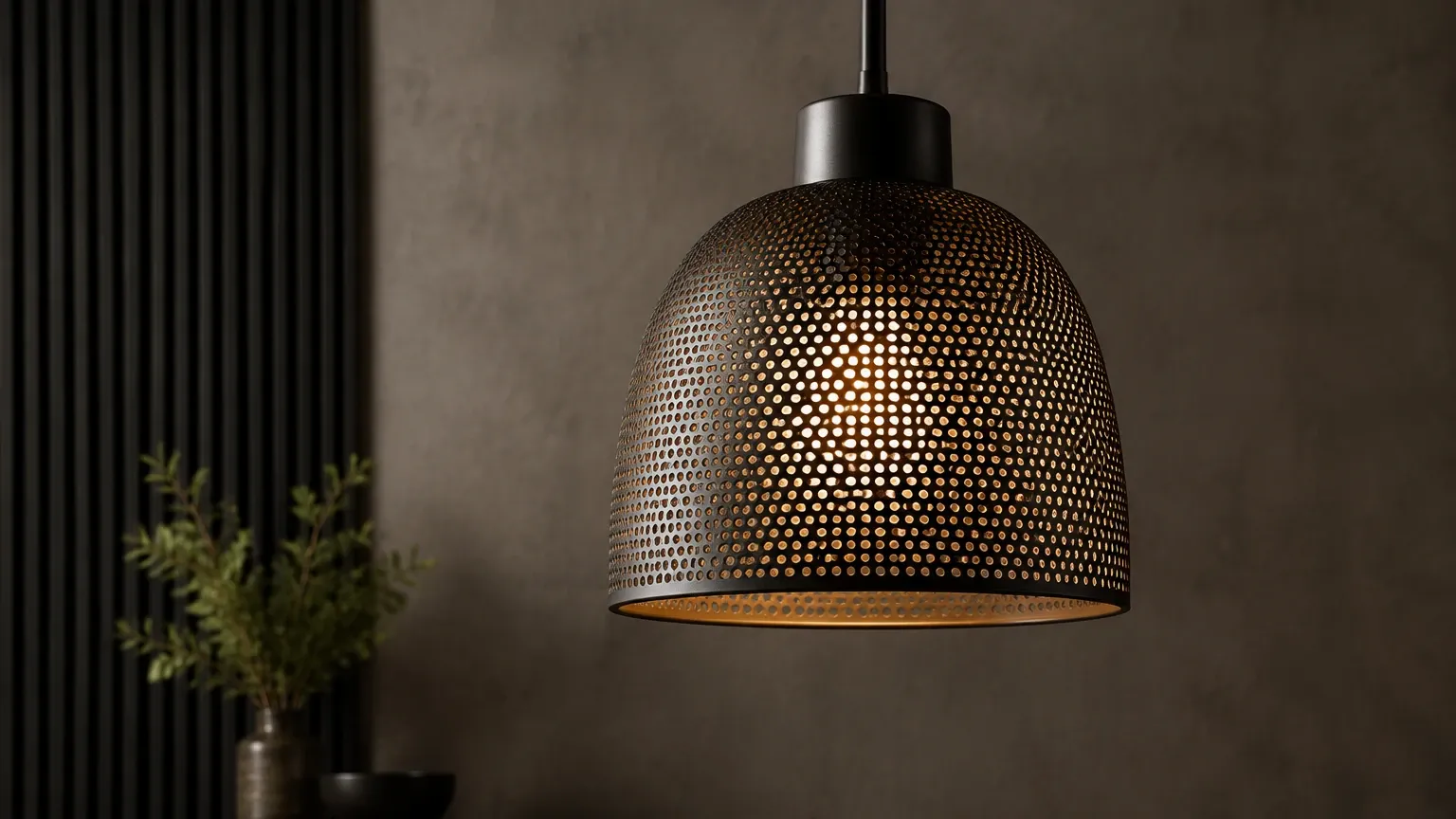
Perforated Metal Pendant Light
In the realm of industrial design and architectural engineering, the selection of materials for lighting fixtures involves a complex balance of thermal management, light diffusion, and structural durability. The use of perforated metal in lighting, specifically for a perforated metal pendant light, represents a sophisticated application of precision metalworking. While often associated with filtration and industrial screening, the same engineering principles that govern fluid dynamics and particle separation are applied to the control of luminous flux and heat dissipation in high-end lighting systems.
For engineers and procurement professionals, understanding the technical specifications of Perforated & Expanded Metal is essential when specifying components for commercial, industrial, or high-traffic environments. This guide examines the technical considerations, material science, and manufacturing tolerances required to produce high-performance perforated metal components for lighting applications.
Technical Foundations of Perforated Metal in Lighting
A perforated metal pendant light is more than an aesthetic choice; it is a functional assembly designed to manipulate light through a series of precisely engineered apertures. The primary function of the perforated skin is to act as a diffuser, breaking up the direct glare of high-intensity light sources (such as LEDs or HID lamps) while maintaining a high degree of light transmission.
From a technical perspective, the performance of the light is dictated by the "Open Area Percentage." This is the ratio of the area of the holes to the total area of the sheet. For lighting applications, an open area of 30% to 50% is common, though this can vary significantly based on the desired "cutoff angle" and the intensity of the light source. If the open area is too low, the fixture may trap excessive heat; if it is too high, the structural integrity of the pendant may be compromised, and the diffusion effect will be lost.
Material Selection: Stainless Steel vs. Alternative Alloys
When specifying a perforated metal pendant light for industrial or demanding commercial environments, material selection is the most critical factor influencing longevity and performance. As a specialist in stainless steel filtration and metal components, Kaifil emphasizes the use of high-grade alloys to ensure environmental resistance.
Stainless Steel (Grade 304 and 316)
Stainless steel is the preferred material for industrial lighting due to its exceptional strength and corrosion resistance. In environments such as food processing facilities, chemical plants, or coastal installations, Grade 316 stainless steel provides the necessary resistance to chlorides and acidic vapors. Furthermore, stainless steel maintains its structural rigidity even at thinner gauges, allowing for intricate perforation patterns without the risk of warping under the thermal load of the lamp.
Aluminum Alloys
Aluminum is frequently used where weight is a primary concern. It offers excellent thermal conductivity, which helps in dissipating heat from LED drivers. However, it lacks the tensile strength of stainless steel and may require thicker gauges to achieve the same structural stability in large-scale pendant designs.
Carbon Steel and Finishing
While carbon steel is cost-effective, it requires secondary processing such as powder coating or galvanization to prevent oxidation. For high-end B2B applications, the risk of coating failure often makes stainless steel a more reliable long-term investment, particularly when considering the total cost of ownership and maintenance cycles.
Engineering Hole Patterns for Light Diffusion
The geometry of the perforations significantly impacts how light is distributed within a space. Engineers must choose between several standard and custom patterns to achieve the specific photometric requirements of a project.
1. Round Hole Staggered: This is the most common pattern, providing a high degree of structural strength and a uniform distribution of light. The 60-degree staggered orientation is typically chosen for its efficient use of space and balanced open area.
2. Square Holes: Square patterns offer a higher open area for a given hole size compared to round holes. This is often used when maximum light output is required, though square corners can act as stress concentrators if the material is subjected to mechanical vibration.
3. Slotted and Decorative Patterns: In architectural lighting, slotted patterns can be used to direct light linearly. Custom patterns, achieved through CNC punching or laser cutting, allow for branding or specific visual effects without sacrificing the functional requirements of the fixture.
4. The Moire Effect: Engineers must be cautious when layering perforated sheets. If two layers of Perforated & Expanded Metal are used in a single pendant light, the overlapping patterns can create visual interference known as the Moire effect. While sometimes used intentionally for artistic purposes, in industrial settings, it can cause visual fatigue and should be modeled during the design phase.
Thermal Management and Heat Dissipation
One of the most overlooked advantages of using a perforated metal pendant light in industrial settings is its ability to manage heat. Modern high-output LED systems generate significant thermal energy at the board level. Without adequate ventilation, the lifespan of the LED chips and the electronic drivers is drastically reduced.
Perforated metal acts as a natural convection cooling system. The apertures allow for the continuous flow of air through the fixture, carrying heat away from the light source. In contrast to solid glass or plastic diffusers, which can act as insulators, metal components have high thermal conductivity. By integrating the perforated skin into the thermal design of the fixture, manufacturers can often reduce the size of dedicated heat sinks, leading to a lighter and more efficient overall design.
Precision Manufacturing and Quality Control
For a perforated metal pendant light to meet industrial standards, the manufacturing process must adhere to strict tolerances. Kaifil utilizes advanced manufacturing capabilities to ensure that every component meets the specific needs of the application.
Burr-Free Perforation
The punching process can often leave sharp edges or "burrs" on the reverse side of the metal sheet. In lighting fixtures, these burrs can interfere with the uniform reflection of light and pose a safety hazard during maintenance. Precision leveling and deburring processes are essential to ensure a smooth, high-quality finish.
Forming and Welding
Transforming a flat perforated sheet into a cylindrical or conical pendant light requires specialized rolling and welding techniques. Because the material is perforated, standard welding parameters must be adjusted to prevent "blow-through." Seamless welding and specialized TIG (Tungsten Inert Gas) welding are often employed to ensure the joints are as strong as the parent material while remaining visually unobtrusive.
Accuracy of Open Area
In technical applications where the light output must meet specific Lux levels, the accuracy of the perforation size and pitch is paramount. A deviation of even a few percentage points in the open area can result in a fixture that does not meet the lighting designer's specifications.
Applications in Demanding Environments
Industrial and commercial sectors require lighting solutions that can withstand more than just standard wear and tear. A perforated metal pendant light is often the ideal choice for several specific environments:
* Food and Beverage Processing: Stainless steel perforated fixtures are easy to sanitize and resistant to the high-pressure washdowns common in these facilities. Unlike glass, there is no risk of fragmentation contaminating the production line.
* Public Infrastructure: In transit hubs, airports, and tunnels, lighting fixtures must be vandal-resistant and capable of withstanding constant vibration. The high strength-to-weight ratio of perforated stainless steel makes it suitable for these high-stress areas.
* Chemical and Pharmaceutical Labs: Resistance to chemical outgassing and the ability to maintain a clean-room environment are critical. Perforated metal does not shed fibers or particles, unlike some fabric or composite diffusers.
Procurement Considerations: What to Confirm with Manufacturers
When sourcing Perforated & Expanded Metal for lighting projects, procurement teams should confirm the following technical details to ensure the final product meets the project's engineering requirements:
* Alloy Certification: Ensure the material meets ASTM or ISO standards for the specified grade (e.g., SS304 vs. SS316).
* Edge Margins: Specify the width of the solid (unperforated) borders around the sheet. These margins are necessary for welding and mounting the component into the fixture frame.
* Flatness Tolerances: Perforating metal can introduce internal stresses that cause the sheet to curl. Ensure the manufacturer uses precision leveling to guarantee the components stay flat during assembly.
* Surface Finish: Decide between a mill finish, brushed (No. 4), or electropolished finish. Electropolishing is particularly useful for stainless steel in corrosive environments as it further enhances the protective oxide layer.
Conclusion
The engineering of a perforated metal pendant light involves much more than simple metal punching. It requires a deep understanding of material science, thermal dynamics, and precision manufacturing. By selecting the correct Perforated & Expanded Metal specifications, engineers can create lighting solutions that are not only durable and efficient but also tailored to the specific rigors of industrial and commercial applications.
Kaifil continues to provide high-performance metal filtration and component solutions, applying rigorous quality standards to every custom project. Whether the goal is optimized light diffusion or robust thermal management, the technical integrity of the perforated component is the foundation of a successful lighting installation.
