


Perforated Metal Sheet 3d Warehouse
In the modern industrial design workflow, the transition from a conceptual digital model to a physical, high-performance component is a critical phase. For engineers and architects working on filtration systems, acoustic panels, or structural enclosures, resources like a perforated metal sheet 3d warehouse provide an essential starting point for visualization and spatial planning. However, moving beyond a generic 3D model requires a deep understanding of material science, manufacturing tolerances, and the specific functional requirements of industrial applications.
At Kaifil, we recognize that while a digital asset can represent the aesthetic or basic layout of a component, the actual performance of Perforated & Expanded Metal depends on precise engineering variables. This article explores how to bridge the gap between 3D modeling and industrial procurement, focusing on the technical specifications that define high-quality metal filtration and support structures.
The Role of 3D Modeling in Industrial Filtration Design
Digital repositories such as the 3D Warehouse—primarily associated with SketchUp—allow designers to quickly integrate complex patterns into their project assemblies. When a designer searches for a "perforated metal sheet 3d warehouse" file, they are typically looking for a representative pattern that simulates the transparency, airflow, or light diffusion of the material.
From an engineering perspective, these models serve several purposes:
1. Spatial Coordination: Ensuring the metal component fits within the housing or structural frame without interference.
2. Visual Simulation: Estimating how the hole pattern affects the overall look of a machine or architectural element.
3. Prototyping: Providing a baseline for rapid prototyping or 3D printing of assembly mockups.
However, generic 3D models often lack the metadata required for industrial manufacturing. They may not account for material thickness (gauge), the specific "open area" percentage required for fluid dynamics, or the structural integrity of the margins (the unperforated edges of the sheet). To move from a model to a functional part, engineers must translate these visual representations into technical specifications.
Distinguishing Between Perforated and Expanded Metal
When selecting a product based on a digital model, it is vital to distinguish between perforated and expanded metal, as they offer different mechanical properties and are manufactured through distinct processes.
Perforated Metal
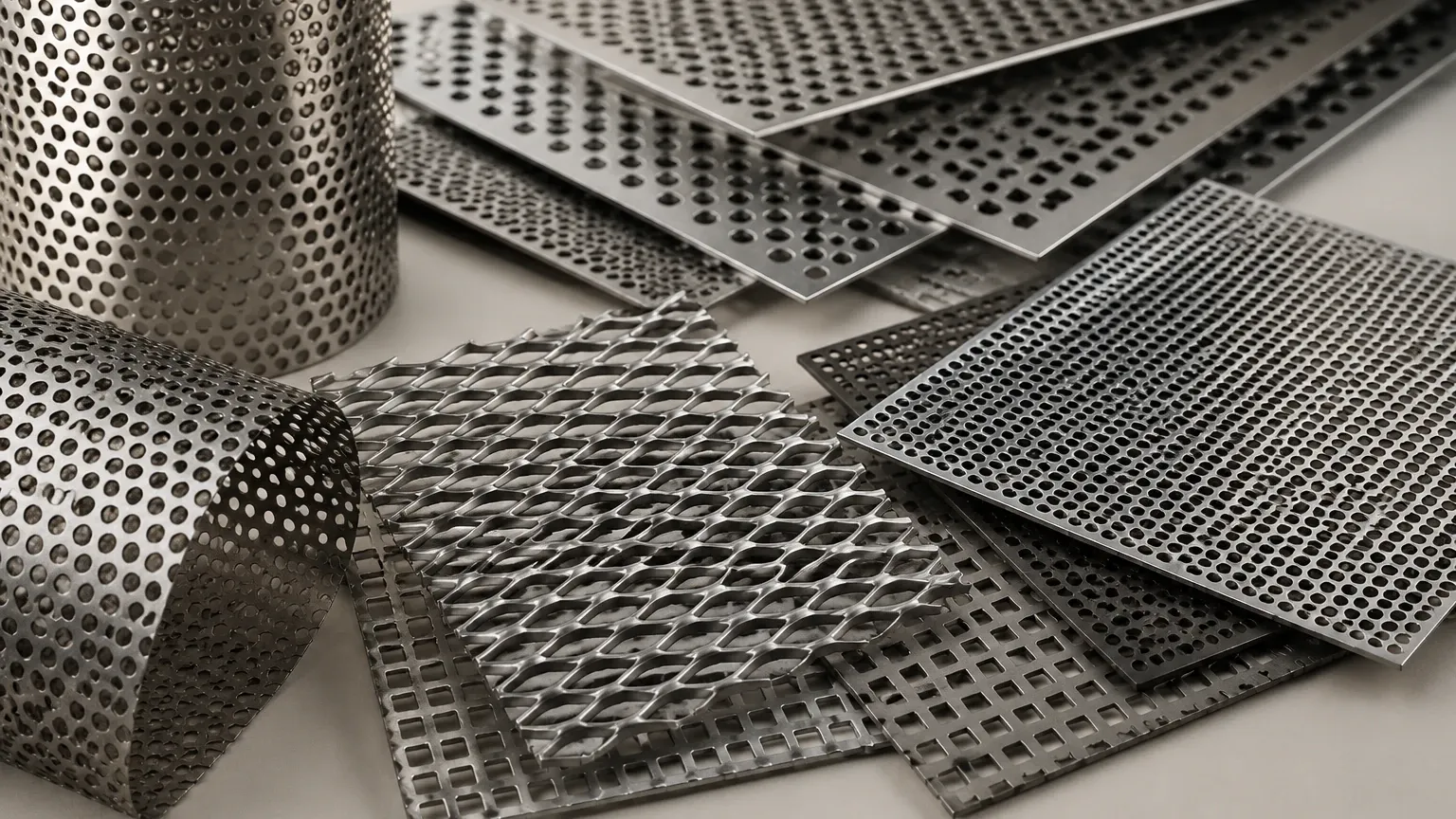
Perforated metal is produced by mechanically punching or laser-cutting holes into a solid metal sheet. This process allows for extreme precision in hole size, shape, and arrangement. In industrial filtration, perforated sheets are often used as the primary filter medium or as a support cage for finer wire mesh. The ability to control the exact hole diameter and pitch makes it ideal for applications requiring specific particle retention.
Expanded Metal
Expanded metal is created by simultaneously slitting and stretching a sheet of metal. This results in a diamond-shaped pattern that is integral to the sheet, meaning there is no material waste (no "slugs" are punched out). From a 3D modeling standpoint, expanded metal has a three-dimensional texture that can be difficult to render accurately without high-poly models. In practice, expanded metal provides excellent strength-to-weight ratios and is frequently used for safety guards, walkways, and heavy-duty filter reinforcement.
Technical Specifications for Industrial Procurement
When transitioning from a perforated metal sheet 3d warehouse asset to a manufacturing order, several technical parameters must be defined. These factors dictate the performance of the component in demanding environments like chemical processing or water treatment.
Hole Pattern and Shape
While round holes are the most common due to their structural stability and ease of manufacturing, other shapes serve specific purposes:
* Square Holes: Offer a high open area for maximum airflow.
* Slotted Holes: Ideal for sorting and grading applications where elongated particles are present.
* Hexagonal Patterns: Provide a very high open area while maintaining better structural rigidity than square holes.
Pitch and Open Area
The "pitch" is the distance from the center of one hole to the center of the adjacent hole. This measurement, combined with the hole diameter, determines the "Percentage of Open Area." This is perhaps the most critical calculation for engineers, as it directly impacts pressure drop and flow rates in filtration systems. A 3D model might look correct visually but could represent an open area that is either too restrictive or too weak for the intended pressure.
Gauge and Material Thickness
The thickness of the metal sheet determines its durability and ability to withstand mechanical stress. In high-pressure hydraulic or industrial filtration applications, using an insufficient gauge can lead to deformation or "ballooning" of the filter cartridge. Common materials include 304 and 316L stainless steel, which offer superior corrosion resistance compared to carbon steel.
Material Selection: Why Stainless Steel Dominates
For the industries Kaifil serves—including food and beverage, pharmaceutical, and chemical processing—the choice of material is non-negotiable. While a 3D model may appear the same regardless of the material assigned in the software, the physical reality of the application demands specific alloys.
1. Corrosion Resistance: Stainless steel 316L contains molybdenum, providing enhanced resistance to chlorides and acidic environments, making it essential for marine or chemical applications.
2. Hygiene and Cleanability: In food and pharmaceutical sectors, the smooth surface of perforated stainless steel allows for effective Clean-in-Place (CIP) processes, preventing bacterial growth.
3. Temperature Stability: Industrial filters often operate at elevated temperatures where plastic or lower-grade metal alternatives would fail or lose structural integrity.
Engineering Considerations: Beyond the Visual Model
When an engineering team utilizes a perforated metal sheet 3d warehouse file, they must also consider the manufacturing limitations that the digital model might ignore.
The Importance of Margins
In a digital model, the pattern often extends to the very edge of the geometry. In reality, perforated sheets usually require "margins"—solid metal borders—to facilitate welding or mounting into a frame. Without specified margins, the structural integrity of the edges is compromised, and the component may be difficult to integrate into a larger assembly.
Flatness and Leveling
The punching process used to create perforated metal can introduce internal stresses into the material, causing it to curl or bow. High-quality industrial perforated metal undergoes a leveling process to ensure the final sheet is flat within tight tolerances. This is a detail that is never captured in a 3D model but is vital for the assembly of precision filter cartridges.
Customization and OEM Capabilities
Standard sheets found in catalogs or 3D warehouses often do not meet the unique requirements of specialized industrial equipment. Customization allows for:
* Varying Hole Patterns: Different patterns on the same sheet to accommodate different flow zones.
* Custom Shapes: Circular, conical, or multi-layered cylinders designed for specific filter housings.
* Surface Finishes: Electropolishing or specialized coatings to enhance flow or prevent adhesion.
Evaluating Total Cost and Lifecycle
Purchasing teams must look beyond the initial cost of the perforated or expanded metal. A cheaper, non-specialized product might match the visual requirements of a 3D model but fail prematurely in the field. Factors influencing the total cost of ownership include:
* Replacement Cycles: High-quality stainless steel components last significantly longer in corrosive environments, reducing downtime.
* Maintenance Requirements: Precision-engineered surfaces are easier to clean and less prone to clogging (blinding).
* Performance Efficiency: Optimized open areas reduce energy consumption by minimizing the pressure required to move fluids through the system.
At Kaifil, we work closely with global customers to ensure that the transition from design to delivery is seamless. Whether you are starting with a custom CAD drawing or a reference from a perforated metal sheet 3d warehouse, our engineering team provides the technical guidance necessary to select the right material, pattern, and secondary processing for your specific application.
Conclusion: Moving from Model to Manufacture
A perforated metal sheet 3d warehouse is a valuable tool for the early stages of design, providing a visual bridge for complex industrial assemblies. However, the success of an industrial filtration project relies on the technical details that lie beneath the surface of a digital model. By focusing on material grade, precise open area calculations, and structural requirements like margins and gauge, engineers can ensure that their designs perform reliably in the most demanding environments.
For those seeking high-performance filtration solutions, the choice of a manufacturing partner is just as important as the design itself. Kaifil’s expertise in stainless steel filtration and custom metal components ensures that your specifications are met with the highest level of precision and durability. When your project moves from the screen to the factory floor, ensure you are working with data-driven specifications that guarantee long-term operational success.
