


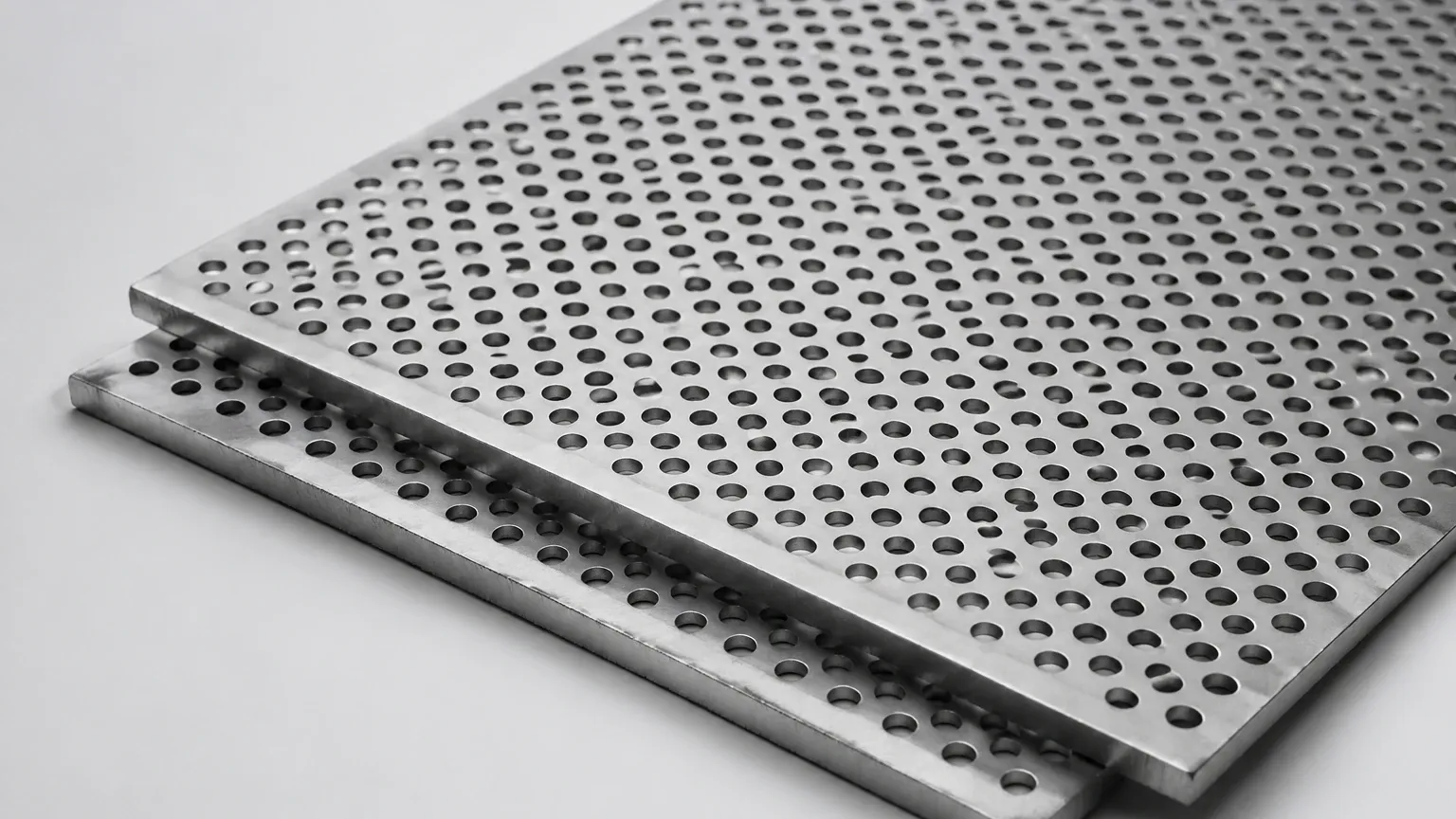
Perforated Metal Sheet 4 X 8
In the landscape of industrial filtration and structural engineering, the perforated metal sheet 4 x 8 (48 inches by 96 inches) represents a foundational standard. This specific dimension is widely adopted across global supply chains because it aligns with standard manufacturing press widths and logistics protocols. For engineers and procurement specialists, selecting the right perforated sheet involves more than just choosing a size; it requires a deep understanding of material properties, hole geometries, and the mechanical stresses the component will face in an industrial environment.
At Kaifil, we specialize in high-performance Perforated & Expanded Metal solutions designed for demanding applications. Whether used as a support structure for fine wire mesh or as a primary filtration medium in heavy-duty processing, the 4×8 sheet serves as the raw material for a vast array of custom-engineered components. This guide explores the technical parameters, selection criteria, and engineering considerations essential for integrating these sheets into industrial systems.
The Role of Standard Dimensions in Industrial Fabrication
The 4×8 foot sheet is the industry standard for a reason. From a manufacturing perspective, most CNC punching presses and wide-roll perforating machines are optimized for 48-inch widths. Utilizing a perforated metal sheet 4 x 8 allows for maximum material yield, reducing waste during the fabrication of smaller components like filter discs, cylindrical cartridges, or machine guards.
For B2B buyers, the 4×8 format simplifies logistics. It is a standard pallet size, making shipping and storage more cost-effective compared to custom-sized oversized sheets. However, while the outer dimensions are standard, the internal specifications—such as hole size, pitch, and open area—must be precisely calculated to ensure the material performs its intended function without premature failure.
Material Selection for Corrosive and High-Temperature Environments
The performance of a perforated sheet is primarily dictated by its metallurgy. In industrial filtration, where exposure to chemicals, high pressure, and extreme temperatures is common, material selection is the first critical decision point.
Stainless Steel Grades (304 and 316)
Stainless steel is the preferred choice for most filtration applications due to its inherent corrosion resistance and mechanical strength.
- SS304: Suitable for general industrial use, including food and beverage processing and architectural applications. It offers excellent formability and weldability.
- SS316/316L: Contains molybdenum, which provides superior resistance to chlorides and acids. This is the standard for pharmaceutical, chemical processing, and marine environments where a perforated metal sheet 4 x 8 will be subjected to aggressive cleaning agents or corrosive media.
Specialized Alloys
For applications involving extreme heat or highly specific chemical profiles, materials such as Monel, Inconel, or Duplex stainless steel may be required. These alloys maintain their structural integrity at temperatures where standard steels might oxidize or lose tensile strength. When specifying these materials, engineers must consider the increased difficulty in the perforating process, which may impact lead times and tooling costs.
Geometric Configurations: Hole Patterns and Open Area Metrics
The efficiency of a perforated metal sheet is defined by its hole pattern and the resulting "Open Area Percentage." This metric determines flow rates, pressure drop, and the size of particles the sheet can effectively retain.
Round Hole Patterns
Round holes are the most common and versatile configuration. They offer the best balance of structural strength and open area. There are two primary arrangements:
1. Staggered (60-degree): This is the most popular pattern. It provides the highest open area and uniform strength across the sheet, making it ideal for high-flow filtration applications.
2. Straight Line: Used primarily for aesthetic or specific mechanical sorting tasks, straight patterns are generally weaker than staggered patterns and are less common in heavy-duty industrial filtration.
Square and Slotted Holes
- Square Holes: Provide a higher open area than round holes but are more prone to structural deformation under high pressure. They are often used in screening and ventilating applications.
- Slotted Holes: These are essential for processing materials that are elongated or for applications requiring specific directional flow. Slotted perforated sheets are frequently found in grain processing and solid-liquid separation equipment.
Calculating Open Area
For a staggered round hole pattern, the formula is:
`Open Area % = (D² x 90.69) / P²`
*(Where D = Hole Diameter and P = Center-to-Center Pitch)*
Understanding this calculation is vital for engineers. A high open area improves flow but reduces the sheet's mechanical load-bearing capacity. Finding the "sweet spot" is a key part of the design process for any perforated metal sheet 4 x 8 used in a pressurized system.
Precision Manufacturing: Tolerances, Margins, and Flatness
When sourcing a perforated metal sheet 4 x 8, technical specifications must extend beyond the holes themselves. The "unperforated" areas and the physical condition of the sheet are equally important for downstream fabrication.
Margins and Edges
Margins are the unperforated areas along the edges of the sheet. In a standard 4×8 sheet, you may have:
- Minimum Margins: The perforation goes as close to the edge as possible.
- No Margins (Full Pattern): The holes are sheared through, which can leave sharp edges and make welding more difficult.
- Specified Margins: Essential for sheets that will be welded into frames or rolled into cylinders. Precise margins ensure that the welding zone is solid metal, providing a stronger joint.
Flatness and Leveling
The perforating process involves high-tonnage punching that can introduce internal stresses into the metal, causing the sheet to curl or bow. For high-precision applications, such as internal components for hydraulic filters, the sheets must undergo a leveling process. This ensures the 4×8 sheet remains perfectly flat, which is critical for automated laser cutting or forming operations.
Surface Finish and Deburring
Punching holes creates a "burr side" (the side where the punch exits). In filtration, burrs can trap contaminants or cause turbulence. Industrial-grade sheets should be deburred and, depending on the application, passivated or electropolished to enhance corrosion resistance and ensure a smooth, cleanable surface.
Evaluating Filtration Performance and Structural Integrity
In many B2B applications, the perforated metal sheet 4 x 8 acts as a support for finer filter media, such as stainless steel wire mesh. In this role, the perforated sheet provides the "skeleton" that allows the filter to withstand high differential pressures without collapsing.
Pressure Drop Considerations
Every hole in the sheet acts as a restriction. If the open area is too low, the pressure drop across the filter will increase, forcing pumps to work harder and increasing energy costs. Conversely, if the holes are too large, the support for the secondary mesh may be insufficient, leading to "quilting" or tearing of the fine wire fabric.
Mechanical Load and Fatigue
For sheets used in vibrating screens or high-pulsation hydraulic systems, fatigue resistance is paramount. Engineers must evaluate the tensile strength of the remaining "ligaments" (the metal between the holes). If the ligaments are too thin, the constant stress cycles will lead to crack propagation and eventual structural failure.
Practical Considerations for Procurement and Customization
When moving from a concept to a purchase order, providing clear technical data to the manufacturer prevents costly errors. For a standard perforated metal sheet 4 x 8, the following information should be confirmed:
1. Material Grade: (e.g., SS316L)
2. Thickness/Gauge: (e.g., 18 gauge or 1.2mm)
3. Hole Diameter and Shape: (e.g., 2mm round)
4. Pitch and Pattern: (e.g., 3.5mm staggered pitch)
5. Margins: (e.g., 20mm margins on all four sides)
6. Post-Processing: (e.g., Degreasing, deburring, or leveling)
OEM and Custom Secondary Operations
While the 4×8 sheet is a standard starting point, many industrial projects require secondary fabrication. At Kaifil, we don't just supply raw sheets; we provide comprehensive OEM services including rolling, welding, and assembly. This allows us to transform a standard Perforated & Expanded Metal sheet into a finished filter cartridge or a precision-engineered industrial component ready for installation.
Conclusion: Making Informed Engineering Decisions
The selection of a perforated metal sheet 4 x 8 is a critical intersection of logistics and engineering. By understanding the trade-offs between open area and structural integrity, and by selecting the appropriate material grade for the operating environment, technical professionals can ensure the longevity and efficiency of their filtration systems.
Whether you are designing a new chemical processing unit or replacing components in a water treatment facility, the quality of the perforated substrate dictates the performance of the entire system. Partnering with a manufacturer that understands these technical nuances ensures that your specifications are met with precision, from the first punch to the final delivery.
