


Perforated Metal Sheet Suppliers in Uae
In the industrial landscape of the United Arab Emirates (UAE), where sectors such as oil and gas, desalination, and food processing demand high-performance materials, the selection of filtration and structural components is a critical engineering decision. Perforated and expanded metals serve as the backbone for many of these applications. Finding reliable perforated metal sheet suppliers in uae requires a deep understanding of material science, manufacturing tolerances, and the specific environmental challenges posed by the region's climate and industrial rigor.
Industrial filtration often relies on Perforated & Expanded Metal to provide structural integrity to filter elements or to act as a primary screening medium. This article provides a technical framework for engineers and procurement professionals to evaluate suppliers, understand technical specifications, and mitigate risks associated with sourcing these essential components.
The Strategic Role of Perforated and Expanded Metal in Industrial Filtration
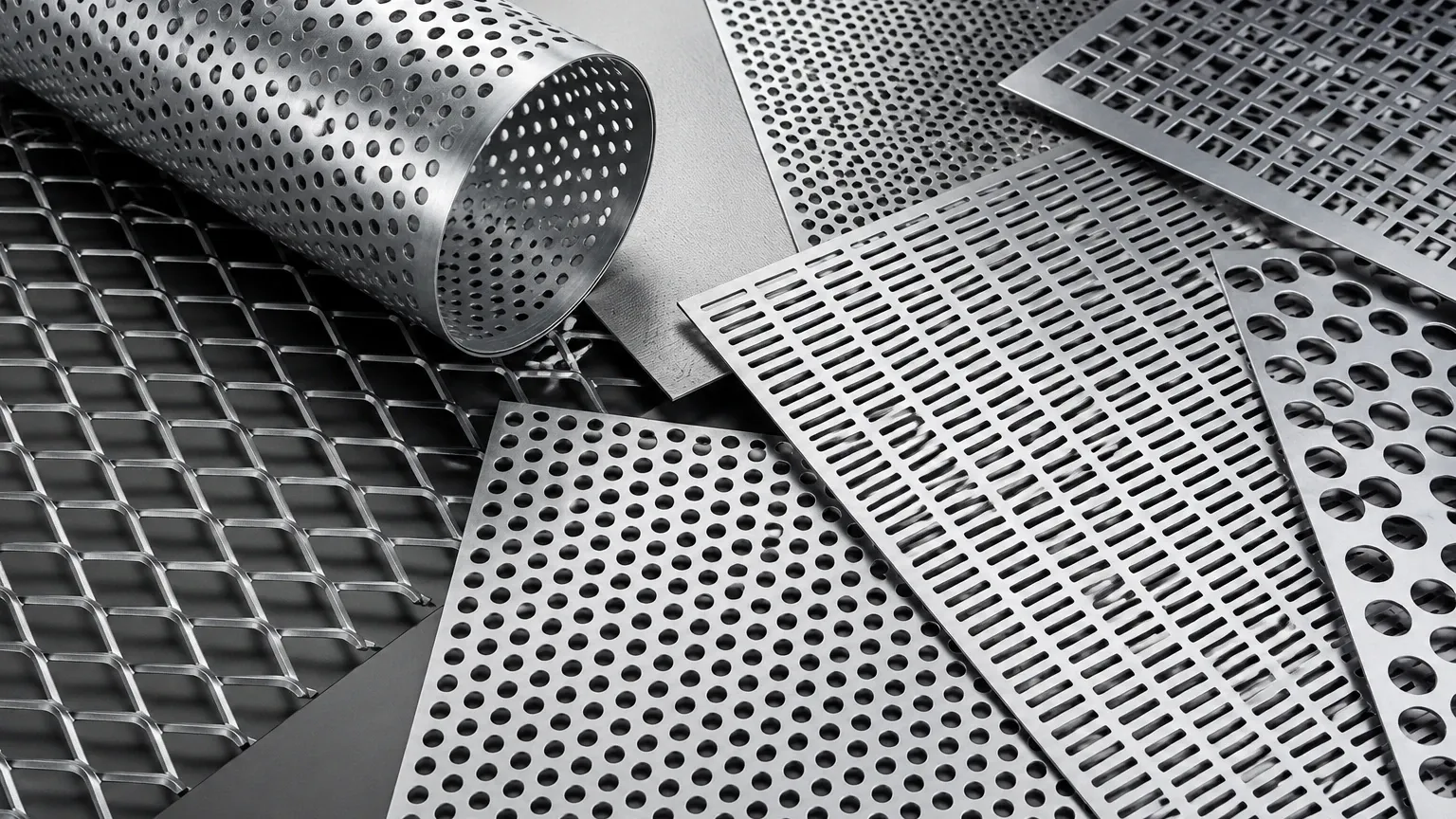
Perforated metal is produced by mechanically punching or laser-cutting holes into a flat sheet. Expanded metal, conversely, is created by slitting and stretching the material simultaneously, creating a diamond-shaped mesh without any material waste. Both forms are indispensable in industrial environments.
In filtration, perforated metal often serves as the outer or inner support core for wire mesh filters or pleated cartridges. Its primary function is to withstand high differential pressures that would otherwise collapse finer filter media. In coarser applications, such as intake screens for water treatment plants or large-scale chemical strainers, the perforated sheet itself acts as the primary filter.
Suppliers in the UAE must provide materials capable of withstanding high salinity and humidity. For instance, in desalination plants, the use of low-grade alloys can lead to rapid pitting corrosion, compromising the entire filtration system. Therefore, technical expertise in material selection is the first hallmark of a qualified supplier.
Key Technical Criteria for Selecting Perforated Metal Sheet Suppliers in UAE
When evaluating perforated metal sheet suppliers in uae, technical professionals should look beyond unit price. The following criteria are essential for ensuring long-term performance and system reliability:
1. Material Traceability and Certification
Industrial projects in the UAE often adhere to strict international standards such as ASTM, AISI, or DIN. A reliable supplier must provide Mill Test Reports (MTRs) that verify the chemical composition and mechanical properties of the metal. For filtration in the pharmaceutical or food and beverage industries, ensuring the material is free from contaminants and meets FDA or EU food-contact regulations is mandatory.
2. Precision and Tolerances
Filtration efficiency is highly dependent on the accuracy of hole diameters and the pitch (the distance between hole centers). Inconsistent punching can lead to "blind spots" or areas of high velocity that cause premature wear on secondary filter media. Suppliers should demonstrate their ability to maintain tight tolerances, typically within +/- 0.1mm for precision applications.
3. Finishing and Deburring
The manufacturing process for perforated metal often leaves sharp edges and burrs. In a filtration context, these burrs can snag fine wire mesh, create turbulence, or shed metallic particles into the process stream. Professional suppliers utilize advanced deburring and leveling processes to ensure the sheets are flat and the surfaces are smooth.
Material Selection: Why Stainless Steel Dominates Industrial Applications
While perforated metal can be made from carbon steel, aluminum, or brass, stainless steel remains the standard for industrial filtration in the UAE. The choice of grade is dictated by the chemical environment and temperature of the application.
* Grade 304/304L: Suitable for general industrial use, food processing, and architectural applications where corrosion risk is moderate.
* Grade 316/316L: The preferred choice for marine environments, chemical processing, and pharmaceutical applications. The addition of molybdenum provides superior resistance to chlorides, which is essential for UAE-based coastal industries.
* Duplex Stainless Steels: For extreme environments involving high pressure and highly corrosive chemicals, duplex grades offer higher yield strength and exceptional resistance to stress corrosion cracking.
When sourcing Perforated & Expanded Metal, engineers must specify the exact grade to ensure the longevity of the filtration component. A supplier’s ability to work with high-nickel alloys and specialized stainless steels is a strong indicator of their technical capability.
Understanding Hole Patterns and Open Area Calculations
The performance of a perforated metal sheet is defined by its open area percentage. This calculation determines the flow rate and pressure drop across the filter. Suppliers should be able to assist in calculating these values based on the following patterns:
* Round Holes (Staggered): The most common pattern for filtration. The 60-degree staggered orientation provides the highest strength-to-open-area ratio and ensures uniform flow distribution.
* Round Holes (Straight): Used primarily for aesthetic purposes or specific mechanical sorting, but less efficient for high-flow filtration due to lower open area.
* Square and Slotted Holes: Often used in heavy-duty screening or where specific particle shapes must be retained. Slotted holes are particularly effective in preventing "blinding" or clogging in viscous fluid filtration.
The Open Area Formula: For a 60-degree staggered round hole pattern, the formula is:
*Percentage Open Area = (D² × 90.69) / P²*
*(Where D = Hole Diameter and P = Pitch)*
An experienced supplier will help engineers balance the need for a high open area (to minimize pressure drop) with the requirement for structural rigidity (to withstand hydraulic shock).
Common Risks and Quality Assurance in Perforated Metal Sourcing
Sourcing from unverified perforated metal sheet suppliers in uae can lead to several operational risks. Identifying these early in the procurement phase is vital:
Material Substitution
One of the most significant risks is the substitution of lower-grade stainless steel for specified high-grade alloys. Without proper testing (such as Positive Material Identification or PMI), it is difficult to distinguish between Grade 304 and Grade 316 visually. This can lead to catastrophic failure in corrosive environments.
Edge Breaks and Margins
In many filtration designs, the perforated sheet must be welded into a cylinder or frame. If the supplier does not provide adequate "unperforated margins" along the edges, welding becomes difficult and the structural integrity of the joint is compromised. Clear communication regarding margin requirements is essential.
Planarity and Internal Stress
The punching process introduces significant internal stress into the metal, which can cause the sheet to curl or bow. For precision filter cartridges, the sheet must be professionally leveled. A supplier lacking leveling equipment will deliver material that is difficult to fabricate and may cause alignment issues in the final assembly.
Customization and Engineering Support for Filtration Components
Standard off-the-shelf perforated sheets rarely meet the specific needs of complex industrial filtration systems. Therefore, the value of a supplier often lies in their customization capabilities. This includes:
* Custom Hole Sizes: Creating non-standard diameters to target specific particle sizes.
* Variable Pitch: Adjusting the distance between holes to reinforce specific high-stress areas of the filter.
* Secondary Fabrication: Providing value-added services such as rolling, welding, and degreasing. For hydraulic and pharmaceutical applications, the removal of all manufacturing oils is a critical step that must be verified.
Engineers should seek suppliers who act as technical partners. By reviewing the application's flow rates, pressure requirements, and chemical exposure, a specialized manufacturer like Kaifil can provide optimized Perforated & Expanded Metal solutions that extend the service life of the filtration equipment.
Evaluating Total Cost of Ownership in Industrial Filtration
In the UAE's competitive market, the temptation to choose the lowest-cost perforated metal sheet suppliers in uae is high. However, the total cost of ownership (TCO) tells a different story. The TCO includes the initial purchase price, installation costs, maintenance frequency, and the cost of unplanned downtime.
A low-quality perforated screen that corrodes prematurely or collapses under pressure can cause damage to downstream equipment, such as pumps and high-precision membranes. The cost of replacing a failed filter and the associated production loss far outweighs the initial savings of a cheaper component. Investing in high-quality materials and precision manufacturing ensures a lower TCO over the life of the project.
Technical Confirmation Before Procurement
Before finalizing a contract with a supplier, procurement teams and engineers should confirm the following technical details:
1. Hole Pattern and Dimensions: Confirm hole diameter, pitch, and orientation (staggered vs. straight).
2. Open Area Percentage: Ensure the calculated open area meets the flow requirements of the system.
3. Sheet Thickness and Tolerance: Verify that the gauge of the metal is sufficient for the expected pressure loads.
4. Material Grade and Finish: Specify the exact alloy and any required surface treatments (e.g., pickling, passivating, or electropolishing).
5. Margin Requirements: Define the width of unperforated borders for welding or mounting.
6. Quality Documentation: Request samples of MTRs and ISO certification documents.
By focusing on these technical parameters, UAE-based industries can ensure they receive filtration components that meet the rigorous demands of their specific applications. Whether for oil filtration, water treatment, or chemical processing, the quality of the perforated metal is a fundamental determinant of system efficiency and reliability.
