


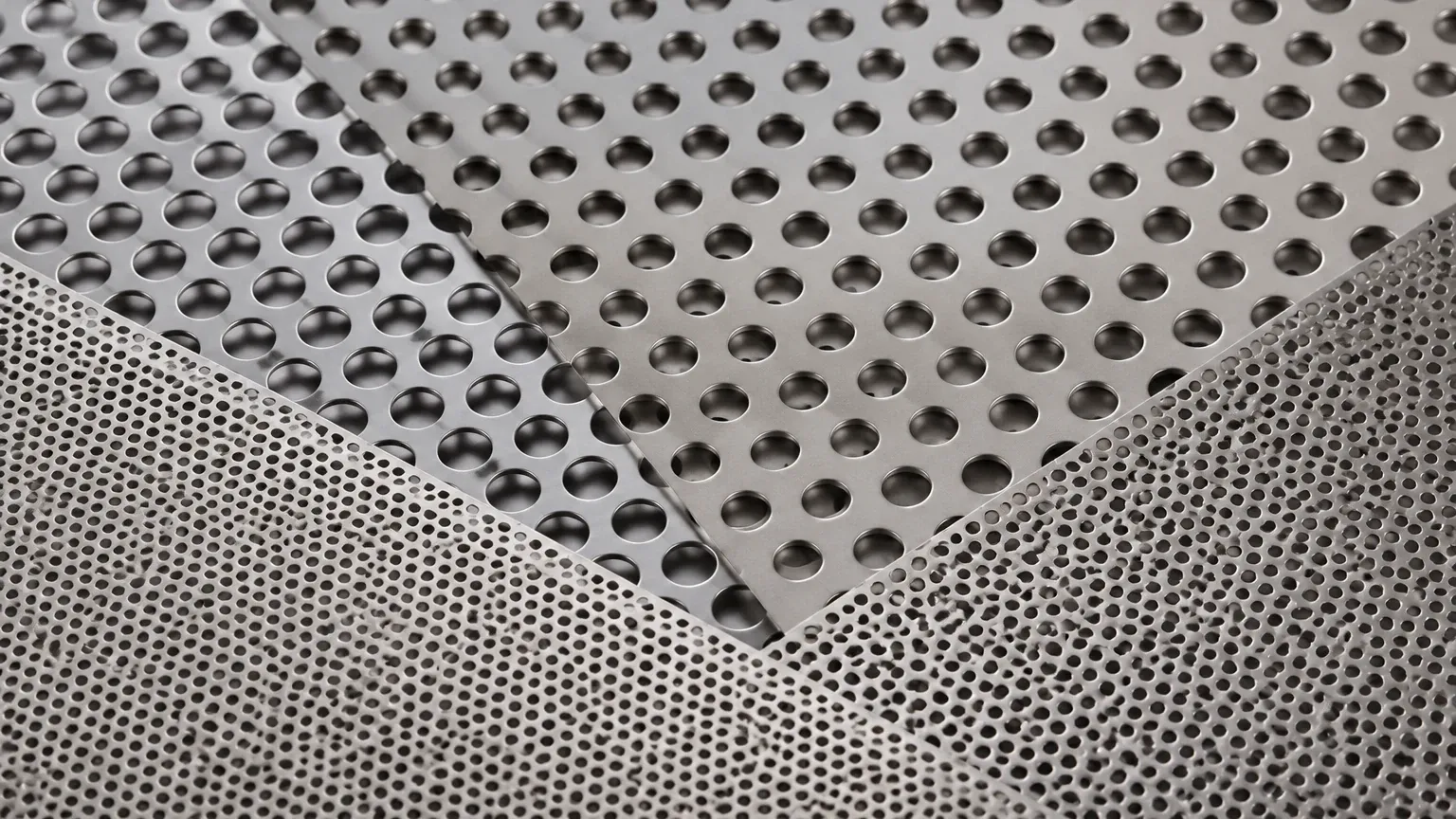
Perforated Metal Texture Seamless
In the realm of industrial filtration and precision engineering, the concept of a "perforated metal texture seamless" transition is more than an aesthetic preference; it is a technical requirement for structural integrity, filtration consistency, and manufacturing efficiency. When engineers design filtration systems—whether for chemical processing, hydraulic systems, or food production—the continuity of the perforated pattern directly impacts the performance of the component. Achieving a seamless appearance and functional uniformity in Perforated & Expanded Metal requires a deep understanding of metallurgy, CNC punching tolerances, and the geometric relationship between hole size and pitch.
At Kaifil, we specialize in the manufacturing of high-performance stainless steel filtration solutions where precision is paramount. This guide explores the technical considerations behind perforated metal textures, the engineering challenges of pattern continuity, and how to specify these components for demanding industrial environments.
Understanding the Geometry of Perforated Metal
To achieve a perforated metal texture seamless in application, one must first understand the geometric variables that define the material. Perforated metal is produced by punching a series of holes into a solid metal sheet. The resulting "texture" is defined by several key factors:
1. Hole Shape: While round holes are the most common due to their structural stability and ease of manufacturing, square, slotted, and hexagonal patterns are also utilized. Hexagonal patterns, in particular, offer a high open area while maintaining a "seamless" visual and functional flow.
2. Hole Arrangement: Patterns are typically arranged in either a staggered (60-degree or 45-degree) or straight-line configuration. Staggered patterns are generally preferred for industrial filtration because they provide higher strength and more uniform stress distribution across the sheet.
3. Pitch (Center-to-Center Distance): This is the distance from the center of one hole to the center of the adjacent hole. The pitch determines the "open area" percentage, which is critical for calculating flow rates and pressure drops.
When we speak of a "seamless" texture in a physical manufacturing context, we are referring to the ability to maintain these geometric ratios across the entire surface of a sheet, or across the seam where a sheet is rolled into a filter cartridge. If the pitch is inconsistent, the "texture" is broken, leading to weak points or localized clogging in filtration applications.
The Role of Precision in Pattern Continuity
Achieving a perforated metal texture seamless across large industrial panels or cylindrical filter elements requires advanced CNC (Computer Numerical Control) technology. In mass production, maintaining pattern continuity involves managing the "margins"—the unperforated areas at the edges of the sheet.
Margin Management
For a truly seamless integration, engineers must specify the type of margins required:
* Safe Side Margins: The perforation pattern stops before the edge of the sheet, leaving a solid border. This is common for structural panels but can create a "break" in the texture if multiple sheets are butt-jointed.
* Finished Ends: The pattern is calculated so that the holes are complete up to the very edge. This allows for a seamless visual and functional transition when two sheets are placed side-by-side or welded into a tube.
* No Margins (Unfinished Ends): The perforation pattern is sheared through the holes. While this can look "seamless" from a distance, it creates sharp edges that may require secondary deburring or specialized welding techniques.
In the production of Perforated & Expanded Metal, Kaifil utilizes high-precision punching equipment to ensure that the cumulative error across a large sheet is minimized. This ensures that when the metal is used as a support layer for fine wire mesh or as a standalone filter, the flow characteristics remain uniform.
Engineering Considerations for Industrial Filtration
When selecting a perforated metal texture for filtration, the primary concern is the balance between the open area and the mechanical strength of the material. A "seamless" pattern ensures that there are no "dead zones" where fluid cannot pass, which is vital for maintaining a consistent pressure profile.
Open Area Calculations
The open area is the ratio of the total area of the holes to the total area of the sheet, expressed as a percentage. For a 60-degree staggered round hole pattern, the formula is:
Open Area % = (D² × 90.69) / R²
*(Where D = Hole Diameter and R = Pitch)*
Engineers must ensure that the open area is sufficient to prevent excessive pressure drop while ensuring the "bridges" (the metal between the holes) are thick enough to withstand the operating pressure of the system. In high-pressure hydraulic applications, a seamless and uniform texture prevents localized stress concentrations that could lead to fatigue failure.
Material Selection and Durability
The durability of the perforated metal texture is heavily dependent on the material grade. For most industrial B2B applications, stainless steel is the standard due to its corrosion resistance and mechanical properties.
* SS304: Suitable for general industrial use, offering good corrosion resistance and formability. It is often used in food and beverage processing where hygiene is a priority.
* SS316L: The preferred choice for chemical processing and marine environments. The addition of molybdenum provides superior resistance to chlorides and acids, ensuring the perforated texture remains intact even in aggressive media.
* Specialty Alloys: For high-temperature or highly corrosive environments, alloys like Monel or Inconel may be used to maintain the structural integrity of the perforated pattern.
Expanded Metal vs. Perforated Metal
While the term "perforated metal texture seamless" is often used, it is important to distinguish between perforated and expanded metal.
Expanded Metal is created by slitting and stretching a single sheet of metal simultaneously. This process creates a diamond-shaped pattern that is inherently seamless because no material is removed. The resulting texture is three-dimensional, which can be advantageous for certain types of pre-filtration or as a support structure for pleated filter media.
Perforated Metal, by contrast, offers more precise control over hole size and shape. For fine filtration or applications requiring a specific flow coefficient, perforated metal is usually the superior choice because the hole diameters can be manufactured to tighter tolerances than the openings in expanded metal.
Applications of Seamless Perforated Patterns
Precision-engineered perforated metal is utilized across a wide range of industries where the continuity of the pattern is essential for performance:
1. Chemical and Petrochemical Processing
In catalyst recovery and reactor internals, perforated metal provides the necessary support for finer mesh screens. A seamless texture ensures that there are no gaps where catalyst particles could bypass the filter, and it facilitates uniform distribution of gas or liquid flow through the bed.
2. Food and Beverage Industry
Perforated stainless steel is used in centrifugal screens, drying trays, and grading sieves. Here, a seamless texture is critical for sanitation. Any irregularities or poorly finished margins can harbor bacteria or trap food particles, making the equipment difficult to clean and potentially compromising food safety.
3. Pharmaceutical Manufacturing
Precision is non-negotiable in pharmaceutical filtration. Perforated components must have perfectly smooth surfaces and consistent hole patterns to ensure that the filtration process is repeatable and meets stringent regulatory standards. The use of SS316L with a polished finish ensures that the perforated texture is both functional and easy to sterilize.
4. Hydraulic and Water Treatment
In high-flow water treatment systems, perforated metal acts as a strainer or a support core for filter cartridges. The seamless nature of the pattern ensures that the structural load is distributed evenly, preventing the core from collapsing under the weight of the differential pressure.
How to Specify Perforated Metal for Your Project
To ensure you receive a product that meets the requirements for a perforated metal texture seamless, engineers should confirm the following details during the procurement process:
* Pattern Type: Specify the hole shape and the angle of the stagger (e.g., 60-degree staggered round holes).
* Dimensions: Provide the hole diameter and the pitch. If the open area percentage is the priority, specify that as the primary metric.
* Margin Requirements: Clearly state if you require finished ends, no margins, or specific solid borders for welding or mounting.
* Flatness Tolerances: Perforating metal can introduce internal stresses that cause the sheet to bow. Specify the required flatness, especially if the sheets are to be used in automated assembly lines.
* Surface Finish: Options include 2B (mill finish), polished, or electro-polished. For filtration, a smooth surface finish reduces the adhesion of contaminants and improves cleaning efficiency.
The Kaifil Advantage in Perforated Solutions
As a dedicated manufacturer of custom filtration components, Kaifil understands that the quality of the Perforated & Expanded Metal is the foundation of an effective filtration system. We work closely with global engineering teams to provide OEM solutions that prioritize precision and durability.
Our manufacturing process includes rigorous quality control to ensure that every sheet or cartridge meets the specified tolerances. By focusing on the technical details—from the metallurgy of the stainless steel to the precision of the CNC punching—we help our clients achieve filtration performance that is both reliable and cost-effective.
Conclusion
Whether you are designing a high-pressure hydraulic filter or a large-scale architectural screen, the concept of a perforated metal texture seamless is rooted in engineering excellence. By understanding the geometric principles of perforation, selecting the appropriate materials, and specifying the correct margin and pattern details, you can ensure that your filtration components perform as intended.
For engineers and purchasing teams looking for reliable, high-precision metal filtration components, Kaifil provides the technical expertise and manufacturing capability required to turn complex specifications into high-performance products. If you are evaluating options for your next project, consider the total cost of ownership, including the longevity and maintenance requirements of the perforated material, to ensure a successful and durable filtration solution.
